Category: Evil

  • Human Knowing

    A presentation by Chauncey C. Riddle, 7 April 2017, Firm Foundation Expo held at Utah Valley University. (Originally a Powerpoint presentation.)
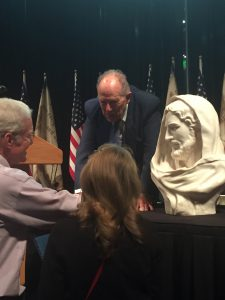
    Dr. Chauncey Riddle delivers his latest paper entitled, “Human Knowing” at Firm Foundation Expo at Utah Valley University

    Human Knowing

    Thesis: We know little but believe much

    Note: I suggest you not take notes but just concentrate on comprehension.

    For further detail, see my book Think Independently
    Think Independently, by Dr. Chauncey C. Riddle – Available in paperback or Kindle format on Amazon.com

    Ways of Human Knowing: We will examine 7:

    Perception: using the senses of the human body

    Reason: using logic to produce conclusions

    Experimentation: trial and error pragmatism

    Authoritarianism: forming ideas by communicating with others

    Imagination: creating ideas, hypotheses, theories

    Knowledge of good and evil: The Light of Christ

    Personal revelation: The Gift of the Holy Ghost

    Perception: Using the senses of the human body to form ideas about the universe.

    Key point: We perceive in our brain

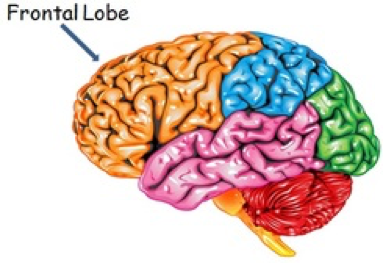
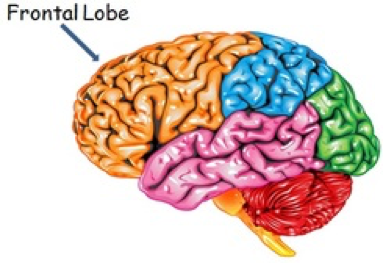
    Vision: We see in the occipital lobe

    Vision: We see in the occipital lobe

    Hearing: We hear in the temporal lobe
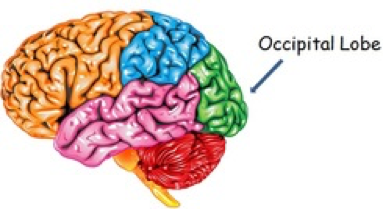
    Vision: We see in the occipital lobe

    Hearing: We hear in the temporal lobe

    We taste, touch and smell in the parietal lobe
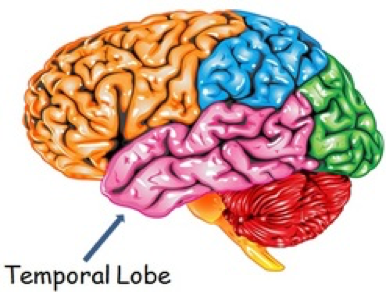
    Hearing: We hear in the temporal lobe

    We taste, touch and smell in the parietal lobe
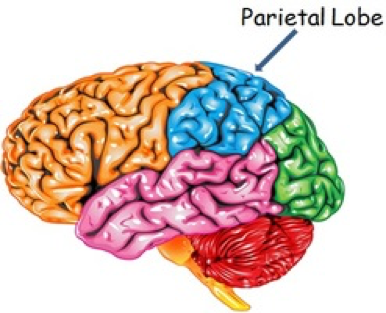
    Walking, writing, balance we control in the cerebellum
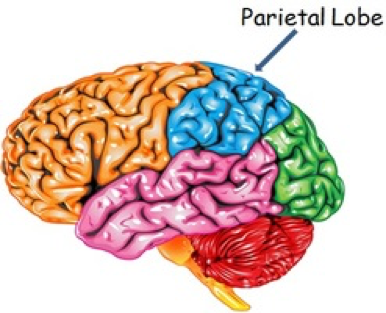
    We taste, touch and smell in the parietal lobe

    Walking, writing, balance we control in the cerebellum
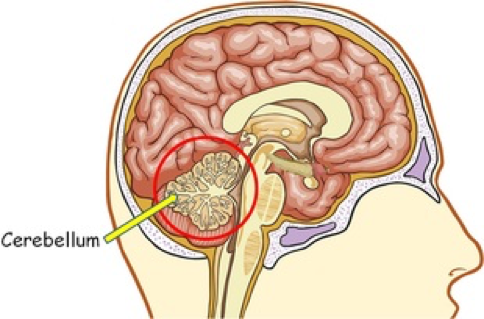
    We think plan and speak from the frontal lobe
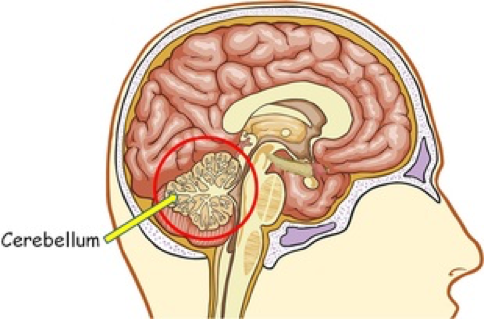
    Walking, writing, balance we control in the cerebellum

    We think plan and speak from the frontal lobe
    We think plan and speak from the frontal lobe
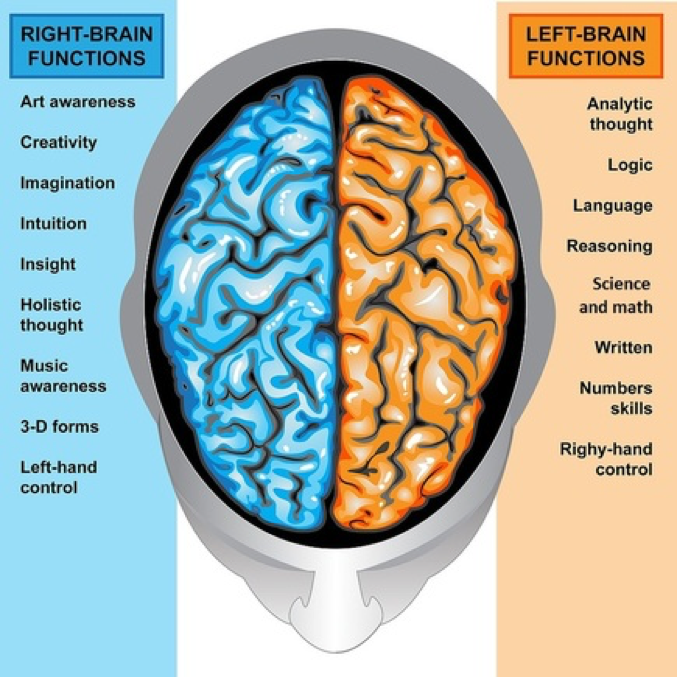
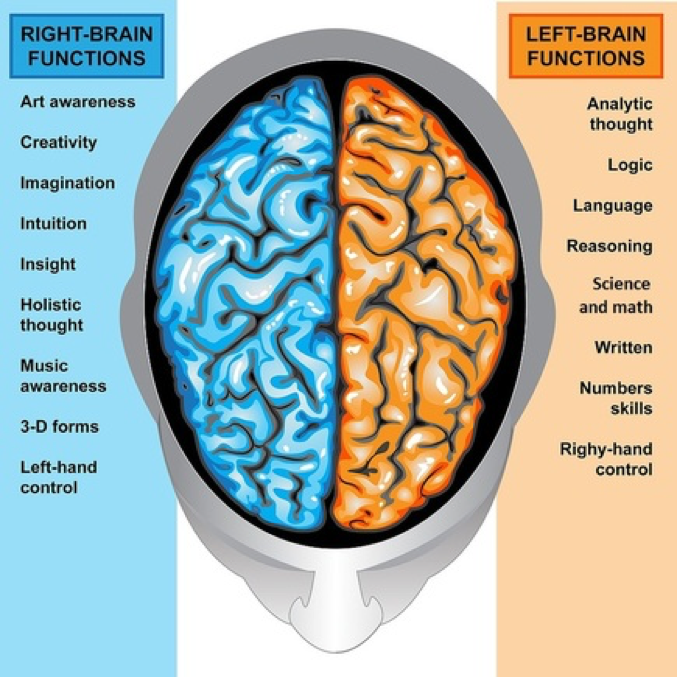
    In the left brain (yellow) we think, control language, do science and math, control our right hand

    In the right brain (blue) we do art, imagine, have intuition,  3-D forms, music, left-hand control
    In the left brain (yellow) we think, control language, do science and math, control our right hand
    In the right brain (blue) we do art, imagine, have intuition, 3-D forms, music, left-hand control
    In the left brain (yellow) we think, control language, do science and math, control our right hand
    In the right brain (blue) we do art, imagine, have intuition, 3-D forms, music, left-hand control

    Sensations

    Sensations are the nerve stimulation of our approximately 25 physical   senses. (Yes, we have more than 5 senses.)

    All sensations go from the sensing organ to specific brain locations.

    All sensations traveling along the nerves from the sensing organ to the receptor part of the brain are of exactly the same type.

    They are interpreted and differentiated by the location to which they travel.

    The Synthesis

    These we have shown are not all the parts of the human brain, but they are major components.

    No one has yet satisfactorily scientifically explained how we see.

    But we do see.

    Somehow we put all the sensations together and form a world in

    our imagination. Imaginations are most vivid when we are

    actually sensing something.

    We have the illusion that when we are sensing, we touch reality.

    Reality

    But reality is also a figment, a creature of our imagination.

    To call something real is simply to say we are quite sure of it.

    But we make enough mistakes that it pays to be humble.

    When we are humble, we say “It seems to me that . . . “

    When we are not humble we say “I am sure that . . . “

    Sometimes our life depends upon being sure enough of our

    sensations that we are able to avoid trouble, as when we step

    out of the path of a speeding automobile.

    Where we live

    So we each live in the world of our imagination, inside our heads.

    We form images of where we live and the surroundings of that place.

    We form images of the people we know, ascribing to them various

    character traits, personalities.

    We form images of the rest of the world we do not now see.

    We form images of the rest of the universe we do not now see.

    We form images of the past, which we cannot see.

    We form images of the future, which we cannot see.

    And thus we live, move and have our being and doing in the world of our images.

    Rebuttal

    But, you say, there really is a reality out there that is not just our imagination. Let me prove it to you by punching your arm. Now, doesn’t that hurt? See, there really is a reality out there.

    I must agree with you that there is a reality out there. It is just that we see that reality only through a glass, darkly. That glass we see through darkly is our flesh, our physical bodies. We thus know we are in a real world. But we are really sure about only some things, and those are not the most important things.

    Example of an illusion: The Necker Cube: Which is the near corner, upper or lower?

    Example of an illusion: The Necker Cube: Which is the near corner, upper or lower?

    The world is full of Necker Cubes

    Every person we meet is like a Necker Cube. We imagine a character for them. We tend to believe our imagination about them is the truth.

    The future, the past, and everything we are not now sensing exist in our imagination, and we determine and control what we believe about them.

    Most of what we think we know we only imagine. And a lot of what we perceive is like Necker Cubes where we must choose an interpretation.

    Conclusions about perception:

    Perception is absolutely necessary to relate to the real world around us.

    Perceiving accurately and surely is done only in environments where we are very familiar with what we are sensing and doing.

    If we are not familiar with what we are sensing and are unable to do anything in the situation, we need to be humble about what we believe we are sensing because we are only guessing.

    Only what we can do over and over is sure to us. But we have no guarantee the future will be like the past. If we think we are sure about the future, we need to realize that that surety is only a hope.

    1. Reason as a source of knowledge

    There are three basic forms of reasoning:

    Deduction: Drawing justified conclusions from given premises.

    Induction: Drawing possible or probable conclusions from given arrays of data (observations, perceptions).

    Adduction: Inventing premises for a conclusion we already have.

    Examples of Deduction:

    Given the premises:

    All men are mortal.

    James is a man.

    We may surely conclude that:

    James is mortal.

    Thus deduction makes explicit the relationships of ideas we already have.

    Other examples:

    When you add up all your checks and deduct that amount from your bank balance, you can find out (become psychologically aware of) how much money you have in the bank.

    If you know the weight of an object, you can calculate the energy required to lift it 10 feet.

    Examples of Induction:

    Given that your back yard has been visited by skunks the last four nights, you may reasonably conclude that skunks will visit again tonight. But you cannot be sure that they will.

    You friend has lied to you several times about what he has been doing for the past month. You may reasonably conclude that he is lying to you now about something else. But you cannot be sure he is lying just because he lied before.

    Your friend has remembered your birthday every year for the past ten years. You may reasonably expect him to remember again. But you cannot be sure he will.

    Examples of adduction:

    Given the conclusion that your friend is acting very strangely, you might think:

    My friend has suffered the death of a beloved sibling.

    When people suffer the death of beloved siblings they act strangely.

    Therefore, my friend is acting strangely.

    Or you might think:

    My friend has been drinking too much.

    When people are drunk they act strangely.

    Therefore, my friend is acting strangely.

    Conclusions about the three ways of knowing by reasoning:

    Deduction is always sure but produces nothing not in the premises.

    Induction is always guesswork, never sure, but can be very useful, producing ideas that often work.

    Adduction: There are always an infinite number of reasons that can be invented to justify any given conclusion.

    To use our power to reason is good, but it does not produce sure knowledge. It’s main help is to allow us to be consistent with ourselves.

    Conclusions about reasoning:

    It is usually good to be rational (consistent) in trying to know.

    No one can be said to be totally rational about what he or she thinks they know. All reasoning begins with premises we cannot prove.

    Anyone who claims to be totally rational about what they think shows a lack of understanding of what reason is and can do.

    Since we cannot be totally rational about knowledge, we all live by faith. Faith, the things we believe but cannot prove, is where we      get all of our initial premises for reasoning.

    1. Experimentation as a way of knowing.

    Doing is a form of knowing.

    Doing what we can do, and doing it over and over, gives us surety that we know what we are talking about.

    Experimenting is trying to do something for the first time.

    When we experiment, we usually have a goal in mind, something we are trying to achieve.

    If we achieve our goal, we think we have an understanding of one of the ways the universe works.

    As we repeat the experience, we become settled in our confidence about what works. This is experimentation, or “pragmatism.”

    A Human life is actually one big experiment:

    A human baby lives by trying first one thing, then another.

    First, it learns to breathe, and then to eat and sleep.

    It looks around and begins to form images and expectations out of the    sights and sounds and feelings and odors it experiences.

    The baby learns to experiment to produce more of what it wants and      less of what it doesn’t want.

    The baby’s attempts to produce what it wants and avoid what it doesn’t want become habits.

    Habits become a character, a personality, as the individual shapes himself or herself.

    Personality (character) is the fruit of human living.

    Every human life is a chain of successful and unsuccessful experiments.

    The successful experiments lead us to repetition, which is the mother  of learning.

    As we learn to cope with the universe, we develop ideas: structures and   sequences which we think are the reality of where we find ourselves.

    The more successful is our coping with the universe to fulfill our desires, the more sure we become of the structures and sequences we have built as our understanding of the universe.

    We turn our ideas of structure and sequence into what we call “knowledge.”     This knowledge becomes part of our personality, our character.

    The core of human knowledge is the result of successful experimentation.

    What we really know in this world is the ideas we find help us to fulfill  our desires, a core of ideas that “work” over and over.

    We then add to that core of ideas, ideas formed by communicating with others. This is not knowledge, but rather belief.

    If we can fit what others tell us is consistent with our core of knowledge, we tend to believe. If the things we are told don’t fit, we either accept those ideas as blind belief, reject those ideas, or experiment with them to see if we can make them fit with our core knowledge.

    Until we have tried an idea for ourselves, it is not knowledge to us.

    We humans are quite capable of being irrational:

    When we have great respect or affection for persons who tell us things  about the universe, some of us tend to believe those ideas, even when they do not fit with our core knowledge.

    Some persons are “hard-headed,” “from Missouri,” and refuse to believe what does not fit with their experimentally produced core knowledge.

    Gullibility, the willingness to believe others persons without experimenting on what they tell us, afflicts most human beings.

    Gullibility makes propaganda a social force used to control populations.

    We live in a sea of propaganda (lies and half-truths). Examples:

    Much of the “news” we are given by media sources is propaganda.

    A lot of what is taught in schools is propaganda.

    A lot of the substance of gossip is propaganda.

    A lot of what is taught in churches is propaganda.

    A lot of history is propaganda.

    A lot of so-called “science” is propaganda.

    What politicians tell us is often propaganda.

    What we tell ourselves is the real truth is often propaganda.

    One cure for propaganda is personal experimentation, being “pragmatic.”

    If someone tells us a certain medicine works, we can try it for ourselves to see if it works for us.

    If someone tells us there is a formula for making money, we don’t have to believe them, we can just try it for ourselves.

    If someone tells us a certain political expediency is what is best for our country, we can look for where the idea has been tried to see if it worked.

    If someone tells us a certain religious practice is helpful, we can try it for ourselves to see if it really works that way.

    Experimentation is a great help in knowing

    Sooner or later, most humans learn that it pays to take what others say with a “grain of salt.” In other words, it is not usually useful to be gullible.

    As we build up a store of ideas that really “work,” we begin to have confidence that we really are figuring things out.

    Our store of ideas that “really work” is the basis of our life accomplishments. As we implement those ideas, what we do becomes our “works.”

    1. Authoritarianism: Gaining ideas from other human beings.

    As we watch what other humans do, we gain ideas as to what we might do ourselves. Example: We watch others ride a bicycle, then experiment ourselves until we can also ride a bicycle.

    But most of our ideas from others come from verbal communication.      We learn a “mother tongue,” and that becomes our major link to the world of people.

    As others speak to us, we are busy in our imagination inventing meaning for the noises and gestures they display, and often find great pleasure in listening to them. Communication becomes a major part of our human living.

    There are four parts to every communication:

    If we really understand someone who is communicating with us, we must fix on four things:

    1. What is the intent or purpose of the speaker.
    2. What is the message of the speaker.
    3. The power of this message: It’s truth or importance.
    4. The consequences of accepting or rejecting this message.

    But most humans do not carefully sort out these four things. We tend to be gullible and just accept as so what the speaker says. Because of this, most human minds contain a lot of garbage.

    Conclusions about Human Communication:

    We are flooded with communications from others.

    That process of receiving communications often keeps us from thinking for ourselves and is always a mixture of good and bad.

    It is difficult for humans accurately to sort out the good from the bad.

    Any idea we accept from another person is always belief or faith. It may be their knowledge, but it is not knowledge to us, even if true.

    We live in a communication jungle that helps or hurts us at every turn.

    1. Imagination as a source of knowledge

    We synthesize our sensations into a world we imagine, and fill in all the blanks with our imaginative inventiveness.

    We look at the body of a person and imagine to ourselves what goes on inside them, their thinking and feeling, desires and future.

    We see the present moment, and with the aid of memory and what others tell us, we invent all of the past and future in our       imagination.

    We hear of events in distant places, and imagine them.

    We live in the world of our own imagination. And we tend to believe ourselves.

    And  our imagination is very useful:

    We do all of our planning in our imagination.

    We do all of our remembering in our imagination.

    We do all of deciding in our imagination.

    The universe we grasp only in our imagination.

    We decide we have or do not have a Heavenly Father and a Savior in        our imagination.

    If we did not have an imagination, we would not be a human being.

    Imagination makes Science possible

    Science is man’s collective attempt to understand the universe using     only perception, reason, experimentation, and imagination. Most scientists specifically try not to include any information from a spiritual source. Thus science is the delight of the natural man.

    Being blind to all of spiritual existence, science does better when dealing with material things such as physics and chemistry.

    But science stumbles when it ignores all spiritual existence, as in psychology, sociology, political science.

    But social scientists do not think they stumble. They tend to think they are “emancipated” by pretending spiritual things do not exist.

    Imagination makes History possible:

    History is the imaginative invention of a story of the past. It is based in documentary evidence about the past, but its creation is always a controlled by the beliefs and imagination of the historian.

    History is rewritten in every generation to satisfy the changing prejudices of historians.

    In a real sense, all historical accounts are fiction. The word “fiction” comes from the Latin “faceo” which means to make or do. All historical accounts are made up by historians taking the beads of ideas gleaned from documents and stringing those beads on a                 narrative string of their own prejudices.

    Shall we then discard Science and History?

    No, we should not discard science and history. Both are interesting, often         useful, often helpful, though sometimes disastrous.

    Science and history should be taken with a grain of salt. That salt is the skepticism we should attach to all human endeavors.

    In all human endeavors we are dealing three kinds of people: 1) the natural man who knows not God, 2) the natural man who thinks he knows God, and 3) the man who does know God. Each produces different beliefs, actions and societies.

    Science and history are at their best when invented by men who know God.

    1. Knowledge of Good and Evil:

    Knowledge not only relates to what is true and false, what works and what does not work, but also to what is good and bad: values.

    Some think that all values are environmentally stimulated by the persons who influence a given person.

    But we see examples of people who are different from the persons of their environment.

    Within each normal human being there is what is called a “conscience.”

    Conscience is the Light of Christ, which lightens every person who comes into this world.

    The Mission of Conscience:

    Conscience gives us feelings about what is good and bad to do and say.

    But the voice of Satan is always with us to give us a choice agency.

    Choosing good over evil is what separates the sheep from the goats.

    Conscience seems to be the key to all further spiritual knowledge.

    When humans ignore their conscience often, it stops functioning. They are then “past feeling.”

    Possibly those who are “past feeling” cannot escape being “the natural man.” Examples: Laman and Lemuel.

    1. Personal Revelation as a way of knowing:

    Personal revelation is communication of God to mankind through the Holy Ghost.

    It comes in many forms: To heart (feelings); to mind (ideas), to strength (health), and to might (prospering). But illness and bankruptcy can also be revelations from God.

    Those who really understand revelation see the hand of God in all things.

    Different forms of Personal Revelation:

    • New understanding of a scripture.
    • Confirmation that what someone else is saying is true or false.
    • Feeling that something we plan to do needs more planning.
    • Understanding what unusual thing will happen next.
    • Confirmation that someone we are asked to sustain is the Lord’s choice.
    • Help with preparing a talk or a letter.
    • Help teaching a class.
    • Guidance as to what to say when speaking and praying.
    • Seeing a vision, having the heavens opened.

    The Holy Ghost is the Pearl of Great Price

    If we desire to be righteous (to bless others as God does), there is no greater aid than receiving the Gift of the Holy Ghost.

    Having the Holy Spirit as our constant companion should be our Number 1 priority. We should try with all our heart, might, mind and strength to have the Holy Spirit as our constant companion.

    Attaining the companionship of the Holy Spirit is what turns a Latter-day Saint (a member of the LDS Church) into a saint (a holy person, one who is forgiven of his or her sins and does only righteous acts).

    ”And by the power of the Holy Ghost ye may know the truth of all things.” (Moroni 10:5)

    How to gain the constant companionship of the Holy Ghost: The Precious Gospel Formula

    1. Faith in Christ: Put our whole trust in Him. This is what makes it possible to become whole, holy.
    2. In that trust in Christ, repent of all of our sins.
    3. Make a covenant with God to keep all of his commandments by being baptized.
    4. Receive the right to the Gift of the Holy Ghost by the laying on of hands, then working until we actually receive the Gift of the Holy Ghost.

    Why Receiving the Gift of the Holy Ghost is not the End but the Beginning of Salvation.

    Receiving the Gift of the Holy Ghost is entering the gate.

    We must also endure to the end.

    The end we should all endure to become like Christ.

    As we obey God through the Holy Spirit in all things, we become a new creature, remade in the image of Christ’s character.

    But remember, there are three voices in our minds: Satan, our own ideas, and the Holy Ghost. Deciding which one to follow is our agency. Learning to follow only the Holy Ghost is the key to enduring to the end.

    To become as Christ is the goal, the end to which we may all endure.

    The Gospel of Christ is the Good News

    The precious Gospel five-step formula is the greatest message on earth.  No other compares with it in importance.

    Part of that good news is that every normal human being can complete the precious five-step formula.

    No one can complete the formula without help. That help is called the “grace” of God.

    God is willing and able to bless us to complete the process of changing   us from a natural man to the stature of Jesus Christ himself.

    Summary of the ways of human knowing:

    Through the ordinary human ways of knowing the truth about the universe in which we live, we see through a glass, darkly. We see enough to live our human, animal lives with some success.

    This is a possible rank order of the ordinary ways of human knowing, most reliable to least reliable:

    • Experimentation
    • Perception
    • Reason
    • Authoritarianism
    • Imagination

    But if we add ways of knowing from God

    If we first pay attention to what is good and what is evil, and choose to do the good instead of the evil through the Light of Christ, then:

    God will eventually, in this world or the next, make the fullness of the Gospel of Jesus Christ, the “good news” available to every human.

    Then, if we so choose, we can receive the Gift of the Holy Ghost, which makes God our Senior Companion in all that we want, feel, say and do.

    The Gift of the Holy Ghost then leads us to perform the best experiments, perceive truly, reason wisely, know what other persons to believe and who not to believe, and to imagine wisely and fruitfully.

    Only using the Gospel of Jesus Christ can we fulfil our human potential.

    When are you an expert witness, one whose testimony really counts?

    • Your are an expert witness when you are bearing testimony of something you can do, do do, and have done over and over.
    • When you are bearing testimony of something you have personally and often experienced: Seen, heard, touched, smelled or tasted.
    • You are not an expert witness about the things you hope for, desire, or dream about unless others want to know what you hope for, desire, or dream about.
    • When you bear testimony as an expert witness, you bless your hearers: They then have access to truth through you.

    Conclusions about Human Knowing:

    We human beings really know only two things:

    1. That which we can do, do do, and have done many times.
    2. The perceptions we have had about very familiar things.

    Someone who has either of those two things is an expert witness.

    Everything else we have in our minds is not knowledge, but rather belief.

    We humans know very little, but believe a lot of things.

    We would do well to treat all the statements of expert witnesses as something to be tested by our own experiments and experience.

    “Prove all things; hold fast to that which is good.” 1 Thessalonians 5:21

    Part Two: Applications of what we know about human knowing:

    We will concentrate on four applications:

    1. Organic Evolution as a theory of science.
    2. Adam and Eve as the first human beings (history).
    3. The attempt to solve human social problems.
    4. The location of the Book of Mormon lands.

    Organic Evolution

    Organic Evolution is the scientific theory that life came to exist on this   earth an by spontaneous generation (chance), and that all present living animals and plants are descended from that  spontaneous generation as shaped by environmental forces.

    Science is ideas about the universe consisting of:

    Facts: Things sensed, perceived.

    Laws: Generalizations of observed facts.

    Theories: Ideas invented to explain laws and facts.

    There are always and infinite number of theories possible to explain any given set of facts and laws.

    Organic Evolution is one of many possible theories to explain the universe.

    No scientific theory can be proved to be true because all theory consists of things which are purely imaginary, not perceivable.

    Scientific theories can be falsified if their logical consequences are not observed.

    Choosing among possible theoretical explanations of observed facts and laws is a personal choice of the persons choosing.

    Every one who chooses to follow Darwin and to believe in organic evolution does so because they want to, not because any evidence makes that choice necessary.

    Major problems with the Theory of Organic Evolution:

    1. The theory depends upon the idea that life formed spontaneously. There are no examples of spontaneous generation of life known to mankind. (This is a major problem.)
    2. The theory depends upon one species of life form changing into another species. There are no examples of one species changing to another species known to mankind. (This is a major problem.)
    3. The theory depends upon there being an immense amount of time in the past since life on earth began to be: Millions of years. The age of the earth is a theory itself. (This is a major problem.)
    4. The theory defies the Law of Entropy: Natural systems disintegrate (run down) as they lose heat. (This is a major problem.)

    Why are some people willing to believe in the spontaneous generation of life?

    Some believe that because so many other people believe it.

    Some believe that because if it is true, there is no need for God and therefore no need to repent, and they don’t want to repent.

    Some believe that because they think (mistakenly) that scientists are never wrong.

    Some believe that because they do not think very carefully.

    Why do people believe that species beget other species? (Speciation)

    Some believe this because speciation is absolutely necessary to the theory of organic evolution, and they desperately want that theory to be true.

    Some believe this because they are shown different animals and plants in the fossil record that resemble one another, and they want to believe that the change represents the natural emergence of a new species. But there is no way to know that one form is ancestral to another.

    Some believe because so many other persons who they respect believe in this idea.

    Why do people believe life has been on the earth for millions of years?

    Some believe because they have been told this idea all of their lives.

    Some believe in an earth millions of years old because it is necessary to the theory of organic evolution, and they desperately want the theory of organic evolution to be true.

    There are many theories as to how long life has existed on earth, but there are no proofs of any of these theories.

    Why do people disregard the Law of Entropy?

    Some disregard it because they believe in evolution and use organic evolution as a proof that the Second Law of Thermodynamics (The Law of Entropy) is not true.

    Some disregard it because they have limited experience with the natural world and suppose that order can naturally come out of disorder.

    The watchmaker objection seems trite to some. To find a running watch on the beach and to suppose the winds and the waves put it together seems perfectly logical to some people.

    Conclusion: The Theory of Organic Evolution is built upon other pure theories, not on facts or laws. It is wishful thinking.

    Notwithstanding the theory of organic evolution is widely taught and believed, especially at universities, it remains suspect and unprovable.

    There are no expert witnesses who can give evidence that the theory of organic evolution is true. (Though some would like to claim to be such expert witnesses.) No one can do evolution or has seen it.

    The main present-day argument for the theory of organic evolution is that so many people believe it.

    A great many people also believe in Santa Claus.

    1. Adam and Eve as the first human beings (History)

    To write history is to invent what happened in the past on the basis of evidence available in the present time.

    To write prophecy is to invent what will happen in the future on the basis of evidence available in the present time.

    To write history is much safer than writing prophecy, because the future will become the present and we will all know which prophecies are correct.

    But history will never again become the present, so historians can say anything they want to and not be found out.

    The story of Adam and Eve is automatically rejected by most historians.

    To accept the story of Adam and Eve as the ancestors of the human race would be to accept the Bible a historical record, which almost no scholars are willing to do.

    So historians fall in with the theory of organic evolution and postulate that human beings are one fruit of a long evolutionary process, having descended from some ape-like creature. The fact that there is less evidence for that evolutionary theory than for the Biblical account does not bother them. They of course reject the evidence for the Biblical account because the Biblical account has God and a supernatural spiritual realm as part of it, which things are anathema to the natural man.

    Some people try to marry the story of Adam and Eve to the theory of Organic Evolution

    Some postulate that Adam and Eve were ape-like creatures to whom God gave a conscience and superior intelligence and they then became human beings.

    That postulate flies in the face of three things we are told about Adam and Eve and the Garden of Eden:

    1. There was no death in the Garden (on earth?) until Adam and Eve fell. Adam became mortal because he transgressed. All nature became mortal with him.
    2. Before the fall, Adam and Eve were celestial beings and had spirit matter in their veins, not blood.
    3. Adam and Eve were literally of the race of the gods. (Otherwise, Mary could not have been the mother of Jesus.)

    The Fall of Adam and Eve is central to Faith in Jesus Christ

    There are three things about the story of Adam and Eve that are crucial to faith in Jesus Christ.

    1. Adam chose to disobey God and therefore fell.
    2. In his fallen state, Adam and all his posterity are dead to the spiritual existence around them.
    3. Being fallen, therefore becoming carnal (trapped in a physical body), sensual (sensing only with the physical body), and devilish (subject to the temptation of Satan through the flesh), Adam and his posterity were in need of a redemption to spiritual life and the presence of God.

    Redemption from the Fall of Adam comes only in and through Jesus Christ.

    It takes supernatural power to restore humans to spiritual life and to be able to abide the presence of God.

    It takes supernatural power to put humans beyond the power of Satan to continue to tempt them.

    It takes supernatural power to rescue the physical bodies of mankind from mortal death.

    These three things are principal features of what Christ does through his work of Atonement.

    Conclusions about Adam and Eve:

    Unless men and women have a correct idea of where they came from and what they are supposed to be doing in mortality, they will not accomplish what God sent them to do.

    God tells men where they came from and why they are here in the accounts of the Fall of Adam and Salvation through Jesus Christ.

    The world rejects both the correct understanding of Adam and Eve and the mission of Christ.

    Part of coming out of this world and not being of it is to gain a true understanding from the Holy Ghost both of Adam and Eve and the Fall and of the Redemption made possible by Jesus Christ.

    1. How can men create heaven on earth?

    If there was no fall of Adam, there is no need for redemption.

    If there is no need for redemption, there is no need for a Savior.

    If there is no Savior, mankind must save itself.

    The main salvation naturalistic thinkers envision is socialism.

    Socialism is humans appointing themselves to be the saviors of mankind.

    Socialists have only one goal: Total control of human society, using guns (force).

    Socialists seek total control of human society because they theorize they can then solve all human problems:

    Poverty, through government redistribution of wealth.

    Ignorance, through government control of all education.

    Disease, by government control of scientific endeavor.

    Crime, by government control of all neighborhoods.

    Opposition, by government control of all media.

    Christian values (which they see as an enemy) by government control of the upbringing of all children.

    Total Government Control is another name for Hell, the implementation of Satan’s plan

    Satan proposed in the pre-mortal existence to save all of mankind.

    Satan proposed to save all mankind by taking the power of God to force all mankind to live in a force-centered Utopia.

    Satan has tried ever since Adam and Eve to set up a Utopia on earth.

    Every attempt of Satan to establish Utopia has failed.

    The advocates of socialism want to keep trying to establish Utopia because they see no alternative.

    Present socialist half-measures are stepping stones to total control.

    The proper alternative to Utopia is Zion.

    Zion is a people who are pure in heart because of their own agency (choice) and the grace of Christ.

    In Zion, people have one heart: They all have pure, unselfish hearts.

    In Zion, people believe the same truths: they are of one mind.

    In Zion, people voluntarily work righteousness: every man seeks the interest of his neighbor.

    In Zion, there are no poor: those who have more voluntarily share with those who have less.

    Zion has been created on earth many times, so it is a real possibility.

    To make possible the establishment of Zion today is one of the main reasons the Gospel of Jesus Christ was restored in the latter days.

    Why do we not have a Zion today?

    We don’t have a Zion on earth today because so many Latter-day Saints are not willing to keep their covenants.

    Latter-day Saints are working hard on the other reason for the restoration of  the Gospel of Jesus Christ: To teach the Gospel to every nation, kindred tongue and people.

    But Latter-day Saints will never fully witness the value of the Restored Gospel to the world until we establish a Zion.

    We now say to the world “We have the wonderful, true Gospel of Jesus Christ to share with you. We can’t live it, but it really is true.”

    When there is a true Zion on earth, the world will have its second witness of Christ.

    The Restored Gospel of Jesus Christ is the one and only formula for saving mankind, both temporally and spiritually.

    The Holy Ghost bears witness to everyone who will accept that witness that Jesus is the Christ, the Savior of all mankind.

    Those who are saved by the Savior are different from those who are not saved. If they live the whole Gospel, they will establish a Zion. The existence of a Zion will become a witness that the Restored Gospel really does work and save people.

    Until we have a Zion, we Latter-day Saints, as a people, are “Mene, mene, tekel upharsin,” weighed in the balance and found wanting.

    But are there not some LDS people who live the whole Gospel of Jesus Christ?

    Yes, there are some members of the LDS Church who live the whole Gospel of Jesus Christ.

    If you put all of those people in one stake, they would establish Zion there.

    But then the rest of the Church would fall apart.

    The Authorities of the LDS Church are trying mightily to establish Zion.

    When we members begin to fully implement what they ask us to do, we will have a Zion.

    The engine that will finally create a Zion is the ordinances of the Temple.

    There are two keys to the establishment of Zion:

    Key #1: To study the Book of Mormon until we truly understand how to come to Christ and be perfected in Him. The Book of Mormon is the manual of instructions as to how to come to Christ and be perfected in Him.

    Key #2: Because knowing how to come to Christ is not enough, we must also have the power to come to Christ and be perfected in Him. That power is only obtained through the ordinances of the New and Everlasting Covenant, focusing particularly in the blessings and covenants of the temple endowment and sealings.

    Blessed are those who use these to keys unto perfect Faith in Christ.

    What will it take to get LDS people to use those two keys?

    God protects human agency above all else. Because he knows that only if his children voluntarily create Zion can they avoid creating Hell on earth and going to hell afterwards.

    We will establish Zion only when enough LDS people freely choose to keep all of their covenants.

    The Savior will never force anyone to create or live in Zion.

    When we Latter-day Saints want Zion more than anything else, we will establish it. Right now, too many of us are overcome by worldliness. At most, only half of the LDS church members will overcome the love of the world before He comes again.

    When we start loving our God and our neighbor instead of ourselves, we will have Zion.

    Selfishness is the great enemy of our souls.

    Selfishness is the gospel of Satan.

    Jesus Christ would have us live “outside ourselves in love.” And that love must be pure, the gift of charity from Christ.

    Therefore, seek after charity, for charity, the pure love from Christ, never fails.

    Charity is the gift of God to all who seek to make their eye single to his glory with all of their heart, might, mind and strength.

    If we gain charity, we will save our own souls and establish Zion.

    The inhabitants of Zion are all expert witnesses to the truth of the Restored Gospel

    Imagine if the world were flooded by expert witnesses who could say to the fallen people of this world: “Jesus Christ has come again and restored his true Gospel and Church. Look to Zion, and you can see that Gospel in action. It really does work. I know it saves mankind because I have participated in Zion and have there seen the Lord solve all human, mortal problems by helping them to have charity. You also can be part of a true heaven on earth by accepting Jesus Christ as your Savior and fully living His Restored Gospel in the Church of Jesus Christ of Latter-day Saints unto having this pure love from Christ.”

    What a powerful expert witness that will be. Then the powers of hell will be shaken forever.

    1. We turn now to the fourth application, the location of Book of Mormon lands.

    This discussion has full meaning only to those who have received the witness of the Holy Ghost that the Book of Mormon is the work of God. Otherwise the discussion is purely academic.

    Knowing the Book of Mormon is a true record of ancient peoples on this, the American Continent, we might then profitably wonder just where it all took place.

    Joseph Smith’s statement about the Book of Mormon:

    Joseph Smith said that the Book of Mormon is “the most correct of any Book on earth & the keystone of our religion & a man would get nearer to God by abiding by its precepts than by any other Book.”

    (Wilford Woodruff journal, Nov. 28, 1841, Church History Library, Salt Lake City).

    Notice that he did not say that the Book of Mormon is the keystone of the Church. He said it is he keystone of our religion. Our religion is our way of life, the habits of character we foster to endure to the end in our faith in Jesus Christ. That goal or end is to “come to the measure of the fullness of the stature of Christ.” Ephesians 4:13)

    The first business of an LDS person is to make our calling and election sure:( See 2 Peter 1: 5-10)

    Our calling is to become the children of Christ, become new crearures  remade in His image,  and to then inherit all he has and is.

    We can receive this inheritance only as we build spiritual muscle that will enable each of us NEVER to give in to the temptations of Satan.

    The commandments of God are given to us to build that spiritual muscle so that we could be trusted with godhood.

    The Atonement of Christ makes forgiveness of breaking the commandments of possible, but until we stop sinning, we cannot receive full forgiveness.

    Repentance is stopping sinning. Is that possible? Only in Christ.

    Don’t be taken in by those who say one cannot become perfect in this life.

    To become perfect means to become complete, whole, holy.

    To say we cannot become perfect in this life is to say Christ cannot save us.

    What he saves us from two things:

    1. The weakness of our character that allows us to sin. He gives us the knowledge and power to learn to keep all of his commandments, thus to build the spiritual muscle necessary to be able to stand godhood.
    2. Christ also saves us from the penalty due for having sinned.

    Satan will try every way to divert us so that we will not fully repent.

    Satan will fill our minds with lies (like: you can’t become perfect).

    Satan will fill our hearts with lusts (like: you deserve to pleasure yourself)

    Satan will try to destroy our physical tabernacle (like: you ought to try using tobacco, alcohol, or other drugs)

    Satan will try to abort our mission in life (like: I’ll wait to have children until it is convenient)

    The solution? To love God with all of our mind, heart, strength and might, first and foremost.

    When our calling and election is sure:

    When we as a people learn to live the Gospel of Jesus Christ as given in the Book of Mormon we will be able to know everything we need to know and do everything we need to do.

    We will receive the sealed portion of the Book of Mormon plates. (This blessing is to the children of Lehi when they become faithful.)

    We will receive the full record of the Jaredites. (This blessing is to the Gentiles when they become faithful).

    Perhaps we will again have the Book of Lehi (the lost 116 pages)

    And we will be able to establish Zion again on the earth.

    In this setting, What about Book of Mormon Geography?

    Book of Mormon geography is a fascinating subject.

    I appreciate the scholarship of John Sorensen in his study of the archaeology of Meso-America and his contention that those are the Book of Mormon lands.

    I also greatly appreciate the work of Rod Meldrum and others in bringing to our attention the remains of ancient civilization in North America, urging us that they are the Book of Mormon lands.

    I find both of them giving interesting and compelling evidence and reasoning. But I honestly have to conclude that Book of Mormon geography is a red herring to me.

    A Red Herring is a diversion. Be not diverted.

    I lean towards the Heartland theory of Book of Mormon lands. Knowing where they are is important.

    But there is something that is 100 times more important.

    The priority of Latter-day Saints should be to:

    1. Come unto Christ and be perfected in Him.
    2. To establish His Zion.

    When we have done those two things, we will not only know what are the true Book of Mormon lands, but a lot of other precious things also.

    So let us be about doing those two things, first and foremost.

    Conclusions about Human Knowing:

    Humans know best what they can do. So treasure the testimony of the expert witnesses: the doers.

    We humans know least about the things we cannot now experience. About those things we invent theories. Appreciate the ideas of those who talk theory. But take it all theory with grains of salt.

    Remember: All human supposing of the past is theory. All human supposing of the future is theory. So learn about the past and the future only from God, for whom they are not theory.

    Great doers:

    The greatest doer is Jesus Christ himself: He lived a perfect life, He fulfilled his mission completely, he wrought the Atonement to reconcile every child of God who will receive it to come back to be with and live the life of God the Father, and brings about the best possible eternal happiness for each human being.

    Joseph Smith was a great doer. He was able to bridge between God and man to restore the fullness of the Gospel of Jesus Christ to the earth and to establish the Kingdom of God on the earth for the last time.

    Other great doers:

    Brigham Young was a great doer. He was the down-to-earth doer who was able to secure the continuation of what Joseph Smith established, to help the Latter-day Saints continue the Kingdom of God in the desert, to meet with good sense the challenges of every-day life.

    Thomas S. Monson is a doer who shows the way to love God by loving our fellowmen. As our leader-doer at the present day, he and the other General Authorities would have us reach out to all others in the pure love of Christ.

    Recommendations for the writings of doers:

    Dean Sessions is a doer who has learned to make fossils. I commend to you his Universal Model of science. His proofs of the Universal Flood are most impressive. If you want a fresh look at science and geology and to see good reasons why organic evolution is a false hypothesis, take time to investigate the Universal Model. See at https://universalmodel.com/

    David Allan is a doer who has learned to measure and calibrate time. I commend to you his book It’s About Time, wherein he tells you how to measure time and to establish simultaneity. His work with time was a critical factor in establishing GPS and other navigational aids. And as a disciple of Christ, he tells you much about living the Gospel. See at http://itsabouttimebook.com

    Other Doers

    Stephen Covey, our deceased friend, had much good to say about doing our human life. His book The 7 Habits of Highly Effective People is a good manual for living life as an intelligent human being. It is great terrestrial wisdom.

    But the greatest doer of all time is Jesus Christ. He create the heavens and this earth and all of us, and is our Savior. I commend to you all of his words about how to come to Him and to our Father in Heaven to become an eternal doer of righteousness. Please don’t accept any human being as your Savior.

    My plea to you today: Come unto Christ

    The best thing any of us can do for this world is to come unto Christ, all the way, until we are filled with and show His pure love.

    Then we will establish Zion, get the rest of the scriptures that are promised to come forth, and each fill our missions.

    Please show love and tenderness for those who do not believe in Christ, and for those who do believe in organic evolution, that Adam and Eve evolved, and that the solution to our political problems is socialism. And treat them that way even if they don’t treat you that way.

    Above all, let us be humble before Christ and our Father in Heaven,  that their will, not our will, be done on this wonderful earth.

    Conclusion:

    I bear my witness that Jesus is the Christ, that He lives and answers prayers, and that He tempers the elements for his sheep who are shorn of pride. There is no more intelligent thing to do for any human being than to search out a knowledge of this Christ. And then we can waste and wear out lives out in loving and serving Him with all of our heart, might, mind and strength by tirelessly sharing all we have with our neighbors in His pure love.

    In the name of Jesus Christ, Amen.

  • Why is There Evil?

    Chauncey C. Riddle

    Can you tell what the problem of evil is?

    Why it is a problem?

    If it is true that God is all good and omnipotent how come the world is so evil?

    It’s important to understand this problem. Why is this an important problem? But you see the question is, does it have to be this evil? Is it necessary that the world be this evil to accomplish its objective? For instance, during the millennium everyone will have just as much agency as they do now but the evil will be reduced on the order of 90%. So one wonders, we have to put the problem just right. It’s true that it’s related to agency and we must understand that.

    Is God good?

    Yes, he is. What do you mean by that? What does good mean? But if you say God is good and you don’t know what it means, what are you saying? What do you mean when you say God is good? OK, but what is evil? So God never promotes anything that hurts you? So God is mostly good. No he’s metaphysical to you. But you have an image of him in your mind. Is your image that he is all good or mostly good? All good. Then you have some explaining to do, don’t you?

    Can he control the rocks?

    Can he make a rock so big that he can’t lift it?

    No. So there are some things that he can’t do. That’s an old catch question. You see that’s what you ask people when they say God is omnipotent, that he can do anything. Then you say can he make a rock so big that he can’t lift it? Which is what you see involving in something which he can’t do. Either he can’t make a rock so big that he can’t lift it. So there’s something he can’t do. So he’s not all powerful. How do you get out of that? You just point out that it’s a contradiction to start with. That’s just a bad question.

    Don’t try to answer all questions. Only answer good questions, that’s a bad question. But anyway we have to come to some sense of how much power God has. So would you say that God could do everything or anything? Or is there something he can’t do? He can do everything but violate agency? It’s impossible for a human being to lose his agency? Is that what you’re saying? So you don’t want to say that. So the question comes back, are there any limitations on God’s power? Is there something he can’t do?

  • Devils

    Encyclopedia of Mormonism
    See this page in the original 1992 publication.
    http://eom.byu.edu/index.php/Devils

    Author: Riddle, Chauncey C.

    In LDS discourse, the term “devil” denotes anyone who promotes the cause of evil, but it is especially applied to those unembodied spirits who rebelled against God in the premortal life and were cast down from heaven to this earth. The devil, who leads them, is also known by the personal names of Lucifer in the premortal existence and Satan since being cast down.

    The name Lucifer means “light bearer” in Latin and is a translation of the Hebrew Heylel ben Shakhar, which means “herald son of dawn” or “morning star.” In the premortal life, Lucifer was an angel having authority in the presence of God. He played a prominent role in the Council in Heaven. After the Father in Heaven offered the plan of righteousness to help his children become as he is, Lucifer countered with an alternative plan.

    The Father’s plan was to save and exalt all of his obedient children. To be obedient, they must keep his commandments and do good. In the Father’s plan, it was foreknown that many would reject exaltation and therefore would receive lesser glories.

    Lucifer’s plan proposed to “save” all of the Father’s children by forcing each to obey the Father’s law in all things. Lucifer desired that he be rewarded for this great feat of saving everyone by having the Father’s honor and glory given to him personally. Because mortals can be saved only in their own freely chosen repentance, Lucifer’s proposal was rejected. In the ensuing war in heaven, he gained the allegiance of a third of the Father’s spirit children. Lucifer and his followers were then cast out of heaven to earth, where he became Satan and they all became devils (Moses 4:1-3D&C 29:36-37;76:25-38).

    The name Satan comes from a Hebrew root meaning “to oppose, be adverse,” hence “to attack or to accuse” (see Rev. 12:10). On this earth the role of Satan and his fellow devils is to attack the working of righteousness and to destroy it wherever possible (Moses 4:4D&C 10:20-23;93:39).

    Righteousness is the condition or action of accomplishing the greatest possible happiness for all beings affected. The attainment of full righteousness is possible only with the help of an omniscient and omnipotent being. This full righteousness is the special order of the Celestial Kingdom where the Father dwells. When the Father’s will is done and his order is in place, every person and every thing attains, or is attaining, the potential he, she, or it has for development and happiness. This righteousness is the good of “good and evil.” It is to be contrasted with those human desires that are contrary to the Father’s order and will.

    A good (righteous) person is an agentive being who chooses and accomplishes only righteousness. No mortal is intrinsically and perfectly good, nor can a mortal alone rise to that standard (Matt. 19:17). But mortals can do righteous acts and become righteous through the salvation provided by Jesus Christ. Christ is the fountain of all righteousness (Ether 12:28). The children of God can achieve the Father’s order of righteousness through Christ if they choose that order in explicit rejection of evil.

    Evil is any order of existence that is not righteous. A state of affairs, an act, or a person not in the order of righteousness is thus evil. Letting one’s neighbor languish in abject poverty while one has plenty, or stealing, or desiring harm for another person are all evils. Satan promotes evil everywhere he can, to thwart the righteousness of God (see D&C 10:27). Thus, Satan tempts people to do evil instead of the Father’s will. Satan himself is not necessary to evil, but he hastens and abets evil wherever he can.

    Satan’s first targets on earth were Adam and Eve in the Garden of Eden. Knowing that the Father had commanded Adam and Eve not to partake of the forbidden fruit on penalty of death, Satan sought to destroy the Father’s work by enticing Adam and Eve to partake of it anyway. Satan’s success marked the beginning of the world (as distinct from the creation of the earth), of Satan’s kingdom on this earth (see JST, Matt. 1:55).

    By obeying Satan, Adam and Eve opened the way for him to have partial dominion over them, over the earth, and over all of their children (see Fall of Adam). Examples of his partial dominion over the earth granted by the Father are his ability to possess the bodies of animals (Matt. 8:28-32) and to use water to destroy people (D&C 61:14-19). Satan gained the power to tempt those who are accountable to do evil (D&C 29:39), to communicate with individuals to teach them things (usually but not always lies), to possess their bodies, to foster illness and disease, and to cause mortal death. He promotes sin, the doing of evil, which brings spiritual death to the sinner and misery to all those affected. In each of these opportunities, Satan’s power is limited: He can do only what he has specific permission from God to do (D&C 121:4Luke 8:30-33). His power may be taken away by individuals as they hearken to God and as they correctly use the holy priesthood to limit his operations (D&C 50:13-35).

    What Satan did not realize in Eden was that what he did in attempting to destroy the Father’s work was actually the very thing needed to fulfill the Father’s plan (Moses 4:6). People could not demonstrate their love of God and their willingness to do the work of righteousness sufficiently to qualify them for exaltation unless they were subject to, and able to overcome, evil and devil adversaries, such as Satan and his hosts (2 Ne. 2:11-22).

    On earth Satan is thus the father of deception, lies, and sin-of all evils-for he promotes them with vigor. He may appear as a counterfeit angel of light or as the prince of darkness, but his usual manifestations to mortals come as either evil revelation to one’s heart and mind or indirectly through other persons. His mission is to tempt everyone to choose evil so that each accountable human being’s choices can serve as an adequate basis for a final judgment.

    This earth life is a mortal probation for all those who have the opportunity to accept and live by the new and everlasting covenant while in the mortal flesh. Those who do not have a full opportunity in this earth life will have their probation extended through the spirit world existence that follows it. By the time of resurrection, each of the Father’s children will have made a final choice between good and evil, and each will be rewarded with the good or the evil chosen during the probation (Alma 41:10-15).

    When Satan tempts a person to do evil, there are limits to what Satan can accomplish. He can put before a person any kind of evil opportunity, but that evil is enticing only if the person tempted already desires that thing. When people are tempted, it is actually by their own lusts (James 1:12-15).

    Satan has power on earth only as individual persons give it to him by succumbing to his temptations (TPJS, p. 187). The agency of human beings is to choose righteousness through the Holy Spirit of God or to choose selfishness through the flesh by succumbing to Satan’s temptations (2 Ne. 2:26-29). (Human flesh is not evil, but Satan may tempt humans through their flesh.) Individuals who repent in this life are nevertheless tempted by Satan until their death; then Satan has no power over them ever again. Those who die unrepentant are still in Satan’s power in the spirit prison (Alma 34:34-35). All except the sons of perdition will eventually accept Christ and obey him, and thereby escape the dominion of Satan (D&C 76:110). Thus is the Father’s plan of agency fulfilled.

    Satan’s three temptations of the Savior may be seen as paradigmatic of all human temptation (see David O. McKay, Gospel Ideals, p. 154, Salt Lake City, 1953). The temptation to create bread and eat it when he should not represents the human temptation of the flesh, to sate the senses unrighteously. The temptation to cast himself down from the temple and to be saved by angels when he should not represents the human temptation of social acclaim. The temptation to receive the kingdoms of this world when he should not represents the temptation to have unrighteous dominion or power over others. The Savior did not yield to any of these temptations because his heart was pure and he knew that the way of righteousness lay only in doing the Father’s will in all things.

    All accountable mortals are tempted, even as our Savior was tempted. As mortals succumb, Satan gains power and earth life becomes a hell. Every person may resist temptation by choosing good over evil. But misinformation, evil cultural traditions (D&C 93:39), despair, and desperate human need all make the choosing of good difficult, even if the person does not particularly desire a given evil (cf. 2 Ne. 28 for an extensive description of the ploys of Satan).

    Through Jesus Christ and the partaking of his new and everlasting covenant, mortals have the opportunity to gain power to choose good over evil unerringly and always. As they do so, they are able to establish the righteousness of God and thus heaven on earth (Moses 7:18D&C 50:34-35see also Zion).

    Human beings resist Satan and evil by controlling their desires-that is, (1) by not desiring the evil that Satan proffers; (2) by gaining more knowledge so that they will be able to see that Satan’s temptations are not what they really want; and (3) by having their hearts purified by Jesus Christ so that they will no longer desire any evil but desire instead to do the Father’s will in all things (Moro. 7:48; cf. the Savior’s answers in Matt. 4:1-10).

    The great help in resisting temptation is the Holy Spirit. It is Satan’s business to dwell in and with all individuals who do not have the Holy Spirit with them, sometimes even gaining total possession of a person’s body, so that he or she loses agency for a time. Partial possession may also occur, for whenever a human being becomes angry, he or she is at least partially possessed by Satan (James 1:20).

    In his role as the destroyer, Satan can cause illness and death, but only with permission from God. He cannot take people before their time unless they disobey God and thus forfeit their mission (Job 1:6-12).

    As the father of lies, Satan has a disinformation campaign. He spreads false notions about himself, about God, about people, about salvation-all for the purpose of defeating acts of faith in Jesus Christ. Mortals believe his lies because the lies are pleasing to the carnal mind and because they promote or support the selfish desires of the individual who believes them. About himself, Satan tells people that there is no devil, that such an idea is wild imagination (2 Ne. 28:22). About God, Satan desires human beings to believe either that he does not exist or that he is some distant, unknowable, or forbidding being. He tells people that they are to conquer in this world according to their strength and that whatever anyone does is no crime (Alma 30:17). Favorite lies about salvation are either that it comes to everyone in spite of anything one does (Alma 21:6) or that it is reserved only for a special few insiders (Alma 31:17). These erroneous creeds of the fathers, fastened upon their children in the form of false creeds, are called in the scriptures “the chains of hell” (Alma 12:11D&C 123:7-8).

    Secret combinations are another devilish device for spreading misery and obstructing the cause of righteousness (Ether 8:16-26Hel. 6:16-32). Satan tempts selfish individuals to use others to their own oppressive advantage. Secrecy is essential to prevent retaliation by the victims and just execution of the laws against such combinations. Secret combinations involve personal, economic, educational, political, or military power that controls or enslaves some persons for the pleasure and profit of others.

    Satan also has influence over the spirits of wicked persons who have passed from mortality by death and who inhabit the spirit prison (sometimes called Hades). The inhabitants of this prison do not yet suffer cleansing pain, which will later come, but continue to be subject to Satan’s lies and temptations (Alma 4041). They also have the opportunity to hear the servants of Christ (D&C 138:28-37), and if they did not have the opportunity on earth, they now may repent unto exaltation. If they did have the opportunity on earth but did not use it, the spirit prison opportunity again allows them to reject Satan and his lies and temptations, but with the reward of a lesser glory (D&C 76:71-79).

    During the Millennium, Satan will be bound (Rev. 20:2). He will still be on earth, attempting to tempt every person, as he has since the Fall of Adam, but he will be bound because no one will hearken to his temptations (1 Ne. 22:26).

    Toward the end of the Millennium, Satan will be loosed (D&C 88:110-115) because people will again hearken to him. But he will be vanquished and sent from this earth to outer darkness, where he and his followers, both spirits and resurrected sons of perdition (Satan is Perdition, “the lost one”), will dwell in the misery and darkness of selfishness and isolation forever.

    Bibliography

    For a more complete treatment of the concept of the devil from an LDS point of view, see LaMar E. Garrard, “A Study of the Problem of a Personal Devil and Its Relationship to Latter-day Saint Beliefs” (Master’s thesis, Brigham Young University, 1955). EspThe Devil: Perceptions of Evil from Antiquity to Primitive Christianity (Ithaca, N.Y., 1977), Satan: The Early Christian Tradition (Ithaca, N.Y., 1981), Lucifer: The Devil in the Middle Ages (Ithaca, N.Y., 1984), and Mephistopheles: The Devil in the Modern World (Ithaca, N.Y., 1986) constitute a comprehensive history of the concept of the devil traced through literature, art, and philosophy from ancient times to the modern day. The presentation is a thorough and scholarly treatment but does not derive from an LD

    CHAUNCEY C. RIDDLE

  • An LDS Answer to the Problem of Evil

    Chauncey C. Riddle
    Brigham Young University
    c. 1984

    This work was stimulated by the BYU forum address of Professor Robert Nozick of Harvard University given March 1984.

    1. Statement of the problem: If God is good and omnipotent, why is this world so evil? If God is not good, the evil is understandable. If God is not omnipotent, the evil is understandable. But if God is both good and omnipotent, surely he would have created a better world than this one.
    2. Observation about the problem: This is a genuine problem. Human beings are finite; God is infinite. It is not possible for a finite being to understand fully an infinite being. Nevertheless, it is most important for human beings to come to a finite satisfaction regarding this problem.
    3. Observation about the historic solutions to this problem: Many of the historic solutions are good in that they lend understanding to the situation. No one of them is sufficient to stand alone. The problem is to find a combination of ideas which will bring satisfaction to finite human souls.
    4. Definitions are in order to clarify this problem:

    Good: To say that God is good means two things. It means that God is morally right in what he does. We shall henceforth express that idea by saying God is righteous. The other thing meant by saying God is good is that I like (love) God. We shall henceforth assume that to say God is good means I like (love) God.

    God: We define God as an exalted man, which is to say he once was a human being. But having sought for and attained righteousness and truth, and having learned to act according to them, he has progressed beyond the state of man. He is now a perfect (morally righteous) being, omnipotent (he can do anything which can be done because he has all the power which exists), omniscient (he knows everything about everything, past, present, and future), is a personal being of flesh and bone, and is the literal father of the human race. His purpose in creating this earth is to provide a situation where his children can (a) choose the degree to which they desire to become as he is; and (b) learn and develop themselves to become as he, God, is to that degree which they have chosen.

    The earth: The earth is the physical globe upon which the human race resides. It is governed by laws which God has ordained, and nothing happens in what we call “nature” except by his personal permission. Thus natural calamities as well as more desirable natural sequences are all manifestations of his will.

    The world: The world is the dominion of Satan on this earth. Specifically, the world consists of all human beings who hearken to Satan, and includes the social institutions and accomplishments of those persons. Nearly every adult human being is or has at one time been part of the world. The opposite of the world is those people who manage to establish a personal daily association with God which enables them to detach themselves from the world and to serve God, the Father, through his son Jesus Christ, according to the instructions each receives through the Holy Spirit.

    Evil: Evil is anything which is not as good as it could and should be. The standard of good is God. Whatever is created or done under instruction from God is holy and good. Whatever else exists or is done by the will of man or of Satan is evil. The commission of every godly person each day is to take something that is evil within his own stewardship and turn it into good through faith in Jesus Christ (direct obedience to the personal revelation one receives from God).

    • Why evil is allowed to exist: Evil in the world exists for three main reasons: (1) That every man may observe evil, compare it with good, and choose good or evil for himself; (2) That every man might be free to create and do evil, to see if that is what he really wishes to choose and promote; and (3) That those who choose to do good and become like God may have ample opportunity to grow towards becoming like God by many choices of good over evil and much experience in turning evil situations into good situations. Evil is not good, but the presence of controlled evil on the earth is good, because without it, man could not grow to become as God is. When the growth period for every human being has been fulfilled, then there will no longer be a need for evil on this earth and the earth will be cleansed of all evil. Then God’s will will be done on earth as it is in heaven.
    • Views of traditional answers to the problem:
    • “The world really is not evil.”

    An LDS view would say that the earth is not evil, nor is any natural event that takes place on it. Storms, lightening, volcanic eruptions, floods and cold winters are all the handiwork of a good God who is reminding all of his children that he is in control of all things and that perhaps they might wish to repent so that they would no longer need such reminders. It is true that the innocent often perish with the wicked in natural disasters. For that reason God gives the innocent another, opportunity to choose between good and evil and to repent to that degree to which they so desire. That opportunity takes place in sheol, or the world of departed spirits. If every person were born and lived at the same time and could not use his agency to bring adversity on others, such as his children, then the opportunity in sheol would be unnecessary. But it is necessary.

    • “Evil is an illusion.”

    The world is evil by definition, since it is the kingdom of Satan on earth. The world is no illusion, so evil really does exist, and in rather overwhelming abundance. But when people see natural events as evil, that is an illusion created by their misunderstanding of what is happening.

    • “The purpose of evil is to educate us.”

    This statement is partly true. We need to see evil as a possibility that we may choose. But we do not need to do evil to know of evil. There is sufficient evil around that no one languishes for lack of observation of it. Thus we are educated as to the difference between good and evil.

    • “Evil comes from free will.”

    Free will is free choice. Free agency is the power to carry out free choice. No human being is completely free, because only an omniscient being understands all the possible choices. No human being is completely an agent, because no human being is omnipotent. But to the degree which a person has knowledge, one does choose, and to the degree one has power, one does act to carry out that choice. As a person chooses other than the will of God and carries out that choice, that person creates evil in the world. If a person knows not God, then everything that person does is evil. Thus is the world created and perpetuated by the choices and acts of human beings. Yes evil comes because men are free.

    • “God is not the absolute creator.”

    This statement sheds some light on the situation. God is not the absolute creator in the sense that he created everything out of nothing and all creation thus is the fulfillment of his desire. God did not create the intelligences of human beings, which is the personality, the true self of each person. God did give each intelligence a spirit body and a premortal life with himself. He gives many a mortal body, and each person who receives that body is given an opportunity to live eternally with him in the resurrection. But God did not create some human beings to be good and some to be evil. Each human being is a cocreator with God in that each determines for himself what he shall become. Thus God is not the absolute creator.

    • “God’s justice and mercy are in tension, out of which comes the problems of the world.”

    This statement has an important element of truth for this discussion. God is love: he acts only to benefit the world. That righteous, pure, selfless love must abide the eternal principles which obtain, two of which are justice and mercy. Love is not pure or righteous unless it is just: God’s justice is that he is a lawgiver who cannot look upon defiance of his law with the least degree of allowance. For compliance with his law, God bestows blessing, even sharing all that he is and has with those who repent and learn to be completely obedient (who learn to love him with all of their heart, might, mind and strength.) But God’s justice also decrees an eternal damnation (stopping of blessing) for all who will not repent.

    God’s mercy is that he desires to forgive all men their trespasses against his law so that he can bless each one. But he cannot forgive unless they repent of their sins, lest he become unjust and deliver blessing where none is due. All men who become accountable sin because of the fall of Adam. Once a person has sinned, the Father’s justice demands that he be cast out forever to satisfy justice. Thus all mankind would be lost, were it not for the Messiah.

    God sends his anointed one, his only begotten son, to atone for the sins of every creature, that every’ man may become as though he had not sinned through repentance and acceptance of that atonement. Thus God is just in that he gives the law and demands an eternal satisfaction of that law, but he is also merciful in that he provides a way for a man who has sinned, and thus learned of evil first hand, to now turn from sin and become just. A man becomes just through faith in Jesus Christ, who teaches him how to live a sinless life henceforth. He becomes a just man-made perfect when he receives that merciful forgiveness of his sins from the Messiah, who has paid for his sins with his (the Messiah’s) own suffering. Thus God is both just and merciful.

    But God cannot be just and merciful, give freedom to sin and reward for not sinning without both allowing sin and paying for all sin allowed. So that same God who created this world by allowing Satan to come on this earth and have a kingdom then pays personally for every jot and tittle of sin which he has allowed, that he might provide a means by which men can be forgiven and become as God is.

    Evil is allowed to exist on this earth so that God can be just, and give his law by which men may be exalted. Men may choose to abide that law of their own free agency, and thus become one with God to share all that he has. But God must also be merciful to those who sin but are later sorry, that they may repent, learn to live by God’s law, and be exalted. God could not be just without giving men both law and agency, whereby they sin and create evil. He cannot be merciful without providing a Savior to show them the way out of sin and to forgive them. The tension between his justice and mercy indeed is the occasion for the freedom of man, which makes evil possible on this earth.

    • “This is the best of all possible worlds.”

    Yes, this is the best of all possible worlds, if what you have in mind is the moral development of mankind. If what’ one wants is the most peaceful and physically non-threatening place which could exist, then this is not the best of all possible worlds for such an one. But if what is desired is a place of freedom, where a man must rely on his heart, his true desires, to choose between good and evil, and where those who choose good will have a virtually unlimited quotient of evil to turn to good as they progress toward becoming as God is, then there could be no better place for such an one to be than on this earth. This earth is the most wicked of all the many earths which God has created. As an incubator for gods and devils, a place where every person may seek and find exactly that pattern of moral choices which he wishes to pursue, this earth and its present world are without peer. They cannot be improved. This is the best of all possible worlds.

    • The tests for an answer to the problem of evil.
    • It must preserve the traditional view of God.

    The question is, whose tradition? The view of God here presented is certainly not “traditional,” but it is scriptural, meaning that it is the same God as that of the Old and New Testaments. It does preserve the idea of a God who is perfect, omnipotent, and omniscient, but doubtless provides an out for everyone who wants one.

    • Does it help a person who is suffering?

    This view does indeed help those who have found a personal relationship with the true and living God. They know that suffering, not peace and plenty, is the key to spiritual growth. They know that the Lord sends his rain on the just and on the unjust. They know that each human, good and evil, must die. But they know that God is good, and that nothing ever happens to any human being but what God will use that as an avenue of heaping blessings upon the head of that person, both in time and in eternity, if only that person will meet whatever the problem is with love of God and faith in Jesus Christ.

    But how can a person who is suffering love God? There is a formula whereby any man can find God. It is to pray in his own secret place in the name of Jesus Christ and humbly to ask for wisdom as to what to do. God; who is merciful, gives wisdom to those who ask in faith. Thus can every human being establish personal contact with the true and living God, and immediately begin to know of his love and goodness as he repents and turns his life towards that light. When one has that personal, experiential (not just rational) relationship with the true and living God, he will know that God is good, for he will taste of God’s love. That love will be his assurance of things not seen, things not understood as yet. It is the assurance that he can trust that the love he feels from God is the safety he need to feel to trust that God has all of the evil of the world in hand, and that God will not allow one iota of evil more than is necessary for the salvation of mankind. Thus are some comforted in their suffering.

    • Is God affected by the evil of the world?

    He most certainly is. It causes him to weep. He would that it might be otherwise. But justice and mercy cause that it may not be otherwise. So the God of heaven comes down to earth, takes upon himself the form of man, and personally pays for every sin which his justice has created. He personally teaches each human being how to avoid unnecessary suffering in this world, and how to eliminate evil from his own life. There could not be a God who is more personally concerned about the evil of this world and the involvement of each of his children in it.

    • Is the God of this explanation worth worshipping?

    This answer must be the personal decision of each human being. It is plain that for some persons on this earth, the true and living God is not someone whom they care even to know, let alone worship. But each person must decide this matter for himself when he meets this God, for all do, sooner or later. Some seek him while yet in mortality and find him and worship him. Some find him, worship him, and then decide that they don’t really like him after all; he is not a good God to their thinking. Others hope against hope that he doesn’t even exist. But all will know he exists when they stand face to face before him at the bar of judgment. Then each will know of his love, his justice and his mercy. Nearly all will worship him then.

    • Does this explanation account for the magnitude of the evil on the earth?

    This explanation holds that the amount of evil on the earth at any given time is simply the sum of the evil desires of the human beings who happen to live on the earth at a given moment (allowing for the sins of the fathers to be visited upon the heads of the children). In times of great evil or of natural disaster, the evil or the natural disasters are simply a function of the desires and actions of the inhabitants. Thus nations ripen in iniquity and are destroyed. Thus nations and peoples humble themselves before God and are prospered. Thus there will come a time again when the earth will be a paradise and when the gross evil of this age will be done away: the earth will enjoy a sabbath of peace and rest from wickedness, which is what evil is. That Sabbath will be brought to pass by the destruction of the wicked people who inhabit the earth, leaving only those who will serve the true and living God of love.

    Note: This paper is entitled “An LDS Answer to the Problem of Evil” because there is no orthodoxy to which everyone must adhere in the Church of Jesus Christ of Latter-day Saints. There are certain doctrines which are assuredly false, and there are others which are surely true. But each individual must seize the freedom to search for himself or herself. This allows one to believe false ideas, which if they are serious enough, will become an occasion for someone in authority to attempt to dissuade that individual. But this also allows a person to go beyond the boundaries of that which is commonly acknowledged as true in the church to discover truths that as yet are not known to many. Each is cautioned not to discuss these matters unless he or she is prompted by the Holy Spirit to do so. Thus every person is invited to become a profound theologian, but not so that they can profess this knowledge Rather is the intent that each would be enabled by this knowledge and thus bring forth greater fruits of repentance and love in his or her life.

    The result of this situation is that two Latter-Day Saints may not agree at a given moment about a matter of doctrine. Each is working the matter out in his own mind, but the two may not be at the same point of development. The goal is that all who are faithful may come to see eye to eye. Meanwhile, the freedom to grow and be personally creative about searching for the truth about theology brings a necessary evil, a lack of agreement at times.

  • Korihor: The Arguments of Apostasy

    BY CHAUNCEY C. RIDDLE

    Korihor:
    Korihor appears out of nowhere, as it were, in the Nephite record. His entire story is contained in Alma 30, where he suddenly appears in the land of Zarahemla, preaching “unto the people against the prophecies which had been spoken by the prophets, concerning the coming of Christ.” (Alma 30:6.) What we know of his background is mostly from inference, but his arguments show that he was an educated man, in sophistry if not in the scriptures. But we know from his own final admission that Korihor once had a testimony: “I also knew that there was a God. But behold, the devil hath deceived me. … And I have taught his words; and I taught them because they were pleasing unto the carnal mind, … insomuch that I verily believed that they were true.” (Alma 30:52–53.) Thus Korihor’s life teaches us that having the truths of the gospel and being a covenant servant of Christ are in nowise guarantees of salvation. We are also reminded that the most powerful opposition to the work of the Savior on this earth comes from those who know the truth and then deliberately turn from it and seek to destroy others.

    Korihor took what might be called a philosophical approach to destroying faith in our Savior, an approach remarkably similar to that taken by many persons today in semiphilosophical attempts to “relieve” believers of what they are pleased to call their “naivete.” His arguments could not hurt those whose belief was born of genuine spiritual experience, but they were powerfully effective among those weak in the faith whose belief had not yet gone beyond words. An analysis of those arguments helps us to see how we can be strong in the faith in Christ. Let us select three of his arguments as examples.

    We begin with Korihor’s argument for naturalistic empiricism (the belief that it is possible to know all truth through the senses—by experience and observation):

    “Behold, these things which ye call prophecies, which ye say are handed down by holy prophets, behold, they are foolish traditions of your fathers.

    “How do ye know of their surety? Behold, ye cannot know of things which ye do not see; therefore ye cannot know that there shall be a Christ.” (Alma 30:14–15.)

    Now it is plain that empiricism has value. It is good for us to observe our surroundings carefully and to appreciate our sensations. How else would we walk or drive an automobile? Without sensation, how could we know beauty or communicate with friends and loved ones or appreciate the marvelous handiwork of the creations of our God? Sense experience is indeed a valuable part of this life; the error comes in supposing that it is the only way of knowing what we know.

    What can our senses tell us about justice or mercy or the future? Nothing. Indeed, it works the other way. Only when we have acquired by some nonempirical means the concepts of justice and mercy, or an idea about some future event—only then can we recognize the significance of our sensory experiences relating to justice and mercy or the fulfillment of prophecy.

    None of the more important questions we ask can be solved or answered by depending solely on sensation. Is there a God? Is man immortal? Is it good to be honest? What should I do next in my life? The answers to each and all of these more important questions must come by faith. Every man answers these questions and makes the great decisions of his life on the basis of his belief in and acceptance of someone or something he cannot see. No man knows by his senses that each man has a spirit separate from his physical body, but some have a testimony of that fact gained by faith.

    The answer to Korihor is plain and simple: Our initial acceptance of Christ is not empirical, for we do not see him. But we have received into our lives a Holy Spirit that teaches us to understand the scriptures about Christ and to believe that he lives. We do not pretend that this is yet knowledge. It is faith. We believe in Christ without having seen him because we trust this Holy Spirit that has taught us so many good things. Korihor might by his argument be able to confuse someone who had never had revelation, but his contention is only a pathetic childishness to those who enjoy the companionship of the Holy Ghost.

    A second argument used by Korihor might be called his humanism. In concert with the other humanists of the world, he insists that achievement and success come by human means, such as physical strength, skill, and reason:

    “And many more such things did he say unto them, telling them that there could be no atonement made for the sins of men, but every man fared in this life according to the management of the creature; therefore every man prospered according to his genius, and that every man conquered according to his strength.” (Alma 30:17.)

    Korihor would have us believe, like some authors of modern “success” books, that the solutions to our problems lie in sharp thinking and realistic approaches to life. But such persons define success in terms of wealth, social status, political power, and the glutting of the senses; and, as the servants of Christ know, if selfish attainments are one’s goal, the world is so constructed that one can indeed ignore the Savior and attain. But Korihor and his fellow humanists think that they are masterfully doing it on their own, not realizing that those who succeed at the expense of faith and love are on a down escalator and are being carefully guided, encouraged, aided, and comforted by their unseen mentor Satan. Their glorying in their own strength and accomplishments is a tribute to the cleverness of Satan, that devil who greases the sluiceway of sin.

    Conversely, those who have accepted the gospel see that real success in this world is overcoming selfishness and turning one’s strength to righteousness, to blessing others. They know full well that this kind of success is an uphill, strained effort into the very teeth of the forces that make sin so easy. They know that it is not by any human means that one can overcome the world. After all we can do by human power, we are still nothing. It is only when the grace of God touches our lives that we can overcome evil and enact the precious mercies of righteousness. There can be no boasting, no pretension that anything human prospers us. The glory is all given unto God by those who are more than armchair servants of the Master.

    The humanist argument is very persuasive to many because it is flattering. We do not naturally like to believe that without Him we can do nothing. Thus part of Satan’s entourage includes those who know the gospel is true but who insist they really don’t need much help except for a pointer or two and a little assistance in being resurrected. The servant of Christ is not persuaded, however. Long pleading with the Lord has stripped him of all humanistic pride.

    A third argument used by Korihor is that of relativism: “… and whatsoever a man did was no crime.” (Alma 30:17.) A fuller statement of this attack by Korihor is as follows: Since (he claims) there is no god and men do not live after death, and since (he claims) all so-called “laws” and “commandments” are but social conveniences to give power to priests, the only important thing in life is to do what you want to do—if you can get away with it. How modern Korihor sounds! But the argument is timeless, as old as sin itself.

    There are, of course, many versions of relativism (one would hardly expect relativism to be absolute). One version encourages enjoyment of the Church social organization without getting uptight about theology or religious commandments.

    Another kind of relativism says that the commandments are great but open to broad private interpretation. A third acknowledges that there are commandments, but allows indulgence in sin since “nobody’s perfect.” A fourth version says that the commandments were okay when they were given, but they have become superfluous in our enlightened age. A fifth kind of relativism, that used by Korihor, says that the commandments were bad from the first; they are inhibitions on the soul of man that actually prevent him from ever achieving happiness. A sixth type, also used by Korihor, says that since one act is indifferent from another, it doesn’t matter what we do.

    The great power of all relativistic approaches is that they allow the individual to judge his own actions. This is why almost any of the approaches strikes a responsive, sympathetic chord in all other relativists. Korihor found many who were pleased with his relativism, even though they may have rejected much else of what he said. “And thus he did preach unto them, leading away the hearts of many, causing them to lift up their heads in their wickedness.” (Alma 30:18.)

    In stark contrast to the virtually infinite number of personal choices available in the broad way of relativism is the way of the Savior. That strait and narrow way is to do as he did: not to seek our own will, but to do the will of Him who sent us. It is to obey him in all things, obeying his word, which is his law, as it is freshly written in our hearts from revelation to revelation. It is to rely solely upon his merits, counting him as the only fountain of righteousness. It is being willing to die for his sake, crucifying the old person with worldly wants and desires in order to be born again “as a child, submissive, meek, humble, patient, full of love, willing to submit to all things which the Lord seeth fit to inflict upon him, even as a child doth submit to his father.” (Mosiah 3:19.)

    Thus the gospel teaches a way that is absolute—absolute in that the formula for righteousness is always the same for every person and for every time and circumstance: take the name of Christ, always remember him, keep all of the commandments that he gives unto us. There is no other way to righteousness, for whatsoever is not of faith in Christ is sin.

    Now it is little wonder that Korihor found much success in commending relativism to the members of the church in his time. For while the Church is true, the members of the Church here on earth have not yet overcome the world, although most are still trying. For many, the effort is hard, the price too great. Whether they leave the Church or not, they abandon the narrow way and settle for some variety of relativism.

    But there is one thing relativism can never do, even within the Church. One who subscribes to any of the versions of relativism just listed will never (unless he repents) be brought to those sacrifices that will prepare his soul to spend an eternity in blessing others. Relativism can never purify heart and mind, or transform body and countenance into the image of the Savior.

    Thanks be to our God that there is a way, strait and narrow though it be, to learn to love with a pure love! But the price is great. We must place all of our heart, might, mind, and strength at his disposal—always. We must count as dross and expendable everything of this world, including our own lives. This does not mean to deny life, but to live fully, enjoying the companionship of the Holy Ghost, working in a crescendo of works of love that will take us without faltering through the veil to results only understood in eternity.

    Korihor was not unique to Book of Mormon times. His counterparts have always been with the Church, and they will now but increase in flattery and fury until the end of the world. What will prevent us from succumbing to their sophistries? The following are offered as a time-tested prescription against apostasy.

    1. Hunger and thirst after righteousness. Blessed are they who do so, “for they shall be filled with the Holy Ghost.” (3 Ne. 12:6.) Righteousness is to bless others, to minister to their needs, both temporal and spiritual. The great enemy of righteousness is not only evil; plain old-fashioned evil fools few. A more subtle and therefore more dangerous enemy is self-righteousness, supposing that what pleases us will be good for others.

    Perhaps the great divider between the seekers of righteousness and the self-righteous is that those who hunger and thirst after true righteousness cannot rest until satisfaction and happiness come to those whom they strive to help. They hurt when others hurt. The self-righteous are often deed-conscious rather than people-conscious. They seem to glory in forms and traditions, formulas and standards. They cast alms to the poor without loving them or stopping to discern what the real problem might be.

    Those who seek true righteousness quickly learn one thing—their own impotence. They find they are not knowledgeable enough, nor wise enough, nor powerful enough to bless others as their hearts desire. Their hunger for righteousness has prepared them for the gospel, and when they hear its good news they leap at the opportunity to make the covenant to love the Savior and to receive his Spirit to be with them.

    2. Learn to live by the Holy Spirit. The Spirit teaches us the truth of the gospel. But it is another thing to learn to live by the Holy Spirit. The difference is like hearing a violin concert expertly performed and acknowledging its merit, then personally mastering the violin to be able to play as expertly ourselves.

    This mastery is a matter of constant, faithful application of our will power. There are no quantum leaps to righteousness, only the slow adding of line to line, precept to precept, grace upon grace. In this remaking of our lives, every improper thought, every bad habit, every evil desire must sooner or later be evaluated against the glory of our Savior. We, not he, must make each painful choice to prove all things, then to hold fast to that which is good.

    How many experiments and experiences are necessary? Only enough to enable us to give our selves, to yield our hearts unto the Savior; enough experiments to know the voice of the Savior beyond any shadow of doubt; enough experiences of obedience to learn to love with pure love and to continue therein.

    3. Support priesthood authority. Those who have learned to walk in the Spirit also rejoice in the opportunity to sustain their priesthood-appointed leaders with faith and prayers. They know by the repeated testimony of the Spirit that The Church of Jesus Christ of Latter-day Saints is the kingdom of God on the earth and that those who serve over them in the callings of the priesthood are appointed and sustained by the Savior. As servants of the Savior, they, too, sustain.

    Because they sustain they become the united power and strength that the Church organization brings to the work of righteousness in the world. They sustain in love even as they hope to be sustained. They always sustain in faith and righteousness, receiving instruction from the Savior and obeying him in all things.

    4. Build the kingdom. Living in righteousness makes possible the establishment of Zion on earth again. What careful priesthood labor there must be to bring the gathered remnants to see eye to eye, having one mind and one heart, dwelling in righteousness with no poor among them! Then the kingdoms of this world will be constrained to admit that this is indeed the kingdom of God and his Christ, for the inhabitants will love one another, even as Christ loves them. Those who support have the joy of seeing the prophecies fulfilled before their very eyes.

    He or she who has a shoulder to the wheel, who honors and trusts the driver of the wagon, who knows he is doing the right thing in the right cause is not taken in by the glitter of apostasy. But what of those not so mature in the work of the Lord? Is there any guaranteed way to prevent apostasy of the newborn or the weak and infirm? The honest answer is no. The love and patience of those who are mature will shelter some of them for a time. But ultimately there is no outside shelter—the only, effective shelter is a personal faith, a personal testimony. In every generation Korihor takes his toll of those who will not get themselves founded on the Rock.

    [illustration] Korihor demanded a sign; so Alma said to him, “In the name of God, ye shall be struck dumb, that ye shall no more have utterance.” (Alma 30:49.) (Illustrated by Ted Henninger.)

    Chauncey C. Riddle, an assistant academic vice-president over graduate studies and curriculum at Brigham Young University, serves as a high councilor in the BYU Ninth Stake and as a Sunday School teacher in the Orem Sixteenth Ward, Orem Utah Sharon Stake.