Category: BYU

  • Principles I

    Chauncey C. Riddle

    I emphasize again, as I did yesterday, that what I am saying is my idea. I have tried to study and put together the gospel in my mind. In preparing these lectures this year I’ve learned some things I’ve never thought before. So I have to apologize for some things I’ve said in the past. I hope each of you will take what I say with a grain of salt, test it for yourself. But we’re engaged in a wonderful enterprise, that of discerning the mind and will of our God. That I think is the most important thing we need to do, because that is the key to every other good thing. Let’s now turn to the principles of the gospel and talk about them.

    The Gospel of Jesus Christ is the good news of salvation sent to the natural man. The central principle of the Gospel of Jesus Christ is faith in the Lord Jesus Christ. All other principle are facets or appendages of this faith. That is to say, anything else you can mention is somehow an aspect of faith in Jesus Christ. That is to say, every other good thing. This principle is sometimes called the law of the gospel, singular.

    We talk about laws sometimes, but when we speak of laws usually we’re speaking on a terrestrial level. When we’re talking about the pure celestial law it is singular, there’s only one law. That law is to put our faith and trust in the Lord Jesus Christ. Without living by this principle, it is impossible to please God. Whatsoever is not of this principle, that is to say, whatever act, whatever we do that is not an act of faith in Christ is sin.

    This faith is the unique access to righteousness in this world. Jesus Christ is the fountain of all righteousness. We must go to that fountain and drink of the waters of life to have any access to righteousness. So, to have faith in Christ, is first to hear him. Faith comes by hearing of the word. Until we receive a message from him and this means a personal revelation. Now the message may be occasioned by the words of a human being or by the print in a book or by some other occasion but the message itself always comes by spiritual means as revealed through the power of the Holy Ghost.

    So, the first thing that we must do, the prerequisite, the thing that makes faith possible is to first hear his voice.

    Secondly we must love and believe him. It’s possible to hear and obey without being faithful. The devils do that but they don’t love and believe him. They obey because they know they have to. So the thing that makes the difference between mere obedience and faith is that we love him who gives us this righteousness and we believe him, we believe what he says.

    Then thirdly we obey him. Now when this is done with our hearts, that is to say when we our faithful with our hearts we love him. When we love him with our mind, when we are faithful with our mind we believe him. When we our faithful with our body, our strength, then we obey him. When we’re faithful with our might, that is to say all that we own and control, that is consecration. Faith is not whole and perfect until it is a love of God a love of Christ in particular with all of one’s heart, might, mind, and strength. As I see it then, the first great commandment and the law of the gospel are identical. They are the same thing said in different words in different ways. And they tie together beautifully, they map one another.

    So we must hear him to know what he wants us to do. We must believe that his instruction is life and righteousness in order to support him fully. We must love him in order to have the motivation, the willpower to overcome selfishness and to make the sacrifices necessary to be faithful. We must obey to bring to pass his will on earth, even as the Father’s will is done in heaven. The opposite of this faith is selfishness which is a synonym for sin. And for one who knows what he is doing selfishness and faithlessness are also insanity. That is to say, a person who is unfaithful knowing the possibilities of faith in Christ really doesn’t have all his marbles.

    Now I say that advisedly, recognizing, I suppose I may include you with me when I say I know I have been deliberately unfaithful and I look back and I see in my own life that is insanity. It’s crazy not to be faithful to the Savior. Sometimes we think that making sacrifices are going to hurt us so terribly that we’ll never recover. But we serve a good master and the sacrifices we make merely reap down to greater blessings on our head. We have a hard time sacrificing, because when we sacrifice our blessings are doubled than when we started with, in the long run. The short run, the short run is the test of our faith. And we must be willing to make the sacrifices to show that we love him.

  • Creating Zion

    March 9th, 1993
    Educators Conference, BYU
    Third Annual Laying the Foundations Symposium

    Chauncey C. Riddle

    I see the place of BYU in Zion to be a bridge between the world and the kingdom of God

    Seventeen years ago I produced a piece entitled `A BYU for Zion‘. In preparation for this conference I wrote another version of that talk. Both of them missed the point.

    They missed because in each case I approached the problem by trying to specify the institutional results which would be seen in a BYU for Zion. All those questions could be interesting, what is more needed is an understanding of just how we (you and I) can go about creating this Zion for which we hope.

    The creation of Zion is not accomplished by reorganizing institutions. It is done only by individual persons who reorganize themselves in and through our Savior. The personal self-reorganization requisite for the establishment of Zion is known either as education or repentance depending on how you look at it.

    It cannot be done by training, that is to say, imposed by one person on another. But an individual can learn and bring himself or herself through the requisite changes. We call it education when we discuss the human changes from the secular point of view. We call it repentance when we remember that human power cannot create Zion; that it is yielding to and using the gifts and power of God that makes Zion a reality. In other words, human education is never complete without divine assistance.

    The beginning of repentance is familiar to all who know the Restored Gospel of Jesus Christ. The prerequisite of such repentance is the hearing and understanding of the Gospel message. Repentance is the response which places hope and trust in Jesus Christ, which is faith; turns away from known sinning, the beginning of repentance; seeks the covenant of baptism, and actually receives the Holy Ghost after the laying on of hands.

    That beginning, wonderful as it is, will not establish Zion. What yet remains is the fifth item of the Gospel message; enduring to the end. When an individual endures to the end, an individual is fit to be an inhabitant of Zion. When a group of individuals has endured to the end, they are Zion. And the place of Zion is wherever they are.

    I do not know what the required critical mass of individuals who have endured to the end is. But I suspect that it is a relatively small number. What we described in the telling of the establishment of Zion is what it means to endure to the end.

    There are several simple ways to denote the condition of having endured to the end: `Life eternal’, `attaining the measure of the stature of the fullness of christ’, `receiving the second comforter’, `having your calling and election made sure’, `having the day-star rise in your hearts’, are all ways in which the scriptures indicate you attain that condition. What we need for our purposes is a further breakdown of that condition into more understandable pieces.

    We shall to attempt to break that state into four parts. Hopefully, better to understand. Then we will show how these four parts will affect a BYU in Zion, thus fulfilling the promise of this hour.

    But first a caveat. In what follows we will be discussing human perfection. Many persons find such discussions discouraging, because they cannot see any possibility of attaining such ideal states for themselves. I understand such discouragement. This discussion has as it’s goal encouragement.

    I deem the difference between the discouragement and the encouragement to hinge on the simple notion of how perfection is to be attained. Those who think they have to do it all immediately and by their own power will find these ideas discouraging. Those who see that what we are talking about is attained only gradually, that it is done only by the power of God, and that every human being who will be sufficiently humble before God can and will do it eventually should be encouraged.

    It is encouraging to know what the Lord has in store for the faithful. But I admit there is a hopelessness that necessarily accrues when one has tried to obtain revelation and has failed or has been fooled by the adversary. It seems that only the stout-hearted, those who are willing to fall on their face and to try again, can profit.

    But now to the four parts of enduring to the end. We shall describe one who has endured to the end, the perfected state. The requisite of the `end’, is to have a pure heart. Only then can one love with a pure love. And be able to fulfill the Lord’s injunction to love Him with all of our heart, might, mind and strength.

    To love purely is to be wholly concerned about the welfare of those around us. And minimally concerned about our own welfare. It enables the person to trust in God completely, to have a fullness of faith. It enables the person to make any necessary sacrifice. It fulfills all of the wondrous attributes enumerated by Paul in First Corinthians Thirteen.

    God is love. To have a heart that has been stripped of all pride and selfishness is to be able to love as God loves. This is the fundamental aspect of being as God is.

    But how does one become pure in heart? That kind of a heart is a gift from God. He will give it to all who seek it according to his instructions. What we must first have is an honest heart. A heart that admits that it is not pure. An honest heart will acknowledge the whisperings of the Holy Spirit and will come down in the depths of humility when it encounters Christ and His Holy Spirit.

    The honest heart will enter in at the Gate and follow the straight and narrow path to the end, as Jesus did. After the honest heart has done all that it can do, our Savior does the rest and gives the person a new heart. Then they can no longer look upon sin with the least degree of allowance. Their being has been changed, they are new creatures in Christ, heirs of all that he has and is. They will be exalted eventually. And meanwhile, they will learn enough, and be able to do enough, to live in Zion.

    What if the person is not honest in heart? I don’t know the answer to this question. But I suppose that these are they that cannot inhabit Zion or the Celestial Kingdom. But then I don’t know who the Lord can save and who He cannot. I suppose we can find out about ourselves and our own possibility of salvation, and will find out by this mortal experience, and that’s all that is really necessary.

    The mark of one who is pure in heart is that they are easy to be entreated and to be persuaded by our Savior or his servants. And they are without guile. Their conscience is strong, their ear is attuned to the whisperings of the Holy Spirit. Anything of Christ which they encounter is beautiful to them. Thus, every human being, is beautiful to them. As is every truth, every piece of true wisdom, every noble life striving. They are entreated by the Holy Spirit to lay hold of every good thing in and through Christ.

    The second characteristic of one who has endured to the end is that they operate on the basis of pure knowledge. While they will be aware of the traditions and fabrications of men, the knowledge base on which they act and understand is wholly given of God. They have searched his ways and know his mysteries, the hidden things of the kingdom of God, the things of nature, and the history and future of the earth. Because each is a prophet and seer in his or her own right. Each has access to everything necessary for their stewardship pertaining this world. This pure knowledge is learned principally by vision, and in doing. Rather than going through language, the child of Christ sees the creation of the earth, and ancient doings of men, sees the future and it’s interaction of heaven and earth. The secret acts of men are known in every age on a need-to-know basis. Knowing how to do things is gained by instruction from mentors beyond the veil who are masters of the technique in question. Pure knowledge will go far beyond the present dreams of men, surpassing those horizons of science fiction, under the truer reality of things.

    It is possible, I suppose, that the human being may approach omniscience concerning the things of this earth. The means to this pure knowledge is revelation. That can and will come only to those who have qualified for the pure heart. It is necessary to become good before one can become knowledgeable. And when one has become good and knowledgeable, only then can revelation make them truly wise. They will not only understand all things, but will be able to know and to do whatsoever is necessary to solve every problem they encounter, as God wills.

    The mark of one who possesses pure knowledge is a complete unwillingness to contend about anything, and a reticence to speak except as moved upon by the Holy Ghost. Wise in counsel and penetrating in insight; the possessor of true knowledge is quite aware that the ordinary human being can and will receive little of what he has to say, being caught up in the traditions and fables of the cultures of mankind. But such an one is ever ready to bare humble witness of Christ, and of the goodness of God. And will explain the fundamentals of the Restored Gospel to anyone and everyone with delight. For they know that everyone must come unto Christ as a little child to get a solid grasp on how to solve human problems.

    The solving of problems is the third aspect of having endured to the end. The standard involved here is that the person does all that they do in the name of Jesus Christ. I understand this to mean that anything and everything that a person does will be done under the direction and the permission of Jesus Christ and by his power in and through the holy Aaronic and Melchizedek Priesthoods.

    Things of a temporal order and matters relating to those who are not of the Kingdom of God will be conducted under the auspices of the Aaronic Priesthood. Matters of a spiritual nature, and especially those having ramifications into eternity will be conducted under the ordinance and orders of the Melchizedek Priesthood. Those who bear and act under this priesthood will act in no other way, or under no other power, having been drawn up into this holy order of God they will never step out of it to conduct any conversation, business, or interaction by any other power. They will always be servants of God, acting in His authority, and by His power, in every act of their daily life.

    The fact that they are acting in the priesthood of God in all things may not always be known to those humans with whom they interact, that is, they will not always announce their authority and mission. But every act of their lives will be an act done by authority, and as part of their mission. Having relinquished their own heart and desires, it is now the fierce desire of their pure hearts and minds to serve the true and living God in every act unto the fulfilling of His divine purpose of the power of love in the earth. The priesthood of God is their only might, and they wield it mightily unto the fulfillment of all of Father’s plans for His children.

    The ramifications of acting on this priesthood platform from which all things are done, are many. Now the person will pray, speak, and communicate only in the Lord. Everything they say to anyone will be given them by the Holy Spirit unto edification of all concerned. They will not take pleasure or nourishment or award or praise, except as it is good in Father’s eyes and can be done in holiness and as a bearer of the priesthood. They will not amuse themselves with the diversions of men, but will be wholly concerned to bring others to know Father and the goodness of His love. They will teach or preach only that portion of the truth which will help their hearers to come to God.

    The scriptures bear succinct witness as to how the servant of God uses the Holy Priesthood:
    ”No power or influence can or ought to be maintained by virtue of the priesthood, only by persuasion, by long-suffering, by gentleness and meekness, and by love unfeigned. By kindness and pure knowledge, which shall greatly enlarge the soul, without hypocrisy and without guile.”

    The mark of those who are in this mode is that their purposes fail not. Whatever they are sent by God to do, they do (unless the agency of others who are not disobedient to God is involved.) Abinadi was sent to witness to King Noah and to his priests. He could not be stopped from delivering his witness. But most of them did not accept, for there their agency was involved.

    Satan is the foe of all righteousness, and especially of Zion. He is a worthy adversary, for he searches every personal and organizational weakness to destroy the work of God. As the saints of God attempt to purify their faith, so that Zion may be established, Satan assures that the effort does not go off half-cocked. When Zion is established, it is done by power; by priesthood power, by the united efforts of persons who are pure in heart, full of the pure knowledge of God and who use the power of the Savior’s priesthood without hypocrisy and without guile; Satan notwithstanding.

    Satan then bears witness that the servants of Christ have finally escaped his power through their faithfulness.

    The final and fourth aspect of enduring to the end is that each of those servants of Christ who thus endure is renewed in the flesh. No power of man nor prerogative of Satan can then be wielded against their person successfully, except as it fulfills Father’s purposes. Even as the Savior could not be stopped from fulfilling his mission, even so the faithful servants of Christ cannot be prevented from doing what they are sent to do. And even as Christ voluntarily gave His life on the cross, so each faithful servant will voluntarily give his or her life when the appropriate time comes. Thus the strength of the person becomes godly; wholly of the order of God, thus able to fulfill all of God’s commands on this earth.

    This fourth aspect of enduring to the end seems almost incidental, because it follows from the other three without much attention needing to be paid to it.

    The personal struggle of each of us is to gain a pure heart. To search out the pure knowledge, and to strive to do all things in the name of Christ. Then our Savior will strengthen our mortal tabernacles in the manner and to the degree which is requisite for our earthly mission without great effort on our part, or so it seems. Those who are faithful, are concerned about their physical tabernacles. They pay close attention to the commandments of God as in the Word of Wisdom. They strive to govern their own body and make it subject to the will of God. But this personal struggle for control of the flesh is not the great focus of their endeavor. It is there, but is unobtrusive. For the great emphasis is on struggling to love God, and neighbor, with all of one’s heart, might, mind, and strength.

    The mark of one who is renewed in the flesh is their countenance shines with the image of Christ. They radiate the love of God unto all. Where some persons are of a dark countenance; they are of a shining countenance. Their whole body is full of light, and their eyes are especially radiant with this light. To be in their presence is to feel the power and majesty of God emanating from their person.

    Now, having been perfected as a human being in heart, might, mind, and strength, the person can truly love God with all heart, might, mind, and strength. Thus the person will have fulfilled the law of God as pertains to mortality. They are not yet exalted, for they have only attained to the fullness of God as pertains to this earthly sphere. But having done this there is nothing which will or can bar them from progressing to the fullness of what Father is and has in eternity. Their exaltation is assured.

    Now you say this may sound wonderful, but has anyone ever done it? Is not this so far beyond the possibilities for a human being that you are telling us fairy tales? I plead that this is only what the Spirit teaches me. Which spirit it is that I listen to you must judge for yourself. I understand that this is the state to which all the ancient Patriarchs and their wives came. As also everyone who has inhabited one of the many Zions. As also those who have been translated in any dispensation. It is the state to which John the Beloved, and the Three Nephites came. It is the blessed and happy state to which everyone who has become a saint may aspire.

    To become a saint is to have entered in through the gate of faith, repentance, baptism and receiving the Holy Ghost, and having received a forgiveness of sins. To endure to the end is to go on from the gate as a little child in Christ, submitting to Father’s will in all things, until the education (or repentance) is complete. Until one has come to the measure of the stature of the fullness of Christ. I plead that what I have said is the burden of the scriptures, and the temple, for me.

    I understand that to become exalted is to go beyond the state that we have described until one is knowledgeable about and has mastered all the kingdoms of the universe. What we have been describing as `enduring to the end’ is becoming perfect in the sphere of this earth. And that to become exalted is to become perfect in the sphere of the universe. It is plain that one who has not become perfect in the sphere of this earth can never become perfect in the sphere of the universe.

    Now let us say how all of these things relate to a BYU in Zion. It seems plain to me that BYU will not be used by Father to assist people in enduring to the end. The specific institution established for doing that is His Holy Temple. And BYU cannot, nor will attempt to take the place of the temple. But, of course, BYU will have in it’s community, if it is in Zion, people who have endured to the end. Having thus repented, they can then encourage others to repent.

    I see the place of BYU in Zion to be a bridge between the world and the kingdom of God. It will become a center of truth and ability which surpasses every other institution in the world which is not related to the Church. It will be a light from Christ to all the world to teach the world how to live in harmony, peace, prosperity, and technical benevolence. It will help those who will not accept the restored gospel of Christ to profit from the other blessings of Christ. Through this means, many will be brought to Christ, and will enter in at the narrow way.

    The scriptures tell us that all nations will come to Zion, accept the Gospel, and find in the Holy Temples the knowledge and power to endure to the end. Some will come to Zion because they are spiritual, but there may be some who are of a more intellectual type who will be attracted to the work of the Lord through a BYU. They might be honest in heart enough to recognize the intellectual superiority of an institution filled with the servants of God. And be caused to turn to spirituality as they become curious as to the cause of this intellectual superiority.

    It is noteworthy that God today has spread His intellectual gifts among all nations and peoples. The members of His church do not enjoy noteworthy superiority over peoples in contributing to art, technology, science, etcetera. But the members of this Church will and must enjoy such a superiority if they are Zion.

    The purpose of my message today is the hope that by understanding how to be a worthy participant of Zion, we each individually may be moved to do what is necessary to come closer to that goal. Even now there are doubtless some in our midst who already qualify. What remains is for more of ourselves to humble ourselves until we have attained, as a group, the critical mass.

    So, though the place of BYU in Zion, as I see it, is not ultimate. It will be of great service to all mankind. At this BYU, the good things given by Christ unto every kindred and nation, and people, will be sought out and treasured. Then, as people come from those nations to BYU, they will see and recognize that which was already familiar to them in their own culture. They will then see that Father has given good things to every culture. And as they desire more and more of the good things of God, they will eventually want to come in to the New and Everlasting Covenant, that they may receive all good things at the hand of Christ, through the Church of Jesus Christ of Latter-Day Saints and through the Temples.

    Thus, I see the place of BYU in Zion as a bridge by which all mankind will find it easier to come to the Kingdom of God and to His Christ. BYU will become a facilitator to those of academic bent who are willing to recognize the things of God. And that is a good place. That place is not to be the master of the Church, but rather the servant of the Church, even as the persons who administer and teach therein will be the humble servants of Christ.

    Well now, we have few minutes for questions if you have any questions. We’ll even try answers.

    Q- The question is, what about the servants of Christ not following the diversions of men.

    Well, I could mention enough things to touch everyone’s pet diversion I guess, but I think of most of the movies and TV programs that we see are not particularly edifying. While it is necessary for a servant of God to be aware of the culture of the world, it is not necessary to drown in it. And so I think that the servant of God will find better things to do with his time than to sit comfortably before the TV taking it in every night, for instance.

    The brethren have recently spoken about watching athletic events on Sunday. Now that is a terrestrial kind of injunction to a people who are not very apt in the things of God. It is too bad we had to be told that. But we did. And we might take a cue from that as to some other things that we might do that will lead us in a godly direction.

    Q- Could you use the man Brigham Young as a case study of enduring to the end?

    Could I use the man Brigham Young as a case study. I’m not sure what you are suggesting, but I suspect that if Brigham Young had enough Brigham Youngs around him he would have had Zion. He tried very hard. So far as I can tell he did very well. He was a man of great vision and great wisdom. He sought diligently to encourage the Saints to let go of their petty selfishness and become Zion.

    But he couldn’t get them to do it. Even as Joseph hadn’t been able to. Even as Spencer was unable. Even as Ezra has been unable. We don’t have Zion yet. I’m not really as negative as that sounds. Now my suspicion is that these prophets of God have succeeded sufficiently that if you were to go all over the Church and take out all of the people who really live the Gospel and put them in one ward you would have Zion in that one ward. But then the rest of the Church would fall apart.

    So I think in His wisdom, God does not worry so much about the establishment of Zion as He does about getting people everywhere to draw a little closer. The invitation of the Church is to come unto Christ. Some want to come one step, some want to come all the way. Anything people do in coming closer to Christ, is good. And the work of Christ in every ward and stake of the Church is to get people to take any step they will take.

    However, we will not have Zion, and we will not have the power of Zion, until enough people take many steps and come together. There is a strength in unity in the priesthood, that cannot be broken by anything of this world. When we get groups of people gathering together, and praying for certain things, in the name of Jesus Christ, that is to say, in the power of His priesthood, great things happen.

    My own personal suspicion is, that the reason we have seen interesting changes in the Church in the last thirty years, is because of that very fact. Righteous people have implored Father for certain things, and have been granted them. And as that process continues, more and more things will come. And the Kingdom will come closer and closer to what it should be.

    Q- The question relates to Zion being the place where the pure in heart are.

    May I tell you that my thinking shifts a little bit from the way you have stated the question. In my thinking, Zion is the people, and not the place. Zion is the people who are pure in heart. And wherever they happen to be, that is Zion. Zion can be plucked up and moved. You don’t create Zion by staking out a territory and doing something to that territory. You do it by having a people who will repent.

    Now, I take it that every stake (the word stake means tent peg and Zion is a tent, it’s the pavilion of the Lord) when the stakes get strong enough, then you can pull the tent up. If you try to pull the tent up before the stakes are in firmly, all it does if flop this way and that. You have no tent capacity whatsoever. So, my understanding is that every stake of the Church, is a stake of Zion, and a strength to Zion. And when the stakes fulfill what they have been asked by the brethren to do. Specifically, when the Aaronic and Melchizedek priesthoods in each stake start functioning fully as they should, we will be getting very close to Zion. Then stakes of Zion will be scattered all over the earth.

    Now maybe it will be gathered. I don’t know. That is the nice things about stakes, you can pull them up and pound them in somewhere else. You can move the whole thing. And so there may be a gathering yet. I don’t know. That will simply depend on what is good in the sight of God. And the brethren will direct us to do what we should do.

    Meanwhile, we are going all over the earth and establishing Zion, trying to establish Zion all over the earth. Because this is what will leaven the whole lump. I hope I answered your question.

    Q- Could you talk about what is the meaning of `the end’ in enduring to the end.

    My understanding is that `the end’ is to become as Christ. And the purpose of everything in the Church and the Gospel, is to facilitate our coming unto Christ and becoming as He is. And we haven’t endured to the end as long as we’re still sinning, as long as we haven’t taken upon ourselves His heart, His mind, His countenance (His body as it were). And every ordinance in the Church is designed to help us in that process. Particularly, baptism, the sacrament, and the Temple ordinances. Those are the great keys. And if we will receive them for what they are, they bring us in marvelous and mysterious ways into his being.

    Yes brother,

    Q- President Benson has said that pride is the great stumbling block of Zion. Could you put that statement into the context of what you are talking about?

    Oh I think he said even more than that. The question was is pride the stumbling block of Zion? YES! That is the stumbling block of Zion. Pride is the sin. There is no other sin but pride, as it were. Another way to say it is there no other sin but selfishness.

    I rejoice in that marvelous talk that President Benson gave, which so far as I’m aware, is the greatest thing that has ever been said on pride in any dispensation that we have record of.

    Now, Latter-Day Saints need to take that to heart. Because what stops us from becoming as Christ is our thought that we are already good, that we are already sufficient, that we already know enough, that we are already pure enough, we already have enough priesthood power. And as long as we think that what we are is good enough, that is pride. And the scriptures are very plain, the only stance appropriate to the servant of Christ, is to come down in the depths of humility and admit that we are nothing! The world has a hard time with that idea. To admit that you’re nothing goes against the grain of everything the psychologists (some psychologists) say. But that is the plan of God. And He says it very plainly in the scriptures.

    The first thing that He said to the Nephites was that: come down in the depths of humility, or I can’t open to you. As long as you think you’re somebody, or something, I can’t help you. But if you’ll admit you’re nothing, I can give you everything. It is that simple.

    So yes, pride is the great stumbling block of Zion. And until you and I stop being proud we just don’t progress. I find it curious, all I have to do is verbally state some good thing that I have done or attained to, and immediately it is taken from me and I fall flat on my face. I don’t know what happens to you, but the Lord takes great pains to show me that I am nothing. And I can’t claim anything of myself. He is inside me, He is the power in me that enables me to any and every good thing that I do. And anything else I do is evil. So, I just have to recognize that. As I do, then I have power to receive strength from Him.

    Q- One thing you mentioned in reference to Zion, that great concept that it can be anywhere, can be moved anywhere. In the ninety-seventh section of the Doctrine and Covenants it indicates that Zion, I suppose referring to the center place, “Cannot be moved out of her place.” I guess because of the past experiences at that location.

    The question is about Zion being moved out of her place as mentioned in section ninety-seven of the Doctrine and Covenants. I understand that to say the center place of the New Jerusalem will not be moved just because the Saints aren’t faithful enough to build the New Jerusalem yet. Eventually we will get faithful enough, and eventually we will return to that place, and will build the city of Zion. Now the city of Zion is called `Mount Zion’, as I understand it. That’s what will be on the sign posts of the city. But it’s easy to put it on the sign posts, what is tough is to make the city worthy of that appellation. So, hopefully, we can to that.

    My understanding is that it was seen long ago, that the place Zion would actually be established, was in the tops of the mountains. And then it will be transported; pulled up and pounded in somewhere else. And my guess is that one of these days, there will be a motion, a movement.

    The Savior says, “Where you see the eagles gather, there the carcass is.” So I think we ought to be watching the eagles. Who are the eagles? The brethren.

    Yes?

    Q- The question, or comment is that in some classes it is difficult to bring up the scriptures and the LDS point of view in things. What should students do about that?

    Well, I sympathize with the problem, having faced it many times myself. I recommend to you that you pray for your instructor. Pray for your classmates. Pray that something will happen to change the situation. But I recommend to you that you in your own mind never settle for that. Always in your own mind insist on understanding how what’s being said in that class compares with the gospel. Insist that you see the total picture.

    My own feeling is that you cannot see anything in it’s true perspective except by comparison. And you don’t see a true comparison unless you compare it with the best. And the best is the Gospel of Jesus Christ, and the truth that surrounds it. And therefore, in my own teaching, I admit that I cannot teach any other way than to teach in a gospel context. No matter what I’m teaching.

    Now when BYU get’s a little closer to Zion, I think that will be more the rule than the exception. I don’t know what the average is now. I don’t know whether it’s the rule or the exception now. But I have found out, that if you want to help somebody, friend or enemy, the way to help them is to pray for them. And the Savior commends that. And if we will all pray for the coming of Zion, I think we can materially advance it’s cause. Because as we pray, Father through the Spirit, will tell us specific things we can, and should, and must do to advance the cause of Zion.

    Q- In your bridge analogy, is it a drawbridge, what kind of bridge is it? A wide bridge, a two way bridge?

    Well, I kind of think of it as a human chain. One strong person holding on to another strong person, reaching down to a weaker person to pull them to safety. I don’t think that any other analogy will suffice for me. And I think that to pretend to any but a human chain is to miss the point of Zion.

    Yes brother.

    Q- I understand how you said that BYU could work as a bridge of Zion to bring people unto Christ, people who are interested in more intellectual things. And that Zion in the future will have superiority in art and technology and this sort of thing. Will the role of BYU in that situation be more of a responsibility to teach the students or for the faculty to progress to be the superior people in the field?

    My understanding is that there won’t be any more teachers in that day. Everybody will be a student, the teacher will be Christ. And He alone will be the master. Everyone else will be learning, scrambling, trying to come up to His standard. Trying to share all of the good that they have received from Him, recognizing that other people have good things from Him that they don’t have. And so, I think we’d find a quite different social situation, as regards to the relationship between Professor and Student. I don’t think there would be professors in that Zion.

    Q- Well, what can we be doing now to progress more towards that state?

    What can we be doing now to become that way? I think it’s happening already. I am grateful to say that I have had many wonderful students that taught me a great many things about the things I profess to tell them about. And it’s been a great delight for me to teach at BYU because of this. And I think it’s happening already. This is happening in many classes, in many situations. I think as teachers turn around and face the Savior, and become one with their students instead of looking down on their students, we get a very different situation and a much richer learning environment.

    Sister?

    Q- You were careful to use the word `person’ and `people’ including men and women in those descriptions that mention all this would be done by the power of the priesthood. Could you explain the role of women in having the power of the priesthood in bringing about Zion?

    I am asked to explain the role of women in the priesthood in bringing about Zion. That’s kind of a shortening of what you said but I think carries of the essence of it. Uh, yes, I will stick my neck out. You see, my conception is that many sisters in the Church have the priesthood and wield it very effectively, and very beautifully.

    My understanding is that those sisters in the Church who clamor for the priesthood do not know what they are talking about. They have not understood the gifts that they have been given. And therefore, probably, have not received the gift fully. But I think the same thing is true for the brethren. My image of most people I see going to the temple is that they have almost no notion of what is happened to them. Or, potentially could happen to them when they come out. It took me years to figure out the first beginnings of what’s going on. To realize that it is an `endowment’. And to understand what the endowment is and to receive it is a great undertaking. And I don’t conceive anybody enduring to the end who will not study the endowment until they know it backwards and forwards and understand every word in it.

    The temple is the means to enduring to the end. It is the power of God which enables one to do so. And men and women are alike in that respect. I do not know this for sure, but I understand that the women in fact, even have an advantage in that respect.

    Q- Will I elaborate further on the role of the temple? Well, I have already probably, maybe, said to much, I don’t know.

    But, we’re out of time, so let me just conclude by saying; I hope I make it plain, I think that the hope of BYU to become part of Zion is for everybody at BYU to go to the temple and understand what is going on there. And to read the scriptures, and to understand what is going on there. And to listen to the brethren when they speak, and to understand what they are saying. Until we become more apt as pupils, we will not be the BYU that we should be. In other words, we need to become as little children, and be able to be instructed in all things in the way of godliness. And then we can triumph over the enemy, which is simply, ourselves. The enemy is our own pride and the weaknesses which so easily beset us which cause us to flinch before Satan and give in to the desires of the flesh and the honors of man. When we stop doing that I think we’ll be on a great track.

    In closing, I’d like to bear you my testimony. I wish I were a better person and could bear you a stronger and better testimony. But the person that I am, I bear you with all my heart, I know that this is the work of Jesus Christ. And that He is good. He is a worthy master. And that you and I will make no sacrifice in His behalf that will not be well worth it. And we will sing His praises forever.

    I bear this witness in the name of Jesus Christ, Amen.

  • Commencement Address for the College of Humanities

    Chauncey C. Riddle
    14 August 1992

    We human beings live in four realms:

    The first is the natural realm; our physical bodies and activities share this realm with the earth, plants and animals, and the events of the atmosphere.

    The second realm is the artifactual; this is our tools and machines, and all that we humans do with them to create our own non-natural environment and to provide comforts for ourselves.

    The third realm is the realm of imagination and ideas, the special province manipulated using symbols which records the hopes and fears, dreams and aspirations, the amusements and indulgences of the human race.

    The fourth realm is the spiritual wherein each human being struggles with good and evil and makes the choices of his or her mortal existence.

    The interactions of these four constitute the whole person, and the more developed each of us is in each of these areas, the more powerful a person we are. We in the humanities specialize in the third realm, that of ideas and imagination.

    I now wish to make a number of points about the humanities and their place in the mortal scheme of realms.

    1. Contrary to the oft asserted idea, the humanities cannot and will not save the world. It is popular to contrast the progress of science and technology, which seem to develop unfettered, with the humanities, which must catch up with and give a conscience to science and technology. This cannot and will not happen, because the humanities is the realm of possibility, and by itself encompasses all possibilities, good and evil. The humanities may feed science and technology with new ideas for creative achievement, but cannot harness or control.
    2. Contrary to what many in the humanities believe, the humanities is not the most real of all the realms. Each realm is real, including the humanities. It is the natural realm which is the ground of our being. We do our work in the artifactual realm. We contemplate in the intellectual realm of the humanities, and we choose in the spiritual realm. The ultimate proof of our choosing and our imagining of ideas is found in what we do in the artifactual realm; in this latter come the fruits of all that we are, and by these fruits we shall be judged. The natural realm will claim us at the end of our mortal probation.
      The special mission of the humanities and the realm of ideas is to explore what is possible. We loop out from the natural and the artifactual to see what could be. Our flight of fancy always returns to the natural and artifactual realms to achieve that of which we first dream and choose. It is this dreaming through the use of symbols which makes us specifically human. And if we choose good over evil in our dreaming, that means we have accepted the invitation to join the gods in their celebration of all is possible and good. Those who pursue the humanities see the humanities as an end in itself at their peril. One of the pernicious teachings of our world is the notion of art for art’s sake, treating the humanities as if they were autonomous and could indulge in anything without answering to anyone.
    3. Those who pursue the humanities see the humanities as an end in itself at their peril. One of the pernicious teachings of our world is the notion of art for art’s sake, treating the humanities as if they were autonomous and could indulge in anything without answering to anyone.
      Every human idea eventually has an impact in the artifactual world. If we celebrate evil in the intellectual world, we will do evil in the artifactual world. Satan is very real, and those who glorify evil are in concert with him. No one ever established a heaven by consorting with a devil. The freedom the humanities enjoy must be matched by responsibility in each person. Superb technique does not sanctify service to Satan. Rather it makes it more devilish.
    4. Thus it is overwhelmingly important that those who pursue the humanities come to grips with the spiritual realm. To come to grips with the spiritual realm is to learn unerringly to discern good from evil and to identify correctly which is which. Only then can one choose the good. We humans were placed in this mortal probation with the possibility of doing both good and evil, but we are under strict command not to choose and do the evil. To pretend that there is no difference between good and evil, or that we must carefully give equal time to both in our creation and consumption in the humanities is to have capitulated to evil.
      The most difficult and demanding intellectual task facing any Latter-day Saint is to discern unerringly between the whisperings of the Holy Spirit and the enticings of Satan. By careful attention and constant experimentation any of us can solve that problem. Only then can we depart from the ways of the world and join forces with all others who have chosen the good over evil.
    5. The solution to what to do in the humanities is for each person who partakes of the humanities to become Christ-centered. Our Savior is the source of all that is good and true in this world. If good and truth are beautiful to you and to me, we will choose him as our master and celebrate and promote only his good and his truth. But we are agents unto ourselves. We are free for the time being to call evil beautiful if we so choose. But for that, we will answer.
      There are many in the humanities who do not believe that we will need to answer for promoting evil. These are they who are not mature in the spiritual realm. They match power in the humanities against only wishful thinking is the spiritual realm, and some of them carefully lead their brothers and sisters down to hell. But no one leads or is led to hell who does not somewhat enjoy the process. Whatever we enjoy tells the state of our spiritual progress.
    6. We latter-day Saints have a mission to establish Zion. Zion cannot and will not be established without the support of the humanities. To work for Zion is to be a revolutionary, rebelling against everything in this world which is degrading and degraded. No revolution can succeed unless it is carefully articulated in the symbols of language, and music and art add that much more. When our use of the humanities becomes wholly Christ-centered, we become fit participants in this most glorious of all revolutions.
    7. Finally, we note that not to work for Zion is to fight against Zion. Those who are not for Christ are against him. Those who believe in equal time for good and for evil are promoting evil and are fighting against Zion. Hopefully each of us will seek after and celebrate all that is virtuous, lovely, of good report or praiseworthy.
      In the fairly near future, all of us here today will meet at another commencement exercise as we commence our individual eternal existences. All that each of us has done in our probation will be publicly reviewed. If we sought good, good will be rewarded to us; if we sought evil, evil will be our prize. Let us hope that there will be no weeping and gnashing of teeth among us on that great occasion.
      Thank you.
  • The Language of Heart, Might, Mind, and Strength

    Chauncey C. Riddle

    Education Week, 1991

    The title of these series of discussions is Language and Philosophy of Language, and their connection with religion. Yesterday we talked about communication, pointing out that everything we do is a communication. And our communication, or what we do, is the sum of our existence. We are what we do. In other words, we are how we communicate.

    Today I would like to talk about languages. Each of us is adept at many languages, and it is important to understand these languages. This changed from the schedule, I hope you don’t mind. I had to put this one first to make sense of the one that comes up tomorrow, which is the one that is scheduled for today. I hope you will forgive me if this upsets your plans. But anyway, we are talking about languages of heart, might, mind and strength.

    We assume this paradigm, which is fundamental in the scriptures. That human beings are composed of four aspects, that is to say that there are four parts of us that we control. And we are accountable for each of these four. Our heart and our mind are the spirit, that is to say they belong to our spirit body. We are talking about the heart of the spirit body.

    Apparently the heart is the thing that makes decisions. It is that thing in us that is the real us. That’s the personality we bring from eternity.

    The mind is what thinks, what understands, what plans, what executes the desires of the heart. Executes in the sense of giving signals to the body. The mind is the thinker, the place where ideas and representations are made.

    The strength is the body, the physical tabernacle. Into which we are placed at birth, and which we are relieved of at death, and which we again have at the resurrection.

    Our might is the trail of effects we leave in the world and the universe. Our might is the wake of our ship. It’s the swath we leave as we go through life, in other words, it’s the effects we have on the world. Now there are two aspects to might. One is our potential, which is sometimes spoken of as might. But the more real might is the actual thing we have accomplished.

    So we will talk about language in each of these four aspects. Because there are languages of heart, languages of mind, strength and might. So, what is a language? A language is a patterned and socially normed set of assertions by which one being communicates with another. Now, let’s take that apart a little bit. It’s patterned, that’s to say there are repeated sequences. There is a discernable pattern.

    If you were to record my voice you would find that I go through a repetition; certain phonemes, certain words, certain phrases, and these come up again and again as I speak. Every language has these patterns. We pick up on the patterns, the human brain is so constructed to pick patterns very readily. And things don’t have to be exactly the same. Our mind functions by analog, or by metaphor, which means it doesn’t have to be exactly alike to see a similarity. We are good at seeing similarities, at seeing patterns, Even though the details may not be exactly the same. Otherwise we couldn’t recognize each other from day to day.

    We all look a little different; wear different clothes, wear our hair a little different, appear in different circumstances. And if we couldn’t see the patterns apart from some particulars, of course we wouldn’t do very well.

    So languages are patterned, they are socially normed, in the sense that in a community (a community needs to be no larger than two people) the pattern begins to take a significant meaning which both the sender of the pattern and the receiver of the pattern understand to be associated with some idea or intention. And so to learn a language is to learn the social norms of a community. It is to acquire the culture of that community. There are no private languages in the technical sense. All languages are public, they are socially normed.

    Now a set of assertion codes is simply a way of manifesting ourselves. The assertion codes that we use as human beings are almost all of our body. Some our not, some are our might. But they come through our body. The body reveals the things that go on in the heart and in the mind. And if you become very good at it, you can read a person’s body and detect things that are going on in their heart and mind. There is also a spiritual power of discernment. Whereby one may read a person’s heart. Or read a person’s ideas and mind. And if a person is gifted spiritually and has that power then there is a direct, (you don’t have to guess that way.) You can look at a person’s body, or the results of their efforts and infer what is going on in their heart and mind. That is guess work, but if you have the gift of discernment, you simply read directly what is in the heart and the mind.

    Well, these assertion codes then, are the signals. Assertion codes for instance I am sending you a series of assertion codes which are noises I make with my vocal chords. And these are socially normed. You know approximately what I mean. By uttering each noise, and the sequence makes a difference to you and out of that you fabricate a meaning from these noises and attach some kind of set of ideas to this whole series of nonsense.

    Well, now let’s talk about the different languages:
    HEART
    Heart language is patterned expression of the human heart. There are many dimensions, I am not sure how many dimensions there are of the heart language. Let me mention a few to you that you will recognize. Some people (these come in pairs) and we recognize different personality types, as different people have different heart language. For instance, some people are strong personalities, and some people are weak personalities. That is a function of the heart. That is to say the strength of the person. The heart is what determines that.

    Some people are very sure of themselves, and move ahead. Other people are deterred by every wind that blows in their purposes. One is strong, the other is weak. To have courage (the word courage of course, cour is the french word for heart) courage is simply heart. Courage is being strong in heart, and to be afraid is to be weak in heart. And part of the gospel is to help us to have courage. And we are told that if the language we express is the language of fear that means we do not yet have faith, and if we do not have faith we cannot be saved. So those who fear are not saved. To be saved for one thing means to acquire something in which we can put our trust so that we don’t need to be afraid. So the heart speaks a language dependent on what it’s capabilities are internally and externally. If a person doesn’t know anything that is stable or good in the world, he can trust nothing, then the heart is automatically weak. If the heart can trust something, and as it trust in that, and it finds that trust vindicated, then the person grows strong.

    Some people are steady, other people are pragmatic, or variable, Some people are constant in the sense that you can always depend that when you see them they will always have a certain attitude and stance. Other people you will never know if they will be up or down. Now that again is part of the language of the heart. This I think is closely related to the strength and weakness part of the language.

    Now the person who is steady is the person again has something in which they can trust, they have an anchor for their soul. The gospel provides such an anchor in the Savior. Those who have come to know the Savior, know his work, and know his spirit, and find that he is eminently trustworthy, they are simply different people. They speak a different language. They speak differently because of the knowledge that they have.

    Some people are sober, that is to say they are serious about serious things. That doesn’t mean they are always long-faced. But the opposite of being sober is to be light-minded. To be light-minded is to be flippant about sacred things. And some people find that the only way they can pursue life is to treat everything as if it were a joke, nothing is sacred to them. Again, you see, that is closely related to faith. And the heart expresses itself, and shows it’s faith or lack of faith in whether a person is sober or light- minded.

    When Mormon was about ten years of age, Ammoron came to him and said “I perceive thou art a sober child” I presume what he meant by that was, `You take spiritual things seriously’. Therefore, I can trust you. That is the thing, of course, that we need to engender in ourselves, in our children. We can’t engender it directly, but we can encourage faith in the Savior. And faith in the Savior makes possible every good thing. Another attitude of the heart, is some person’s are proud or self-sufficient. That is to say, they are a law unto themselves, they have no trouble passing judgement on anything, anytime, anywhere. On setting the standard saying whether something is true or false, or right or wrong. They simply know of themselves, it is so because they say so. That is to say they are very self- sufficient.

    Other people are humble. These people who are humble do not pretend to know all things. Sometimes you can be humble and strong for instance some people are humble and they don’t know very much, but what they do know they feel very strong about. They don’t know very much. But some people (there are all kinds of variations) You see, as talk all these kinds of characteristics, and get them in different kinds of combinations, you begin to weave personality. You find a personality pattern. And interestingly enough, it is easier to read the heart of a person than it is the mind. Because the heart really comes through. You can see it in a person’s demeanor. In what they do, in how they speak, how they act, what they do, and so forth. You can read that.

    The final dimension of heart language is the person’s attitude toward good and evil. I say final dimension, I suppose there are many other dimensions of heart language. These are the ones that I have been able to identify surely to my own satisfaction. But I suppose there are others. But perhaps the most fundamental of all is simple the orientation toward good of evil. So a person either love’s righteousness, and seeks for equity and truth and justice and kindness and love, or they don’t. If they are casual about such things, and they don’t mind being good, if it suits their purpose, and they don’t mind being evil, if it suits their purpose; that is a special expression of the heart.

    And so the heart expresses itself in everything we do, in everything we say. We can’t do anything without the heart, because the heart is the basic aspect of the human personality; the most fundamental thing of any person.

    MIND
    Let’s move on to mind language then. Mind language is the patterned expressions of the human mind. We say these are harder to read. Father has given us the ability to hide our minds better than the ability to hide our hearts. The ability to hide is in a sense our agency. If everything were absolutely public and there were no place to hide, there would be no space for repentance.

    It is my understanding that in the celestial kingdom, every inhabitant of the celestial kingdom reads hearts and minds directly. That is to say the discernment is so great everybody knows exactly what everybody else is thinking and feeling inside. They don’t have to say a word. I presume there is no verbal communication in the celestial kingdom. Simply people read each other, read each other’s intentions and thoughts and feelings directly. Well now, if you’ve had a chance to repent and get yourself in shape that’s wonderful. But here in this world we get to hide that a little bit. We don’t hide it from Heavenly Father, or from spiritually gifted persons, but most people aren’t awfully spiritual, and most people have to guess what is going on in our minds. It is easier as I say to guess what’s going on in the heart, because there is so many evidences of that.

    But mind language is simply our ideas; what we think. And so we express our mind language in our concepts. We take concepts and put them together, for instance, if you’ve successfully navigated the various locations of these Education Week lectures the last few days that means you have some sense of a map in your mind about the BYU campus. And if it were not for that map in your mind, you couldn’t navigate the system. And so if you have a certain belief about the BYU campus, that belief doesn’t have to be exactly accurate. It can be skewed in various ways and you can still get to your destination on time as long as certain essential relationships are right. You might have the distances all wrong but the directions might be right etc. And so you eventually get there. But nevertheless, you’re mind language is simply the ideas in which you think about the universe.

    Now mind language has several dimensions. We have in our mind what we call the truth, but we also have in our minds other variations of that which for the past would be “what might have been” and for the future it is “What could be”. So, we have in our minds what was, what is, and what will be. That’s one set of beliefs, but we have another set of beliefs: what might have been, in the past, what might have been right now, and what could be in the future. And so we do a great deal of thinking about what could be.

    Now if we’re the recriminating type, we really like to lay it on people, and we go back and harbor in our minds all these “what might have beens”. When somebody challenges us and finds fault we lay on them “what might have been” had they done something different. That’s a way of counterattacking; defending ourselves. It isn’t especially effective, but it seems to be a rather popular way of acting.

    But we spend a great deal of time thinking about what might be. We had this sense of what will be if nothing changes. But then if we do something maybe something else will happen. And so we have to have this in mind and this and this is our ability to plan and to project the future and shape the future according to our own desires. So if we don’t want to be hungry tonight, we make some kind of thought as to what to do to prepare for that contingency. There are fifty different ways to solve the problem. So we find some solution that happens to be attractive to us. And begin to set in motion those thoughts and feelings that will lead us to do the things that will produce the satisfaction we want. So our mind language is connected both with truth “what is” and with possibilities of things.

    And so we express ourselves constantly. A little child, as soon as they come into the world, they begin to build an image of the universe. They are very good at it. Little children are extremely bright and quickly begin to construct a world to figure out what is going on, who’s good, who’s bad, what you can to depend on, can’t depend on, and so forth. Very soon, they have world all built in their mind. Now the interesting thing is when we actually think and act we don’t think and act in the real world, we think and act in our minds. That’s all our consciousness can get around.

    Our consciousness is limited to our brains, apparently to a small portion of the brain. And so in our brains we live and move and have our being. Now this body is and extension of that brain, but we know we don’t touch with our hands when I reach out and touch this podium. I’m feeling it back here, I’m really sensing it back here. In my mind I’m projecting it out to here. But where I’m actually feeling it is right here as if it were out here. And similarly with everything we experience. It is actually taking back here in the back of our heads. And so in this we represent the world in our heads, it is where we live and think and move and judge.

    Now it is true that our body is in the real world, but our body sends us sensations, some of which we can interpret, some of which we can’t. We make the best of these sensations, some noises we can’t interpret, some noises we can. Some sights we see we can get a significance for them and fit them into our pattern. Some we can’t. For different persons there is a different percentage of things they look at around them that they can understand. Some understand a lot some don’t understand very much. But everybody has to understand something to be able to survive as a human being.

    So, we need to be able to have a mind that is adequate to our environment. There are then, languages of mind. And these languages are the ideas that we build in our minds to represent the universe so that we can live and make what we think are wise decisions. Consisting basically of beliefs, of strategies for achieving our desires, and for readings of other people and their intentions.

    Now we build an image of each person we meet, and we interpret them in terms of that image. That image is our mind language expression or our caricature of that person somewhat like a cartoonist. Instead of drawing on paper we draw on our minds. We draw an image of the face, we draw an image of personality, we construct a heart with some of its variables that we talked about. We type the person as being smart or not so smart, linguistic or not very linguistic, and so forth. All kinds of things we characterize them as. Not that we are putting them down, we just have to know those things to know who it is we are talking to. Those are things we have to do to have a picture of one another. I say it is a caricature, because it is never exactly right. We are not given the ability to get the real absolute truth of things, we only approximate things. The more experience we have with people, the more our image of them comes in relationship to the truth. Each day it gets closer and closer. But we can be badly fooled. So we always have to be careful that’s why it pays to be humble. When we begin to suppose we know everything, that we’ve go everything figured out, that is when the roof is about to fall in.

    So we have these different mind languages in which we express ourselves. All mind language is simply an expression of the desires of the heart. We build the kind of world which we think exists, which we want to believe in. We build the kind of possible world that includes the things we would like to achieve. We build the kind of people the caricatures of people around us into the kinds of persons we’d like them to be.

    Again, we have to have a dose of reality with that and recognize we may be wrong. Well, anyway, that’s mind language. We use mind language constantly when we think. Some people have a rather narrowly developed mind language, others have widely developed. Vocabulary is a pretty good measure of mind language. It’s not the sole measure, because sometimes people are very good at thinking about things about which they have no words.

    Now reading is a form of mind language. When you pick up a book, you normally see black marks on a white piece of paper. The marks have to be. But what you do is you sit there and study the marks, and see patterns in the marks. And you take the normal meanings of those patterns and begin to build an imaginative world out of them. And your ability to read is usually just a function of the development of your mind language.

    The best way to teach somebody to read books is to talk to them a great deal. To expose them to a lot of verbal language so that they get used to building images in their mind. And then when they pick up a book and start looking at the black marks on the white page they use that same facility they’ve used with heard words to do it with the black marks and away they go.

    Children that are read to, normally have a very good vocabulary, and have a very well developed imagination by the time they go to school. The ones that are not read to do not have as well-developed imagination because they have not been exposed to as wide a vocabulary nor as varied a scenery as people who have been read to have.

    And so people who do a lot of traveling have a bigger mind vocabulary because they have all kinds of ideas in their mind about things and places other people just don’t have. To be parochial is to have a narrow mind language. To be broad means to have many experiences and to be able to interpret in many ways and variations.

    STRENGTH
    Now we come to strength language. Strength language is what we do with our body. Expressions of the human physical body. The strength language of itself does not have meaning. It is only a signal, and the signal is always indeterminate. The meaning of the signal is what is going on in the heart and mind of the sender. Since most people can’t read the heart and mind of the sender they simply “invent” or “guess” the meaning of the signal. And they build a projection on the basis of that guess. So we hear each other’s noises, see each other’s faces, see each other’s hand gestures and we create and imaginative scenario as to what they might be saying in that process.

    It’s amazing that we do well with language as we do. I’m convinced that in college classes the communication seldom rises above seventy-five percent. And the first day of class it is always about ten to twenty percent. As time goes on, things get better. But sometimes you read a book, or hear a talk in church, and the person is just talking way over your head and almost nothing gets through. We just don’t have the ability to imagine anything that fits with those words. So part of speaking, projecting language, is to size up what language your audience understands and speak in that language. It’s typical at times for people who don’t care about others for people not to do that. People who care, watch their audience, and try to read their attitudes by their reactions. As you sit there, you are reacting, every one of you to me as I speak. If I’m good at reading you, I can tell your positive input or negative input, and so forth. And if I’m wise I will use that to adjust what I say when I say it.

    So there are different physical languages. There is first of all body language. Body language is simply how we control our body to indicate certain things. All of our verbal language exists in the context of body language. Verbal language cannot be understood except you put it in the matrix or context of a physical surrounding and a body language. It is the only way we can make verbal language mean anything is by ostensive definition, that is to say, some fundamental definitions you have to point, show, and then the person begins to figure out what the norms are. And the meanings for those symbols. Now, with that we build up our entire repertoire of language. But strength language is the basic fulcrum of our communication with each other through which we build up our understanding. Now spiritual language is there also, and that’s very important. In speaking after the human — our strength is the fulcrum on which everything turns when we communicate with each other.

    So, there are different kinds of body languages. Dancing is a body language. Playing soccer is a body language. Carpentry is a body language. In each of these enterprises what we are doing is we are going through patterned expressions or motions of the human body by which to accomplish something in the physical world. And so, just about everything we do, we do by the way of the languages we have learned. It’s all patterns and norms and we express ourselves to achieve our desires. Not in a random haphazard way, that would not be a language. But in a specialized patterned way are our languages.

    So there are all kinds of these languages, anything we do regularly, all forms of acting, are simply languages. Then there are colloquial human languages. These are the mother tongues of the human race. Strictly speaking, there is a mother tongue for each individual family. No mother teaches her children exactly the same language as any other mother. Because no two mothers speak exactly the same language. There is no such thing as `the’ English language. There are several hundred english languages that have something in common. But the one on this end is totally incomprehensible to the one on this end. Even though they’re both english. Bill Meyers has demonstrated this very well if you’ve seen his series on the english language.

    So there is a family of languages. Languages are always familial. The same mother tongue is no accident. Mothers are the purveyors of language. It is the mothers that teach children language. The first language children learn from their mother is heart language. They learn whether the mother is afraid or confident, steady or not steady, and so forth. And the child picks up on that emotional pattern and begins to be like that from the moment of birth. The child picks up on body language, very quickly the child picks up on spoken language and begins to form ideas. And begins to build a mind world. A world where he can speak his own mind language. And by the time the child is two or three, it is well adapted into the human languages, doing very well with expressing itself in heart, mind and strength.

    Then there is another kind of language, there are artificial human languages. Most artificial human languages are `technical’ languages, or `specialized’ languages which people use to communicate with each other for particular purposes. Colloquial language, or the mother tongue language are always deliberately vague, ambiguous. That’s one of the glories of language. That is both deliberate and not deliberate. That is to say, we do it sometimes deliberately so that we can’t be pinned down as to what we are saying. Sometimes we would like to express ourselves more particularly, but don’t have the vocabulary.

    When human beings find themselves wanting to speak very precisely and do not want to be misunderstood, so that there can be absolute communication they always go to a technical language. And a technical language, there is only one meaning. And if the technical language allows two or more you haven’t got a good technical language. So you refine and refine and refine until the signals are all unambiguous. You can communicate exactly and know what your wants and needs of the situation are. So if you are a carpenter, and you go on the job, you have to speak the carpenters language. English will not do. If you are a basketball player, you go on the court, (Say you are a pro basketball player) you don’t speak english. The language of pro basketball is black english, and if you are white, you have to speak black english or you don’t play basketball. That’s all there is to it. And so forth.

    There are specialized languages, the language of science over the whole world is the same…bad english. Broken english is the standard scientific language anywhere you go in the world. Anyone who pretends to be a scientist will speak to you about scientific things in broken english. Now your english might be better than that, but that is the standard scientific language. And it works, that is the beautiful part of it. That there is sufficient communication plus it is a technical language because the person is expressing himself very carefully in specialized terms. And the communication succeeds. The grammar doesn’t have to right. It’s the meaning that you get that you formulate in connection with what you say that has to be right. The grammar can be terrible.

    Grammar is all artificial and invented anyway. There is no such thing as `correct grammar’. Grammar is always a matter of norms. Now that doesn’t mean to say I am against grammar. I am very much for good grammar. Because when you use a standard grammar you tend to stabilize a language. When you break the grammar patterns. You cause a change in the language. And change puts you out of touch with certain groups. Now some people do this deliberately. When you wish to have a clique of people that you control, what you do is you form a private language for that group. You invent new words for some common meanings, common terms, and speak in that language with the people in that group who know what you mean. And pretty soon you find that there are `insiders’ and `outsiders’ and that gives you a group identity. Because you have a language now.

    Now, language is the vehicle for group identification. If you wish to join a group, the only way you can usually do it is first of all to master language. You may have to do some other things to but if you don’t master the language, you’re never in. So, if you are in a group of college graduates, if you don’t speak college language, they will not count you as one of their number. It doesn’t matter how many degrees you have. If you can’t handle the language, you don’t count. If you can handle the language, (there are people who have never been to medical school who fake being MD’s.) they’ve been around enough that they can handle the language. They get by with other doctors and do beautifully. Because they know the language. That is the main thing you learn when you go to medical school is the language. In any profession, that is what you learn.

    I am a philosopher, what do we teach students in philosophy? The language of philosophy. And to become philosophical is simply to be able to express yourself in the normal historic philosophic patterns. Simply to learn the specialized jargon of philosophy. That is what constitutes being a philosopher. And so it is with almost every discipline in the world. These are artificial languages that people learn to accomplish specific tasks. The more languages a person knows, usually the more powerful they are. You can take any colloquial language and render it a technical language simply by being careful how you use it. So, if the need demands, you become careful. There are different ways of being careful. If you’re trying to meet somebody on campus that you’ve missed the last few times, you pretty soon get pretty good at doing it so that you don’t miss them. You have them say where they’re going to be and you say where you’re going to be and you repeat it about three times, you have a backup for where you’ll be if that fails, and so forth. Eventually you get to the point, if succeeding is important to you, you figure out a way to succeed. And the way to succeed is to be so technical about language that you cannot be misunderstood. So there are these strength languages.

    MIGHT
    Lets go to might languages. Might language then, is the result of all that we do from the heart, mind, and strength languages. So if you were to go to my home and look at it you would see my trail, and my wife’s trail, and our children’s trail. It is a collective trail, but nevertheless, certain features of it are mine, certain features of it are my wife’s, certain features of it are my children’s. But you can read us in the trail that we have left in our home. The way the furniture is arranged, the kind of art-work that what we have on the walls, the kind of dishes that we collect, the kind of layout of the house, the way the grounds are kept, the way the automobiles look. (Just don’t look in the garage, that’s my territory).

    But anyway, like it or not, all those things beray us, that is to say, they are our linguistic expression. And a person can look at those things and read us by looking at what we have left. So, to can read a person you see what is interesting to them, what is valuable to them, what isn’t interesting to them. Some people don’t care about clothing at all. They wear the craziest getup that don’t match at all. Other people are very conscious of clothing, and they leave a very different impression on us. The result on other people is the might language. Some people are orderly, and wish to be precise and careful about all things. Others are orderly about some things and not about others. And again, that is an expression of the self.

    So, our might is the trail that we leave. Again, like it or not, the happiness of our spouse is one way you can read your own might language. If your spouse is happy, that means you are expressing yourself well to your spouse. If you’re happy, they’re expressing themselves well. Our children are might language. Children have their own individual identities, we cannot control them. Nevertheless, a great can be read about parents simply by looking at the children. You can’t read everything, but you can read a lot. Some people use priesthood as their might, they perform lots of ordinances and do lots of things in the power of God. And the trail that they leave is a language trail which can be read and linked back to the nature of the person that left the trail.

    Now, the Savior tells us that we must assess people. He tells us to be careful about judging them. We must judge righteous judgement. If we have to judge the goodness or the badness we better do it by his power and his authority. We nevertheless have to assess what they are. And he tells us, “By their fruits shall ye know them.” Now the words people speak are not their fruits. The words people speak are their strength language. But the results of their deeds are their fruits. That’s their might language. The real way for us to read each other is the might language. And the Savior commends that to us.

    Now again, he doesn’t read us that way alone, he reads that, he judges according to our deeds, but he also judges us according to the thoughts and intents of our heart. Which means our heart and our mind. They are visible to him, he reads them directly. And thus knows us completely, and makes no mistakes in judging us. He knows exactly what we are and therefore can succor us in our need exactly as we need it.

    Well, these are the languages in which human beings express themselves. Repentance, to speak linguistically, is to change the way we express ourselves. Is to change our language so that our fruits are meet. That is to say so that they are more like those that Christ would produce.

    Repentance is changing our expression so that achieve different might results in the world. To do that we normally have to change our heart language. That is to say, to assess our own hearts. To size ourselves up and to find where we are weak and where we are strong. And to be very candid about that. And then pray for those aspect of heart that will enable us to do better. If we are vacillating, we need to pray for steadiness. If we are weak, we need to pray for strength. Those are all spiritual gifts we can have if we will pray for them in the right way. When we get the heart language correct then we pray for the correct mind language.

    The correct mind language means to really understand what is going on, to know the truth about things. And to see the real possibilities of things. Some of the possibilities are not real, that is to say we think that might happen but it really can’t. It isn’t in the cards we might say. But some things are possible that we don’t even dream of. More things can be done through the priesthood I think than most people ever suppose. Usually we have a rather limited view of what you can and can’t do with the priesthood. The possibilities, I think, are almost endless. And the time will come, when virtually all that we do, if not all, will be done through priesthood. As an expression of the language of God. It may turn out that the Adamic language is simply the priesthood language. I don’t know. Maybe just the language of God expressed in the pattern of God. To control things and accomplish results that are good using the principles of righteousness.

    So, as we correct our heart language and our mind language then we make more precise our strength language. What we actually do. And that makes better fruit. That is to say, our might language will then improve. We can’t say we have repented until the fruits change. But when the fruits are good then we know that we have repented.

    So, this is the message about languages. How many languages do you speak? Well, you speak many. And my understanding is it pays for us to be very good at language. We ought to study the expressions we make. We ought to study our own hearts, and correct our expression. We ought to study our own minds, and correct our minds as much as possible. We ought to study our own bodies, how we express ourselves, how well we communicate to others.

    Study our might, take a candid assessment. What am I? looking at my achievements, my accomplishments, what am I really? Where do I need to repent, what’s the next thing I need to do. What’s the thing that hurts most in my kingdom that needs to be fixed. And since it depends on me, it has to be fixed in here in my heart and mind first. And I will fix me, and then it can be fixed. Well, that’s what repentance is.

    Now we have a minute or two for questions:

    Q: The question is, what was the Adamic language like?
    A: I don’t know, I suppose with you that with the Adamic language, expression is quite precise. We know that when we go back to the old languages, the further back we get, the more complicated the grammar is. That is to say, the more precise the expression is. As we come forward, the vocabularies increase, the number of words we have increases, but the grammar collapses. And so we aren’t quite sure what’s being said. Even though we know what we’re talking about. So, there are these variables in language that I don’t know.

    Q: I a have heard that English has something like seven hundred thousand words, French has like two hundred thousand. I always assumed that English was there for (I can’t think of a better word right now) but a superior language. That there is more variation and that you can get more precise in your definitions.

    A: The comment is that English has many more words than French and therefore English is a better language. That doesn’t necessarily follow. The reason English has so many words in it, (the number I had in mind was 450,000 but the difference is not important) the reason English has so many words is because it is a smash of so many languages. It has all of French essentially, all of Anglo-Saxon, which is the Germanic background. Plus a lot of other things tucked in there. And therefore it has a big vocabulary. That doesn’t mean you can say more things with it. The French pride themselves on expressing themselves rather exactly. They believe that is something important to them. They want to be very clear and precise when they speak. That’s why the language of diplomacy for a long time was French. Because that was cultivated in that language. The French are very careful not to let their language shift. They are very conservative about language. They have their national board that tries to hold things down, and not let all these foreign words creep in and adulterate the language and so forth. So they specifically hold it.

    Now, the acting vocabulary of a normal American is about ten thousand words. That isn’t very many compared with the 250,000 say in French. The passive vocabulary of the normal American is about fifteen thousand words. Somebody who is really educated might have a passive vocabulary of about 30,000 words. But you see, none of us tap the language. We don’t use the power of the language. To be quite blunt about it, most of us don’t need to. The kinds of endeavors that we are engaged in from day to day don’t require a great vocabulary. Because you can make millions of combinations out of five hundred characters and that suffices for most things.

    So, the power of language is not in the extent of it’s vocabulary. Usually in the extent in which you can be precise in expressing yourself. That is to say, to be understood very exactly. And that’s something again, that’s hard to come by.

    Q: Sister Nello points out that in a dealing with people of foreign nationalities, when you are trying to teach them English, you have to begin with going on feelings and on emotions using body language.
    A: I think that’s very common. When two cultures meet there is always this inability to communicate. The people want to communicate, so when two cultures meet there is always an adaptation. That’s what is called pidgin. Pidgin language is where part of one language and part of another starts to be used by both of them so that they can begin to communicate. Pidgin is almost always all physically oriented. It is full of nouns, very few verbs, almost no adjectives at all, no adverbs and only one tense. People find that that doesn’t do very well. And so they develop it further. And you get the next stage of language which is creole. Creole language is the next stage. It is a language that has adjectives and adverbs and tenses. And then the full- blown language has all the cases.

    So, we find that it takes a good many parameters to trust what we wish to express. But, sometimes we don’t wish to express. English, for instance, is losing the subjunctive. It’s virtually gone for all intents and purposes as a grammatical form. Now the function is maintained and people still can understand when we mean a subjunctive. But we have lost the ability to express it clearly. And so the language has degenerated in that sense, though the function we were still able to save.

    Q: What is the relation of ordination in the priesthood to the expression of the priesthood as a language.

    A: What is the explanation of ordination to the expression of the priesthood as a language. Well, my understanding is that ordination is simply an expression, one of the expressions of priesthood language. And that blessing is another. Sometimes they happen in the same speech, by the same laying on of hands. But that ordination is a specific transfer of some kind of power or authority.

    Q: ?

    A: The language, the occasion of the ordination as I understand it is the occasion by which the power is transmitted to the person by God. But the language itself does not transmit the power. It is simply the signal by which the power is being transmitted. If that makes sense.

    One more and we have to quit. Brother.

    Q: Here on this earth, can we be perfected in any of the languages.

    A: Can we be perfected in any of the languages on this earth. Well, I think, yes, the important language to become perfected in is heart language. If we will study what the heart of the Savior is, and then work and work until we get that down. There are just a few parameters there. It is not a complex language. And if we go out of this life with that language learned everything else good will follow. But apparently if we fail on that, we have kind of missed the boat as a human being.

    Q: In your opinion, would God’s language have a very limited vocabulary?

    A: Does God’s language have a limited vocabulary. My answer is no. I take it that his language is different from ours. Our language is all generalizations. I use the word `chair’ and it covers fifty kinds of pieces of furniture. When he uses a word it always means a precise thing. Now he probably has the ability to use general words to. But he expresses himself, I take it the language is actually mind language, ideas. He shapes an idea in his mind and communicates it as an idea. It does not need to go through a symbolic vehicle. And therefore his communication is always precise and sure. When he gives a message he speaks to us in our heart and mind in our language. So that we cannot misunderstand. We don’t have to interpret, we know what he says. Does that make sense?

    Q: That makes sense, but what that is saying to be is that he always speaks in generalities.

    A: No.

    Q: Because what you are saying is that if he has one word for `chair’ and we have one word for `chair’ we need to create a specific brown chair.

    A: He tells us to build a chair, he will show us a specific chair to build, I think. Like he did Nephi with the boat. He showed him the boat he was to build. And it wasn’t a generic boat, it was a specific boat. And he built it and it worked beautifully. For whatever that’s worth.

    Q: Well, he showed the brother of Jared to build a barge. And that barge was different from a boat, he used a different word there.

    A: I agree, what’s your point?

    Q: So you’re saying there is only one kind of boat.

    A: No, I’m not saying that at all. I’m sorry, we’re over time, thank you very much.

    END
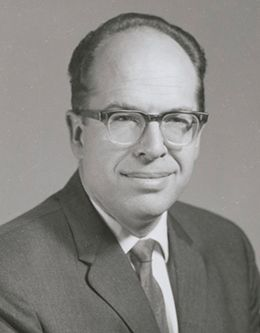
  • Language of the Spirit

    Chauncey C. Riddle

    We talked yesterday about language. The topic today is how this applies to our living our lives in the world, in the gospel. I would like to pose a problem for you, something to investigate. That is, the very interesting story we have of the fall.

    Language before the fall very possibly was different. I’ve tried to understand exactly how they communicated before the fall and what difference the fall made. It’s possible that before the fall communication was simply concept communication the way it will be in the Celestial Kingdom. Adam and Eve were Celestial people, they had Celestial bodies, they had their spiritual eyes opened and they could see the Father and the Son and very possibly they simply communicated by thought.

    And that Satan was given the privilege of coming and speaking to them in the same way, I don’t know. The thing I think that is the key to the puzzle is three things that we learn in the story of the fall. When we understand what it means when it says their eyes were opened and they knew they were naked and they were ashamed. I think those pieces were put in there as clues to the puzzle to help us understand something about communication.

    Now my understanding further is that before they fell they did not know good and evil except in one particular that the Father had told them of. The evil was to partake of the fruit of the knowledge of good and evil, they knew they shouldn’t do that but everything else was just neutral. It was neither a good nor evil because they didn’t know an evil to correspond with it. Now, I think that we have to concede that part of that was the fact that they were very perceptive. That they simply looked around and saw things and took them for what they were without having anything with which to contrast that.

    It’s possible that what the fall was, was giving them the kind of language that we now have. And the kind of language we now have enables us to conceive and hold in our minds varies possibilities about things. Which enables us then to contrast a good with an evil. And it is just possible that the tree of knowledge of good and evil was the giving of language. The kind of language we have as opposed to the concept language that they communicated with before.

    At least, I think we can say this much. Language is the great facilitator of our knowledge of good and evil. Because through language rather than showing us exactly what to do or being something, the Savior can say to us, be kind to your neighbor, Satan can say to us, take advantage of your neighbor. Because we have language we can conceive those two possibilities in our minds.

    Now, what I’m saying, I’ll try to make it a little clearer. I don’t think animals in their looking at the world can see good and evil the same way we can. They can see things that may be dangerous to them, they can see things they want to avoid but I don’t think they can see good and evil and have the same ability to choose between good and evil that we do. Because we can suit whatever is good or evil to our own desires.

    We have this interesting ability because we get presented with good and evil alternatives but they don’t come labeled. No voice, no label, no power says to us, this is the good and this is the evil, we just get these two opposing things. We have to put the label on them. And we have to, we do choose which is the good and which is the evil according to our own desires. And so you find people in the world going around pasting the label good on all kinds of evil and what are they doing? They’re simply carrying out their agency. This is part of why they were put down here and on the day of judgment what will they be rewarded with?  They’ll simply will be given over to those things that they wanted. As they judged so shall they be judged. If they judged these things to be good to them so they will get them for eternity. Now, that isn’t to say that they will get all of their desires but if they wish to be selfish and they call selfishness good then they can be selfish for as long as they want to be selfish. If they like to be carnal, fleshly, they will be carnal and fleshly forever. If they wish to be kind or honor the truth do good for others this will be rewarded unto them forever. Because the judgment simply fixes upon us that which we have chosen.

    But language is the great facilitator of that choosing. It is the thing that exposes us to all kinds of opportunities the range of variables that make great freedom possible.

    Now, when Adam was put in the garden we know that God gave him a language both oral and written. Language is a gift of God and a great and wonderful blessing. As I said yesterday, no greater technology has ever been given to man. And by this we receive the commandments of God. He speaks to us in our own language in our own concepts so that there is no confusion. We will not be able to say I didn’t understand when he speaks to us. When men speak to us there is a real possibility that we won’t be able to understand. But when God speaks to us he always gives us at least two witnesses. Sometimes there are two persons, sometimes there’s one person and the Holy Ghost, sometimes there is a written message in the scripture and then a spiritual message through the Holy Spirit directed to our concepts.

    My guess is that the Holy Ghost always communicates to us in our own concepts and if we want to put that into a language we have to translate it. I’ve often asked one who knows two languages which one they pray in? They tell me one or the other and I say which one does the answer come in? How many of you know two languages? You know which one you pray in, which one does the answer come in? It doesn’t come in a language, you have to put it in the language of your choice. And that’s the answer that almost everyone gives. Which I think is a good indication that the language of the spirit is a concept language not a verbal language. And that’s why the Holy Ghost can communicate with us perfectly because it uses our concepts. He touches our mind, our heart in the way that we will understand exactly what he wants us to say. Which we human beings don’t have the power to do as we talk to each other.

    So when the angel came and commanded Adam to offer sacrifice Adam knew exactly what he meant. I would guess that when the Father gave commandment to Adam to offer sacrifice Satan also said don’t bother to do that, that’s a waste of time or some such. Because now that Adam was fallen Satan had full access to Adam to communicate with him. Apparently in that same concept language. And thus here’s Adam, he has these two forces working upon him now in everything that he does and he has to decide where does his heart lie? Does his heart lie with this the voice of God? Or this with the voice of Satan?

    Adam did have an advantage, he had known God and Satan before he fell and it was probably easier to recognize their voices. But his children, you see, never had that advantage, perhaps that is why so many of them fell away and worshiped Satan and called him the good instead of God. The angel came and asked Adam why he was offering sacrifice. Without language of course he wouldn’t have understood the question nor would have been able to answer. But, he gave an answer, and the answer was because he had faith. He believed the commandment of God and then the angel explained why he had given that commandment to him. To teach him that in all things he must look to Christ who’s the author of all good things and the beginning and end, the author and finisher of his faith.

    Now, what does righteousness consist of? If someone chooses to serve Jesus Christ to keep the new and everlasting covenant, the facilitation of the keeping of that covenant is through language: Through the reading of the scriptures, through listening in church meetings, by receiving instruction of priesthood authorities, by bearing our witness to non- members, by teaching the gospel, hearing the gospel.

    Now we do all of those things but we have to remember that in doing all of those things that there is a good and there is an evil. The fall made it so that in every choice that every human being has there is, we must always choose between a good and an evil. So whenever we open our mouths to speak we have the choice. The important thing to know is how do you find the good and what is the evil? In general, in my understanding, the evil is what we want to say (selfishness) choosing our own desires over those of God. If we wish to do the good we are going to have to inquire of God and find out what he would have us say. Now you have to have the gospel of Jesus Christ before this is a meaningful thing to say. To those outside the church they aren’t going to have that possibility but we who have accepted the new and everlasting covenant know something more.

    We know that we shall be held accountable for every idle word that we speak. An idle word is a word that we speak having chosen to do it evilly. Whereas a non-idle word is a word given to us having chosen to speak the good, meaning the right thing to say, the righteous thing to say. So I conceive that the Father has devised for us a program, a plan, whereby he will teach us how to speak truly, how to speak righteously. He speaks only light and truth, he never lies, he never gives bad advice.

    I take it in our apprenticeship to become as he is that’s probably one of the most important things we need to do is to learn to speak only light, his light and only truth, his truth. So how do we do that? I think the key to it is prayer. Now, there is a correct way to pray and there’s a false way to pray. The false way to pray is to say whatever we want to say. But the scriptures are plain, when we pray correctly it is given to us what we shall ask. And so if you have learned about how to pray correctly you come to realize, prayer is a thing that must be done by revelation. That is to say, our use and abuse of language is what condemns or saves us for one thing.

    And there’s probably no more important thing that we do than to use language. If we use it for evil then we cannot be saved and one of the greatest things we can do is to learn to speak only light and truth through Jesus Christ. Which we do by first learning to pray, how do you do that? Well, we have to first ask the Father to help us to pray, that has to come from us. But he has commanded us to do it so it is a good thing to do. And then we wait and we think and we try to open our hearts, to be as humble, as pliable, as susceptible as we can to the enticings of the spirit.

    And then sooner or later something comes to us and we have to discern whether that is a good spirit or an evil spirit. Whenever we invite the good spirit in the evil spirit also comes around and has it’s say and that because of the fall. We’re subject to Satan in that respect and so God does not speak to us except there is an evil counterpart to that so that we always have a choice. So if we will choose the good then our prayers begin to be holy prayers, prayers of light and truth. Now should we ever get so good at this that we can say a whole prayer simply by saying what we are prompted to say by the Holy Spirit we’ll be beginning to be in good shape.

    Imagine what it would be then, if each of us took that clue and then used it in our daily conversations with each other. And we did not say anything to anybody except that it was good in the spirit of the Lord to say so. So that we only spoke light and truth to each other. Wouldn’t that be a marvelous change in our society. We would never again get angry and tell somebody off. We would never again say something to hurt someone deliberately. We might say something that would hurt someone but it would only be because the Lord prompted us to and we say it in love with the intention of helping them. And then show forth an increase of love after so they will know we did not say it in anger, did not say it to hurt them.

    Now, if you get a great big sliver, if it’s deep somebody may have to cut your flesh to get it out, that’s going to hurt. And that’s what the Lord has to sometimes do with us, he has to hurt to help us get rid of the evil that’s in us. But the hurt is always beneficial in the long run when it comes by the Holy Spirit. If it’s light and truth the hurt is but a short hurt and brings great blessings in its consequence. But we have to judge these things by their fruits. We have to tell the difference between good and evil by seeing what the results are.

    So it’s given to us to judge and if we don’t like the way our life is going, that’s a clue to us that we are not listening to the right spirit, we’re not getting the clues that we want and need. If our hearts are evil, of course, then it’s very difficult for us to tell. The great key is to get a pure heart so that we will be able to tell the difference between good fruits and evil fruits.

    Which leads us to tell the difference between good spirits and evil spirits, which enables us then to choose the good and never to choose the evil. If we learn to speak righteously to one another, that is the key to learning to use the priesthood.

    What is the priesthood? The priesthood is the power of God, but it is not given to any man to say of his own mind and desires what he will do with that priesthood. I learned that one the hard way. Years ago I was an Elders quorum president in Manhattan, we were visiting members of our quorum on Statten Island. We came to the home of one brother, he had just had a heart attack and they had taken him to the hospital. His wife asked us to go to the hospital and give him a blessing. So we went, we slipped through the oxygen tent and gave him a blessing and told him that he would be all right, that he soon would be well. Ten minutes later he died. That’s a bit disconcerting if you’re a young elder quorum president. And so, we went to the high counselor over our quorum and said, tell us what happened? He was also the stake patriarch and understood this problem very well. He said, did the spirit tell you to say that? We said, no. We just thought that would be a nice thing to say.

    That’s not how the priesthood of god works. Man does not know what is good or righteous. Righteousness is of Christ and many times the things we ask for in our prayers are simply evil. The scriptures says, if you ask for evil it will be accounted unto you for evil. We have to learn to speak correctly. And so, we get this opportunity to practice and we’re promised that the Holy Ghost will be our constant companion and will communicate with us through this concept language exactly what it is we should pray for. And then what we should say to one another and then what we should say when we’re hoping to represent him, using the priesthood. Now there is two sides to that, sometimes when you’re laying your hands on someone’s head and the Holy Ghost is speaking through you, what the Holy Ghost tells you to say is so scary that you don’t dare say it. We have to be brave enough to say it and humble enough to get what to say.

    What are we supposed to do, we lay our hands upon somebody’s head and nothing comes? We’re not to say anything by way of blessing. We’re simply supposed to pray for the person. We admit defeat at that point and say, I’m sorry I can’t give you a blessing but I will pray for you. And I’ll pray for you the best I can but I don’t really know how to bless you. I had the experience a few years ago of laying my hands on a sister’s head. And I was told that there was a blessing for her, she was to be healed but because I hadn’t repented of my sins I couldn’t do it. It’s called a come up’ins. The Lord brings you up short once in a while, he lets you know where you stand. Twenty- four hours later another man laid his hands on her head, she was healed instantly. Because he had lived for that opportunity, he was able to heal her she was able to go on with her work. It’s the Lord’s desire that all of us be able to heal, by being righteous. I’ll tell you the man’s name, his name is Nathan Eldon Tanner.

    But you see, how much good can we do if we would repent of our sins and learn to speak nothing but light and truth. Oh, then we would have power in the priesthood. Which does not come from man, it comes from God. But it’s learning to use language, use this great technology that the Lord has given us correctly. So that we can use the greater technology. Priesthood is greater than language. But learning to use language correctly is the key to using the priesthood correctly. So he gives us a lesser power to see if we can learn to do well with it so then we can see if we can use the greater power.

    Now, if we can, not only do we have to speak by the power of the Holy Ghost we have to read and understand by the power of the Holy Ghost. And so he gives us the scriptures. The scriptures were not written to be understood, they were written to be a puzzle. They were written to help those who have the spirit and to blind those who don’t have the spirit, lest they be condemned. Here again, we get to practice. We have these beautiful words and if we are faithful we will sit and look at those black marks on the white pages and try to hold back our own interpretation which is private interpretation, until we get the Holy Spirit coming to us in our minds and telling us what the Lord wants us to think in connection with those black marks. Thus we have a chance to learn to interpret by the Spirit of the Lord.

    We get to sit in conference, we get to listen to the prophet of God and the question is: Are we in tune? If, as he is speaking, the spirit rings and our hearts swell within us and our minds are enlarged and enlightened and we know this is light and truth then we know we are on the beam. If we’re faithful the Lord is rewarding us with that resonance that comes when we are in tune. Should we find that we are beginning to wonder, is President Benson getting a little old? Is he saying things that really aren’t quite square? Has one of his helpers put this into his mind? He really wouldn’t say that if he were about to be — These are things that people say. And they are the temptations of Satan as it were. But, if you and I will go to the conference humbly in the attitude of prayer and fasting, ready to receive the word of the Lord. Having done what we were instructed to do the last conference. That’s our key to getting the Holy Spirit to understand this next conference and then the Holy spirit will just flood our minds with this beautiful feeling, will fill our heart with this warmth and we won’t have to ask further if this is the will of the Lord we will just know it, with every sentence he says, will just march into our heart and fill our being with light and truth. We will know that he is the prophet of God, that he loves us as the Savior loves us. And that he’s trying to do the thing that we need.

    What does he want us to do? He wants us to read the Book Of Mormon. The Church has neglected the Book of Mormon and he knows the church is suffering under a curse because of that. The curse was pronounced way back in 1832. It’s never come out of the curse because we as a people have never paid enough attention to the book yet. He’s trying to lift that curse, he loves us, so he’s gone to the Lord to find what we need to do to start being Zion. The first thing we need to do to start being Zion is to get ourselves wrapped around that book. It’s concepts, it’s ideas, it’s a chance for us to have the most perfect instrument in the world perhaps, to teach us how to live by the spirit that there is. There’s no better way to do that than to read the Book of Mormon.

    Maybe prayer is the only other thing that comes close to it. Now reading the Book of Mormon is probably the best help there is to learn how to pray. They go hand in hand. But if we learn to interpret by the spirit so that we interpret the scriptures, then we interpret the words of the brethren in conference, then we interpret the words of our Stake President, we interpret the words of our Bishop, we interpret the words of our Father. And then we begin to interpret every word we read and hear everywhere it comes. Discerning whether it’s good or evil, treasuring, collecting, remembering, living by all the good that we meet from any source. Putting on the shelf holding in abeyance everything we hear that’s evil.

    Now, if we can do those two things, learn to speak and interpret by the power of the Holy Ghost then we’re really benefiting from this marvelous thing of language which God has given us to raise us up. Why does he give us language? Because only through language can he give us the freedom to choose both good and evil. This freedom is the whole key to our salvation. If by our own free will and choice we will choose the good when it comes to us, then he can give us every good thing. We have to make that basic choice. So, what is our mission in life? It is to perfect our relationships with one another by first perfecting our relationship with God. If we can love him and hear his voice and interpret him without error then we can learn to love one another.

    We transact most of our business with one another through language. If we have learned to interpret language to separate the good from the evil then our language transactions with each other will begin to be holy. We will not speak anything that is evil and we will not allow ourselves to believe anything that is evil and thus we begin to bring our relationships to perfection. One place I think this needs to be focused, can be focused is in the relationships between husband and wife. The place to practice good communication is in prayer, that’s the first place, the second place is between husband and wife. Because husband and wife love each other they will want to communicate and my thought is, where is a better place to learn to communicate through spiritual means than between husband and wife?

    To use the physical words of the English language that we usually use as a key to begin to communicate by feeling and by ideas through the spirit of the Lord. If you have been married a while and your marriage is good you probably have experienced some of that. What a beautiful thing to have, that’s really wonderful when you begin to see eye to eye and you begin to know exactly how your spouse will react to something. That’s great communication and if they both choose the good, you see, there’s no limit to how close they can become, because each will become enclosed to the Savior all the time. Becoming closer and closer to the Savior enables them to become closer and closer to each other. Till finally they come to have one mind and one heart. How is Zion established? I think Zion is established by getting husbands and wives to love each other, so they come to have one mind and one heart. We’re surely not going to have one heart and one mind with anyone else if we can’t do it with our own wife or husband.

    Charity begins at home. If we can’t love the person we’re closest to, our closest neighbor in all this world which is our spouse, we’re surely not going to do much for anyone else. There’s the place to perfect our language. To work with one another, talk with one another, think, pray, hope, compare notes until we can do this just the right way. Now what do we do with language? With language then we participate in our own creation. Our creation is not over, it’s on going every day. Our Savior has given us a body but the body is changing constantly, it’s being recreated every day. Our minds are being recreated every day, as our hearts also and our might. Every time some new influence comes into our life, and we react to it we are a different person.

    So by making these choices that come to us through language we are choosing either the good or the evil; thus building ourselves into a better person or an evil person. Thus by the end of our lives we will have created a god through the help of God or a devil through the help of Satan, according to our own desires. We can’t do either without help from those sources. But with the help of those sources we can do either. Thus our final blessings then come by the pronouncement of either God of Satan. God has certain words which he says which seal us to him. Satan has certain words which he says which seal us to him. Thus we become the eternal child of either God or Satan, depending on which one we choose including what we do with language.

    So, as we learn to use language it’s important to recognize that there are four components to all language. There’s a heart portion, a mind portion, a strength portion, and a might portion. We have to perfect each one of these. Might is our fruit, it is given unto those who are not very spiritual yet to judge others by their fruits by the effects of their language. If their language produces good we know that they are good. If their language produces evil we know that they are evil.

    As we learn to communicate better and better then we begin to communicate by concepts by feelings of the heart directly. Finally by communicating as God does by looking upon the heart of other people. We have to be a little careful we don’t presume we can do that before we actually can. Well, we have said essentially what needs to be said about the use of language in our lives and applying it to the gospel.

    I think that as Latter-day Saints we would do well to try to be rich in the languages of this world. Languages are the keys for bearing testimony. The more languages we know the more people we can help. I think it ought to be our constant study to be working on another language other than the one which is our mother tongue. We need to be learning child language so we can speak to children. Some people can’t talk to children. We need to be learning technical language so that we can speak to people who want to speak technical language. We need to be learning the language of whoever it is that we love. Because if we do love them we will want to speak to them in their own language, in their own frame. Father has promised that every person will hear the gospel in his own tongue. And that may be a certain variety of English, it may be French, it may be scientific language, it may be statistical language, it may be the language of music, it may be the language of painting, it may be the language of dancing. All of these are languages, they speak, they express. And whatever it is we need to know to speak to someone we need to learn that language. The measure of our love for them is our willingness to sacrifice enough to learn their language so that we can bear witness of light and truth to them in terms that they will understand.

    Well, are their questions?

    (unheard)

    God says that in the mouth of two or more witnesses he will establish every word. So, he usually sends out missionaries two by two, so that there will be two witnesses. Whenever he gives a scripture, we see something written here in a book, he always sends his Holy Spirit, if we will receive it, to accompany that. So that we get the witness of the black and white and also of the Spirit. The Father and the Son are two witnesses, the Son and the Holy Ghost are two witnesses. In everything he tries to make sure we get two witnesses so that we will never have to depend on a single source. Two points make a line, he’s trying to give us lines or direction. Does that help?

    I was thinking of prayer when the Holy Spirit speaks to us, where if …

    The other witness will be the fruits of the prayer, the consequences of our prayer. If we don’t learn any other way, we will learn by what happens after we pray. If the prayer is answered, if we get what we asked for or pray for, that’s a pretty good sign. If it isn’t answered we’ll know that maybe something is probably wrong with that prayer and we can ask, why wasn’t it answered? And we’ll probably get an answer as to what we should then do to make amends or reparations. If we do that and it works, then we then know that we’re on the right track. We should always look for the second witness. My experience is that if we are in tune we always get an immediate answer of some kind. It’s true that sometimes I might pray for a million dollars and not get an answer for a long long time, I may never get it, but I can ask, why not? I’ll get an immediate answer to that. I find that sometimes my prayers are not answered but there’s one kind of question I’ll always get an immediate answer to and that is, what should I do next?

    Is there a difference between the language that Satan speaks and Christ speaks?

    Yes. The Savior always speaks in light and truth. Satan always speaks in darkness and warped truth or wrong, untruth. I have to be careful with that, sometimes he speaks truth, he never speaks light but sometimes he speaks truth so that we will buy what he has to say. And so yes, there’s a difference, and that’s why the whole study of our lives that the basic skill of being a Latter-day Saint consists in being able to detect the difference between the voice of God and the voice of Satan. Now we need to study that and try out different cases and try experiments until we become absolutely perfect at making that distinction.

    Satan can never speak to your heart.

    I don’t know about that. I think he can. But that’s my guess don’t believe that.

    The question is, he asked me how I read the scriptures, as the prophet has told us to read the Book of Mormon.

    I try to read it lots of different ways. I find that I have to just read it through occasionally. Start from the beginning and go to the end because that way I sweep out things I hadn’t seen before. Sometimes I read it topically, I look for a certain word or subject and just trace that though all the scriptures. I find it very useful to try a different medium, I’m currently listening to the Book of Mormon on tape for the first time and I hear things I’ve never seen before at looking at the printed page. I read it in Spanish last year. And the Spanish showed me certain things that I’d never seen in the English. I insisted sometimes to myself, that’s not in the English and I’d go back and look in the English and there it was. One difference was ever since I began to read I’ve been a fast reader. So I read the Book of Mormon just as fast as I can read, which is somewhere between 800 and a 1000 words a minute. There’s a lot you miss when you read that fast. I can’t read Spanish nearly that fast and slowing down taught me a great many things. So I would commend to you, slow down sometime, just read it very carefully word for word and piece it together. You have to do that on the tough passages. But read it slowly, read it fast, read it with other people. As you share with other people sometimes their insights are just what you need to put the pieces all together from what you’ve been studying. You’ve got the rest of it, they’ve got the one piece. That’s why the Lord wants us to teach one another, he doesn’t give everything to everybody. He wants us to need each other and to converse and teach each other about these things so that we will learn. So those are some thoughts.

    Question – (unheard) – something about choosing between good and good and between good and evil.

    But the real evil is always a good and the most tempting evil is always a good. That we could do, it is a good thing to do under ordinary circumstances, but it just happens in this case there something better to do so the good becomes an evil.

    Question – (unheard)

    My understanding is it’s always good and evil even though the two things in general terms are good. I use this technique. If there’s some job I’ve been putting off for a long time and I know I should do it. There comes a day I’m prompted to do something that’s much better than this and I say well I’ll go and do that job I’ve been putting off because I don’t want to do the good I’d rather do evil in this case, isn’t that terrible. But I find that I’m able to get some things done that way. The Lord has to try hard to save some of us.

    Question – Why is the devil able to duplicate the gifts of the Holy Spirit?

    Well, what he can duplicate is the results and not the holiness of the spirit. Therefore we know that the two spirits will never be confused. But for instance the devil can heal. And if all you can do is live by signs you have no sense of gifts then you can be taken in by Satan. Those that seek for signs are always evil in their hearts, cause if they had good hearts they wouldn’t seek for signs they would seek for the gifts. And they would seek to know the difference between the good spirit and the evil spirit.

    That’s the basic gift of the Spirit. But if you’re just looking for signs or the guy who’s got the power or to be healed or to speak in tongues or can do mighty miracles, Satan can do all of those things. If that’s the only thing that convinces you, there’s no hope.

    Question – Can Satan hear a silent prayer?

    I don’t know the answer. My belief is, that if we’re under the influence of the Holy Ghost he can’t.

    Question – (unheard)

    May I read you a scripture? I’ll give you my understanding on that. It’s Section 58 of the Doctrine and Covenants.

    “It’s not meet that I should command in all things.”

    Is that the one you’re talking about?  Let’s deal with both of them then. We’re supposed to the Savior says, “work it out in your own mind”. Don’t ask until you put some effort into it. That’s the instruction to Oliver Cowdery as to how he should translate. Now not every problem is a problem of translation. Is that the formula that applies to everything? I don’t think so. If the Lord tells you to do that in some particular problem, study it out in your own mind and present it to him, that’s what we must do. But my experience is this. Sometimes I go to him without having put any investment into trying to finding the answer. I just ask the question and I get the answer before the question is half out. Other times He makes me wait and do research on it for years. So I can’t find that that’s a general formula. That’s a specific instruction and a valuable thing to do when we’re supposed to do it. That takes care of Section Nine.

    Now Section Fifty Eight. This is a Section that was given that many people use that many people say, “we shouldn’t seek the revelations of God, we don’t want to bother Him with anything that’s not awfully important.” But I don’t think that is what He was saying. Beginning with verse 24, the revelation was given to Edward Partridge. He had been told in a previous revelation to take his counselors and move to Missouri where he was to be the presiding bishop of the church. He went to Joseph and said, “ask the Lord how we shall go”? This is the answer, “now as I spake concerning my servant Edward Partridge. This land, meaning Missouri is the land of his residence and those who he has appointed his counselors and also the land and residence of whom I have appointed to keep my store house. Wherefore let them bring their families as they shall counsel between themselves and me. In other words, don’t ask Joseph, ask me! For it is not meet that I shall command in all things. What does he mean by command? He has to mean. He has to mean getting a commandment through flesh and blood. For he that is compelled in all things the same is a slothful and not a wise servant, wherefore he receiveth no reward. Men should be anxiously engaged in a good cause and do many things of their own free will and bring to pass much righteousness. Because the power is in them, wherein they are agents unto themselves.”

    What makes us agents? We are an agent when we can choose either good or evil in a situation. If we don’t have both those possibilities we are not agents. And the Holy Spirit is that which makes use an agent to know what is right to do. The evil spirit makes us an agent in knowing what is wrong to do. The power is within us, the power of the Holy Ghost to bring to pass much righteousness. We don’t have to ask flesh and blood what to do. We can find out by asking the Lord himself directly. That’s what makes a Latter-day Saint, is someone who has the Holy Ghost with him and asks and gets answers and doesn’t have to be commanded in all things.

    Question – What are alms of prayer?

    My understanding that an alm of prayer, that an alm is something that we give to the poor. That’s the basic meaning of the word. But we do it in the intent of doing an act of righteousness, an act of good to the Lord. We’re trying to love our neighbor as he loves us when we give alms to the poor. Now, when we pray we’re trying to learn to pray in the same kind of token and sacrifice as we do when we give alms to the poor. We’re trying to pray correctly. So an alm is an offering or a sacrifice we make. And we offer up our prayers as offerings to the Lord in the same sense we do the offerings of sheep or goats on the alter or the offering of something we give to the poor. That’s my sense of it if that helps.

    Question – Something about gods and lords.

    My understanding is yes, gods are only created for exaltation in the Celestial Kingdom. But some create themselves into terrestrial beings by waiting a long long time to finally decide to choose good and not evil. The ones that choose good early and anxiously are the celestial spirits that become exalted. Those who want to do good but not all of it become ministering angels in the Celestial Kingdom. Those who want to do good but not too soon become terrestrial. And those who finally admit at the last ditch that it’s better to do good than evil they apparently become telestial. But they all choose the good and every one of them does nothing but good ever after. There’s no evil committed by anybody in the Telestial Kingdom. They don’t sin, they don’t do very much but everything they do is good.

    Question – Does that imply that the progression of people in the Terrestrial and Telestial Kingdoms will sometime lead to Godhood?

    My understanding is no. It says, worlds without end they will not pass the barriers. This is the time to prepare to meet God. Now is the day of our probation and after this life it’s over.

    Question – Do we have the same development in our language as we grow spiritually as we do as we grow physically?

    And I think so yes. As we become acquainted with the words and concepts of the scriptures we are growing in our linguistic ability which is also a growth in our spiritual ability. That’s why we study the scriptures and figure out what all these things mean. That’s a growth in language ability which sets us free then to do more perfectly the will of the Lord.

  • Faith and Repentance

    Chauncey Riddle

    The time has come for us to begin.

    This series has to do with the principles of the restored gospel. It may seem a little peculiar to talk about faith and repentance since that’s the main theme of everything that is talked about in the Church. Still, I find for myself there is a certain refreshment in going back over the basic things. I don’t listen to music because I have never listened to it before. I listen to it because I have heard it before, and I like it. And I find the same thing with the gospel.

    One of the beautiful things about the gospel is that it never gets old. In fact, it continually grows, and sharpens, and refines. So I would like to talk about the principles of the gospel.

    The principles by themselves are not enough. That is to say, this is a complicated discussion, because the principles have to be put into a context. The context is what we call theology, our situation. When you put the theology, or our situation, and the reality which we find ourselves together with the principles then we have the gospel. The Savior outlines the two of them together very wonderfully in 3rd Nephi 27, if I could review that with you. This is setting the stage for what I have to say.

    He says in verse thirteen, (3rd Nephi 27:13)

    “I have given you my gospel, This is the gospel, that I came into the world to do the will of my Father. Because my Father sent me.”

    The most fundamental thing to know. Is that the Savior came for one purpose only, to do his Father’s will. That is to say, to keep His covenant with Father.

    “And my Father sent me that I might be lifted up on the cross.”

    The main thing the Father wanted him to do, besides obey him, was to die for us, that the New and Everlasting Covenant might be made possible.

    “And after that I had been lifted up on the cross, that I might draw all men unto me. That as I have been lifted up by men even so should men be lifted up by the Father to stand before me. To be judged of their works, whether they be good, or whether they be evil.”

    And so, here we come into the scene. We also are children of God. Also having the opportunity to do the will of the Father. But because the Savior came and was perfect, and atoned for our sins, He will draw us unto Himself. He will judge us. And we will see how many times we chose for God, and how many times we chose for self, for selfishness or evil.

    “For this cause I have been lifted up, therefore, according to the power of the father, I will draw all men unto me, that they may be judged according to their works. And it shall come to pass that whoso repenteth, and is baptized in my name, shall be filled. and if he endure to end behold him will I hold guiltless before my Father at the day when I shall stand to judge the world.”

    Enduring to the end, as I understand it is to fulfill the purpose of repentance. Repentance begins before baptism, but ends long after.

    “He that endureth not to the end, the same is he that is hewn down and cast into the fire.”

    From whence they can no more return, because of the justice of the Father. Justice is Father’s law. And they cannot return to Him if they have broken the law. And there is no way to mend it. We mend it, of course, through Christ.

    “This is the word which He hath given unto the children of men, For this cause he fulfilleth the words which he hath given. And he lieth not, but fulfilleth all his words.”

    He fulfills his own law. He is exact and precise in doing so.

    “And no unclean thing can enter into His Kingdom. Therefore nothing entereth into His rest save it be those who have washed their garments in my blood because of their faith and the repentance of all their sins, and their faithfullness unto the end.”

    “Now this is the commandment, repent all ye ends of the earth, and come unto me and be baptized in my name. That ye may be sancitified by the reception of the Holy Ghost. That ye may stand spotless before me at the last day. Verily, Verily, I say unto you, this is my gospel.”

    Now, with that as a background, let us focus on faith and repentance. Let us begin with repentance. Repentance is a “what.” Whereas faith is a “how”. Repentance is what we are supposed to become. What we are supposed to leave, and what we are supposed to come to. And faith is how we do it. So, as I understand it, very simply, what we are to repent from is our old self. That is to say, our old habits, our old ideas, our old feelings. In other words, our sins. We repent from our sins. And we turn to Christ. To come into the measure of the fullness of his stature. To think his thoughts, to have his feelings. To do his acts. And thus to fulfill what he is.

    Now, that Latin root for repentance, is to turn. The Greek root means to change one’s mind. The Hebrew root means to return to God. But the important thing about repentance is that you have taken all of those things into account. No one of them captures fully what repentance is. Repentance is simply turning from wherever we are, from whatever we are, to the measure of the stature of the fullness of Christ. We have to change our minds in that process. Not only our minds, but our hearts, We have to return to God. We have all gone out of the way, that is to say we have sinned and fallen short of the glory of God. Therefore, we must return to God, and that return is repentance.

    Now the scriptures give us a very careful account of what it means to repent. Let’s read from Alma chapter 5.

    “And now, if ye are not the sheep of the good shepherd, of what fold are ye? Behold I say unto you,” This is Alma 5:33. “Behold I say unto you that that the Devil is your shepherd, and ye are of his fold. And now who can deny this? Behold, whosoever denieth this is a lier and a child of the Devil.”

    We have two alternatives, and two only. Do we serve God, or do we serve ourselves. In other words, righteousness or selfishness. Good and evil. There are many degrees of evil. There are some who mix a little good into their evil, there are some who mix a lot of good into their evil. But the question is, will we turn to good. My understanding is, that before we entered into eternity, that is to say, before the judgement, everyone of us will have made the decision to turn to Christ. We will finally see that selfishness will not do it for us. Even we don’t want the selfishness. The only ones that doesn’t apply to, of course, are the Sons of Perdition. They accept Christ, and then turn back to selfishness, preferring selfishness to Him. But everyone else, will eventually see that only in Christ is their good.

  • Crown Jewels and Royal Purple

    CHAUNCEY C. RIDDLE

    Chauncey C. Riddle was a professor of philosophy at BYU
    when this devotional address was given on 8 July 1986

    Download or listen to the audio: https://speeches.byu.edu/talks/chauncey-c-riddle/crown-jewels-royal-purple/

    True Crown Jewels

    Royal weddings and state occasions are top news items in our world. The reason for that is that people in general, of nearly every nation and culture, enjoy the show, pomp and ceremony that these occasions feature. A conspicuous aspect of many of these occasions is the use of crowns and crown jewels, of royal purple, and other finery.

    The use of crowns themselves is an ancient custom that seems to have four somewhat interrelated origins. Some crowns were first helmets, part of personal military gear. As the rank of the person increased, the helmet tended to become more elaborate, sometimes losing all pretense of being a protective device and serving solely to signify to all the high rank of the wearer. We see an example of this in the “scrambled eggs” on the visor of a naval officer’s cap.

    A second antecedent of the crown is found in the laurel wreaths that were anciently bestowed as honors on the heads of successful athletes. These were later bestowed on persons receiving honor and status of many kinds. The garlands became stylized, and we are probably seeing a version of the garland in the festive headbands some modern people wear.

    A third antecedent of the crown is the religious headdress worn in many different cultures to suggest the possession of authority. These are represented in the modern world by the rather massive crown used in the coronation ceremony of the Pope.

    A fourth related item is the bridal garland that is part of the traditional marriage regalia in many cultures.

    All of these cultural streams converge in the regal headdress so familiar as part of the courtly trappings of European aristocracy, including crowns, coronets, and tiaras, each often festooned with precious gems according to the wealth and rank of the possessor. The investment of a fortune in such items has been deemed desirable to set the wearer apart from those of lesser status. Sometimes the common people of a nation are insulted if their leaders are not appropriately bedecked; they seem to take a vicarious pride in such ostentation. All of this provides the show and pageantry of which some people are so fond and that attract worldwide attention. Ordinary people tend to mimic royalty by wearing jewelry and expensive clothing even though they cannot indulge in crown jewels and royal purple. The highlight of some commoners’ lives is to live and look like the nobles and the wealthy for a moment, perhaps to be “queen for a day.”

    Though the world is awed and carried away by the royal show of jeweled crowns and royal purple, it is important to remember that in the restored gospel frame of reference, those worldly indulgences are counterfeits of something good and spiritual. Crowns are counterfeits of true priesthood authority. Purple robes and other rich and royal vestments are counterfeits of the robe of righteousness that every person may wear and bear through faith in Jesus Christ. The jewels that are so costly and outwardly beautiful are counterfeits of the true concepts and principles of the gospel of Jesus Christ that make a life of righteousness possible. These precious jewel concepts, when properly cut and polished, become instruments through which the light of Christ is translated into understanding and good deeds in the life of a Saint.

    Let us now turn to an examination of some of the precious jewels one may find in connection with the gospel of Jesus Christ. Like natural jewels, these concepts that pertain to godliness are first found rough and irregular, mixed with things of lesser value. The deposit to which we turn to seek out these treasures is the scriptures. The fullness of the scriptures is itself a treasure, but within the scriptures are some ideas that stand out as precious guiding lights when properly uncovered, shaped and polished, and installed in our system of thinking.

    The Concept of Fear

    An example of a real and eternal jewel is the concept of fear as found in the scriptures. As we turn to instances where the word “fear” is used, we see that fear is commended and commanded. In Deuteronomy 6:13 we read, “Thou shalt fear the Lord thy God, and serve him, and shalt swear by his name.” Samuel tells the children of Israel in 1 Samuel 12:14­15,

    If ye will fear the Lord, and serve him, and obey his voice, and not rebel against the commandment of the Lord, then shall both ye and also the king that reigneth over you continue following the Lord your God:

    But if ye will not obey the voice of the Lord, but rebel against the commandment of the Lord, then shall the hand of the Lord be against you, as it was against your fathers.

    We see plainly from these scriptures and many others like them that the servants of God are to fear him.

    But turning to other scriptures, we read passages such as the following in the same chapter in 1 Samuel just quoted:

    And Samuel said unto the people, Fear not: ye have done all this wickedness: yet turn not aside from following the Lord, but serve the Lord with all your heart;

    And turn ye not aside for then should ye go after vain things, which cannot profit nor deliver; for they are vain.

    For the Lord will not forsake his people for his great name’s sake: because it hath pleased the Lord to make you his people.

    Moreover as for me, God forbid that I should sin against the Lord in ceasing to pray for you: but I will teach you the good and the right way:

    Only fear the Lord, and serve him in truth with all your heart; for consider how great things he hath done for you. [1 Samuel 12:20­24]

    How is it that a prophet of God would tell the people both to fear and not to fear in almost the same breath?

    We see the same problem in Isaiah. Isaiah counsels Israel in Isaiah 35:4: “Say to them that are of a fearful fear, Be strong, fear not: behold your God will come with vengeance, even God with a recompence; he will come and save you.” But Isaiah also says, “Sanctify the Lord of hosts himself; and let him be your fear, and let him be your dread” (Isaiah 8:13). It sounds again as if we are both to fear and not to fear. Without further multiplying examples we can readily conclude that the concept of fear is important but needs to be clarified. But who shall we believe as to the correct concept of fear?

    The one whom we should believe is, of course, the Lord himself. The written scriptures as we have them are our treasure mine. But the treasures do not jump out at us in ready-made splendor. We must search, hypothesize, test, correct, perfect, and live by what we find. The holy scriptures are our raw material; the revelations of the Lord that result from our diligent searching of the scriptures become our jewels, our keys to understanding and to faithful obedience.

    Let us suppose we have made a diligent search of the scriptures, old and new, concerning fear. Having done that we are then in a position to make hypotheses in the attempt to lay out clearly and distinctly the concepts of the scriptures. If we have done our work well, every scripture should be clear and understandable with no contradictions. Great light should be shed on the topic, and it should tie beautifully with other correct concepts.

    May I now share with you the results of my own personal search into the scriptures concerning the concept of fear. Without going through all the detailed steps of the search, I will give only my present conclusions, because every day as I think about the gospel and the scriptures, new light seems to come. A new insight in one area of ideas sheds light and new perspective on every truth hitherto discovered. Thus, one must constantly readjust his thinking to new and grander perspectives as the panorama of the Father’s marvelous love for his children slowly takes shape and detail. This is exciting to experience. Of all the experiences a person can have, I suppose that learning the ways of God is perhaps next to the greatest of all experiences. I believe that the greatest experience is to have the privilege of putting those newly learned truths into action, to do the work of righteousness that correct concepts and true understanding make possible.

    May I then share with you my hypotheses concerning fear. Please do not be tempted to believe what I say because I say it. I am not an authority to you. But I am your brother in Christ, and gladly share what I believe in the hope you may hear something that will cause you to make your own diligent search into these matters. For if you search in faith, I believe you will find and be greatly edified. Should you already have made your search, you will be able to compare notes and see where I have both scored and failed. Perhaps then, some occasion of testimony will bring your insights to me that I may then test your hypotheses. Thus may we all grow together in the knowledge of the Lord.

    But on to my hypotheses as illustration of the true crown jewels.

    Fear One

    I see fear as an emotional state, a matter of the heart of man, having much to do with the choices he makes. But it seems from the examples we have already presented that there must be two different concepts represented by the English word “fear,” which would explain why we are commanded both to fear and not to fear. I shall begin with the more ordinary variety and will call it Fear One.

    Fear One is closely related to prudence; it is prudence with a powerful emotional charge. When one is prudent, he carefully calculates the results of his actions before doing anything, taking care to avoid results that are not desirable. When that prudence becomes an emotional, compelling force, it turns to Fear One. Examples of Fear One are fear of heights, fear of the dark, fear of spiders and snakes, and most important, the fear of death. I personally have known this fear strongly in the fear of not surviving graduate school and in the fear of not being able to support my family adequately. In many ways this kind of fear is a good thing. Fear of traffic may help a child to be wary of a busy thoroughfare. Fear of falling may temper some desires to climb. But this fear can also become a paralyzing phobia as when a person freezes high on a building and cannot rationally be induced to save himself. I suppose that every human being is well acquainted with Fear One, and that life for many of us is a precarious balance between the strength of desire for results that impel us to action and Fear One, which prevents us from doing many things. When Fear One prevents us from doing things we should not do, that is one thing. But often it also prevents us from doing what we well know we should do. So it is a mixed opportunity.

    I see Fear One well represented in the scriptures. In Deuteronomy 28:58­67, the curse upon wayward Israel is couched in terms of this fear:

    If thou wilt not observe to do all the words of this law that are written in this book, that thou mayest fear this glorious and fearful name, THE LORD THY GOD;

    Then the Lord will make thy plagues wonderful, and the plagues of thy seed, even great plagues, and of long continuance, and sore sicknesses, and of long continuance.

    Moreover he will bring upon thee all the diseases of Egypt, which thou wast afraid of; and they shall cleave unto thee.

    Also every sickness, and every plague, which is not written in the book of this law, them will the Lord bring upon thee, until thou be destroyed.

    And ye shall be left few in number, whereas ye were as the stars of heaven for multitude; because thou wouldest not obey the voice of the Lord thy God.

    And it shall come to pass, that as the Lord rejoiced over you to do you good, and to multiply you; so the Lord will rejoice over you to destroy you, and to bring you to nought; and ye shall be plucked from off the land whither thou goest to possess it.

    And the Lord shall scatter thee among all people, from the one end of the earth even unto the other; and there thou shalt serve other gods, which neither thou nor thy fathers have known, even wood and stone.

    And among these nations shalt thou find no ease, neither shall the sole of the foot have rest: but the Lord shall give thee there a trembling heart, and failing of eyes, and sorrow of mind:

    And thy life shall hang in doubt before thee; and thou shalt fear day and night, and shalt have none assurance of thy life:

    In the morning thou shalt say, Would God it were even! and at even thou shalt say, Would God it were morning! for the fear of thine heart wherewith thou shalt fear, and for the sight of thine eyes which thou shalt see.

    Fear One has a complement concept in boldness. The more bold one is, the less Fear One one has, and vice versa. The fullness of Fear One is petrification, or the inability to act.

    Fear Two

    We turn now to build the concept of Fear Two by contrast. Fear Two is also an emotional state, a matter of the heart. But where Fear One is a negative emotion, Fear Two is largely a positive one. Fear Two is awe and respect and admiration for God and for his goodness. Fear Two begets reverence and faithful obedience to the commandments of God. Perhaps the clearest contrast between the two concepts of fear is seen in the relationship each has to sin. Fear One causes one to be afraid to sin for fear of the resulting punishment when justice comes. Fear Two, on the other hand, is a fear to sin lest one disrupt the plans and purposes of God in bringing to pass the salvation of all mankind. Fear Two trembles at the very thought of sin, as we see in the words of Nephi:

    Behold, my soul delighteth in the things of the Lord; and my heart pondereth continually upon the things which I have seen and heard.

    Nevertheless, notwithstanding the great goodness of the Lord, in showing me his great and marvelous works, my heart exclaimeth: wretched man that I am! Yea, my heart sorroweth because of my flesh; my soul grieveth because of mine iniquities.

    I am encompassed about, because of the temptations and the sins which do so easily beset me.

    And when I desire to rejoice, my heart groaneth because of my sins; nevertheless, I know in whom I have trusted. . . .

    O Lord, wilt thou redeem my soul? Wilt thou deliver me out of the hands of mine enemies? Wilt thou make me that I may shake at the appearance of sin?

    May the gates of hell be shut continually before me, because that my heart is broken and my spirit is contrite! O Lord, wilt thou not shut the gates of thy righteousness before me, that I may walk in the path of the low valley, that I may be strict in the plain road! [2 Nephi 4:16­19, 31­32]

    We see that Fear One is fear of the consequences of sin, fear for one’s own skin, fear of the punishment that is surely to follow. It is a selfish fear, a concern only for oneself. Fear Two, by contrast, is fear of sinning, fear of harming others, fear of destroying the beautiful plan of blessing that God has ordained for all of his children here and now. It is not a fear for self, but a sorrow that one is weak and may harm others. It is a fear of thwarting God, of harming other persons; it even extends to plants and animals, which are also God’s creatures. Fear Two is a reverence for all of nature, which is God’s handiwork. Fear Two is the anguish of soul that causes a person to repent of all sin. Fear Two does not shrink from the penalties due for past sins. It gladly and willingly would suffer tenfold if that would do any good; but it learns that the freedom from sinning is inextricably coupled with the forgiveness for the debt of past sins. Fear Two cannot rest until repentance is complete and sin is done away with in the heart, mind, strength, and might of the person forever. Fear Two is also a concern for the welfare of others, an anxiousness when they will not repent.

    A person driven by Fear One is obsessed with forgiveness of sins, if indeed he does believe in God and in an accounting. Fear One has a natural tendency to hope there is no God, and that there will be no day of accounting.

    The salvation that Fear Two desires is to be free from sinning so that one will no longer inflict wounds on others. It so hungers and thirsts after righteousness that it is willing to forego eating and drinking, sleep and rest, riches and honors, even life itself in the quest for freedom from transgressing against the God it knows and reveres. Fear Two is not a motive open to atheists and agnostics. It is available only to those who have perceived the existence of God through the Holy Spirit and who worship to partake of more of the same.

    Indeed, this Fear Two is a gift of the Holy Spirit, as we see in the account of the reaction of the people to the great sermon of King Benjamin:

    And now, it came to pass that when king Benjamin had made an end of speaking the words which had been delivered unto him by the angel of the Lord, that he cast his eyes round about on the multitude, and behold they had fallen to the earth, for the fear of the Lord had come upon them.

    And they had viewed themselves in their own carnal state, even less than the dust of the earth. And they all cried aloud with one voice, saying: O have mercy, and apply the atoning blood of Christ that we may receive forgiveness of our sins, and our hearts may be purified; for we believe in Jesus Christ, the Son of God, who created heaven and earth, and all things; who shall come down among the children of men.

    And it came to pass that after they had spoken these words the Spirit of the Lord came upon them, and they were filled with joy, having received a remission of their sins, and having peace of conscience, because of the exceeding faith which they had in Jesus Christ who should come, according to the words which king Benjamin had spoken unto them. [Mosiah 4:1­3]

    The Fear of God

    Now it is possible to call Fear One worldly fear and Fear Two godly fear on the model of the distinction between worldly sorrow and godly sorrow. But if we do that we must be careful to maintain a distinction between Fear One of God and Fear Two of God. As an instance of Fear One of God, Isaiah describes the situation of the wicked of the house of Israel in the last days, when they realize that the prophets were right, that there is a God, and that he is actually visibly arriving on earth to recompense every man for his deeds:

    Therefore thou hast forsaken thy people the house of Jacob, because they be replenished from the east, and are soothsayers like the Philistines, and they please themselves in the children of strangers.

    Their land also is full of silver and gold, neither is there any end of their treasures; their land is also full of horses, neither is there any end of their chariots:

    Their land also is full of idols; they worship the work of their own hands, that which their own fingers have made:

    And the mean man boweth down, and the great man humbleth himself: therefore forgive them not.

    Enter into the rock, and hide thee in the dust, for fear of the Lord, and for the glory of his majesty.

    The lofty looks of man shall be humbled, and the haughtiness of men shall be bowed down, and the Lord alone shall be exalted in that day.

    For the day of the Lord of hosts shall be upon every one that is proud and lofty, and upon every one that is lifted up; and he shall be brought low: . . .

    And the loftiness of man shall be bowed down, and the haughtiness of men shall be made low: and the Lord alone shall be exalted in that day.

    And the idols he shall utterly abolish.

    And they shall go into the holes of the rocks, and into the caves of the earth, for fear of the Lord, and for the glory of his majesty, when he ariseth to shake terribly the earth.

    In that day a man shall cast his idols of silver, and his idols of gold, which they made each one for himself to worship, to the moles and to the bats;

    To go into the clefts of the rocks, and into the tops of the ragged rocks, for fear of the Lord, and for the glory of his majesty, when he ariseth to shake terribly the earth. [Isaiah 2:6­12, 17­21]

    For an example of Fear Two toward God, we turn to Psalms 22:23­31:

    Ye that fear the Lord, praise him; all ye the seed of Jacob, glorify him; and fear him, all ye the seed of Israel.

    For he hath not despised nor abhorred the affliction of the afflicted; neither hath he hid his face from him; but when he cried unto him, he heard.

    My praise shall be of thee in the great congregation: I will pay my vows before them that fear him.

    The meek shall eat and be satisfied: they shall praise the Lord that seek him: your heart shall live for ever.

    All the ends of the world shall remember and turn unto the Lord: and all the kindreds of the nations shall worship before thee.

    For the kingdom is the Lord’s: and he is the governor among the nations. . . .

    A seed shall serve him; it shall be accounted to the Lord for a generation.

    They shall come, and shall declare his righteousness unto a people that shall be born, that he hath done this.

    Thus we see that Fear One sees God as terrible and threatening, whereas Fear Two sees God as marvelous and wonderful, the object of adoration.

    This difference between Fear One and Fear Two of God is reflected in an interesting passage in Isaiah that is also represented in the Book of Mormon. In Isaiah 29:13­14, the Lord himself laments that men have only Fear One for him, and therefore he will restore the true gospel to them that they might again worship in spirit and truth:

    Wherefore the Lord said, Forasmuch as this people draw near me with their mouth, and with their lips do honour me, but have removed their heart far from me, and their fear toward me is taught by the precept of men:

    Therefore, behold, I will proceed to do a marvellous work among this people, even a marvellous work and a wonder: for the wisdom of their wise men shall perish, and the understanding of their prudent men shall be hid.

    When men teach the fear of God to other men, they usually do it by preaching hellfire and damnation, or purgatory and limbo. Or they may portray God as a terrible and unloving being, sometimes as completely impersonal. Such may generate wariness and prudence but can never become the heartfelt adoration of Fear Two, which comes only as a gift of the Holy Spirit. To know God is first to know his Spirit.

    If we know his Spirit, the thing that Holy Spirit teaches us is the nature and attributes of God in the pattern revealed in D&C 93:19­20:

    I give unto you these sayings that you may understand and know how to worship, and know what you worship, that you may come unto the Father in my name, and in due time receive of his fulness.

    For if you keep my commandments you shall receive of his fulness, and be glorified in me as I am in the Father; therefore, I say unto you, you shall receive grace for grace.

    That grace begins with fear of and for God. It seems to me that it does not really matter whether one begins with Fear One or Fear Two. What does seem to matter is the reaction. Either Fear One or Fear Two can come as a gift of the Holy Spirit. When received as this kind of gift, the receiver is turned toward repentance. In repentance and faith, Fear One always turns to and becomes Fear Two. The basic issue seems to be, when one fears, does one turn to God through the Holy Spirit or does one turn away and harden his heart? We read in Proverbs 1:7: “The fear of the Lord is the beginning of knowledge: but fools despise wisdom and instruction. ” With either Fear One or Fear Two as a beginning, the humble servant of God progresses from grace to grace until Fear One grows into Fear Two, and Fear Two grows into a perfect love for God and for all of God’s creatures. We read in 1 John 4:15­18:

    Whosoever shall confess that Jesus is the Son of God, God dwelleth in him, and he in God.

    And we have known and believed the love that God hath to us. God is love; and he that dwelleth in love dwelleth in God, and God in him.

    Herein is our love made perfect, that we may have boldness in the day of judgment: because as he is, so are we in this world.

    There is no fear in love; but perfect love casteth out fear: because fear hath torment. He that feareth is not made perfect in love.

    This passage from John presents us with a problem. If perfect love casts out fear, is it Fear One or Fear Two that is cast out? Or is it both? I will venture an interpretation. My belief is that John was referring only to Fear One when he says perfect love casts out fear. One clue that this is his meaning is the phrase “fear hath torment.” Fear One indeed has and is torment. But Fear Two has no torment, unless you wish to call the agony of hating one’s own sins a torment. I deem John to be saying that when one accepts God’s love and the redemption from sin and sinning that eventually attends the faithful, he ceases entirely to have any Fear One, for anything. I believe that same idea is reflected in D&C 63:17, where the Lord speaks concerning the fate of those who covenant with him and then deliberately go on and die in their sins:

    Wherefore, I, the Lord, have said that the fearful, and the unbelieving, and all liars, and whosoever loveth and maketh a lie, and the whoremonger, and the sorcerer, shall have their part in that lake which burneth with fire and brimstone, which is the second death.

    Now we know that only the sons of perdition suffer the second death and that only those who take the covenants in this life can become sons of perdition. Therefore, it seems urgent that anyone who has taken the covenants needs to press on in the gifts of the Spirit until their trust in the Lord is great, until they can acknowledge his hand in all things, until they know there are no accidents of nature, until they know that not a sparrow falls without the Lord being aware of it, until they know that all things work together for their good for they who love the Lord. Then there is nothing to fear in the sense of Fear One.

    The Perfecting of the Soul

    If, then, we walk in the Spirit of the Lord, the Lord will lead us in the paths of righteousness, and in that path nothing can harm us in any eternal way–that is to say, in any important way. Wicked men may prey upon us, disease may fell us, war may ravage us, but through all of this we will know that the Lord is working out his eternal purposes. Though these may indeed hurt our body, if we love God they can in no way hurt our eternal spirit. Therefore we endure them without Fear One, knowing that the Lord is master of all, that he is fully mindful of our predicament, and that he is but using our faith and suffering to work out his eternal purposes for all of his other children as well as for us. Thus we will have no Fear One, no gripping concern for the future welfare of ourselves or of our loved ones, for we rest content to do our part in the Lord’s great drama. Thus does love of God with all of our heart, might, mind, and strength, serving him in all things in the name of Jesus Christ, cast out all Fear One.

    My hypothesis is that a righteous being maintains Fear Two always. Fear Two forms a tension with the pure love of God. We see on the one hand the enormity of sin and the inability of God to look upon sin with the least degree of allowance because of his justice. That is in appropriate tension with the love and mercy of God on the other hand. Fear of sinning stretches against love of God. I see this tension as the power by which a righteous being keeps himself eternally on the straight and narrow path of righteousness.

    The righteous, those who are impassioned and motivated by Fear Two, see sin as a devastating destruction of the happiness of mankind. They recognize that God has prepared a celestial heritage for every human being, one that can be claimed in all important aspects even here in mortality. They come to realize that the potential of every human life is to do great good through our Savior in establishing and maintaining that celestial society to which all men are invited. They see that sin, which is selfishness, is the great destroyer of the blessings of mankind, and it even causes God himself to suffer. The terrible thing about sin is not that one has to pay for sin, as the believer in Fear One would have it, but that I cause everyone else to suffer here and now when I sin. He who understands Fear Two knows that he is hating God and each of his fellowmen when he transgresses the commandments of God. Such a one would far rather suffer himself than cause the least of these, his brethren, to suffer because of his own weaknesses. Thus he strives for perfection by making every sacrifice necessary to love the Lord God with all of his heart, yearning to receive it.

    My conclusions about fear, then, are that Fear One is human fear of being hurt, and it fears God and sin because of the possibility of being brought to justice and thus having to suffer. Fear One is selfish, an attempt to protect one’s own skin. Fear Two is godly fear, a gift of the spirit, a sense of awe and gratitude at the goodness of God and the life opportunity he has given. This awe and reverence makes one tremble at the very thought of sinning, or hurting someone else. The fullness and perfection of Fear Two is the perfecting of the soul through the sacrifice of repentance unto a perfect man, even to the measure of the fullness of the stature of Christ. A person who has Fear Two is the God-fearing man of the scriptures, one who reverences God through faithful obedience, striving to love purely, even as God does.

    The Riches of Eternity

    Those are my conclusions about fear. These ideas are very precious to me; they are some of my jewels. But do not mistake them for the main point of my discourse with you today. The conclusions about fear are my conclusions, and are intended to be illustrative only. My main point concerns crown jewels and purple robes, if we may return to where we began. My belief is that the concepts and principles of the restored gospel have virtually infinite worth compared with the paltry dust of gold, silver, jewels, and expensive clothing. He who knows the ways of God has the riches of eternity, for having that knowledge, he can live the gospel of Jesus Christ and thus fulfill the work of righteousness. Those who lack that knowledge seem to know their lack and adorn themselves with that which has no life and cannot save. One beauty of the truths of the restored gospel is that they are not a limited resource. One does not need to deprive someone else to gain them. In fact, as they are shared, all grow richer.

    We may all seek and obtain these riches by a simple process. The Father has ordained that we should have written scriptures. If we hunger and thirst after righteousness, these scriptures will be delicious to us. But the main thing we learn from them is that there is more. The fullness of the gifts of the Spirit, including all of the mysteries of godliness, are ours if only we will relinquish selfishness and begin to live by every word that proceeds forth out of the mouth of God. Through personal revelation we may share a fullness of all that the Father has, even unto eternal lives, but we must begin with a knowledge of him and his ways.

    We may go to the Father, in the name of Jesus Christ, in mighty prayer, fasting, scripture study–searching the words of the dead prophets but especially the words of the living prophets–pondering, piecing, hypothesizing, experimenting, feeling, thinking, and trying with all the power we have to search out the ways of God. I bear you my testimony that this is a very rewarding process.

    The true jewels are of immense benefit to us. Even as light shines on earthly jewels and reflects visible light of pleasing color and brilliance, even so do the true concepts and precepts enable us to reflect the light of Christ into noble thoughts, clear ideas, and goodly deeds. Through correct gospel concepts and principles we receive and assimilate the riches of eternity. Through them we minister to our stewardship. Using them and the power of the priesthood, we have the ability to work mighty miracles unto the salvation of souls. In place of the purple robes of earthly royalty, we may enjoy the garment of the wedding feast when Christ comes as the bridegroom. Our wedding garment is the invisible sacrifices we make to keep our covenants and to minister to the poor and the needy out of the abundance that the Lord has given to each one of us. The true robes are the robes of righteousness, and they are spotless white, not royal purple.

    We are saved no faster than we gain knowledge of the ways and goodness of our God. It is my prayer that we shall all be diligent in obtaining the true riches, that there will be no regrets when our eyes are opened in death and we realize that our whole life we lived in the hand of God. I believe that we shall then see that he was trying to bless us and help us all the while so we would not need to try to comfort ourselves with crown jewels and royal purple. I say this in the name of Jesus Christ. Amen.

  • LDS Ideals for Education

    Chauncey C. Riddle
    c. 1984

    I. What is the Relationship of Education to Living the Gospel?

    Repentance in the Restored Gospel can be viewed as the process of change. Specifically, it is the change from being a natural man to becoming one who possesses the divine nature of the Savior. To endure to the end is to repent so completely that we become new creatures, just men made perfect, even as our Savior is perfect.

    Seen this way, repentance is an educational process. It involves comprehending something that is better, then achieving that better condition. Line upon line, precept upon precept, the servant of Christ is taught to understand and then to exemplify a new mode of being and living.

    To construe repentance as education is not to construe all education as repentance, for one can learn to become evil as well as good. But viewing education in this manner does help us better to promote repentance. We see clearly that repentance is the process wherein gospel principles are progressively taught and learned, thus enabling the faithful to govern themselves correctly.

    The principle reason for the existence of The Church of Jesus Christ in every dispensation is to promote repentance. Members of the Church do this first by teaching and preaching the gospel to all to whom the Savior sends it. The gospel is the basic message as to how to repent. Then, for those who accept the gospel, the authorities of the Church assume the responsibility of assisting in the perfecting of the Saints, encouraging all who desire to do as to endure to the end. In this process, everything in this world that is virtuous, lovely, of good report, or praiseworthy is sought after for the children of Christ in order that they may come to the fullness of Christ.

    While it is the principle responsibility of church leaders to promote repentance, gospel education in the full sense, that opportunity is shared by every member of the kingdom. Apostles, prophets, and presidents are set to teach, preach, expound, and exhort as they lead the house of Israel to become like the Savior. But it is a wicked and slothful servant that must be commanded in all things. Each covenant servant has within him the gift of the Holy Ghost, that precious pearl of great price which empowers each to be an agent himself, to receive knowledge and direction from heavenly sources, and to bring to pass much righteousness by careful, repentant obedience.

    Every faithful person in The Church of Jesus Christ thus ought to be engaged in the process of education. Each one should be seeking, searching, learning from those who are above him in the stewardship structure of the kingdom. Each should be teaching those in his stewardship, and each person should be humble enough to learn from those under him in stewardship.

    The thesis here maintained is that repentance will be enhanced in the Church by seeing it as a species of education, and that education will be enhanced in the Church by seeing it as a species of repentance. Such a view would promote the following consequences:

    1. It would become plain that knowing the gospel is not enough; that it is doing what we know which fulfills both repentance and education.
      1. It would be more easily recognized that telling people what they ought to do is only the first step of leadership; helping them to learn to do what they ought to do is also required for repentance and for education.
      2. Seen this way, repentance would lose the negative connotation it has for some (that which sinful people need to do) and would become the way of life for all church members who are not yet perfect.
      3. Seen this way, education would become a lifelong way of living for all church members—learning to know and being able to do every good thing, and thus becoming able to help others in every way possible, as did the Savior.
      4. Just as repentance is seen to be a means, not an end, linking it with education would help all to see that education is not an end but a means to greater service to others, a preparation for righteousness. This would tend to cure one of the persistent perversions of the “civilized” world: the idea that education is an end, sometimes help to be the ultimate end, in itself.
      5. If the additional idea of hungering after excellence is added to education, quality added to quantity, then education as repentance, clearly centers on the Savior. For it is he who is the spirit of truth and the light of the world, showing the world a more excellent way. Only in and through Jesus Christ is quality education fulfilled, just as only in and through him is repentance fulfilled. He is the fountain of all truth and of all righteousness.

    Conclusion: Greater emphasis on lifelong education in the Church and linking it to repentance would enhance both education and repentance.

    II. What is the Mission of Latter-day Saints in This World?

    The life mission of any member of The Church of Jesus Christ of Latter-day Saints is identical to that of any other member in its general features. Those features are that:

    1. The whole of each person’s life is seen to be a mission in the cause of Jesus Christ from the time one receives the covenant of baptism until one is released with his final breath. This means that one is on a mission twenty-four hours a day, seven days a week, at home or abroad, in sickness or in health, and in whatever marital state or church calling one is found.
    2. Each person’s daily assignment in that mission is to turn his assigned portion of evil into good. Defining evil as that which is not good as it could be and taking the Savior as the standard of good, the life goal of a Latter-day Saint is to do that which the Savior would do as if he had our stewardship as his own. Our life should be one continuous labor to uplift, to enoble, to beautify, to instruct, to correct, to celestialize all around us, when, where, and how it is appropriate to our stewardship and as directed by the Holy Spirit.

    A child forlorn, frightened, sobbing is an evil of this world: it is the mission of a Saint to hold that child, to administer comfort, security, and understanding as the manifestation of a pure and inspired love, thus turning an evil into something better. A ward choir which sings grudgingly, mechanically, egotistically is an evil; with skill, sensitivity, and love an inspired director can lift every participant to praise God in voice and song, to bear witness and gratitude through the meaning of the lyrics, to sing to bless rather than for recognition or reward. A widow’s home is unpainted, with sagging doors, cracked panes, and drafty casements; brethren of the priesthood who are skilled and who care descend upon that home and leave dignity in place of deterioration. There are children of an Andean village who have no opportunity for education; a low-cost, locally administered self-help program is designed, embodied, and delivered, giving those children access to the modern world. A people languish in ignorance of their true spiritual heritage: their need is assuaged by the teaching of the Restored Gospel in their midst.

    Every father, mother, builder, teacher, chemist, administrator, repairman who is a covenant servant of Christ should be striving each day to make the world a better place, to uplift, encourage, and comfort not only fellow Latter-day Saints but ultimately all of the earth’s inhabitants. No one except the President of the Church carries the burden to worry about the whole world, for each of the rest of us has a more limited stewardship. Each morning each faithful servant should go to his knees in prayer to discern his assigned quotient of evil to be turned into good for that day, knowing that the powers of heaven will assist his faithful labor and that therefore his day will be “sufficient unto the evil thereof.”

    Compensation is one of the last things the true servant is concerned about. He knows that he must perform honorable work and be compensated for it to provide for himself and for his family and to have a modest surplus with which to bless others. He knows that his greatest personal opportunity is to turn evil into good for which he is not compensated. Therefore, he deliberately spreads his resources of wisdom, knowledge, skill, and substance in many times and places where there cannot or should not be any return favor. He always remembers that it is to the Savior that he is beholden for his health, strength, mentality, knowledge, wisdom, and skill with which to bless, be it in compensated or noncompensated opportunities to do good.

    Thus the daily mission of a Latter-day Saint is to search out the mind and will of the Savior relative to his formal and informal callings, then to turn evil into good in those callings. He does it cheerfully, gladly, and gratefully, rejoicing in the goodness of our Savior. He thinks about poverty, ignorance, disease, inferior values, and corruption in high and low places and strives to help. He may need to invent, translate, build, tear down, persuade, expose, correlate, and cooperate, but all with pure motive and under the direction of his Master, the Lord Jesus Christ.

    Whatever preparation he needs to fulfill his task, he seeks; he begins with personal repentance from all sin, carries through to the acquisition of knowledge and skills, and his efforts culminate in attaining power in the priesthood to do all good things. This is the true education and repentance. It is likely that through the efforts of such servants of Jesus Christ this earth will be first terrastrialized, then celestialized and delivered spotless and whole to its worthy creator.

    III. How and by Whom Should Latter-day Saints be Educated?

    1. Individuals ought to be motivated to learn the gospel (as opposed to emphasizing programs that teach them the gospel) and likewise motivated to do all that they can in righteousness to better themselves in the social and economic context in which they are personally located. The individual member of the Church must believe that his own efforts to learn the gospel and also all other worthwhile knowledge are efficacious. He must see that his own efforts are the most important factors which affect the quality of his spiritual and material well-being. It seems that too many of our members, especially in new and economically developing countries, are led to believe that their future well-being is unrelated to their present activity, that they are personally powerless to alter the circumstances of their lives. There seems to be a need to redirect such thinking toward personal initiative and responsibility.
      1. The family, headed by a righteous patriarch and faithful spouse, should be responsible for making certain that their posterity are fully instructed in all they need to know to be faithful to Christ, to overcome the world, and to subdue the earth.

    IV. The Role of the Patriarch in Zion.

    A patriarch is a faithful servant of Jesus Christ, a bearer of the Melchizedek Priesthood who is yoked with a faithful spouse in the temple covenants of eternal marriage.

    The personal goal of every patriarch and his wife should be to endure to the end, which is life eternal. Their family goal should be to so lead and inspire their posterity that they also come to know the Savior.

    The process of enduring to the end is mainly an educational process. One must be taught the gospel message and be taught to do all that it entails. The educational role of the patriarch and his wife is to assure that their children are fully instructed in all they need to know to be faithful to Christ, to overcome the world, and to subdue the earth.

    If the patriarch and his wife have fully learned to be faithful to Christ, to overcome the world, and to subdue the earth, and if they have learned to do and are doing all they should do, then they can fulfill their role, which has three principle parts:

    1. To love purely, so that each person in his stewardship is enveloped in a spiritually oriented atmosphere of unconditional love. Giving this emotional sustenance is by all odds the most important thing a patriarch and his wife ever do.
    2. To instruct by example and by precept in every important matter, in order that those in their stewardship can learn all that they need to know and do, in both spiritual and temporal matters.
    3. To provide such spiritual, physical, social, and economic protection and support as is necessary and appropriate.

    These persons thus blessed by the patriarchal order have the maximum earthly opportunity to exercise agency. For it is only this divine order coupled with the Restored Gospel and the authority of the Priesthood which provide full free agency to any person on this earth.

    V. The Educational Ideal for Zion.

    What kinds of education will righteous parents foster for those in their stewardship? Six kinds of education are proposed:

    1- Family Education. The patriarch and his wife should assume direct personal responsibility for instructing each of their children in each of the following areas:

    Personal discipline

    • Emotional steadiness
    • Intellectual honesty
    • Physical orderliness
    • Unselfishness

    Language skills (including a foreign language, if possible) Spiritual matters

    • The gospel
    • How to receive and live by the gifts of the Spirit
    • The scriptures
    • The order of the Church
    • The order of the Priesthood

    Work (learning to do and to love it)

    Ability to cooperate

    Hygiene

    • Cleanliness
    • Body functions
    • Nutrition
    • Exercise
    • Healing

    Sex education

    Family preparedness

    Citizenship (opportunities and responsibilities)

    Service (learning to rend it as appropriate)

    Skills, basic

    • Care of tools
    • Safety
    • Food preparation
    • Household management
    • Care of machinery
    • Teaching
    • Accounting for stewardships

    Social graces

    Parental influence in basic education has often done all it will do by the sixteenth year of the child’s life.

    2- Basic Formal Education. The patriarch and his wife should assume guidance and quality control in the educational opportunities which their children having in schooling outside of the family to learn:

    • Literary skills
    • Mathematical ability
    • Sciences
    • Countries and peoples
    • Physical education
    • Arts and crafts

    Basic formal education is roughly what is received in the United States in K-12 education. For this basic formal education parents should use whatever opportunities are available in their local area which do not put their children into a deadly emotional, spiritual, physical, or social environment.

    3- Manual Education. The patriarch and his wife assume the responsibility for instructing or arranging for the instructing of each child in one or more manual skills by which that child could later support a family, such as:

    • Administrative Assistant skills
    • Auto mechanic
    • Farming/ranching skills
    • Clothing construction
    • Building trades

    Ideally this education would be substantially complete by the end of the teenage years.

    4- General Education. The patriarch and his wife assume the responsibility for instructing or seeing that each child is instructed in the basic intellectual matters which a person needs to have to cope with the world. Areas which especially need to be pursued are:

    • History
    • Economics
    • Politics
    • Philosophy
    • Literature

    This general education is to give a person the strength to be alive to the educational, political, and economic forces of the world and to be able to influence those forces for good.

    The general education is roughly equivalent to two years of college work, though many have not attained it even after two years of college.

    5- Missionary Education. It is contemplated that every young person in the Church would be fully prepared to go on a mission at age nineteen, having received full-fledged family, basic, vocational, and general education, then capping that preparation with a thorough understanding and ability to use honorable proselyting techniques. It is also contemplated that every worthy young man in the Church would be called and honorably fulfill a full-time mission.

    Upon returning from missionary service, every young person would be ready to marry and to enter full-time work or to enter into further education.

    6- Vocational Education. The patriarch and his wife should advise, encourage, and assist as is appropriate in the vocational education of their children. Vocational education is viewed as

    (1) on-the-job education for a career,
    (2) technical schooling, or
    (3) the last two years of college and whatever graduate training is appropriate for entry into the job market in one’s chosen work.

    VI. How Can we Foster a Better Tradition Concerning Learning and Teaching?

    Even the casual observer cannot help but notice the marked difference in affluence and learning attained by various social and ethnic groups in American society. Japanese, Jews, and Mormons are often cited as examples of subgroups which have, on the whole, prospered in society and have achieved high levels of formal education relative to accomplishments in these areas by other groups.

    Studies have shown that the desire to excel (achievement, motivation) is generated by two kinds of cultural practices.

    1. Achievement training in which parents, religious leaders, and other impose standards of excellence upon tasks by setting high goals for children and youth, indicate their high evaluation of the person’s competence to do a task week, and communicate that they expect evidence of high achievement.
    2. Independence training in which parents, leaders, and others indicate to the youth that they expect them to be self-reliant and, at the same time, grant them relative autonomy in decision-making situations where they are given both freedom of action and responsibility for success or failure.

    Essentially, achievement training is concerned with getting people to do things well, while independence training seeks to teach them to do things on their own.

    The Jews, who for centuries had lived in more or less hostile environments, have learned that it is not only possible to manipulate their environments to ensure survival, but even to prosper in it. Jewish tradition stresses the possibility of the individual mastering his work. Man is not helpless against the forces of nature or of his fellowman; God will provide, but only if man does his share. Physical mobility has likewise characterized Jewish culture. The Jews have typically urged their children to leave home if in doing so they faced better opportunities.

    We are culturally similar in many respects to the achievement and independence training characteristics of Jewish society.

  • A BYU for Zion

    Commencement address given to the graduates of Brigham Young University, 15 August 1975. Chauncey C. Riddle is Assistant Academic Vice-President — Graduate Studies and Curriculum, at Brigham Young University.

    Chauncey C. Riddle

    BYU for Zion – Quoted from BYU Studies-Summer 1976-

    President Tanner, brothers and sisters, friends of Brigham Young University: I wish first to extend special congratulations to all who graduate this day. I hope that you are educated in addition to being graduated. By educated I mean having the ability to think clearly, to make proper discriminations and judgments, to understand what you believe and remember. Education begins with memorization; but if that is also the end, true education has not been attained.

    The story is told of the great physicist Michael Pupin that he once was engaged in lecturing about the country. His chauffeur would drive him to a location and listen to the lecture. At the last stand, he said to Pupin, “Dr. Pupin, I have heard your lecture at least fifteen times, and I believe I could give it myself. No one here is likely to know you personally, so why don’t you be the chauffeur and I’ll give the lecture?”

    Being a bit of an adventurer himself, Pupin went along with the idea. The chauffeur turned out to be a good showman. He delivered the lecture word perfect, and with a flair. At the conclusion he said, “We have just enough time left for one question. Is there one?”

    After a moment, a man arose and asked a rather pointed question about the lecture. The pretender was a showman yet. He thanked the questioner, then said, “The question is sufficiently elementary that I will call upon my chauffeur to answer it for you.” I guess the moral of the story is that if you are not educated, be sure you have a chauffeur who is.

    Something very special about you who are graduating today is that you are centennial graduates, products of the one-hundredth year of this institution. The Centennial celebration is a great time to look back, to gain appreciation of the sacrifice, sweat, and tears which have enabled BYU to come to its hundredth year. It is also a time to look forward. With good reason, we can expect that the second century will be greater than the first.

    The reason for the difference is the progress of the Church, the Church of Jesus Christ of Latter-Day Saints. The stone which was cut out of the mountain without hands is rolling forth to fill the whole earth. What a thrill it is to see the Church moving in majesty and power, yet with grace, as it fulfills the prophecies! The Church is preparing the world for the Second Coming of our Lord and Savior.

    As I understand the scriptures, two great works crown that preparation. The first is missionary work. The gospel must go forth to every nation, kindred, tongue, and people with joyful greeting to invite every soul to the supper of the Lamb. I hope that each of us is supporting President Kimball in our prayers, asking that the doors of the nations will be opened and that we shall be ready when they do open. I hope that each of us is doing all he can to field the hundred thousand missionaries. Then we can lift our sights to the one hundred forty and four thousand high priests who will sweep the earth with righteousness, as with a flood.

    Glorious and great as the missionary work is, there is another preparation for the Savior which is equally necessary. It is the establishment of Zion again on the earth, on this continent. How fortunate you and I are to be living in the days of its establishment! Many righteous men, prophets of old, longed to see Zion. Though they personally were worthy of being part of Zion, their contemporaries would not be persuaded to it. Our friend, the prophet Isaiah, saw it clearly in vision and rejoiced:

    1 Awake, awake; put on thy strength, O Zion; put on thy beautiful garments, O Jerusalem, the holy city: for henceforth there shall no more come into thee the uncircumcised and the unclean.

    2 Shake thyself from the dust; arise, [and] sit down, O Jerusalem: loose thyself from the bands of thy neck, O captive daughter of Zion.

    7 How beautiful upon the mountains are the feet of him that bringeth good tidings, that publisheth peace; that bringeth good tidings of good, that publisheth salvation; that saith unto Zion, Thy God reigneth!

    8 Thy watchmen shall lift up the voice; with the voice together shall they sing: for they shall see eye to eye, when the LORD shall bring again Zion.

    9 Break forth into joy, sing together, ye waste places of Jerusalem: for the LORD hath comforted his people, he hath redeemed Jerusalem.

    For Zion is a people who are pure in heart. They have not only entered in at the strait gate but have pursued the narrow way to its end. Through their faith in Christ, they overcome all things, beginning with each individual self. The Lord crowns their faithful obedience to him by purifying them. They then have one heart and one mind. They dwell in righteousness, and there is no poor among them. Because they have made his path strait, the Lord himself comes to dwell with them.

    “Blessed are all the pure in heart, for they shall see God.” (3 Nephi 12:8)

    Zion is the pavilion of the Lord. It is his dwelling place. But he cannot come to it in the days of wrath and disobedience, except to burn. In his mercy he waits until the stakes are strong and the pavilion is fully erected and ready, worthy of its king. The great opportunity you and I have is to support the authorities of the Church, to carry out the programs, to magnify our callings so that the work of the holy priesthood will be complete. Then the earth will not be utterly wasted at his coming.

    As I hope you can see, I rejoice with Isaiah and with you at the prospect of Zion’s again being established upon the earth. But that is background. My message today is really about Brigham Young University. The question I ponder is, What kind of an institution must BYU be to be fully acceptable to the Lord as part of Zion? Now I do not suppose that Zion needs BYU; it could be established without this institution. But BYU is part of the Church Education System. If it does not grow and increase in glory as the Church will, that would be a calamity. But a great and glorious BYU could well be a great contributor to the beauty of Zion.

    What would this university need to be, to be part of Zion? I do not pretend to see the whole picture, but I believe I see some of it. May I share with you six factors which I personally believe should help qualify this university to be part of Zion. Each of them is noteworthy in at least two respects. Each factor is a reflection of what I understand every individual must do personally to qualify to be part of Zion, and each would make this institution quite unlike the model universities which the would esteems. I present these six points not that you should believe me, but that you might compare them with your own image of the BYU of the future.

    NUMBER ONE: DEPENDENCE UPON THE SAVIOR

    I understand the law of the celestial kingdom to be faith in the Lord Jesus Christ. Without faith it is impossible to please God, for whatsoever is not of faith is sin. Truly this is a counsel of perfection. We are commanded to become perfect, even as Christ is. He is perfectly obedient to his Father, and through his grace we may become perfectly obedient to him, if we so desire. I understand that the real importance of the fact that we have free agency is that we are free to become like our Lord and Master, with the full weight of his omnipotence and omniscience as the guarantee of that freedom. If we choose to be fully obedient to him, he will make it possible.

    Faith in Christ is to hear the word of Christ, to believe, and to obey that word. Nephi of old counseled his people who had accepted the gospel as follows:

    17 Wherefore, do the things which I have told you I have seen that your Lord and your Redeemer should do; for, for this cause have they been shown unto me, that ye might know the gate by which ye should enter. For the gate by which ye should enter is repentance and baptism by water; and then cometh a remission of your sins by fire and by the Holy Ghost.

    18 And then are ye in this strait and narrow path which leads to eternal life; yea, ye have entered in by the gate; ye have done according to the commandments of the Father and the Son; and ye have received the Holy Ghost, which witnesses of the Father and the Son, unto the fulfilling of the promise which he hath made, that if ye entered in by the way ye should receive.

    19 And now, my beloved brethren, after ye have gotten into this strait and narrow path, I would ask if all is done? Behold, I say unto you, Nay; for ye have not come thus far save it were by the word of Christ with unshaken faith in him, relying wholly upon the merits of him who is mighty to save.

    20 Wherefore, ye must press forward with a steadfastness in Christ, having a perfect brightness of hope, and a love of God and of all men. Wherefore, if ye shall press forward, feasting upon the word of Christ, and endure to the end, behold, thus saith the Father: Ye shall have eternal life.

    Moroni tells us in similar language how home teaching was done in those ancient days:

    3 And none were received unto baptism save they took upon them the name of Christ, having a determination to serve him to the end.

    4 And after they had been received unto baptism, and were wrought upon and cleansed by the power of the Holy Ghost, they were numbered among the people of the church of Christ; and their names were taken, that they might be remembered and nourished by the good word of God, to keep them in the right way, to keep them continually watchful unto prayer, relying alone upon the merits of Christ, who was the author and the finisher of their faith.

    In our own time the Savior has said it thusly:

    43 And I now give unto you a commandment to beware concerning yourselves, to give diligent heed to the words of eternal life.

    44 For you shall live by every word that proceedeth forth from the mouth of God.

    45 For the word of the Lord is truth, and whatsoever is truth is light, and whatsoever is light is Spirit, even the Spirit of Jesus Christ.

    46 And the Spirit giveth light to every man that cometh into the world; and the Spirit enlighteneth every man through the world, that hearkeneth to the voice of the Spirit.

    47 And every one that hearkeneth to the voice of the Spirit cometh unto God, even the Father.

    As applied to Zion in the latter days, the Savior makes the same point in the following words:

    14 That through my providence, notwithstanding the tribulation which shall descend upon you, that the church may stand independent above all other creatures beneath the celestial world;

    Faith in Christ enables us to become independent of the world because we labor solely under him and depend upon his merits.

    As applied to BYU, this dependence would mean that the word of the Lord would be the most treasured possession we would have. Faith would find guidelines, and errors would be detected by revelations. The words of the living prophets would be esteemed above the words of any other living men.

    NUMBER TWO: MORALITY, THE KEY TO KNOWLEDGE

    Morality is another term for faithfulness. To be moral in the restored gospel is to obey the Savior in all things. Why obey him in all things? Because he is a God of righteousness. He does not command whim, but only that which is righteous according to a standard that is above him. I understand that righteousness is to bless others. Only in Christ do men know how to bless others sufficiently to meet the needs of mankind, for the Savior is the sole fountain of righteousness. Those who hunger and thirst after righteousness are his sheep. They hearken to his voice and come unto him that he might fill them with the Holy Ghost.

    Those who obey his commandments are thus moral. Being moral, they can then be trusted with great knowledge, for they will not abuse it. They will use it only to further the cause of righteousness in the earth. The Savior makes this promise:

    5 For thus saith the Lord–I, the Lord, am merciful and gracious unto those who fear me, and delight to honor those who serve me in righteousness and in truth unto the end.

    6 Great shall be their reward and eternal shall be their glory.

    7 And to them will I reveal all mysteries, yea, all the hidden mysteries of my kingdom from days of old, and for ages to come will I make known unto them the good pleasure of my will concerning all things pertaining to my kingdom.

    8 Yea, even the wonders of eternity shall they know, and things to come will I show them, even the things of many generations.

    9 And their wisdom shall be great, and their understanding reach to heaven; and before them the wisdom of the wise shall perish, and the understanding of the prudent shall come to naught.

    10 For by my Spirit will I enlighten them, and by my power will I make known unto them the secrets of my will–yea, even those things which eye has not see, nor ear heard, nor yet entered into the heart of man. (D&C 76:5-10)

    Does this mean that faculty and students at BYU will cease to read books and journals? Will all scientific investigation cease? Will all creation become a waiting for God to reveal? Not at all. All efforts to learn will increase, but they will then all be fruitful. For reading shall be done with discernment, and the reading of error will often be an occasion for a revelation of truth. Experiments will be conceived in revelation to capture insights of truth which will flash in to well-disciplined, cultivated, and informed minds. Artistic creation will spring forth from the bosom that hungers to edify and will find physical embodiment through persons skillful in all useful endeavors. The glory of man will not then be the pretense to create or discover. The glory will be given to the Father of lights as men humbly seek to embody his will in material things of this earth, even as it is done in heaven. Morality will be the key to knowledge, to creation, to every success.

    The world would say that this process should be reversed. It is said by them that it is knowledge which leads to morality. There is a strong and irrational tradition in the world that the learned man is more likely to be moral than the unlearned. It is true that we must first know the will of the Lord before we can be faithful to him. But the world says that worldly knowledge is that which creates faith. I call holding that idea irrational because it does not stand up when put to the test of experience. The Savior has shown how he feels about the idea by choosing fishermen and farm boys to be his prophets. Not that the learning of the world is bad of itself. It is just that as it is usually acquired, it tends to block faith in Christ, which is morality. Jacob carefully noted that in that familiar passage which rankles those who would like to make worldly knowledge the basis for being a good person. he says:

    42 And whoso knocketh, to him will he open; and the wise, and the learned, and they that are rich, who are puffed up because of their learning, and their wisdom, and their riches–yea, they are they whom he despiseth; and save they shall cast these things away, and consider themselves fools before God, and come down in the depths of humility, he will not open unto them.

    43 But the things of the wise and the prudent shall be hid from them forever–yea, that happiness which is prepared for the saints. (2 Nephi 9:42-43)

    I surmise that when all who are part of BYU become strong in obeying as well as in receiving the word of Christ, knowledge of all things in heaven and earth will flow unto them freely. Then indeed BYU will be the most proficient educational institution on the earth.

    May I comment on what many persons see as an annoying provinciality of BYU: the dress and grooming standard. I see that standard as an invitation on the part of the living prophets to the children of light to please the Savior, that he might shower light and truth upon their heads. But if we do not search out the source–if we “hem and haw” over skirt and hair lengths–how can we be taught and trusted with the riches of eternity? Those who have the wit to make compliance with the standards-of-grooming part of faith in Christ, and who add to that small beginning of morality honesty, diligence, chastity, responsibility,–they are they who reap wisdom and great treasures of knowledge, even hidden treasures.

    NUMBER THREE: CONCERN FOR THE POOR

    The crown of morality is charity, the pure love of Christ. Those who love Christ reflect his love to others who are less fortunate than they. Whereas people of the world concern themselves with those who have more wealth, talent, prestige, or athletic ability, true servants of Christ care about those who have less. When the covenant servants of the Lord do not care for the poor, the Lord punishes and chastises them as when he allowed the members of the Church to be driven out of Jackson County, Missouri, in 1833. One of the glories of Zion is that therein love has triumphed over natural differences. All who are Zion become equal in earthly things and then become one in the Savior because of their love for him.

    We are told in the Doctrine of Covenants:

    14 I, the Lord, stretched out the heavens, and built the earth, my very handiwork; and all things therein are mine.

    15 And it is my purpose to provide for my saints, for all things are mine.

    16 But it must needs be done in mine own way; and behold this is the way that I, the Lord, have decreed to provide for my saints, that the poor shall be exalted, in that the rich are made low.

    17 For the earth is full, and there is enough and to spare; yea, I prepared all things, and have given unto the children of men to agents unto themselves.

    18 Therefore, if any man shall take of the abundance which I have made, and impart not his portion, according to the law of my gospel, unto the poor and the needy, he shall, with the wicked, lift up his eyes in hell, being in torment. (D&C 104:14-18)

    Hell is one of the names which can appropriately be applied to this natural world. It is a kingdom ruled over and tormented by Satan, where lies, immorality, and unfaithfulness abound. But this world can be improved upon if we will employ the Lord’s way. If we love, if we obey the Lord, and if we share, we need not lift our eyes in hell, either now or after death; a celestial kingdom can be established right in the midst of hell, a kingdom called Zion.

    How will BYU care for the poor? Its primary mission is not to the physically or the spiritually or the emotionally poor. Its direct mission is to those who are poor in knowledge and ability. To make them rich answers the ends of its creation. To be clear about how this might be done, let us analyze the nature of a true helping relationship, which charity, or caring, must be.

    Real help must have its source in superiority. This is not necessarily total superiority, but the one who helps must have more knowledge, more skill, more power, or more resource–more of something than the one helped. For the lesser to help the greater is not help but servitude. Then, the person who has the superiority must place himself in a position of inferiority; he must become the servant of the one being helped. This means that neither the agency nor the integrity of the person being helped is breached. With the graciousness of true nobility, the helper extends succor which is freely and gratefully received. Help given against the will of the receiver is not real help; it is domination. The test of true help is this; does it leave the person helped better able to meet his problems, other things being equal?

    For BYU to help those who are poor in knowledge and ability, the faculty here must have a towering superiority in those things, which it can and will have through dependence upon the Savior and hardworking, diligent obedience to him. Then those who teach must become the servants of those whom they would instruct. They must not teach by domination, but rather in the pattern set by the Savior for righteous dominion:

    41 No power or influence can or ought to be maintained by virtue of the priesthood, only by persuasion, by long-suffering, by gentleness and meekness, and by love unfeigned;

    42 By kindness, and pure knowledge, which shall greatly enlarge the soul without hypocrisy, and without guile. (D&C 121:41-42)

    Not all the prerogatives of priesthood authority are appropriate to teaching, but the ones here mentioned certainly are.

    Will a teacher who seeks to be a servant of both Christ and his students disdain to prepare? Will he be unconcerned about the personal problems of his students which keep them from learning? Will he cover up when an error or a lacuna in his material is pointed out? Will he grade on the curve as if his students were so many random manikins? Will he resist instruction from his superiors as to how he might better serve? No, he will rejoice in the opportunity he has to make his friends, his students, rich like unto himself in knowledge and ability.

    What of students in this system? Will they not feel the gift of love and light and seek to absorb all the knowledge and attain all the ability they can? Will they not seek learning outside class requirements as well as in? Will they not share with fellow students, helping those who are poorer than themselves in ability to learn in order that their classmates might take full advantage of the instruction given? Yes, they will do all these good things and more, for they, too, love the Master.

    NUMBER FOUR: EMPHASIS ON DOING

    One of the lamentable debilities the world has suffered from for millennia is the supposition that knowing is more important than doing, understanding than performance. Knowing is taken to be an end in itself.

    This mistake is reflected theologically in the notion of the world that the end of all is to behold the face of God, the “beatific vision.” I understand that the reason for that goal, grand as it is, is for a further end. To be the kind of person who could have that blessing, then to have it would make a man a great blessing to his fellow beings. This is to say that such a one would then turn to the poor to lift them up, be they poor in any of the ways one can be poor. This difference between knowing is also reflected in the change, which I understand was requested by President Kimball, in the song I Am a Child of God, Instead of singing, “Teach me all that I must know,” we sing, “Teach me all that I must do to live with him some day.” For surely it is not knowing what to do, but doing what we know we should do which enables us to be saved.

    Part of the problem is that the tendency of a natural man in this world is to shun work. Much of history has been a game to see who could enslave whom. More people have lived as slaves in this world than have lived free, and there are more slaves today than there ever have been before. In such a setting, occupations that do not dirty the hands or cause the brow to sweat have been sought and esteemed. The Chaldeans, astrologers, and soothsayers have always been court attendants, next to the king or the president himself. In religion, orthodoxy has often been deemed more important than repentance. In a world where true knowledge and true wisdom are usually in short supply, those professing knowledge and wisdom are accorded the high honors.

    But, thanks be to God, knowledge and wisdom are not in short supply in the kingdom of Christ: there is no such problem. Often the problem is that some of us know more than we wish to know. But that brings us to our problem, which is to be doers of the word. The Savior furnishes his kingdom with prophets, seers, revelators, scriptures, presidents, home teachers, fathers, mothers–and enables all of us to be accompanied by the Holy Ghost. Faith does not exist in the mere hearing of the word; it lives only in the doing. The Savior reminds us of this as follows:

    5 But behold, verily I say unto you that there are many who have been ordained among you, whom I have called but few of them are chosen.

    6 They who are not chosen have sinned a very grievous sin, in that they are walking in darkness at noonday. (D&C 95:5-6)

    How would BYU differ from the world if it emphasized doing rather than knowing? Could not writing and speaking be more emphasized relative to reading? Internships an laboratory work would be more important than classroom lecture. Grading would be based more on performance than on memory. The whole of the educational practice would veer towards the application of knowledge. Graduation would be based on skill rather than on grade-point and seat-time. One of the reasons we enjoy sports so much is that we can tell who the doers are. What would it do to the university if at least once a week every professor had to compare his students with those of other universities? Men who decry competition do so out of fear; they know that they cannot compete in the real world. Only when tenured in an ivory tower before helpless students dare they puff up like men. But an emphasis on doing tends to change all that. And the doers turn out to be the real knowers.

    What will people at BYU be doing? They will be reaching out to solve the problems of the world’s intellectual poverty. Our educational transmission systems are woefully inadequate; they must be rather completely redesigned. Our teaching of scientific research puts on blinders as well as helping. Our society downgrades technical skill, for which folly we are paying dearly. Millions over the earth who now have little hope for education could receive basic instruction at low cost. Spiritually guided pure research could provide the basis for elimination our energy crisis. The list extends to every intellectual and educational problem in the world. It is like genealogy. There is no danger of any one person’s doing all the work.

    NUMBER FIVE: CAREFUL DISTINCTION BETWEEN BEING INTELLIGENT AND BEING INTELLECTUAL

    As we do the works of righteousness, the Lord can bless us more abundantly. He can shower upon our heads that intelligence which will enable us to become a great blessing to our fellow beings. But we must not be confused as to what this intelligence is, and we must distinguish is from its companion– intellectuality.

    Intelligence is light and truth. Truth is knowledge of things as they are, as they were, and as they are to come. A study of human ability to know shows us that human beings as natural men–that is to say without divine revelation — are somewhat equipped to know physical things around them as they are; they are poorly equipped to know many things around them, such as other people; and they are very poorly equipped to know things distant. They are scarcely able to grasp the truth of things as they were. And they can only make guesses as to the truth of things to come. Small wonder that truth is a stranger in a world of fallen men whose god is the father of lies.

    Light, the other part of intelligence, is wisdom. It is guidance, direction. It is knowing what to do to solve our problems. The natural man is at least as poorly equipped to be wise as he is to know the truth. In fact it is so bad that no human being or collection of human beings, acting on their own as natural men, can be sure that anything they propose to do is the best thing to do. And this applies to any discriminative standard of “best.” All human wisdom is thus a guess. No wonder the Savior inveighs against priestcraft. He just does not like one man’s guessing what is good for another, then taking praise and gain for it.

    But the Savior does not leave it there. He gives us an alternative. He himself is the Spirit of truth. He himself is the Light of the world. His mission is to bring light and truth to mankind. To everyone he gives a little. But only those who receive the light and do what is right receive more light. To him who is faithful, the Lord can and does give light and truth, increasing him line upon line, precept upon precept, until that person either has all he wants or has received all the Lord has. Those persons who love the works of righteousness and who have found the Savior are magnified through and in light and truth until they become like the Savior himself. They are then indeed intelligent beings. To be intelligent is to receive and understand the things of God.

    To be intellectual, on the other hand, is to receive and to understand the things of man. An intellectual is a person who had mastered a goodly portion of the language and learning of men. Every intellectual person has great command of and can use precisely at least one language. This linguistic skill makes it possible for him to think more clearly and more powerfully than those less learned. Language is a tool, and the intellectual person must also know some subject matter well, to have applied the tool of language with considerable force and precision in some area of learning. Learning can take many forms, but the usual minimum mastery of a subject is to know what the principal accepted ideas in the field are, what the principal problems, of the field are, and who the principal contributors to the field are. An additional echelon of eminence is attained if one himself is a contributor to the solution of problems in the field. To signify knowledgeability in a field is what is intended by the bestowal of the bachelor’s and master’s degrees. To signify a contribution to the solution of problems in the field is what is intended in the granting of a doctoral degree. Unfortunately, time and practice have blurred these distinctions and sometimes degraded them, but they originally were intended as meaningful ways of identifying a genuine intellectual.

    I do not suppose that these two categories–the intelligent person and the intellectual person–can be fully mutually exclusive. I suppose that to understand the things of God one must have some language skill, be a good thinker, and acquire great understanding. I suppose that there is no person of great intellect whose mind is not quickened to some degree by the divine light and truth that emanate from the Savior. I judge that the learning of the world has a good deal of truth in it, and that when the Lord reveals a subject to the mind of a man, that revelation might include some truths already known to intellectual people. One problem lies in the fact that the learning of men, besides having a good deal of truth, is also shot through with error. Another problem lies in the fact that the tools of intellect are very clumsy in separating truth from error in the minds of intellectuals. Witness how difficult a time even simple truths like the heliocentricity of the solar system have had in gaining widespread acceptance.

    A prime example of a person of great intellect but little intelligence was Saul of Tarsus. A man well schooled in the learning of the Jews, a Pharisee of the strictest sect, Saul was nevertheless a zealous destroyer of the work of the Savior, the more devastating because of his intellectual prowess. What little intelligence that had come to him Saul had vigorously resisted, as the Lord reminded him in saying, “It is hard for thee to kick against the pricks” (Acts 9:5). But Saul was finally willing to receive intelligence. He submitted himself to Ananias, who was the Savior’s appointed keeper in Damascus. He received the ordinances of salvation and accepted the light and truth that had burst upon him. As a new person, Paul diligently sought the Lord that he might remedy the gap in his education. Being called to the ministry, he bore a witness ground in both intelligence and intellect that made him a powerful servant of the Lord, and apostle whose testimony and teaching have blessed every generation of the world since his calling.

    A contrary example, one of a man of great intelligence but little intellectual attainment is the case of the boy prophet Joseph Smith, Junior. Blessed by the Savior to receive more light and truth than any of his contemporary human beings, he became a giant in intelligence, so far surpassing even those who accepted the restored gospel that he could not share much of what he knew. Because of his faithfulness, revelation continued to pour out upon him throughout the short span of his life. But lo, what did this man of superlative intelligence do? He, too, felt a gap in his education. With great diligence and persistence the prophet of the Most High sought to become an intellectual. He studied languages, law, and apparently every subject to which he could find access. And was he a greater and better prophet for his intellectual attainments? No more correct, no more moral, but surely more effective in communicating the God-given intelligence which crowned his soul. And communication is a large part of what being a prophet is all about.

    Now I would guess that you can think of examples of people who tend to be intellectual without intelligence or intelligent without intellect. I dare say you will be able to think of more who are in the former category. One of the casualties of every dispensation is the person who tries to let intellect do for intelligence. Such learned ones suppose they can judge both the truth and the morality of the word of the Lord and of his prophets. Jacob, the brother of Nephi, concisely expressed their plight:

    When they are learned they think they are wise, and they hearken not to the counsel of God, for they set it aside, supposing they know of themselves, wherefore, their wisdom is foolishness and it profiteth them not. (2 Nephi 9:29)

    Though there be many, in and out of the Church, who are intellectual with little intelligence, you probably will have difficulty thinking of many who are intelligent but with little intellect. This is so because a man on whom the Spirit of the Lord rests to quicken him with intelligence must be faithful to the light he receives, or it will withdraw from him. One of the things pertinent to the faithfulness of every servant of God is that he must learn to do well in the temporal matters in his stewardship. He must learn to understand, to control, to succeed. The Lord may instruct him in these things spiritually, or, if he has not sufficient faith, the Lord may send him to the world to learn to do well. The Lord says:

    And as all have not faith, seek ye diligently and teach one another words of wisdom; yea, seek ye out of the best books words of wisdom; seek learning, even by study and also by faith. (D&C 88:118)

    In a BYU for Zion, people will gain knowledge and skill both by study and by faith and will not confuse the two.

    NUMBER SIX: NO PRIESTCRAFT

    At a BYU for Zion, instruction would be difference from that of other universities in that it will have been cleansed of the lies, the false notions of the world which are riveted upon the hearts of the children by their fathers, these being the chains of hell. It will also be different in that it will be strictly informational: it will limit itself to truth. It will not pretend to be a source of light, which is to say wisdom, to the world.

    Now I am sure you are aware that being a source of supposed wisdom is what universities are traditionally all about. Aristotle’s prescription for the ideal society was for men to find the path of wisdom, which leads to happiness, by reason. Persons not educated enough to reason were to go to a wise man, a philosopher, to have him reason out the path of wisdom for them. Universities were established originally as theological training schools, to teach the philosophies of men, appropriately mingled with scripture, so that society would amply furnished with wise men who could lead the people correctly. The “general education” which each university graduate receives is the residue of the wisdom training of the medieval priest. Though you are graduating in the robes of the medieval priest and are receiving similar recognition, hopefully you and I will avoid pretending that we are now, because of our degrees, adequate sources of wisdom to anybody. The scriptural term for lack of such avoidance is priestcraft.

    To engage in priestcraft is to make a business out of being a wise man. It is to take reward for giving advice to others. Nephi says it this way:

    29 He commandeth that there shall be no priestcrafts; for, behold priestcrafts are that men preach and set themselves up for a light unto the world, that they may get gain and praise of the world; but they seek not the welfare of Zion. (2 Nephi 26:29)

    Indeed, one of the special reasons the Lord gave for restoring the gospel was to do away with priestcrafts. He says in the first section of the Doctrine and Covenants:

    17 Wherefore, I the Lord, knowing the calamity which should come upon the inhabitants of the earth, called upon my servant Joseph Smith, Jun., and spake unto him from heaven, and gave him commandments;

    18 And also gave commandments to others, that they should proclaim these things unto the world; and all this that it might be fulfilled, which was written by the prophets–

    19 The weak things of the world shall come forth and bread down the mighty and strong ones, that man would not counsel his fellow man, neither trust in the arm of flesh–

    20 But that every man might speak in the name of God the Lord, even the Savior of the world;

    21 That faith also might increase in the earth. (D&C 1:17-21)

    Let us be plain: The Lord Jesus Christ is the true Light of this world. No man knows enough to tell any other man what to do, how to be wise, except he receives that light from Christ. The Savior reveals light and truth only through the channels of his true priesthood, and to individuals. For any man to preside as a source of light, that man must hold priesthood authority. To have a testimony of the Church is to recognize the true authority of Christ in this Church. But there are also signs that follow. True servants of Christ giving true light have these marks: They do not attempt to force their light upon anyone, and they do not take pay for administering it.

    Money always clouds the helping relationship. We are free to go to the Lord to receive wisdom, and he gives liberally and upbraids not. Freely we receive, and freely we should give. Is it not monstrous that a man should receive something freely from God, then turn and sell it to his fellowman? And is it not even more monstrous to substitute the wisdom of men for the wisdom of God and then to sell that paltry substitute?

    BYU cannot save the world and will admit it. That will indeed make it different. BYU will be a haven of truth, a citadel of virtue, but it will eschew priestcraft. Its professors will give information and will teach technique but will not usurp the prerogative of the true priesthood to give personal advice.

    In conclusion, let me extend two caveats. First, I am not supposing in my description of a BYU for Zion that BYU is presently doing none of these things. I deem that it is firmly on the path to such greatness at present. My purpose has been to celebrate what I take to be the goal of this institution. Second, perhaps what I have said may seem idealistic, even unrealistic. May I point out that part of the present reality of anything is what it can become. Not to see the potential in something is to miss the import of its reality as surely as does idle daydreaming. With man, many things I have said about BYU are not possible. But in Christ all good things are possible. Thank you.

  • The Pillars of Testimony

    AN ADDRESS GIVEN TO THE BRIGHAM YOUNG UNIVERSITY STUDENT BODY

    DR. CHAUNCEY C. RIDDLE
    Dean of the Graduate School
    June 30, 1970 – Devotional

    with an introduction by
    Dr. Dean A. Peterson
    Dean of the Summer School

    DR. DEAN A. PETERSON

    It is our privilege this morning to have as our devotional speaker, Dr. Chauncey C. Riddle, dean of the Graduate School and professor of philosophy. Dean Riddle was named Professor of the Year in 1962 and BYU Honors Professor of the Year in 1967. He also received the Karl G. Maeser Award for Teaching Excellence.

    He received his bachelor of science degree from Brigham Young University and his master’s degree and Ph.D. from Columbia University. He is a member of Phi Kappa Phi Honorary Scholastic Society and the American Plains Division of the American Philosophical Society. Since 1965 he has been a member of the high council in the Sharon Stake and has served on high councils since 1958. He is a former bishop of three wards: Provo Eighth Hard, Provo Nineteenth Ward, and the BYU Second Ward.

    Chauncey Riddle is a native of Salt Lake City and is married to the former Bertha Alfred. They are the parents of twelve children, ten of whom are living, and their twelfth child, a son, was born this past Sunday. We congratulate Dr. and Sister Riddle. It is now our pleasure to turn the time to Dr. Riddle.

    DR. CHAUNCEY C. RIDDLE

    Several years ago I was descending the main stairs of the Butler Library at Columbia University in New York City when a fellow student stopped me. He asked if it was true that I had graduated from Brigham Young University. Upon receiving my affirmative reply, he volunteered that he was a graduate of one of our neighboring institutions. But the thing that so delighted him about his university, he went on to explain, was that he had been “liberated.” I took the bait and innocently asked him from what he had been liberated. Then the roof fell in. For the next two hours, as we stood there on the stairs, he explained to me all of the terrible evils of the Mormon Church. He began quite calmly to explain these evils, but as time progressed his explanations became a tirade punctuated by invectives and blasphemies. His face became beet red; his fury was so great that he began to jump up and down in sort of a war dance. l wondered if he would leap upon me to vent his obviously full spleen.

    He told how he had once been a “good little Mormon boy.” He had attended all of his meetings faithfully, graduated from Primary, bad become a deacon, teacher, and priest in due order. He was well read in Church literature — was so well informed about doctrine that he was asked to teach a class in one of the auxiliaries of the Church during his freshman year at the university. Then he began to take classes in philosophy.

    His professors of philosophy had carefully explained to him the delights of being “an intellectual.” As an intellectual he was given to understand that religion is all subjective, and therefore completely unworthy of any thinking man’s allegiance. They convinced him that the General Authorities of the Church had no such thing as revelation from God since there is no personal God. These authorities, they said, were simply paranoid and had a variety of illusions of grandeur. They were power mad, according to his professors.

    Shades of Korihor 

    My fellow student, of course, wasn’t just quoting his professors. He believed fully in what he was telling me. He went on to explain how the Church was really a system for making money and emphasized how shameful it was that all those Mormons out there in Utah were being slavishly led around by the nose. His attack included the Book of Mormon in particular, which he claimed was gibberish, and the Bible, which to him was a collection of myths and bedtime stories. One by one he decried the major doctrines of the Church showing how, to him, each was ridiculous when compared with modern science.

    At first l attempted to counter his statements. As he launched upon the Brethren or certain doctrines, I would point out inconsistencies and untruths in what he was saying. These replies only made him the more angry, and soon I perceived that his attack was completely emotional and not intellectual.

    On only one point could we agree. l challenged him with the idea that he had taken this apostate stand because he couldn’t live the standards of the Church. He then vehemently affirmed that such was not the case, that he saw real value in the Word of Wisdom and in the moral standards of the Church. He claimed that he had never broken these standards and never would, for he saw a utilitarian value in these things quite apart from the gospel.

    The conclusion to his long outburst was that he intended to get his Ph.D. and then spend the rest of his days bringing light and cheer to Mormons of guilty conscience in order to smash the Church and its authorities wherever and whenever he could. Shades of Korihor!

    By the time we parted, l was somewhat numb, drenched with his vituperation, and frustrated too, for I had been unable to help him. l wondered how on earth anyone could help him. l especially wondered how he would fare in New York City in keeping true to the moral standards he claimed he would never violate. My wonder ceased after a few months. The last time I saw him was in a dimly lit corner of a campus restaurant. He was reclining in a booth, obviously drunk, surrounded by empty beer cans, with a cigarette in one hand, and the other hand on a girl whose appearance told the rest of the story.

    A Real Testimony       

    Oh, sad, sad story! I cannot think back on him without wanting to weep. That this could happen to the youth of the noble birthright is appalling. But it did happen and it does happen. And it happens again and again for the same reason. That reason is the lack of a real testimony.

    A testimony is that precious gift that enables a person to have enduring faith in These then are the components of testimony. First, an ability to hear the voice of the Lord when he guides us to righteousness; this we called recognition of spiritual experience. Second, knowledge of the work and the ways of God; this we might cull understanding. Third, having in our lives that most precious fruit of the gospel, the quiet inner peace that passeth understanding.

    The Parable of the Sower        

    The Savior gives us a graphic illustration of these three elements in the parable of the sower. He tells us what would happen if we were to lack any one of these elements.

    A sower went out to sow his seed.. and as he sowed, some fell by the way side; and it was trodden down, and the fowls of the air devoured it. (Luke 8:5.)

    The Savior explained this as follows:

    The seed is the word of God.

    Those by the way side are they that hear; then cometh the devil, and taketh away the word out of their hearts, lest they should believe and be saved. (Luke 8:11-12.)

    These people of the beaten path are those of the world who are so trodden down by the influences of the world that they do not recognize the word of the Lord when it comes to them. When the word of the Lord comes to any man, it is carried by the Holy Spirit into his heart. But perhaps that man pays little attention to his heart, priding himself on being objective in responding only to “hard, cold physical evidence” which affects his body and which he can demonstrate publicly to others. If so, the precious things in his heart lie undiscriminated, unsorted as time passes, it is easy for the adversary to snatch the precious word of the Lord from his memory. So, for want of attention and honest recognition of admitted worth, the word of the Lord is lost from consciousness and the opportunity to have a testimony and to be saved is gone.

    Returning to the Savior’s parable, we see the second error.

    And some [seed] fell upon a rock; and as soon as it was sprung up. it withered away, because it locked moisture. (Luke 8.6)

    This is interpreted by the Savior as follows:

    They on the rock are they, which, when they hear, receive the word with joy; and these have no root, which for a while believe, and in time of temptation fall away. (Luke 8:13.)

    These are persons who are able to recognize and treasure the word of the Lord. They begin to keep his commandments; yet they do not understand his work. In the face of temptation they wither because they cannot see the purpose and necessity of being different from the world, of keeping themselves pure and unspotted. Lacking the perspective of eternity, they fall easy prey to the desires of the moment, and the joy of the word of the Lord is overwhelmed by the lusts of the flesh. Had they searched in the scriptures and listened carefully to their priesthood leaders, they would have caught the point of sacrifice and they would have had the hope of the rewards of righteousness. This would have nourished their souls in the hot glare of temptation. But lacking root, not understanding what they were doing, they withered.

    The third problem is represented in the teaching of our Savior as follows:

    And some [seed] fell among thorns: and the thorns sprang up with it, and choked it.

    And that which fell among thorns are they, which, when they have heard, go forth and are choked with cares and rich’s and pleasures of this life, and bring no fruit to perfection. (Luke 8:7, 14.)

    This is the problem of what it is that satisfies us. Some persons hear the gospel message but are quite content with the world the way it is. They busy themselves with making and preserving their wealth and in living deliciously; they see no reason for a change. This is the problem of the upper economic classes of society especially. The Book of Mormon speaks of them being comforted with carnal security and thus being carefully led away down to hell. If they are ill, they have the best doctors; if they are hungry, they command the finest cuisine; if they are lonely they throw a party; if they are depressed or nervous, they are soothed by drugs, tobacco, alcohol, or whatever suits their fancy. They fancy, of course, that they do not need a Savior. Whatever they need, they can get — they think. These persons seldom gain testimonies until their health and wealth are taken from them. Bereaved of the temporal salvation they have so ignorantly enjoyed, they begin to glimpse the fact that there might be something better to life than just sating the flesh.

    The Gospel Produces Good Fruit   

    Undoubtedly there are some persons who do not have the fruits of the gospel in their lives simply because of not knowing what they are missing. My neighbor has a nectarine tree. He enjoyed its abundant fruit each year until he tasted one of the nectarines on my tree. Now his taste terrible, and he has grafted in many twigs from my tree hoping to convert his into a tree that produces good fruit.

    Producing good fruit is the point of the gospel. If we live the gospel, our lives produce love, kindness, charity; we produce righteousness. Righteousness is caring more to see others happy than worrying about our own happiness. This is one of the paradoxes of the gospel. The only way to be really happy is to forget about our own happiness and to labor diligently for the happiness of others. The Savior said:

    “He that findeth his life shall lose it: and he that loseth his life for my sake shall find it. (Matthew 10:39.)”

    Pillars of Testimony    

    Above all, our God is a god of righteousness. Whatever we do for his sake, we do in the cause of righteousness. And, among those who have tasted of the fruits of righteousness which have come through obedience to Christ, there are those who desire this fruit above all else. It is even more important than life itself to them. These are they who have strong, secure testimonies of the gospel, of the Savior. They know the gospel is true because when they heard the word of the Lord they had a spiritual quickening. Through this spiritual experience, they gained insight into the work of the Lord, the work of righteousness. And, when through faith they acted in obedience to that understanding, they tasted the precious fruit of the tree of life and knew of God’s goodness and love. Then they were founded on the rock. Then they had an anchor for their souls. These are they of whom the Savior said:

    And other [seed) fell upon good ground and sprang up, and bear fruit an hundredfold.

    But that on the good ground are they, which in an honest and good heart, having heard the word, keep it, and bring forth fruit with patience. (Luke 8:8, 15.)

    Testimonies and Righteousness     

    One plain and very important conclusion we may draw from the Savior’s parable is that testimonies are not for everyone. There will come a day when every knee shall bow and every tongue confess, but today only those who have honest and good hearts can be sure of gaining a testimony, and they gain one because they love righteousness. That love of righteousness leads them to the Savior, because only in and through him are they able to bring forth true fruits of righteousness. He is the way, the truth, and the life.

    We have seen in the example of the Savior’s parable of the sower what happens when we leave out one of the necessary elements in gaining a testimony. Let us observe the consequence of trying to depend upon only one of these elements.

    Spiritual Imitations        

    Rather frequently there are manifest in our society persons who claim to be spiritual. They have had some unusual experience which has caused them to embark on a crusade or to alter their way of life. With all seeming sincerity they claim to have discovered the truth, which supposed truth they pursue with great zeal. When we see this claim to spiritual manifestation and its attendant zeal, we ought to check carefully for the other two aspects of true testimony. First, does this spirituality this person claims to have bring him understanding? Does it ring true in comparison with What the scriptures tell us? Is it consistent with the advice and counsel of the authorities of the Church? Secondly, does it bring forth in that person’s life the works and fruits of righteousness: love, kindness, joy, peace?

    The Savior has given us a measure by which to judge those who claim to be spiritual. “By their fruits ye shall know them.” (Matthew 7:20.) It takes very little experience to separate good fruits from bad fruits if we are doing careful thinking. The reason for bad fruits and for being very wary of those who claim special spiritual experience is that Satan produces his own revelation or experience abundantly in the world. Many, many of those who think they have found the Lord have simply lent an ear to Satan. Undoubtedly, only those who are honest and good in heart can detect all spurious revelation, that is to say, revelation not from God.

    Detecting Spurious Revelation

    But there are rational means for detecting spurious revelation. Recognizing that a rational formula is no substitute for long experience in any field, we might note the following marks which are associated with people who have had false revelation.

    1. Indiscriminate recounting of the spiritual experience. (The Savior told us not to cast our pearls.)
    2. Insisting that others accept this spiritual experience. (In the Lord’s system each person depends on his own personal revelation.)
    3. Inconsistency of the supposed revelation with scripture and with the words of the living prophets. (The Lord has told us that his house is a house of order.)
    4. Fruits of unhappiness, contention, hate, confusion. (For the Lord’s way is light, truth, simplicity and unity.)

    There is no shortage of revelation in this world. The problem is to tell that which is true revelation, given of the Lord, from that which is spurious revelation, given of the adversary.

    Knowing or Living                            

    Let’s turn now to an examination of what happens when a person attempts to base his testimony solely on a knowledge or understanding of the gospel. We occasionally see a person who has read all the books and has accumulated a tremendous store of catechistic answers to questions about religious matters. When challenged on a point, the person uses the method of proof-texting; that is, he produces scriptures and quotations which purportedly substantiate his opinion. This person is in the tradition of the scribes and Pharisees whom the Savior so roundly scored because they delighted in knowing the words about the work of God rather than in living by the word of God.

    Many times this person who has only great knowledge has correct answers. He will quote scripture and propound the words of the prophets at great length. His problem is that it all comes from his head and not from his heart. It is sometimes said that this person has an intellectual testimony, which is to say, he is fascinated by the rational unity and consistency of the gospel and the scriptures. But this fascination is not a true testimony. It is only an intellectual game which the person is playing. Anyone who is said to be “intellectually” converted to the Church is not founded on the rock. Soon some other intellectual game will fascinate him more and he will be as zealous and catechistic about it as he was about the gospel. Or perhaps the Brethren will ordain certain of the seventy to be high priests, or they might put five counselors in the First Presidency, or perhaps they might even do away with one or more of the auxiliaries of the Church. These persons are then offended because the work of a former president of the Church is being countermanded. They see this as an inconsistency, and their intellectual house of cards is toppled. They forget that the original instruction was given spiritually, by revelation; that the change is given spiritually, by revelation; and that a member of the Church can appropriately sustain either or both only by means of his own personal revelation.

    But the person who glories only in knowing about the kingdom of God does not enjoy personal revelation from the Lord. And because he does not live the gospel, which he cannot do without personal revelation, he does not have the special fruits of the Spirit in his life. He will not and cannot endure in the kingdom unless he repents and adds these missing dimensions to his life.

    And Signs There Are      

    Turning now to the third possibility, we see the case of the person who settles for the fruits only, who has no spirituality nor depth of understanding in his life. This is the person who depends upon signs. And signs there are. Signs follow those who believe in Christ. Signs also follow those who knowingly or unknowingly serve Satan. The signs of these two masters are not always the same, but they are not always different. Thus a person who depends on signs alone has no true idea as to what or who might be the cause of the signs on which he depends.

    It is not unusual to see in the Church a person who believes the Church is true because he was there when Aunt Annie was administered to by the priesthood and was miraculously healed. He saw them lay on hands; he saw Aunt Annie healed. Is that not proof enough? It is for him. Building his house on the sand, he proceeds as if he had a testimony. But then Aunt Annie becomes ill again. She is administered to again, but this time she passes on. Everyone is grief stricken at losing beloved Aunt Annie. But our friend who based his testimony on her healing is not only grief stricken, he is terrified. He thinks that maybe the gospel is not true; perhaps there is no God; perhaps life is just a monstrous joke of nature. Because be has not accepted into his life the comforts and guidance of the spirit of the Lord, be does not and cannot know why Aunt Annie was restored on the one occasion and released on the other. He does not have the understanding of the gospel to know that death is not a curse but a blessing to the righteous. Bereaved of moorings, our friend is swept with the tide of skepticism and despair now despising the sandy foundation which once supported his unstable house of testimony.

    Testimony and Faith     

    It has been obvious through this discussion that testimony and faith are very closely associated in the gospel of Jesus Christ. What we have here called testimony is very close to what Paul talks about when he discusses faith in the book of Hebrews. The formula we have given sounds very much like Alma’s description of how to gain faith. The connection is that testimony is the necessary prerequisite to sustained faith. Testimony is the basis, the foundation for acting on faith. A testimony is knowing that the gospel is true. Knowing that, one can then exercise great faith.

    To exercise faith in Jesus Christ, one must hear the words of Christ. These come to us in the still, small voice of his spirit. If we then believe and obey the Savior, we are showing forth faith in him. But a person cannot go very far acting on faith, not far enough to save his soul, without knowing that the course he is pursuing is the will of God. Without that knowledge it is too risky and expensive to act on faith. The sacrifices demanded are too great. A sandy foundation will not support them. But when we have tried our God and know that he is just and true and righteous, then we can exercise faith in him, unto death if necessary, because we have a testimony.

    On the other hand, one may have a testimony and not continue to act in faith. This is the terrible route that apostates of every dispensation have taken. Having known the goodness of the Lord, they chose to stand apart, to forsake the ways of righteousness and to return to the world and to sin. A testimony never impels a person to be righteous; it only enables him so to act. The devils all have testimonies of Christ. They know him and know who he is, but they deliberately choose the way of sin because their hearts are not honest and good.

    The scriptures plainly reveal to us that testimony and faith must grow together before either is strong or of great value. The beginning point is always personal revelation for the Lord always takes the first step by extending the arms of mercy towards a man. The man must desire to believe and hope to find righteousness enough to try the Lord, to try the experiment of obeying him and his cords. If a man obeys the Lord, he receives a reward, a spiritual reward. This reward shows him that it is good to obey God. Thus, as a man adds obedience to spirituality, understanding to obedience, and recognizes the result, he has a testimony. As he is further obedient, he gains more understanding and more rewards which increase his testimony. As his testimony grows, he can stand greater and greater spiritual manifestations. As he obeys the instructions from the Lord given in these revelations, his faith becomes greater and greater. Thus these two, faith and testimony, grow together as the saving grace of our Savior until that person has overcome the world.

    Perhaps you have watched concrete being poured. In any job that is intended to be strong and lasting, reinforcing steel is placed at strategic intervals. This steel makes the concrete almost indestructible. It may crack and the surface may chip, but the mass remains solid and steadfast. If you have watched somebody trying to destroy reinforced concrete, you know that the simplest thing to do usually is just to pick up the whole mass and cart it off.

    Concrete is like faith. A testimony is like reinforcing steel. Satan is the destroyer trying to smash your faith. If you are full of reinforcing steel, Satan cannot smash you. He would like to take you up bodily and cast you away. But our Savior does not give him that power. So Satan hunts for faith without testimony, for good acts, obedient acts, where the person is not sure whom he is obeying, why he is obeying, and if it is worthwhile to obey. When he finds such a person, he puts the pressure on. Not necessarily a great massive pressure – just enough to chip off a corner. And then another corner. Here a piece, there a piece, the person is destroyed all the while trying to do what is right. Trying but not succeeding – because of only half trying. Trying to live the gospel without searching the things of the spirit, without pondering the meaning of the Lord’s message, without keenly observing the fruits of the Spirit. To try to have faith without a testimony is to be thoughtless. But to think, to search, to obey, to experiment, to find that rock upon which to build, that is thinking, the best kind of thinking; it is called repentance. And that kind of thinking is real living; in fact, it is the beginning of eternal life.

    Testimony Bearing        

    A word about the bearing of testimony. In one sense a testimony is a wholly private thing. It is something you know; it is part of your life, your conscience, your experience, but you cannot show it to anyone else because it is part of your inner life and experience, your spiritual life. That, of course, is why it is so valuable to you. It is your personal comfort and warrant for your faith. No matter what happens to anyone else, you have something you know for sure about spiritual matters. You and the Lord have a functioning, ongoing relationship and companionship.

    The privacy of your testimony is another witness to your personal free agency. Because it is private, other persons cannot judge you nor assist you in your thinking. You must think through the evidence for yourself. It is your own personal evidence. Others may check your reasoning, but they cannot check either your data or your desires. So you remain free of men because of your privacy, and free from the flesh because these data are spiritual. This is the freedom which the gospel offers to all who seek the truth.

    But though your testimony is private, the Lord does nt always want you to keep hidden the fact tat you have one. Under his guidance you are to bear your testimony. When he prompts you, he wants you to express to others the fact that you have one, as Paul says, to give account to men of the hope that is within you. You can never give another person your testimony, or even a testimony. But there are times when you must stand up to be counted.

    For when you bear your testimony, you declare yourself to be on the side of the Savior. You express to men that you have tried the Lord and found him to be good, and you stand as a personal witness to that truth. As you speak, truly the Holy Ghost is your companion. He, the Holy Ghost, also bears his witness to the souls of your bearers. He is a God; his witness is divine. His witness is the beginning of spiritual life, the basis of testimony, the opportunity for faith. While your witness is nothing so grand and mighty as that of the Holy Ghost, nevertheless your witness is the occasion and opportunity for his witness. Thus you are an important and even indispensable part of the Savior’s plan to save mankind. If no man bore true witness of God, the occasions for revelation from God would be so sharply diminished as to throw the world into another black night of apostasy. So we are sent into the world to be witnesses of the light. We are not the light. But we know him and bear testimony of him; he is Jesus Christ.

    There is also a responsibility upon those who receive a testimony, a witness of Christ. Like it or not, they must judge. When a man declares himself to be of Christ all of his hearers who claim to be servants of Christ also must react. If a man bears a true witness and his hearers who are members of the Church accept it, the speaker and bearers strengthen one another and draw closer to each other in the bonds of fellowship and unity that characterize the perfected kingdom of God. But if these members reject a true witness, they have opted in behalf of Satan. If a man bears a false witness and members of the Church accept it as true, they have likewise declared themselves against the Savior and for Satan. If members reject a false witness, then they know to labor with this man as an unbeliever. If they try not to accept or reject, then they are pretending that the occasion is unimportant. But a testimony of Christ is never unimportant; it is a matter of spiritual life or death for both hearers and bearers. When we attend sacrament meeting and especially testimony meeting we are all accountable. We add or detract from the meeting and we will have to answer for what we do. Sometimes it is fashionable for people to express boredom with a testimony meeting. But, for those who have and understand testimonies, a testimony is always a spiritual feast, a rich opportunity for discernment, an occasion to know how to act toward our brothers and sisters.

    Many times a point is made of the fact that we bear testimony in our deeds as well as in our words. And indeed we do. Whenever we who are covenant servants of Christ make a decision or perform a deed, we are bearing our testimony. If we seek and yield to the enticings of the Holy Spirit, we declare ourselves to be servants of Christ. Whenever we avoid him or act contrary to what we know to be right, we are plainly bearing witness to ourselves and to any who see our acts that we do not really believe in Christ. We are saying that though he may exist and he may be all right in his place he is not good enough to be worshipped with all of our heart, might, mind, and strength. And thus do we reject him.

    But thank the Lord for those few stalwart souls sprinkled through our midst who unpretentiously and steadily opt for the Savior. They can discern the Spirit of the Lord and they love it. They understand the gospel and have their eye on eternity, whose name is Jesus. They bear the fruits of faith in their lives, for they strengthen the weak knees, they lift up the hands that hang down. They build the kingdom of God day and night, summer and winter, by showing forth in purity of life the love of God towards men.

    In conclusion, may l give you my witness. l testify with all my heart and soul that I know that the gospel of Jesus Christ is true. I know because I have tried it. I know that it works. I know that the Holy Ghost is a sweet and a pure companion that leads to righteousness. I know that the gospel is profound, consistent. I know that to learn about the mysteries is a great and overwhelming blessing even though we may not speak of them. I know that God reigns in power in his priesthood, for I have seen lives change under the ordinances of the gospel and I have seen miracles performed. I witness to you that the authorities of the Church are men of God. They have his power; they have his authority; they are filled with his love; and they are working tirelessly to bring salvation to us and to all men. Above all I know that our God is god of righteousness and truth. I give glory to the name of our Savior, and I witness unto you that I know him to be true, to be good. And I know that all that I know that is good and true and virtuous I know though him.

    I pray that each of us may inventory his testimony, and then do whatever is necessary that we will never falter in our faith. I pray that we might love the Lord enough to become pure in heart, to establish Zion. That we might show forth the glory, honor, and majesty, and righteousness of the true and living God, I pray in the name of Jesus Christ. Amen