Blog

  • Pride and Riches

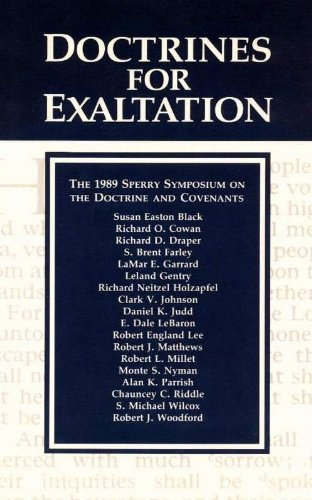
    Chauncey C. Riddle, “Pride and Riches,” in The Book of Mormon: Jacob through Words of Mormon, To Learn with Joy, eds. Monte S. Nyman and Charles D. Tate Jr., (Provo, UT: Religious Studies Center, Brigham Young University, 1990), 221–34.

    Chapter 13: Pride and Riches

    Chauncey C. Riddle

    One of the most memorable and striking passages of the Book of Mormon is Jacob’s instructions to his people on the subjects of pride and riches. Our purpose here is to examine the detail of this message and to apply it to our own day. We will proceed by giving a verse by verse commentary on the short passage on this subject found in Jacob 2:12–21, and will then draw some relevant conclusions for our own time.

    Parentheses and superscripts are used to mark the portions of the text upon which specific commentary will be made. Commentary is then made without further reference to substantiating evidence. The supposition is that each reader will compare notes with the author’s opinions and submit any differences of opinion to the Lord in prayer for resolution. That, of course, is what must be done with any evidence or opinion, footnoted or not.

    The setting for Jacob’s message is that his older brother Nephi, the son of Lehi, and leader and prophet unto the Nephites, has died. Jacob has been consecrated to be the spiritual leader of the Nephites, and on the occasion of the message concerning riches he is addressing those whom we might well presume are the more faithful of the Nephite peoples because his discourse takes place within the confines of the temple (Jacob 1:17). In response to Jacob’s prayer, the Lord has given him instruction, specific word, to deliver to these covenant people on this occasion, and Jacob delivers that word as quoted below.

    Jacob 2:12. And now behold, my brethren, this is the word which I declare unto you, that many of you have begun to search for gold, and for silver, and for all manner of precious ores, in the which (this land, which is a land of promise unto you and to your seed)a, doth abound most plentifully.

    a. A land of promise is a place designated by the Lord where he will go before those who are assigned to go there. The promise is that there they may find righteousness and the Lord himself, to be personally redeemed from the fall of Adam. There is no guarantee that a promised land will be fruitful or that it will abound in ores, such as Lehi’s promised land did. If it is fruitful and abounds with treasures, this may actually prove to be a snare to the people if they forget the real purpose of their being in the land and if they then substitute temporal desires for the promised spiritual blessings.

    13. (And the hand of providence hath smiled upon you most pleasingly, that you have obtained many riches)a; (and because some of you have obtained more abundantly than that of your brethren)b (ye are lifted up in the pride of your hearts)c, and (wear stiff necks and high heads)d (because of the costliness of your apparel)e, and (persecute your brethren because ye suppose that ye are better than they)f.

    a. The Lord is the provider, the hand of providence. He wants his children to enjoy the good things of the earth.

    b. The Lord gives different gifts in differing amounts to each of his children. He deliberately does not equally bestow his temporal blessings. He wishes to give each of his children the opportunity voluntarily to share with others who have less of some temporal gift. Sometimes the temporal blessings are given to those who seem to deserve them least. The initial distribution of spiritual blessings also often seems to be unequal and unearned. But any subsequent spiritual blessings must be earned upon the principles of righteousness. In this area of further spiritual blessings, the Lord is immediate, equitable and absolutely just in bestowing his blessings, even as he will be in bestowing physical blessings in the next world.

    c. We lift up our heads in pride as if we were something special among men, supposing that it has been our intelligence and industry which have provided for our desires rather than the Provider. Thus we look down on those whom we consider to be less industrious and less intelligent.

    d. We have stiff necks in that we will not bow to the God of the land and acknowledge the source of our blessings. We have high heads in the haughtiness of pride.

    e. The common way of showing wealth the world over is to wear expensive clothing. Expensive clothing is labor intensive, and wearing it shows that we are able to buy the time and skill of others more than most persons can.

    f. Persecution comes in so many forms that it is impossible to name them all. But standard ways of persecuting are to look down on others, to speak down to them, and to segregate them because of their lack of wealth.

    14. And now, my brethren, (do ye suppose that God justifieth you in this thing)a? Behold, I say unto you, Nay. But (he condemneth you)b, and (if ye persist in these things his judgments must speedily come unto you)c.

    a. God justifies men by teaching them what is just or righteous, then empowering them to live up to the standard. He never calls an evil thing just, and can never make a person who persists in doing evil things into a just person. The only hope an unjust person has to become just is personal repentance through faith in Jesus Christ.

    b. Jacob is the Lord’s anointed; he represents Jesus Christ to them. Thus they need to take very seriously his flat statement that the Lord condemns them.

    c. This is a plain warning of peril. The Lord will not always immediately bring misery and woe upon a people who are wicked if they know him not. But when a people have covenanted to become his children and obey his commandments, he warns them through his prophet and then shakes them temporally if they will not hearken to the spiritual warning. This has the goal of causing them to be humbled through physical suffering if they will not be humbled by spiritual warnings. Only as they are humble can they repent and receive the promises.

    15. (O that he would show you that he can pierce you, and with one glance of his eye he can smite you to the dust)a,

    a. Jacob seems to be saying: I would that he would impress you by letting you see his great power, without having actually to smite you so that you and your children suffer.

    16. O (that he would rid you from this)a (iniquity)b and (abomination)c. And, O (that ye would listen unto the word of his commands)d, and (let not this pride of your hearts destroy your souls)e!

    a. It is the Lord who makes it possible for a person to repent. He does not take the iniquity out of the world or the person, but enables the person to depart from the iniquity by turning to the corresponding righteousness. When we have departed from iniquity by making the good things the Savior would have us do part of our character, then we can also receive a permanent forgiveness for the iniquity once committed.

    b. Iniquity is inequity, and it is never seen more plainly than when some are rich and some are poor and there is no attempt on the part of the rich to create equity in righteousness. Unrighteous ways to create equity in wealth are theft and governmental redistribution. Both of these attempted solutions use force to negate agency, and never do create real equity, for they are based on the faulty “wisdom” of men. The righteous way to attain equity in society is for the rich to humble themselves before God and share their wealth with the poor as he directs, until they have achieved a just equity (D&C 104: 11–18).

    c. Abomination is that which departs from, is different from, the revelations of God. All righteousness comes through faith in God, which is loving obedience to his revealed instructions “Omin” is the equivalent of “omen,” which refers to revelation. “Ab” means away from.

    d. Faith comes by the hearing of the word. If only they will inquire of the Lord to know for sure that this is his word and then do what he says in full faith, they can and will be released from the curse under which they operate.

    e. The curse under which they operate is their own doing. They have departed from the way of the Lord, and the destruction of their souls, spirit and body, awaits them if they will not now return to that strait and narrow way.

    17. (Think of your brethren like unto yourselves)a, and (be familiar with all)b and (free with your substance)b, (that they may be rich like unto you)c

    a. The Lord’s celestial way is for us to love one another even as he loves us. If we are not quite up to that, at least we ought to think of and treat our brethren and sisters of the covenant the same way we treat ourselves.

    b. The desire to make money, especially to benefit unduly, is one of the great spiritual traps of the world. Spiritually, we might well be much better off if there were no money and we were under the necessity of trading labor. That would be one step toward equity. But another, more immediate step, is simply freely to give of our possessions to those who have less than we do, being aware of their needs and circumstances and imparting to them under the direction of the Holy Spirit.

    c. Richness is relative. It is not required that all men rise to a certain absolute level of physical wealth. It is only required that we of the new and everlasting covenant be equal, voluntarily equal, with each other in whatever we have. Then the Lord promises that he will give us the abundance of spiritual blessings. (D&C 70:14)

    In any mortal situation, a righteous person who has the strength to do so will be voluntarily producing physical goods and services for the society in which he dwells. He will consume only what is necessary of these self-gained benefits, and will voluntarily share the surplus with others who are in need of his surplus.

    One such surplus is knowledge, skills and tools which enable us to produce physical benefits. These may be righteously shared with others and are even more helpful to the recipient in most cases than are consumable goods.

    18. But (before ye seek for riches, seek ye for the kingdom of God)a.

    a. There is nothing wrong in itself about seeking for riches. But we must put things in proper perspective, in proper order. The correct order is first to straiten our hearts and minds into the pattern of the Lord’s love. That we do by finding his kingdom, accepting the covenant to enter that kingdom, then fully participating in the proffered salvation of our souls from the evil which is within our own breasts, which evil keeps us from becoming just and upright in all that we do.

    19. And (after ye have obtained a hope in Christ)a (ye shall obtain riches, if ye seek them)b; and (ye will seek them for the intent to do good)c—(to clothe the naked)d, and (to feed the hungry)e, and (to liberate the captive), and (administer relief to the sick and the afflicted)f.

    a. Hope in Christ is the pivotal concept which helps us to bridge from the beginnings of faith in Jesus Christ to the attaining of the fullness of faith, which is charity. After we receive a manifestation from the Savior which reveals his will, we have the opportunity to exercise faith by believing and obeying that instruction. Obeying the Savior gives us a right to hope for the spiritual blessings which the Savior can so richly bestow. The principal blessing which a person of faith can hope for is to receive a new heart, a pure heart which no longer desires any form of evil. This pure heart is called “charity” and is the greatest mortal attainment of any human being. Attaining it makes it possible to be able to ask for and to receive any other blessing from the Savior. Such a further blessing can be either spiritual or temporal. Additional gifts can then be given freely by the Savior to the individual who has charity because there is then no danger that the person will use any gift for an evil purpose. Thus to attain to a genuine hope in Christ is another way of saying that we have attained unto charity, which is the pure love of Christ. Then we are ready to endure to the end of our lives in righteousness, in doing pure and godly works in behalf of others. We are then ready to seek riches of any kind to be used for righteous purposes.

    b. The Savior tells us that when we are pure and cleansed from all sin, we can ask for anything and will surely receive it as we obey him, because we will not ask amiss but will ask for good things to do the work of righteousness.

    c. The intent to do good is the intent to do the will of God, even Jesus Christ, who is the fountain of all righteousness for the inhabitants of this earth. This good sought may be of four forms or types, each one corresponding to part of the nature of each individual human being.

    We humans consist of heart, mind, strength, and might. The heart is the heart of the spirit body and is the decision center in the human being. The mind is the brain of the spirit body and is the knower, planner, executor function of the human being. The strength is the mortal human body especially including the power of procreation. The might is whatever power or influence the person has in his or her sphere of action resulting from the abilities of the heart, mind and body and also from any wealth, property, persuasive power, or ability to command the efforts of other persons which anyone might enjoy. Thus there are good things of the heart, such as pure desires; good things of the mind, such as truths; good things of the body, such as health and strength; and good things of might, such as food, clothing, shelter, fuel, money, land, political position, priesthood power, etc.

    d. The naked may be those who have no clothing with whom we might share our excess clothing. Or they might be naked emotionally, such as the bereaved or hopeless to whom we can extend love. Or they might be naked intellectually, and we can share with them a knowledge of just how this world works so that they need no longer be so buffeted because of their ignorance.

    e. Some hungry persons need physical food. But others are hungry in heart; they need love and kindness in a world that offers much hate and tyranny. Or they may have an insatiable curiosity which they cannot satisfy because they lack the opportunity to learn.

    f. Some captives are political or military prisoners who are incarcerated through no fault of their own. To use our might to free them may be most important. Or they may be justly imprisoned, where influence might be brought to bear to help them to square a debt with society so that they may be honorably released. They might be emotional captives who are under the spell of an evil person and need an alternative to which to turn. They may be intellectual captives whose vision of the world is constrained to the point that they know not God. They may be captive to drugs or sin, from which they might be released through the assistance of the ordinances of the holy priesthood.

    g. Administering relief to the sick and the afflicted may be caring for someone who has had a stroke or a debilitating disease. But it may also be nurturing someone who is suffering under a load of guilt and does not know of the mercies of the Savior. It may be to help someone who has a preoccupation with a false idea or cause, who needs to see the world another way. It may be to help a person who is possessed of evil spirits who can find no relief except in Christ.

    Whatever the virtually infinite variety of need, the Savior has a solution which faithful servants may obtain and administer for every malady save one: A hard heart which will not admit the Holy Spirit. Only that person himself can change that.

    20. And now, my brethren, I have spoken unto you concerning pride; and those of you which have afflicted your neighbor, and persecuted him because ye were proud in your hearts, of the things which God hath given you, (what say ye of it)a?

    a. When the prophet speaks to those of the covenant, they of necessity must respond. If they are repentant, they will confess their sins and forsake them; thus Jacob asks his people what they will say. If they wish to continue the apostasy, they will murmur under their breath and persist in the way of evil. In either case they are judging themselves and setting the direction of their own future unto good or evil, whichever they choose; and out of their own mouths they are exonerated or condemned.

    21. Do ye not suppose that such things are abominable unto him who created all flesh? And the one being is as precious in his sight as the other. And all flesh is of the dust; and (for the selfsame end hath he created them, that they should keep his commandments and glorify him forever)a,

    a. God is a god of righteousness. He desires that we should worship and glorify him because that increases the righteousness in the universe and enables him to enlarge us without end. The dust of the earth and we humans were both created, or organized, for that same purpose, but most of the time the dust is more faithful than are most humans.

    Reflection on Jacob’s message brings three strong conclusions to mind. The first is that there is a good reason why it is hard for people to share: the differences of values and commitments which they have. The second is that to live the gospel of Jesus Christ we must be willing to be poor. The third is that before we do anything else in our life we should seek for a hope in Christ.

    Having differences of values and commitments does not make sharing impossible or unnecessary, only harder. When people have the same values and allegiances, it is easier to share. When they do not, sharing can become more difficult. To use an extreme example to emphasize the point, let us suppose two families living as neighbors. One family is very frugal and saving, and through years of living by those principles have gathered a small surplus. They are in a position to share. Suppose the other family is very needy. The first family sees that need and takes part of its hard earned savings to the other family to buy groceries. Then suppose that the second family takes the gift, rejoices in it, but decides that the best way to spend it would be to invite all of their friends over for a big alcohol bust. In one evening they squander the hard earned savings of the frugal family and are even poorer than they were to start with. Sharing has gone awry there.

    For this reason, the first thing people should share with one another is the restored gospel of Jesus Christ in the hope that there can be a common set of values, and service under a common Master. That would greatly facilitate sharing. But even if those in need will not change their values, they may yet have needs that must be addressed.

    This brings us to the general rule laid down by the Savior: Sharing needs to be done under his instruction and in his way. That is why there is a gift of the Holy Ghost, for men are not wise enough to know how to do all things in righteousness. That is why there needs to be a priesthood structure in the Church to be an established channel of inspiration and sharing among the children of the Savior. Difficult though sharing maybe, it must be done, but in his own way by the guidance of his own Spirit. When done in the Savior it is always worthwhile to impoverish ourselves in the service of our fellowmen.

    Clearly we do not need to be impoverished or poor to be servants of Christ. But we must always be willing to be poor. If we are already poor, we are admonished to remain poor before seeking wealth until we have obtained a hope in Christ. Thus we must be willing to be poor. If we have wealth, we must be willing to share our wealth with our brethren to the point that they are equal with us in physical wealth; if we have many brethren, our wealth may help many only a little, leaving us and everyone else in relative poverty. Sometimes our mission in life may cause us to be impecunious, as are some persons who spend most of their lives on a series of missions, or who may be dedicated to an enterprise which completely drains them financially, such as sustaining a fledgling educational institution. Or they may be moved to contribute heavily to the construction of a new temple, and making that contribution leaves them impoverished.

    The general principle is, of course, that all we have is at the Lord’s disposal. Whenever he instructs us to give it all away to the cause of righteousness, we gladly do so, knowing that we are pleasing our Master and furthering his work. We cannot be faithful servants of Christ unless we are willing to be poor, even as he, the Father of Heaven and Earth, was willing to be poor to fulfill his earthly ministry in righteousness.

    But who can look so dispassionately on material possessions as to count them nothing dear when the time comes to be stripped of them? This is not easy for most mortals. It surely is not the natural inclination of the vast majority of mankind. But it must be the attitude of all who are true followers of Jesus Christ.

    The true followers of Jesus Christ know that the only riches worth counting are the riches of eternity. They know that all flesh is as grass and will be gone tomorrow. They know that God is good, and amply rewards the faithful for any sacrifice of worldly goods they might make. They trust completely in the wisdom of their Master, having tried him and having found him to be trustworthy in every particular. So their faith commends only one thing as the first priority in their lives: Seek first for a hope in Christ before doing anything else.

    The time called “youth” is looked upon by the world as a time of freedom from responsibility, a time of learning, of indulging, of exploration before settling into the sacrifices and rigors of adulthood. That largely perverse view is a very poor preparation for adult, responsible life for most of its adherents. No wonder so many want to be supported by society throughout their lives, or to be perpetual students, or to indulge their ever increasing desire for pleasure, or to avoid the responsibility of family and a productive life.

    The ideal pattern for Latter-day Saint youth would seem to be that of the life of Jacob himself, who in his youth sought for a hope in Christ and found it. As a youth he beheld the glory of the Savior (2 Nephi 2:4). Then Jacob could ask for anything and know that he would receive it because of the promise of his God. If we become pure and spotless, we may ask whatsoever we will and we will receive it, for we will not ask amiss (D&C 46:30). We will ask to be able to succor the weak, the helpless, the poor, the abused, the ignorant, the hopeless. The riches of both time and eternity are standing ready to be given to the faithful to minister to the needs of the poor of all nations, kindreds, tongues and peoples if only the covenant servants of Jesus Christ will seek first for the kingdom of heaven and for a hope in their Beloved Master before they seek for anything else.

    The real problem is not with riches, of course. The real problem is with hearts. When our hearts are not pure, we cannot love with a pure love. We cannot love the Savior as we should, nor can we love our neighbors as we should. The Savior came to save us from this deficit of love by extending the arms of mercy, through our own faith and repentance, to each of us.

    Why do some of us resist? Is it not because we somehow see ourselves as being sufficient as we are? Do we not believe in our hearts that we are already good enough, that the Savior may indeed have to forgive us of a few things, but his love and generosity will easily take care of those things and we will then be ushered ceremoniously into the blessings of the great beyond? (2 Nephi 28:7–9). Such a belief is what the scriptures call pride. It is the belief that we are good, though perhaps our deeds are not. This is the belief that the old us does not need to die and become a new creature, but only our garments need to be cleansed. In pride we see ourselves as eternal creatures who may need to be forgiven and lifted up by Jesus Christ, but who do not need to be essentially changed by him. We do not need that new and pure heart which only he can give to us.

    My understanding of the gospel of Jesus Christ is that no mortals are just and righteous enough of themselves to go to the same kingdom as Jesus Christ unless they are remade in the image of Christ, heart and mind, body and soul. For without that pure heart, that charity, we are nothing (Moroni 7:44), and can, of ourselves, do no good thing (John 15:1–5). We must cease to exist as the old selfish persons we were and take upon ourselves new hearts and new minds.

    Then in the humility of being salvaged from damnation by the Savior’s love, we will never again consider that we are better than anyone else. Then we will know that we stand only in the grace of Christ, and will never be found looking down on anyone, including the worst sinner and Satan and his angels. We will then know our true place and being in the universe, and will say of the sinner, “There, but for the grace of God, go I.”

    Pride is the root of our evil, the source of our selfishness, the great barrier to our salvation. It is the pride of our hearts from which we need to be saved more than from anything else. Once we are saved from that, then all good things can be added to us. Then we will see as we are seen, know as we are known, and we will be familiar and free with our substance, treating all men as brothers. Then indeed we will have heaven on earth.

  • Philosophy 110 – Class Notes

    Chauncey C. Riddle
    March 15, 1990
    8:35 am

    Today’s question, what is the metaphysical point of this story? There was a maiden in Judea who was married to Heavenly Father and had a son. He was born Joshua, the name Jesus was attached to him by the Greeks. He was never called Jesus but that’s all right he answers to Jesus when you and I call upon him. We use that name, that is now one of his names.

    All right, what’s the answer to the question? Yes, it does explain how Christ became both God and man. What’s another one? There’s a big metaphysical point to be made in that story, a tremendous metaphysical point. This is one of the big places where the restored gospel gives us information that’s absolutely essential for our understanding. This little story ought to set the world on its ear. But you see people don’t think about what it means. The world in general has no idea what … The story is told over and over again without any understanding. What is the fundamental metaphysical point made in this story?

    One of your basic metaphysical questions was, what is the nature of man? Man was created by God. That’s true, but that’s not the point of this story. What is the great metaphysical point of this story? That’s what we’re after. Ah, thank you. Man and God are exactly the same species, the same kind. You see that is a tremendous metaphysical point. If you don’t know that you miss the whole point of what salvation is. The Christian world doesn’t believe that. Therefore, the Christian world misses the whole point. It doesn’t understand God, Jesus Christ, nor man. And all that the Christian world really gets out of Christ is some good ethical teachings. It does not understand salvation. Why? Because the metaphysics is all messed up. How did it get so messed up? You’d think that that story being told thousands and thousands of times in everybody’s lifetime would put a point across. Why doesn’t it? Because Satan has been very careful to sow lies in the minds of the children of men. Many of them want to believe the lies, so they do. They don’t inquire of God what the story really is. They just assume what they’ve always heard by some authoritarian source. That God is some non-material being. Therefore, man and God can’t possibly be of the same race.

    This isn’t the origin of man, this is the origin of Christ who came so the rest of us could become as he is.

    What does the `Son of Man’ mean?

    What is God’s name? His name is the Man of Holiness. Jesus Christ is the son of Man of Holiness. You and I can also become sons of God or Man of Holiness. That’s what salvation is.

    All right, are we all settled on that metaphysical point? What class do people belong to? That is a very important metaphysical question. What is the nature of man? What is the nature of God? The point is that they both have essentially the same nature. You see, that if Heavenly Father could actually beget a child by Mary in exactly the way you and I were begotten, we have to be the same species. That’s really good evidence in fact.

    Because they can’t imagine that she was married. When the story starts she’s a virgin. They don’t know the whole story, they don’t know that she got married. You see therefore the big question in the minds of a lot of peoples, was he born an illegitimate child? We know he wasn’t. He was born under the covenant. There’s a great deal of difference, you see. No, the Father wasn’t around, so she had another husband for time. As often happens to sisters in this world they’re sealed to their husbands who are not around. They also have other husbands for time.

    Now, do you have a Heavenly Mother? It’s a good metaphysical question, isn’t it? One of the important metaphysical questions about God is, does he have a wife? In the LDS situation the answer is, of course. Eliza R. Snow said, the thought makes reason stare. If you have any sense at all you know if there is a Father in Heaven, there has to be a Mother in Heaven. It’s just so simple. The world you see confuses this, it’s not using it’s own common sense. I can’t prove it to you but I believe it. And I have fairly good evidence. But the evidence isn’t your evidence. So why am I throwing it out to you for? As a hypothesis by which you might wish to seek evidence.

    All right, we are discussing the nature of man.

    Joseph was a good man. My guess is Joseph knew full well what he was doing. And he won’t miss out on his eternal blessings at all. He performed a very great service by being a good foster father to the Savior.

    Well, where do children go? They go with the mother. So brethren, be good to your wife or you’ll lose your posterity. Seriously.

    Now, what does that mean about the eternities? Do you know who Adam’s father is in the patriarchal order? Who is Adam’s father? His father in the patriarchal order is Jesus Christ. He is sealed to Jesus Christ. Who is the father of Jesus Christ? He is sealed to our Heavenly Father. Why are you and I trying to get our genealogy work done? So that you and I can also be sealed into that line. Because if we’re not sealed to Adam we cannot get sealed to Christ. And if we’re not sealed to Christ … it descends only from father to son. See, what we’re asked to declare ourselves for in this mortality, we’re asked if we wish to claim the race … the race to which we genetically belong. We belong to the race of the Gods. If we wish to relinquish that we may. That is man’s agency. We don’t have to inherit it. But anybody who’s willing to undergo training to inherit. What is the training to inherit? It’s schooling in righteousness of Christ through the laws and ordinances of the gospel of Jesus Christ.

    Anybody who wishes to inherit may inherit. There’s no soul on this earth that can’t inherit and receive the full blessings of his rightful heritage. You see, if the world understood these things … take advantage but most people don’t know, they don’t know where to find them. It’s our job to get it out …

    Now we need to ask some other questions about it. It’s important to know about the kind of being man is. The most important thing to know is, that man is of the race of the Gods. The key to theology is that they are of the same species. If you don’t understand that, you don’t understand theology because that’s the key to the whole thing. It’s the key to the whole understanding of salvation, of covenants, of everything that goes on in the kingdom of God.

    OK, what are some other questions concerning the nature of God? We discussed last time, are we all the same or are we all different? Let’s ask the question a little bit differently. Let’s ask the question in this way. Sure we all have these individual … but does that mean we are actually different creatures in essence or are we all pretty much the same? For instance, do we all have the same heart? No. Since the heart is the independent variable, what does that tell us about ourselves? People come to the world different but can grow to become one with Christ, to look like Christ. (Al 5)

    That’s right, sin is never justified. Why did the Father create the fall so we would sin? Why did the Father want us to sin? It’s not necessary to sin. A third of the people that come into the earth don’t bother to sin. They take a body and leave without sinning, they don’t need it. How come the rest of us need to? One of these days there will be a whole generation who will grow up without sinning. Not everybody who comes to earth needs to sin. Most of us are so hard headed, most of us apparently have to sin and see for ourselves how evil it is before we will not do it.

    The world is Satan’s kingdom on this earth. The world was created, Satan was given a kingdom on this earth in the fall. So that we would sin and we are told exactly why that was done. Why was that done? So that all would taste the bitter and know the difference between the bitter and the sweet. So that when we make up our minds to choose either the bitter or the sweet we’re doing it out of our own power, not out of (supposition). That’s important.

    Father doesn’t want us to sin, nevertheless, is it not true he put us into a situation where we have to sin. So that we could all taste the bitter and know it. So that we could choose by our own knowledge. Now, why? There has to be opposition. In the Celestial Kingdom there is no sin, but there is opposition. What’s the opposition in the Celestial Kingdom? Not evil desires, no one will be there who has evil desires. So where do you get the opposition? You see unless there is the opportunity to be evil, the opportunity to be good means nothing. The Celestial Kingdom could not be Celestial if there was not opposition. So where does in come from? Ah, yes. Just not outer darkness but the other kingdoms. All right, the opposition in the Celestial Kingdom is provided through the other places to go and those in the Celestial Kingdom see those other places constantly. They know, they know what’s going on there. That is the opposition in the Celestial Kingdom to go to some other place. That’s the option that’s there. that’s why there is opposition in the Celestial Kingdom. The only people who stay in the Celestial Kingdom are the ones that want to. Who choose to, thus they reject the opposite.

    … point of doing good. There has to be the constant opportunity of doing evil. Can God lie? Yes, anytime he wanted to. Why is he God? Because he chooses to. He doesn’t do it because he’s beyond temptation. In the sense that he couldn’t do it. He does it by sheer will. He holds himself on the path of righteousness. It isn’t outside him that holds him there. He doesn’t have a big gyroscope that keeps him upright on the line. By his own will he chooses in every act he does to do what’s right. And you see, the only way you and I can qualify to be in that kind of a kingdom is also to learn in every act of will to choose what is exactly right and nothing else.

    You see that’s what is … it makes it possible for us to be saved. We cannot be saved except by our own will power, we get on the path and choose what’s right, by our own choices. (Al. 5)

    Every day is precious to fashion in ourselves a new character, to make the change in the time we have to do it.

    Repentance is a strategy of religion, to stop sinning.

  • Problem Solving, 1989

    November 1989

    Step 1: Establish the problem.

    • a.   Locate the topic and do a concept formulation on it.
    • b.   Do an internal systems analysis of the topic.
    • c.   Seek for any laws or rules that govern this topic in the world.
    • d.   Locate the major problems related to the topic.
    • e.   Select a problem for further work and state it with clarity.

    Step 2: Relate the problem to its context.

    • a.   Do a systems analysis of the place of this problem in the larger world or universe system.
    • b.   Detail the relationship of the problem to three or four major components of the larger system.
    • c.   Locate the key system element(s) which governs the problem area.
    • d.   Identify the principal system outputs which make this problem important.

    Step 3: Examine the thinking which governs the problem area.

    • a.   Examine the epistemological roots of the problem.
    • b.   Show the metaphysical involvements of the problem.
    • c.   Show the ethical complications of the problem.
    • d.   Relate the problem to worldviews.

    Step 4: Propose and justify a solution to the problem.

    • a.   Propose a solution for the problem which furthers some stated general goal.
    • b.   Propose a systems analysis of the implementation of this solution.
    • c.   Tell why your solution will work better (be more effective and/or more efficient) than other solutions.
    • d.   Propose an assessment and an evaluation which would serve to measure progress in actual solving of the problem and in establishing the cost/benefit assurance.
  • The Development of Thinking Skills in College Students, 1989

    15 August 1989
    (This paper was delivered at a conference on education held at the University of Puerto Rico in 1989)

    This paper consists of three main parts. The first will be a set of definitions of thinking. The second will be a comment on the history and future of thinking. The third will be the description of a system of instruction for teaching people to think in the manner defined and in the historic context outlined.

    The position taken here is that the major problem in thinking is not formal. Logic seldom trips anyone up. It is the considered opinion here that the two major problems in thinking are 1) techniques of information handling and 2) gaining truth as a basis for thinking. Problems of logic come a distant third in this comparison.

    I. Definitions of thinking.

    The following definitions of thinking are intended to describe the same process, but in different idioms and applications. It is intended that the understanding of each separate kind of definition will assist the reader or hearer to gain a positive grasp on the ideas here being described.

    First a common-sense definition: Thinking is what happens in the mind and heart of a person as that person learns, uses and transforms the social and natural milieu in which the person finds himself. “Mind” and “heart” are here used as metaphors for the imagining and deciding functions of the human being. It is assumed that the individual person is shaped and molded by his environment before coming to any consciousness of self or of the surroundings of the self. We are born mentally as individuals only as we have learned well the social, linguistic and natural context of our lives. Our individuality at first is largely a product of the environment in which we are reared. Later we contribute to and change that milieu according to our desires and abilities.

    Now a technical definition of thinking. Thinking is the concept sequences which result from a person’s choosings. Concept sequences are systems of concepts. Thinking is thus the creation and use of concept sequences. Admittedly this is a non-behavioral approach to the subject. It depends upon introspection: you and I as individuals are aware of our own concepts, even if those concepts have no standing in a “scientific,” that is to say, “behavioral” account. Not all good thinking is science, and thinking about thinking is not science, just as thinking about mathematics is not science. But concepts and systems of concepts are known and used by us. Thus the focus of the investigation of thinking must focus on concepts and systems of concepts.

    The third definition of thinking is a description of ideal thinking: Ideal thinking is the deployment of concepts and systems of concepts which allow the individual to solve every problem which it is desirable to solve with a maximum efficiency and with no later regrets. Ideal thinking thus includes three main elements: the truth of the way things are, the possibilities of how what is might be transformed, and values as to what is good and worthwhile. This definition is thus a stipulation that thinking has its end in solving problems, and in solving them effectively, efficiently and wisely. Turning now to the historical perspective, we see how thinking has and may yet operate in human affairs.

    II. The history and future of thinking.

    The individual human being in our society today inherits a vast cultural deposit. This deposit consists of one or more languages, a social order, technical skills, and a value hierarchy. Languages are the basic socializing factor; they make all things in the deposit available to the person. The social order is the human relationships of which one is a part, including the nature of the family structure into which a person is born, the neighborhood structure, and the church, educational and governmental arrangements one partakes of in the process of growing up. Thinking in this personal situation consists of learning and using the ambient milieu in order to fulfill or to attempt to fulfill one’s desires.

    It is to be emphasized that no one person creates or controls the ambient milieu in which each person comes to consciousness. The milieu is a fabric, woven of many strands by every person who affects an individual, living and dead. No two persons have identical milieus, for each person has a unique set of relationships with the persons around him and becomes part of the milieu for every other person whom he or she affects. In a special way, the individual is created by his unique milieu, given his speech, ideas, values and habits. How he acts on the milieu may indeed have something to do with his unique personality, but that personality is at first almost wholly shaped by the milieu itself. Whatever latent absolute individuality there may be in the person can only emerge and find expression in terms of the cultural heritage. It is notable that few persons affect very many others in passing on that cultural heritage, though everyone affects someone in living their lives.

    The picture we are painting of the individual is that of a web. Every person is born into and becomes part of a social web. The web gives the person existence and the opportunity to act. But the person acts within the web and whenever he or she acts it is within the web. No person can destroy the web into which he or she is born. One may affect it, change it, in some way. But for any individual the change can be only small. One individual may apply those small changes to assist some around him also make small changes; but the receiving of those changes will be mostly voluntary. As the number of persons acting in concert grows, the net effect on the web may be drastic. Of such stuff are revolutions made, both military and cultural. But no one person can swing a revolution by himself. Many must cooperate and add their deliberate changes to the web to make any lasting change in the whole.

    Power in this world into which each of us is born thus comes from social organization, numbers of people working in concert. Only by joining the concert can any of us become persons. Only by working within the concerted effort can any person make a contribution. And the contribution of any individual is always small, notwithstanding the mythologies which grow up under the “great man” theories of history. The “great man” theories are simply useful fictions which focus upon one individual to describe changes which it takes many like-minded people to make. Theories as to why one individual appears to succeed and another appears to fail are interesting, but like all theories, cannot be proved to be true. But the theories sometimes become part of the cultural milieu, the small influence of some individual multiplied by the small influence of other persons who choose to believe the theory.

    As far back as our historical documents reach, we see this same picture of human beings and human life. Each human being has come into existence and has learned the language, the social system, the arts and the values of his context, has made some small impact on that milieu, and has then passed out of this existence through death. But there has been at least one major change in that cultural heritage in historic times. We now turn to an examination of that change, which we shall call the scientific revolution.

    The scientific revolution has its focus in the desire of individuals to understand the processes of the natural and social world, the milieu or context in which each individual finds himself, and to describe the processes of this milieu in general terms. This desire has probably always been present in some persons of every society. But the revolution came because many persons joined forces in that desire and created a new social and intellectual heritage, one in which the procedures and fruits of scientific thinking were socially codified and transmitted.

    Scientific thinking begins with asking the questions “how” and “why” does something operate or work in this world. That beginning has probably always been present, and is not itself scientific thinking. For no person is ever at a loss to answer such questions. Historically, most persons either ask someone else to answer their questions of this sort or they invent an answer for themselves. The scientific revolution takes place in the demand that the answers must pass two kinds of muster. First, they must satisfy certain canons of adequacy. These canons are culturally determined, that is to say, are changeable and do change historically and from place to place. They include today such requirements as rationality (the demand to be rationally consistent), the necessity of being grounded in some phenomenal base (the demand that there be a relevant body of empirical evidence on which the ideas are based), and the requirement that the ideas be predictive (that they successfully enable one to predict future phenomena, especially novel or unexpected phenomena). These requirements are not strictly “rational” themselves. Rather they are social. They are requirements established by the consensus of those who are considered to be scientists. Which brings us to the second factor for passing muster in the scientific revolution: the explanation must not only meet the requirements or canons set by those who are scientists, but must be accepted by the scientists themselves.

    We see that the scientific revolution was thus a social revolution. It consisted in the institutionalizing of truth. A certain body of persons loosely known as “the scientists” of their day became the arbiters of what would be and could be called truth. They were socially successful in replacing the clergy because they took a special and different focus than had the clergy. Where the clergy had focused on being the keepers of the truth by claiming the ability to deliver men’s souls to happiness in the next life, the scientists focused their claim as the arbiters of truth on the ability to improve the arts, the technical traditions of mankind. And because they were able to deliver obvious and impressive technical gains by means of their socialization of truth, they gained the acceptance of many persons, thus becoming socially acceptable and influential. The clergy, on the other hand, took a back seat, because one needed to die first to verify their claims to truth.

    Today scientists would like to think they have a corner on all truth. That they have not been able to accomplish thar, for the average person does not yet believe them in all things. But they are roaringly successful nevertheless, and would fain claim to be the keepers of all that is true. The atom bomb, medical advances, electronics, and other innovations have given them great clout, so they try sometimes to take dominion over the past in connection with their cousins, the scholars, and over the future. But they sometimes go too far, and are forced back into their proper bailiwick, the improvement of technical processes.

    The scientific revolution was thus a revolution in thinking. Those who created it said and showed that there was a process, a systematic approach, which was beneficial, in answering the questions “how” and “why” things work as they do in this world especially as related to physical or material processes. They have been successful in socially institutionalizing this method of thinking using the PhD degree. And they maintain their hold as keepers of the truth by attacking all others and any mavericks within their own ranks who will not bend to the socializing process and accept their group verdict as to what is truth and what is not.

    It would seem that on the whole, the scientific revolution has been a great plus for humanity. Apart from the exaggerated claims of some persons of the scientific community, they have shown very real gains for humankind, gains which continue and which give every promise of continuing into the future. And perhaps the domain may expand as human beings come to agreement about psychic phenomena as they have about physical phenomena.

    But there is another revolution in the wings, waiting for enough persons and enough consensus, that it might be truly institutionalized as science has been. This revolution is the revolution of value considerations, the question of good and evil, that values are all either non-existent or entirely arbitrary. But they have not convinced the majority.

    Today the majority of persons know that human survival depends upon getting the same kind of hold on good and evil that science made possible for truth about technical processes. It will not do to simply politicize the matter. That did not work for truth, and doubtless it will not work for good and evil. The opinion of the majority does not make persons happy just as it does not launch rockets to the moon. Today we look into the near future and see that if we do not come to some value conclusions as to what to do with the production and distribution of garbage, with the allocation of health care, with the endlessly draining arms race, with the breakup of the family, we will all soon be in misery. And misery is evil.

    The historic solution for misery has been social. Into the dark recesses of the past our peering reveals that a few have always organized things so that they could escape misery by focusing the labors of the many upon themselves. This is to say in plain terms that every great world civilization has been formed on the social base of slavery, some kind of involuntary servitude. The scientific revolution and the accompanying industrial revolution enlarged the few to many, as natural power replaced slave power in producing the amenities of the good life. But the revolution has failed to improve the lot of the remainder. Technical processes used for evil now threaten everyone (e.g., the nuclear threat). Gone is the old scientific optimism, replaced by a wandering apprehension of gloom and doom.

    The gloom and doom will continue until we have a widespread recognition of the realities of good and evil, even as there was a widespread recognition of a corner on some kinds of truth in the scientific revolution. How this will come, I do not know. But doubtless it will be a new kind of thinking, even as was the scientific revolution. It will be a thinking which has some demonstrable benefit, even as the scientific revolution benefited industrial and technical processes. Perhaps some group of persons will achieve a society so happy and emotionally prosperous that everyone will have to admit that they have a corner on good and evil, and will make them the keepers of good and evil, even as the scientific community has been made the keepers of certain kinds of truth.

    But clearly a value revolution is needed as our world of inequities so clearly shows. Not only must we choose our future on the basis of truth but also on the basis of which choices are good and which are evil, which choices lead to peace and happiness, and which ones lead to misery and degradation. The next revolution must and will be a social thing. As was the scientific revolution, it must also be an institutionalizing of good thinking. And it will make possible the final revolution which will be the creation of a social order in which the cultural heritage and milieu of every child born will be truth, good, and perfected social order. But the revolution of good over evil must come before the society can be perfected. The mistake of Marx was to jump the gun. He thought that the scientific revolution was all that was necessary to destroy evil and create the just and perfect society. He did not see that science does not and cannot answer the question of good and evil. His new state simply perpetuates the evil of the old system, replacing nobles with party members, perpetuating social inequality in the midst of technical triumphs.

    All that has been said thus far is a prelude as to how to teach thinking, good thinking. The prelude has been necessary, because not to put thinking into its historic context would be to shear thinking of its true power, the power to help us to see what our real problems are and to assist us with creating and implementing the social institutions which will assuage those ills. Good thinking must be a two-edged sword: cutting away error from truth and evil from good, that good and reasonable men and women might work in concert for that better world to which so many of us have dedicated our lives. Good thinking must see the world as a whole, as a system which includes people, truths and values.

    III. The teaching of thinking.

    As with everything else, thinking cannot be taught. But it can be learned. What we call good teaching is actually the facilitation of learning, and it can exist only as and if learning is actually taking place. But a good deal can be done to facilitate good thinking. Most of what can be done is to suggest possibilities which the learner can try, to see if they help. If they help, and if problems are solved, then facilitation has taken place.

    The following is a description of an intense experimental honors course in thinking which has been conducted at Brigham Young University for the last nine years (since 1980). The course is actually a workshop in which daily written assignments which involve the practice of thinking skills are required of each student. The course has undergone many revisions. This account will review its present major features.

    a.   The Key is to ask good questions.

    The key to thinking and learning is the asking of good questions. The interrogative stance puts the initiative on the inquirer, begins where he needs to begin, pursues what he wants and needs, proceeds at his pace, and terminates only according to the individual’s desire.

    All learning is thinking, and thinking is the creation of concepts and the establishing of relationships among the ideas one has created. Relationships among concepts or ideas is what we ordinarily call understanding, and all questions are questions of understanding. It is the world of saber, not conocer knowledge which is opened up by questioning. (Of course, good questions may well lead indirectly to conocer types of knowledge.)

    It is helpful in the facilitation of questioning to note that there are five kinds of questions. First there is the generic question of understanding, and all questions are questions of understanding. But within the domain of questions of understanding there are four principal subtypes. These are questions which elicit clarification, verification, evaluation and application. Questions of clarification are requests which seek surety of the intention of the speaker or enlargement of an area of ideas indicated by a speaker. “Do you mean to say that…?” and “Would you be more explicit?” and “Tell me more about X” are questions of clarification. Verification is concerned with the evidence for the truthfulness of an idea. Questions such as “What is the documentation for that data” and “How do you know whereof you speak?” and “How can you hold that idea in the face of evidence that X?” are questions of verification. Evaluation has to do with the value connections of ideas, and results in questions such as “Why is concept X better than concept Y?”, “Is this procedure a practical thing to do?” and “How can we be sure this is the moral thing to do in this situation.” Application questions deal with the actual use of ideas in the real world, and result in questions such as “How do I put this on?” and “Will this work for every occasion of the problem?”, and “Of what use is this object?” Questions for general understanding which do not well fit any of the four specialized kinds might be the following: “How is X related to Y?”, “In what ways is the human brain like a computer?”, and “What does hygiene have to do with longevity?”

    One can, of course, mix categories of questions, such as asking, “How can you be sure that this is the best thing to do?” which mixes verification with evaluation. And if all questions are simply questions of understanding, why even separate out the four subtypes? The answer is that as one becomes aware of the subtypes and their combinations, one can become more expert in asking just the right question to elicit the answer needed. It is true that one can use a shovel to do the work of a hoe, just as one can use questions of evaluation to get at problems of verification. But clumsy and inefficient applications are not desirable in either gardening or thinking. Asking “Is this a good idea?” is a clumsy way of asking for the evidence for the truthfulness of a concept, and would better be replaced by “How can we be sure that this procedure is reliable?”

    b.   Everything is part of a system.

    When a person has been alerted to the importance of asking good questions, he is ready to be exposed to systems thinking. Systems thinking is different from ordinary thinking in that it insists on conceiving things as wholes. It involves the recognition that though analysis of things or ideas is valuable, analysis must always result in a resynthesis to be fully fruitful. Nothing exists in a vacuum, and nothing can be understood all by itself. Understanding is a matter or relating, even as existing is a matter of being a part of a system. And it is important to realize that there is but a single system in existence: the universe itself.

    It is useful to distinguish five modes of systems thinking. The first is systems analysis, which is studying something in the real world to determine its parts, how they function, and how that something relates to the universe around it. An example of this kind of thinking is a market survey to see what is needed in an area. The second mode of systems thinking is systems design. This is the invention of an idea structure which is not part of reality, but which hopefully would be an improvement upon reality if actualized. This is the planning, designing, inventing function which is so crucial to all successful solving of practical problems. An example of this would be the work of an architect. The third mode of systems thinking is systems creation, which is the translation of the desired systems design into reality, as a contractor builds the building which the architect has envisioned. The fourth kind of systems thinking is systems operation, which is the maintenance and use of a system for its intended purpose, such as the work a hotel manager would do. Finally, there is systems evaluation, which is the comparison of two systems according to some criterion of desirability to ascertain which of the two beings compared most nearly meets the desired standard. An example of systems evaluation is the star system by which many hotels are rated in various countries of the world.

    To assist persons to learn to think in systems format it is useful to establish a standard set of questions which form a useful beginning to the five types of systems thinking. It is useful to see that every real system has a form, and may be considered as a static system. The important questions to ask for a static system are, “What are the system boundaries, which set it apart from the environment?” “What are the system parts and how are they related to one another?” And, “What is the function or purpose of this system as it exists in its environment?”

    Many systems may also be analyzed in a dynamic aspect, asking such questions as: What are the inputs of the environment to this system? What are the outputs of the system to the environment? What are the factors which are in opposition to this system, which tend to its destruction? What is the relative efficiency of this system as it functions in its environment?

    A system may also sometimes be seen as an agent system, one which contains an agent and is therefore not fully to be understood in terms of its structure and environment. For agent systems we ask such questions as: What is the goal or desire of this agent? What are the resources available to the agent? What strategy may the agent employ to use the resources available to attain the goal? What tactics would be useful to implement the strategy selected? What assessment can and should be made to determine when the agent has reached the desired goal? What evaluation of the cost/benefit ratio of the attainment of the goal can and should be made?

    These questions of the static, dynamic and agent systems analysis are of course not exhaustive. They do provide a beginning, and a solid beginning for interrogative investigation of an area, and as the technique of systems thinking is learned by a person, his list of questions becomes tailored to his own particular personality, needs and successes. What is important for thinking is that a person see all things as systems, and all part of the one actual system of the universe. An example of the fruit of such systems thinking is the environmental concerns which are beginning to abound as people become painfully aware that no factory or business is an isolated entity unto itself. We will do better systems thinking when we all realize that individuals must not be a law unto themselves either. Consciousness of that necessity is beginning to be seen in restrictions on the public burning of tobacco (smoking), which burning some individuals seem to enjoy while being oblivious to the stress which that act causes in other persons near them.

    c.   Concepts are systems also.

    The concept of systems as a foundation leads to an analysis of concepts as systems. Concepts are the building blocks of our thinking. Human beings think, speak and act according to their concepts, whether these concepts be correct or incorrect, fuzzy or precisely defined, few or many. To attain to clear and precisely articulated concepts is the foundation of all expertise. This process benefits from the application of good questions in order to elicit the systemic relationships which all concepts possess. The following is a list of ten questions which have been found useful to assist persons to think newly and precisely about their own concepts, thus to be able to think and to communicate with greater ability.

    1.   What are the names which attach to this concept? A listing of the names used, even from several languages, provides the key to researching of the concept. The name is not the concept, but is the index.

    2.   What is the base, language, culture, time-frame of this concept? All concepts are related to people in their historic settings, thus the necessity of seeing a concept as part of a particular cultural system at a particular time and place.

    3.   What is the etymology of the words used to designate this concept? It is important not to confuse historic usage with present concept, but historic usage of them provides important nuances of meaning for a concept.

    4.   What are the dictionary definitions of the symbol being used? Dictionary definitions are not to be confused with what a concept should be. They are simply a register of historic usage. But historic usage needs to be known whether or not that usage is fortunate or useful or not.

    5.   What are examples of the use of this concept (symbol) in the designated cultural base? Good dictionaries give such examples, and such examples are helpful in seeing how the concept has actually been deployed by other persons.

    6.   What are the correlative concepts which form the matrix of meaning in which this concept has its significance? Examples of such helpful correlative concepts are the genus, concepts which are similar, contrary and opposite, concepts which are complementary, counterfeit, and the perfection of the concept. Here we see systems operating as a concept is shaped and defined by the concepts with which a person associates the idea on which they are trying to shed light.

    7.   What key questions should I ask and answer to elicit factors of this concept which have not already been brought to light? This category gives the thinker the opportunity to get away from the prescribed questions and to explore what is needed at the fuzzy edges of this concept which is being fashioned.

    8.   What is the best definition of this concept? Here the person has the opportunity to pull together the very best thinking he or she can do to detail the nature of the concept in question. It is here recognized that concepts are and should be personal, for every person creates his own concepts within the cultural milieu in which he or she finds intellect. A concept system which is clear, articulated, which has integrity or consistency in itself and is most useful in solving problems is never a gift from the public domain, but must be achieved by the individual out of the materials furnished by the cultural heritage. Having achieved such a concept system, the fortunate possessor of same then has the problem of communicating it. But at least then he has the possibility of communicating precisely, which the cultural heritage alone does not usually afford.

    9.   What are positive and negative examples of this newly formulated concept? The definition is a beginning of the process of communicating the new concept. As we learn in life the usage of words from positive and negative examples used by our tutor, so we may communicate to others the nature of our concept by furnishing many positive and negative usages of the concept, according to the needs of the circumstances.

    10. What effect should and does this concept have on me? What does it do for my mind, for my belief system? What does it do for my heart, for my value system? What does it do for my actions, the skills of body with which I relate to the universe? And what does it do for my power to influence the universe around me? A concept demonstrates its existence and power by the changes it makes in its possessor. Thus, part of the defining and communicating of the concept is the answering of questions as to what difference using it will make in the life of the user.

    Concept formulation is the deliberate and forthright attempt of an individual to control his own thinking by acquiring a set and system of carefully thought-out concepts with which to relate to the universe. Anyone who does well at anything in this world has performed this operation, which operation enables the person to make correct and precise judgments about the world around him, and to make wise plans for acting. Concept formulation is a species of systems analysis as a preparation for other modes of systems thinking.

    d.   Strategies for effective systems action.

    Armed with good questions, a sense of systems, and a power to formulate useful concepts, the person who is learning to think is ready to consider strategies. Strategies are specialized patterns of thinking which are devised to handle efficiently recurring human problems related to thinking. While there are many strategies, the principal ones for a thinker to master are those of communication, scholarship, science, religion, creativity, and evaluation. We shall consider each of these in turn.

    1. Communication. Communication is the affecting of others. We communicate diseases, blows, and gifts, but the communication with which we are here principally concerned is the communication of ideas, which we do mainly through symbols. Communication is an expression of thinking in the speaker and a stimulus to thinking in the hearer.

    It is useful for a user of language to know that there are four principal uses of language: to express one’s feelings and ideas, to describe the world, to command others, and to perform acts by authority. These are the disclosure, the descriptive, the directive and the declarative modes of assertion, or human symbol usage. Good thinking distinguishes them and identifies each correctly both when the person is speaker and hearer.

    Knowing the type of assertion is the key to the capture process. To capture is to grasp the essence of any human communication, seeing it for just what it is. The capture format is to ask and answer four basic questions about any assertion:

    a.   What is the speaker’s purpose? (Knowing the correct type of assertion is of assistance here.)

    b.   What is the speaker’s main assertion? When a message is all boiled down, what is the point being made?

    c.   What is the support of that main point? Is it a true or important assertion, and what evidence is there for that? Does the speaker give evidence, or do I already have evidence which shows me that the speaker’s point is true or false, or important or unimportant?

    d.   What is the relevance of what the speaker says? Should I do something about it, and if so, what? And what might be the loss if I do nothing.

    Only as a person grasps all four of these factors does a person grasp a message. These four parts map the nature of human beings. Each human being is made of value choices which are reflected in purpose: ideas which are reflected in main assertion; clout, which is reflected in support; and effects, which are reflected in relevance. These are the four aspects of the human system, and every communication reflects systemically these four aspects of a speaker. To communicate well, both as speaker and hearer, is to understand communication and communicators well, which these questions help one to do.

    2. Scholarship. Scholarship is researching and interpreting the written communications of other persons, then forming an image of whatever they are describing on the basis of what has been documented. This is the typical mode of gaining ideas about the past and the distant where we have no personal opportunity to observe. Scholarship is a specialized mode of thinking which is designed to eliminate error in favor of the truth about matters one cannot directly observe. This strategy has served mankind rather well, but has not proved to be without problems, for it sometimes rejects truth in favor of error.

    The essential thinking process of scholarship is to assemble the extant documents on a subject, interpret them, then to form a reconstruction of what they describe according to the stricture and canons of scholarship acceptable to the community of scholars at the present time in history. As with science, this is an institutionalizing of truth. No one person can read all the documents about every subject. So there is a division of labor in which one person becomes an expert on one set of documents and ideas, other persons on other documents and ideas. The hope is that if each person is responsible and careful, each person will contribute to the society the best that can be done and thus all will be edified as they believe the delivered reconstruction of the scholars.

    Scholarship has large problems, of course, because human beings perform it and human beings have large problems. The scholar is at the mercy of whatever documents happen to be extant, what other scholars have said, the truthfulness of the writers of the original documents, and the canons which obtain at the time of writing. Scholarship eliminates the unusual, the spiritual, the unlikely, and the unverified. And this is done with good reason, for many things that are unusual, spiritual, unlikely and unverified are in fact not true. But some are, and thus the scholar labors in the cause of likely truth. The person who does good thinking understands and uses scholarship, both as a consumer and a producer, but is acutely aware of its limitations.

    3. Science. The strategy of science is to produce reliable generalizations of fact, law, theory and principle out of the phenomena human beings observe about the universe. It is a creative enterprise, necessarily restricted by what ordinary human senses perceive, but highly flexible as to how those sensations shall be construed. Science also weaves a social fabric, for no person can observe and imagine all things. As one person does his task of generalizing and creating ideas which are responsible and within the current canons of scientific acceptability, all are enriched. Science has the advantage over scholarship that some of its products have enormous potential for technical application, and therefore for commercial gain, where scholarship is limited to the production of information.

    To think scientifically is to attempt to characterize the universe in which we live in a manner that reduces surprises to zero. Its surety lies in its predictive ability. The controlled experiment reveals what has been and is; inductive faith in uniformity projects what will be. Fortunately for us humans, uniformity seems to be a real thing, making planning and engineering of many kinds feasible. But there are limitations to science.

    Science cannot operate except in an area of controllable phenomena. If there cannot be a controlled experiment, there cannot be reliable projection. If the phenomena are not public, (if they are unique to some personal sensibility) again there cannot be scientific projection. And controlled experiments are very difficult to achieve, even in simpler cases such as physics and chemistry. But notwithstanding the limitations of science as a thinking strategy, every good thinker needs to know the procedure, to perform it well as necessary, and to consume its products with care and skepticism.

    4. Religion. Religion is the strategy of the creation and maintenance of one’s self or one’s character through controlling habit formation. Habits are formed by unbroken patterns of choosing, and the strategy of religion is to learn to perform such unbroken patterns even in the face of thoroughly entrenched habits which one has had for a lifetime.

    Using this strategy, there seems to be no limit as to which or how many habits can be changed. This gives the individual total control over his own personality over time. It is thus a great access to personal freedom. To understand the patterns of habit change, the function of triggers, of positive and negative feedback and rewards, the necessity of controlling the environment as well as the person, all give the person power over self.

    The strategy of religion is not to be confused with church institutions. Churches traditionally have attempted to influence the habits of individual participants, to influence the character and choices of persons. But churches have usually done a poor job of making much difference except for initial imprint. Learning to think in the strategy of religion gives the individual the opportunity to take good out of every culture and environment and to incorporate that good into himself, be it values, ideas or physical action patterns. The strategy of religion is what gives lasting personal harvest to all other good thinking.

    5. Creativity. Creativity is the strategy of taking the patterns given to the individual by nature and by his culture and then recombining those patterns in ways not before encountered. Creativity is a thought process, a thinking method. To learn how to do it is to free the imagination, that the imagination might learn well the heritage of the past and then expand that heritage. The greater the heritage of patterns, the greater the recombining potential, other things being equal.

    Not all creativity is good or useful, even as the seemingly random mutations in a gene pool seldom produce viable, much less superior, individuals. But the value of a genuine improvement is so great, and so few persons seem to want to be genuinely creative, that the creative person has a great advantage in society.

    Society is double-minded about creativity. In general what society rewards, especially in children, is conformity. Through conformity one learns his language and becomes acculturated and an acceptable member of the adult world. But then for an adult, lavish praises are heaped upon those who manage yet to be creative and produce things which society then treasures.

    Thinking creatively is a social skill as well as a thinking skill. The wild imagination must be tamed to select and publicly produce just those new ideas which are on a leading edge of social change, which will be desirable and tolerable to the mass of less imaginative persons. Artist, inventors, military people, scientist and scholars all need to be creative, but responsibly and socially creative lest they be ostracized from the human sphere. To learn this double bind of unfettering the imagination then carefully fettering what is shared with others is the skill of creative thinking, which every good thinker may master, but especially can master if they are a creative facilitator.

    6. Evaluation. The necessary companion skill for creativity must be evaluation. Evaluation is comparison of things with an idea. Having ideals is itself a matter of evaluation, for one must select good ideals or the process flounders. To pretend there is no good and no evil is to eliminate the possibility of evaluation. Some persons so pretend, but must introduce good and evil by the back door to avoid being flooded with the trivial and the obnoxious.

    The strategy of evaluation is to have an acute sensitivity to value, which sensitivity can be enhanced by the deliberate thinking and experiences of a desiring individual, even it it cannot be taught. Like most other things, evaluation is a matter of experimentation, learning from the results of our choices. Admittedly this is circular, and a person who has no clue as to what is good and evil to begin with cannot learn evaluation, even from a lifetime of experience. But most persons do seem to have that starter ability to evaluate. Careful cultivation of that ability by good example and by special exercises then places evaluation in the repertoire of the thinker, enabling him to evaluate all of his own thinking and also those things communicated by other persons. Most people can tell physical garbage when they see it. But curiously many do not see intellectual garbage unless they are directed in thinking about it. The propaganda machines, acculturation techniques, and cultural pressures to conform seem to have done such a good job that not only is creativity rare but the ability to be a forthright and obviously responsible evaluator is at least as rare.

    Evaluation is a social skill, even as creativity is. One must not be too far away from the sensibility and norms of the social milieu, or one will not be heard. To evaluate clearly in one’s own mind, then to make public only that which will be socially acceptable and helpful is the test of good thinking. Those who promote evil suffer the same social strictures, for they must not be too different from their contemporaries either. But promoting evil seems to be like rolling stones down a mountain; given the right social situation, it is easy. But promoting good is like rolling the stone back up the mountain. Not only does one need to evaluate correctly and carefully, but to affect the social scene you usually need to assist others to learn to think, to learn to evaluate; it is not enough to propound you own evaluation as it often is in the promotion of evil.

    There are many other strategies, such as that of philosophy, persuasion, and entertainment. There are strategies of facilitation of learning, as there are specialized strategies that form the background of every profession. The more strategies of thinking a person masters, the more powerful he or she will be. But the emphasis in the teaching of thinking must be on those which are fundamental to the successful utilization of all other strategies, such as those discussed above.

    e.   Relevant general knowledge.

    The thinking skills discussed above mostly fall into the category of the processing of information in special ways, which we stipulated in the beginning was the first priority in the teaching of thinking. The second priority was that of special knowledge, or truth. We turn now to a discussion of that area, focusing on the subjects of epistemology, metaphysics, ethics and worldviews.

    1. Epistemology. Epistemology is the discussion of how human beings know. Understanding what can be known and how it can be known is indispensable to good thinking and to the proper skepticism which every thinking person must constantly employ. To bring someone to a realization of the ways of knowing, with their strengths and limitations, is to give those persons a great freedom of perspective with which to evaluate the sayings of mankind.

    The epistemologies which seem important to bring every thinker’s attention are the following:

    a.   Authoritarianism: Forming beliefs on the basis of information communicated from other human beings.

    b.   Rationalism: Ideas deduced from what one already believes or which is consistent with what one believes.

    c.   Empiricism: Forming beliefs on the basis of one’s own sensory observations.

    d.   Scientific empiricism: Forming beliefs on the basis of arrays of empirical data which have been mathematically treated to reveal justifiable generalizations.

    e.   Pragmatism: Forming and accepting ideas because they seem to work.

    f.    Skepticism: Rejecting ideas when there is not sufficient warrant to believe them.

    g.   Mysticism: The substitution of feeling for mental evidence in the accepting of ideas.

    h.   Non-human authoritarianism: Forming or accepting ideas on the basis of communication from non-human persons, should one encounter such.

    i.    Fabrication: The invention of ideas where there is a need and no other epistemology offers help.

    j.    Sensitivity to good and evil: The basic ability to make value judgments not based on personal preference. This is often seen in children but tends to be covered up in the process of acculturation. It is an epistemology which focuses not on truth, as do the others (with the possible exception of mysticism), but on values.

    This list of epistemologies is longer than the standard philosophic categorization. It is deliberately longer to include all of the kinds of knowledge and knowing which are important to human beings in this world, even though some are not popular in academic circles. But it is important to understand them all, and to use each of them as needed. The best approach to thinking seems to be to use them in concert, as so many organ stops which enrich the flow of ideas. It is assumed that the ultimate justification for any epistemology is pragmatic: the source is judged by what it produces. But clearly, one who is ignorant of epistemological possibilities is woefully hindered. To know how to know and the limitations of what can be known is a great advance in the process of knowing and thinking.

    2. Metaphysics. Metaphysics is the study of the unseen world. While it is not implied that there is no value in studying the seen world, the seen world is rather well-known to human beings both through their own observations and through the cultural and scientific deposits which are the cultural heritage of particular peoples. But everyone is confused about metaphysics, for by definition it is the area of truth about which there is no established procedure for defining what is true and what is not.

    What is crucial about metaphysics is not so much to have a set of answers but to have a set of questions. If one has answers, they cannot be verified. But if one has an understanding of the questions, then at least he or she can be wary whenever anyone propounds an idea which is clearly metaphysical or which is based on some metaphysical conclusion. Which is to say, of course, that the study of metaphysics makes one very skeptical about most things, because most human ideas of truth are demonstrably based on and intertwined with metaphysical presuppositions.

    The questions of metaphysics are such as the following:

    ·    Is the universe material, ideal, or both?

    ·    Are universals or particulars more real, or do they have different status in different realities?

    ·    What is the nature of time and space?

    ·    Is there a genuine uniformity which guarantees our inductions, or is the universe an assemblage of curious chance events?

    ·    What is the true nature of human beings? Is there more to a person than the physical body?

    Some questions are borderline, as might be expected, bridging the seen and unseen worlds, such as:

    ·    Are there intelligent beings other places in the universe?

    ·    Are human beings part of a race which also exists elsewhere?

    These questions are quasi-metaphysical because solid physical evidence would answer the question but in the absence of such evidence answers to the questions remain metaphysical speculations.

    To be aware of metaphysical snares is again to be a wary purchaser in the marketplace of ideas. To be without this ability to think and to evaluate leaves one in a position of great naivete, which is unbecoming of one who likes to think that he thinks well.

    3. Ethics. Ethics is the study of different value systems. Of itself, ethics does not make a person more moral, a better citizen of the world. But it does make a person more conscious of the alternatives and can assist a person to sharpen his or her perceptions of value if one cares to do so.

    It is important for both personal decisions and for cultural awareness to be knowledgeable about the great historic value systems. These include the Cyrenaic emphasis on physical pleasure, the Platonic emphasis on knowing, the Aristotelian emphasis on the golden mean, the Epicurean emphasis on the balance of higher and lower pleasures, the Stoic tradition of apatheia, the moral sense of doctrine, the Kantian categorical imperative, and the utilitarian social emphasis on the greatest pleasure for the greatest number. A brush with one or two less traditional schemes is also valuable and invites the student to explore the great variety of these on his or her own.

    One conclusion that seems important to emphasize is that all of these schemes mentioned are “rational” systems of ethics. They give an adherent a rule or principle on which to base practical decisions. But they fail to give any surety that the result one obtains from following them is in any way guaranteed to deliver the kind of reward the user anticipates. That is a way of saying that human ethical systems cannot deliver wisdom. They are not powerful enough to cover all contingencies, and therefore each fails, even in its own terms, at times. Not to learn this great lesson which Socrates taught so clearly is to miss one of the greatest cornerstones of good thinking. The moral of the story is, of course, that one must search beyond the rational systems of ethics to obtain a system of value considerations which has any hope of being a sure deliverer of sure and enduring wisdom.

    Since all practical thinking and planning in this world involves value considerations and commitments, the study of ethics is indispensable to the learning of good thinking. If one cannot be sure, one can at least be wary, and that of itself is a great boon to thinking.

    4. Worldviews. Having examined epistemology, metaphysics and ethics, it is next important to emphasize the systemic function of these areas of thought. To put answers to the questions of each area of thought together in a consistent whole is the business of building worldviews. A worldview is a person’s belief and planning system, and includes each of the above named disciplines and more, even if the person is not aware of it. But to become aware of one’s own thinking is one mark of a good thinker.

    The study of worldviews asks and answers three basic questions. The first question is, “How do I know this?” The second question is, “What is the truth about this matter?” The question about truth must be answered in two separate phases, one relating to the seen or knowable world of nature (physics in the Greek sense), and the other relating to the unseen world of metaphysics. The third question relates to values and choices, and asks “What should be done in this situation?” The last question is the area of ethics.

    Putting together the areas of epistemology, physics, metaphysics and ethics enables one to build a coherent worldview. Or, starting at the other end, one can take a person’s thinking and analyze it into the components of a worldview. For purposes of teaching a person to analyze a worldview, twenty or so questions suffice to elicit the information to give a picture of a person’s mind-set or worldview.

    This ability to analyze and to synthesize worldview gives a person great power over his own thinking. Most persons have subscribed to a worldview in their youth as they learned their language but are almost totally oblivious to the fact that the view they have is in many aspects arbitrary and may indeed be false or undesirable in some points. But teaching that person to discover his own worldview as well as those of other persons gives the individual great power over his own thinking, for he or she can then alter that worldview in accordance with personal desires and experiences.

    5. Applications. Armed with the skills and knowledge described above, students are then exposed to a number of readings in the subjects of personal responsibility, education, science, history, technology, education, politics and religion. They are challenged to ferret out of each area the issues which are of crucial importance and to evaluate and rank the answers to those issues. This is that part of the course which seems most rewarding to students, for they see and feel the power of their skills in working with the traditional problems of mankind.

    IV. Conclusion

    This approach to the teaching of thinking thus focuses on systems thinking. Individuals are taught to ask questions that elicit the systems characteristics of everything which they investigate, then to pursue the best way to conceive of these matters using background knowledge from the areas of philosophy, science, scholarship and common sense. As they learn to and do solve their problems, they will know that their thinking is good. As they compare the success they have in attaining personal goals with the success others around them have, they gain a sense of the comparative value of their thinking skills. But only as they look back over a lifetime of good thinking will they be able to see the value of their thinking powers in any ultimate perspective. The owl of Minerva looks only backwards.

    But hope looks forward. There are a good many problems yet to solve to make this human world a fit place for all human beings to live. Good thinking, responsible thinking, systematic thinking which takes everything and every person into account is one thing that will help all of us towards that goal.

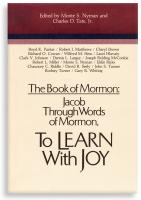
  • Truth and Language

    Chauncey C. Riddle
    Brigham Young University
    14 Mar. 1989

    Riddle, Chauncey C. (1989) “Truth and Language,” Deseret Language and Linguistic Society Symposium: Vol. 15: Iss. 1, Article 4. Available at: http://scholarsarchive.byu.edu/dlls/vol15/iss1/4

    The challenge of this paper is to say enough about the subject of truth in a short space so that the picture of truth that emerges is not a false witness.

    You may be aware that in the long history of the problem of truth there have been some principal answers as to what truth is. The correspondence theory of truth holds that truth is ideas or statements which are perceived empirically to correspond to the nature of the universe. The main problem with the correspondence theory is that empiricism often yields false results. Another historic theory is that truth is the property of propositions which rationally cohere with certain fundamental truths; this coherence would be good if we could only find those fundamental truths. The pragmatic theory of truth says that what works may be taken as true; but what that theory supports is that what works does work, not why it works or what it is that works. A recent entry into the arena is the linguistic theory of truth as initiated by Wittgenstein and articulated by Garth L. Hallett in the book Language and Truth (Yale University Press, New Haven, 1988). This linguistic theory holds that statements are true if they are faithful to the linguistic norms of the culture in which they are uttered. I believe there is a good deal of merit in Hallett’s formulation in that he does well represent how the word “true” is actually used in society, but that his theory also falls short by not giving a clear statement as to what truth is and in failing to handle the problem of untruth in ordinary usage.

    I therefore now proceed to give my own theory of truth and true, hoping to shed light on this important subject.

    I define truth as a synonym for reality. Reality is all that exists, or has existed or yet will come into existence. One cannot discuss reality without making fundamental metaphysical commitments, which I now proceed to stipulate for my ideas of truth.

    I understand existence to be composed of material things in various orders, arrangements and functions. These material things and their relationships constitute a whole, each part of which is essential. Thus truth is one, and cannot be divided. To be grasped as truth, it must be grasped as a whole, all that is and was and will be in all of its whys and wherefores, particles, subsystems and totality. Needless to say, this truth is beyond the grasp of any human being.

    Each human being is a particular part of the whole of truth, a participant. Each of the feelings, ideas, and representations of a human being are part of the whole truth. The pertinent and pressing question about any given human being is then how he or she represents the truth of the universe to self and to others, and how intelligently one takes ones place in that great truth.

    Of principal concern to us is representation of truth. We shall define “true” as a quality of something which measures up to a standard. Thus human beings are true to their word if they do what they have promised to do, and their statements are true if and as those statements measure up favorably to the truth of the universe. What are the possibilities that what an individual thinks or says can be called “true”? To answer that question, a taxonomy of human representations must be posited. We will now explore a taxonomy which begins with representations which have the greatest possibility of being most true and ends with those least true.

    The general label which I give to all human representations of truth is “factitions,” from the Latin facere. I use this term to emphasize that in every case, human attempts to characterize truth are for each individual a creative making and doing. Human beings do not passively reflect the universe at any time in their characterizing of it. There is a personal element in each factition which is ineradicable. To use the analogy of a landscape painter, every human factition of truth is an attempt to paint some piece of the universe in a helpful manner. But the painting is never exactly true relative to the truth for at least two constant reasons: first, every human representation is an abstraction from truth, leaving out much that is true; second, no human representation can capture the whole, and only the whole is the truth.

    The first level of human representation is perception. Perception, or conocer, kennen knowledge, is the direct sensory inspection of some aspect of the universe. In that direct sensory relationship perception is as close to the truth of things as a human being can get. Sensation is always particulars and of particulars. But this perception is ordinarily flawed by the fact that sensation is not perception until it is interpreted by the mind of the person. That interpretation is done on the basis of the total contents of the mind of the person; all of his previous sensations, ideas, theories, hopes, fears and inhibitions color his interpretation of sensation. Sensations must be read, just as a book must be read, to make any “sense.”

    The categories of understanding which the person uses to interpret the particular sensations are usually themselves universals. These universals are theories as to what is important and true in the universe and what is not. The more truth the person already has in mind, the more true will be his perceptions. But it is quite safe to say that no human ever perceives ill things truly. The best and paradigm case of human perception is found in the direct, continuous, present, proximal sensing of a limited and very familiar aspect of the universe by one who is an expert on that subject. At best direct perception is once removed from the truth, which is to say that the best representation of the truth a human can make may yet be false.

    The second degree or echelon of representation is the understanding of an experienced person. This is saber, or wissen knowledge of the world. At its best and surest this understanding is limited to the spatial, temporal, and causal sequences with which the person is very familiar. Identities, differences, continuities, etc., are part of this domain. At its weakest, this type of representation may be so flawed by false theories of the universe as to render the individual without a workable hypothesis as to what is being perceived, as is seen in certain types of mental illness. At best, these representations are twice removed from truth; at worst they are wholly untrue.

    The third echelon of human representation of truth is found in the ability to do what one wishes to do. This ability exists only in doing what one wishes to do. This is koennen knowledge, can do in English. This kind of representation of truth comes after perception because the desire to do things comes only after understanding the possibility that they might be done. This can-do knowledge is a representation of truth by emphasizing what works, what the effective sequences of action are that are necessary to produce a certain result. Producing results does give us the truth that a certain action has produced a result, which is a specialized form of understanding, but knowing that a thing has happened does not involve knowing why that thing happened. Thus a full understanding of echelon two is a better representation of truth than the partial understanding of what works as found in echelon three. And echelon three is thrice removed from the truth.

    Perception, understanding and the ability to do something are personal representations of truth within the individual. They have been the inspiration for the correspondence,   the coherence, and the pragmatic theories of truth. Though not truth, they are the representations of truth closest to the truth and therefore the most true ideas which the individual may have. They are not linguistic, but they reflect heavily the prior linguistic experience of the individual. The remaining categories of representation of truth by persons are all linguistic functions.

    The fourth echelon of human representation of the truth is found in the individual’s witness of his own perceptions. Using his own personal perceptions as a base, the person formulates some verbal means of expressing a new perception. All words represent universals. When an individual tries to express the particulars of his experience in words he always faces a mismatch between what sensations are and what words can do. That problem, compounded with the universals of interpretation and understanding which color all perception, make an individual’s testimony as to what he has personally perceived four times removed from the truth.

    The fifth echelon of human representation is in the witness an individual gives of his understanding of actual experiences he has had. All of the problems of perception and the reporting of perception are here augmented by the potential flaws in his understanding. A person might honestly report a temporal or spatial or causal sequence which he has observed, but be so thoroughly mistaken as to what actually was happening as to be a totally misleading witness. This fifth echelon is five times removed from the truth.

    The sixth echelon of human representation of the truth is in the individual’s linguistic representation of what has worked for him as he has tried to fulfill his objectives as a person. Colored by his perceptions and limited by his understanding of the truth, this echelon is further hampered by the fact that when an individual is successful in accomplishing something he seldom can give an exhaustive account of all that he did and of all that the environment furnished to bring about his desired result. The individual knows that in situation X he did Y and obtained Z, but cannot give a full and accurate account of X or Y or Z. Therefore, this sixth echelon of representation is six times removed from the truth.

    The seventh echelon of human representation is human witness as to inductive generalizations he has made about the world out of his own experience. We have now crossed the line from the possibility of inadvertent error in representing truth to the overt and deliberate embellishment of what the individual has experienced. In other words, we are now in the realm where pure guesswork characterizes the attempts of the individual to represent the truth. All interpolations and extrapolations are technically guesses, and these guesses suffer even more from the possibility of wishful thinking than do the previous levels of factitions. Valuable and useful as some inductive generalizations of experience may be, such representations are at least seven steps removed from the truth.

    The eighth echelon of representation is theory. Theories are understandings that are deliberately invented to characterize some aspect of truth which cannot be the subject of direct empirical observation. Thus discussion of the nature of atoms, of space-time matrices, of how man came to be on the earth, of what is good and evil—all such are inventions of men to try to overcome their lack of ability to see for themselves the truths of these matters. All historical accounts and all interpretations of linguistic formulations are types of theories. This echelon includes all quotation of other human beings. While it is true that logical consequences of a theory sometimes offer the possibility of empirical confirmation, no empirical experience necessitates either the adoption or the rejection of any theory. Theories are often accepted and rejected on non-experiential criteria. Theories are eight times removed from the truth.

    The ninth echelon of human representation of truth is found in overt fictions. These are counted as representations of truth because one main use and value of fiction is to   present ideas as to the way things really are in some respect using non-historical characterizations. These characterizations are usually attempts to present inductive generalizations or theories of truth in an artistic form, one that is pleasing or attention-getting. But as representations of truth, fictions are at least nine steps removed from the truth of things.

    The tenth and final echelon of human representation of the truth in this taxonomy is found in the deliberate lie. This lie is a deliberate mis-representation which is known to the positor of the lie to be a lie but which he hopes he can get other humans to accept as true, as adequately representing truth. Lies are very effective in a world where truth is important and valued, where truth is difficult to come by, and where people are not always very careful as to what they accept as a representation of truth. Such is the world in which we live. Thus lies are ten steps removed from the truth. But they are not very far removed from those representations which are close to it in the echelons of representation.

    Sometimes human beings do recognize the importance of truth and take special precautions to try to eliminate falsehood from linguistic exchanges. In law there is a recognition that the personal testimony of an eyewitness to an event is more valuable in establishing the true representation of an historic event than any other kind of representation, and that the testimony of several witnesses is better than that of only one. Also recognized is the testimony of expert witnesses, who are allowed to tell of their understanding and can-do knowledge, sometimes even of their inductive generalizations and theories. But since that kind or representation is from four to eight times removed from the real truth, the justice of our courts of law sometimes miscarries because it must accept such a poor representation of the truth as this, for want of better. The scholarly world recognizes that primary sources (fourth echelon representations) are much better evidence of the truth than are secondary sources (eighth echelon representations).

    Science as an institution has sought to rid itself of the problem of representing truth by eliminating all personal knowledge and witness of truth, the first four echelons, and by replacing them with inductive generalizations and theories which are agreed upon by the majority of competent scientists. Science thus focuses on the seventh and eight echelons of truth representation. Scientists essentially say to the rest of mankind: We will manage your truth concerns for you; just put your trust in us and we will deliver you from error, because anything different from or outside of what we propound is error. Historical insight reveals that science is not omniscient but advances by replacing one scientific representation by another through time. The power of science is of course not in its representations. Its power and prestige come ultimately from the fact that the technology associated with modern science is formidable. Science is accepted as a painter of truth because of the fireworks it can produce. Producing fireworks does show that sometimes the inductive generalizations and theories of science do have some positive relationship to the truth.

    Art in some of its forms is a non-literal attempt to represent truth, as discussed above in the matter of deliberate and overt fictions. Another side of art is that it attempts to create truth, to bring to pass new being which is valuable in some way. The attempt to capture ideals in artistic production is the attempt to “realize” things which are taken to be true, good and beautiful. The question about such art is, does it fully embody the ideal which the artist set out to create? Inasmuch as an artist does create, his artistic production becomes truth, part of the whole being of truth, which itself must and may then be represented by some one of the above delineated ten echelons of human representations of truth.

    We come now to some conclusions and applications.  

    1. Truth is a whole and cannot be represented adequately by human beings. Therefore a large measure of humility is appropriate in every human attempt to find or state something which could be called true.

    2. There are no degrees of truth. Something is either the truth or it is not. But human representations of truth certainly do come in degrees, in at least the ten steps of removal from the truth as explicated in this paper. The trueness of a representation is thus a qualitative variable which may vary from 1 to 10, 1 being best. But human beings have no human means of being sure that their representation of the truth is true. Error always lurks as a real possibility.

    3. There is also a quantitative measure of truth as well as a qualitative measure. How much truth a human being represents is a function of the amount of experience he has had with whatever fraction of the universe he has experienced.

    4. All human representations of the truth are creative, factitious, and are therefore as much a measure of the artificer as they are of the truth being represented.

    5. It is easier to know truth, to represent it to oneself, than it is to speak truth, to represent it to others.

    6. Most of human discourse, statistically speaking, lies at the untruth end of the spectrum rather than at the truth end.

    Which brings us to the necessity of including in what we say some mention of spiritual matters. Spiritual matters are part of the reality of the universe, and to try to discuss truth without saying something about spiritual experience would be deliberately to falsify everything that has been said. There are two troublesome problems that must be dealt with in connection with spiritual matters. One problem is that every human being is more an expert on his own spiritual experience than is any other human being. This is good in that it fosters individual initiative and independent thinking. The other problem is that because there are two spiritual sources, many persons latch onto a spirit that fosters untruth, and in their independence, are difficult to assist. A typical human attempt to overcome these problems is to encourage people to denigrate all spiritual experience in favor of trusting in some human authority. We shall show that that is a poor expedient, if getting close to the truth is the goal.

    The individual in his own personal experience of truth can be closer to the truth than any linguistic and socially acceptable account of the universe could ever be. Personal experience is always spiritual, and furthermore each honest person knows that there are at least two spirits besides his own which affect him constantly. Let us then make a brief account of truth in light of those two spirits which affect human beings.

    One spirit is the spirit of truth and the other spirit is a lying spirit. By whatever names these spirits are known to men, they are known to men. Whenever a person attempts to characterize the truth, to know it or to speak about it, one or both of those spirits is at hand to assist in the process.

    It is the mission of the spirit of truth to assist the person to see, to understand, and to be able to do all that he needs to do in this world. But the spirit of truth is not primarily interested in truth. What the spirit of truth is more concerned about is righteousness, doing good in the world. Truth is a means to doing good, but knowing truth is never more important than doing good. So the spirit of truth comes to a person first to tell them the importance of doing good, then to tell them what truly is the good to be done by them in their situation, then to tell them any other truth they need to know to be able to do the good they should do. Should what that person needs to do to do good involve linguistic characterizing of the truth about the universe for the benefit of another human being, the spirit of truth will instruct the speaker as to what to say,   and then will interpret for the hearer, so that the exact portion and quality of truth necessary for both the speaker and the hearer to do good will be communicated.

    The lying spirit is of course also not principally interested in truth and error. That spirit is principally interested in getting human beings to do evil to one another, to damn and hurt one another. The chief weapon of this spirit is lies, thus this is a lying spirit. He will tell truth and will influence human beings to know and speak truth whenever that will bring about evil, and he promotes lying whenever it will bring about evil.

    So if a human being understands the difficulties of representing truth and also knows these two spirits, how can or should he or she act? We shall first delineate the case of the follower of the spirit of truth, and then the case of the person who follows the lying spirit.

    How will a follower of the spirit of truth act in this world? Such a person will seek to feel the influence of the spirit of truth in all situations. He or she will be apt to listen to and quick to do that good which that spirit of truth commends, seeking also to gain true perceptions, true understanding, and true ability to do that which needs to be done. Should this person need to speak of the truth, he or she will assiduously strive to measure every gesture, word and characterization to itself become a good and a true representation, acting and speaking as humbly as possible under the influence of the spirit of truth. When one speaks by the spirit of truth, though words cannot convey the truth, the truth of the matter can be manifest to the hearer by that same spirit of truth by which the speaker speaks. Thus it is the spirit of truth that is responsible for the truth, not the human speaker. This does not give license for the speaker to be careless with the truth, for he must attempt always to speak truly, by the spirit of truth. But truth is yet the province of the spirit of truth.

    Should the follower of the spirit of truth encounter the words of another human being who speaks by the spirit of truth, that hearer will pay close attention to the personal witness of particulars which the speaker relates out of his own experience. If the matter is important, the hearer will go to see for himself. He does not want to depend on the word of another, even a good word, because words are always further removed from the truth than is personal observation under the influence of the spirit of truth. Should the good speaker speak of things not in his personal knowledge, that person will speak only under the influence of the spirit of truth, and the hearer will then apply to the spirit of truth to receive a personal manifestation of the matter from the spirit of truth for himself. He knows that personal knowledge is always closer to the truth than a manifestation reported by another, even if the speaker is truly saying what he has been led to say by the spirit of truth. Thus the influence of the spirit of truth is to cause every person to seek to know for himself both the natural things he may observe and the unseeable things concerning which he may receive his own personal instruction from the spirit of truth.

    When one who hears by the spirit of truth hears a person who speaks by the lying spirit, the results are much the same. The hearer will not accept the reported personal knowledge of the speaker, but will go see for himself. Neither will he accept the witness of things which are not personal knowledge, but will seek further from the spirit of truth the truth about the matters on which the person of the lying spirit speaks.

    What happens when one of a lying spirit hears another who speaks by the spirit of truth? In this case the person of the lying spirit will accept whatever is in the personal knowledge witness that the speaker gives which the hearer finds to be useful or pleasing, and will reject the rest. The person of the lying spirit hears the speaker who speaks of unseeable matters by the spirit of truth in such a way as to reject what is said unless it can be twisted or interpreted to become pleasing or useful to the hearer.  

    When one of a lying spirit hears one who speaks by a lying spirit, the witness of personal knowledge is again accepted if it is pleasing or useful. But if the hearer wants to use that knowledge to accomplish something in the real world, he will go find out the truth of the matter by his own personal observation, for even liars must abide truth in that which they wish to accomplish. But in the matters which are not the personal knowledge of the speaker, the hearer of the lying spirit will hear what pleases himself or what he will find useful in promoting lies with others.

    Now for some conclusions and generalizations about spiritual matters related to truth.

    1. A person of the spirit of truth wants the real truth no matter how unpleasing it is, because only the truth enables him to work in a real way to solve the real problems with which he is confronted.

    2. A person of a lying spirit must leave that lying spirit and seek truth to be able to do anything in the natural world, for nature cannot be flattered into cooperation by lies as people can.

    3. People who speak truly by the spirit of truth will often be rejected by those who hear with the lying spirit, because the truth does not please them. If truth pleased them, they would seek and hold to the spirit of truth rather than the lying spirit.

    4. Persons who seek influence in society by the lying spirit only need to tell those who hear by a lying spirit what pleases them in order to gain power.

    5. No person can assure any other person of the truth. That is the domain of the spirit of truth.

    The conclusion of the matter is then that two factors must be accounted for by one who would make truth his standard. First he must be more interested in righteousness than he is in truth, for then he will be able to find the spirit of truth and to hold to abide in it without error. Second, he must understand the difficulties and problems in knowing and speaking truth, so that he will believe and speak only by the spirit of truth, and not be tempted to let go of the spirit of truth and propound on his own as if he were some sort of non-human paragon of truth. For to propound on our own that which pleases us is to have fallen into the arms of the lying spirit.

  • The New and Everlasting Covenant

    C. C. Riddle

    6 February 1989

    In Doctrines for Exaltation: The 1989 Sperry Symposium on the Doctrine and Covenants, 224-45. Salt Lake City, UT: Deseret Book, 1989.

    The New and Everlasting Covenant by Chauncey Riddle given at The 1989 Sperry Symposium on the Doctrine and Covenants

    1. Introduction

    I begin with a word about speaking. Realities are wholes. Human words can never capture wholes, thus human descriptions always fall short of being true to the reality they attempt to describe. The best we human speakers can do with words is to paint broad brush strokes which indicate some basic relationships and hope that each recipient will gain inspiration from that painting, partial and incomplete though it be, and that each hearer will then search for the truth of the matter through the Holy Spirit.

    I propose to paint for you a picture of the New and Everlasting Covenant. I do not suppose that I can or will say everything necessary to do justice to this topic. But I will attempt to express what I feel to be certain key concepts and ideas which are important. I ask you to compare these with your own picturings of the reality of things in the hope that we may each move one step closer to understanding those things which are eternally important. I therefore bear the following witness.

    2. The gods.

    We begin with the concept of our God. We know of three beings who are our God: the Father, the Son and the Holy Ghost>>1. These three are individuals, yet they are also one, and furthermore, they invite every human being to become one with them>>2. The good news of the Restored Gospel of Jesus Christ is that God is our Father and invites us to become as he is and one with him through his son Jesus Christ.>>3

    Though there be gods and lords many, there is but one God,>>4 and that God is the priesthood – ordered community of all the righteous exalted beings who exist.>>5 To be invited to join them by hearing the Gospel of Jesus Christ is to receive the greatest message in the universe; to be enabled to join them by receiving the New and Everlasting Covenant is to have the greatest opportunity in the universe; to be joined with them is the greatest gift in the universe, which gift is life eternal, sharing with them all the good they have and are.>>6

    This good which they share is righteousness. Righteousness is that necessary order of social relationships in which beings of knowledge and power must bind themselves in order to live together in accomplishment and happiness for eternity. They bind themselves to each other with solemn covenants to become predictable, dependable and united so that they can be trusted. They bind themselves to be honest, true, chaste and benevolent so that they can do good for all other beings, which good they do by personal sacrifice to fulfill all righteousness.

    The contrary of this good is evil. Evil is departing from God’s order of righteousness by twisting and/or diminishing it. Evil enables one being in a social order to fulfill his own personal desires at the expense of others, thus to be a law unto himself.>>7

    3. Man

    We, the children of God, as we are found in our natural and evil state upon the face of this earth are called by the scriptures “natural man” or sometimes simply “man.”>>8 The natural man is without God and Christ in the world, and by default is carnal, sensual and devilish.>>9 We pay more attention to information that comes through our flesh than that which comes directly to our spirit. We are sensual as much as we delight more in the pleasures of the flesh and of the world than we do in doing good. We make devilish decisions when we would rather yield to the temptations of Satan and be selfish rather than to perform the sacrifices necessary to do good for others. Such a natural man tends to continue in his inertial path of choosing first good, then evil, as he pleases, but is jarred out of his complacency by a divine witness. The witness is that to become righteous he must repent of choosing evil and accept the godly order of choosing good. Those who accept that jarring are the honest in heart.>>10 Those who will not accept it harden their hearts by that rejection, placing themselves further from righteousness.>>11

    The honest in heart who hear the Restored Gospel are taught that Father is Man of Holiness who cannot look upon sin with the least degree of allowance.>>12 They are also taught that Father so loved his children of this world that he gave his Only Begotten Son as a sacrifice so that every human soul might be redeemed both from the effects of the Fall of Adam and from the effects of his own sins and weaknesses. They are taught that because of the Fall man’s nature is to be evil continually,>>13 and that only through striving to accept the merits and mercy of the Son of God can any human rescued from being and doing evil.>>14

    4. Salvation

    The rescue process is called salvation. To be saves is to be placed beyond the power of one’s enemies.>>15 The great enemy of each human being is himself, for in our weakness and selfishness we are and do evil. We as individuals or as collective humanity cannot help ourselves or each other fully to overcome weakness or selfishness.>>16 But that overcoming is possible if we fully cooperate with Jesus Christ in fulfilling Father’s plan of salvation. That cooperation enables each human being also to become a person of holiness, which is to be completely righteous, perfect in good, even as the Father is, even as the Son is.>>17

    But such salvation comes only by covenant with God, never by accident or by natural or human process.>>18 Man must first understand, then desire the proffered transformation of his own eternal nature when it is proffered.>>19 Before it is too late>>20 man must cooperate with Christ to the fullest extent of his considerable human powers to do better,>>21 and he must then fully submit to the incomparable divine power of Jesus Christ to create for him and of him & new creature, remade in every aspect of being.>>22 Thus human beings may become good and gods.>>23

    There are two covenants whereby a human being may attain complete good and thus become an exalted being as God is. These two covenants were established by Father in the beginning for the salvation of his children. The first of Father’s covenants is a covenant of justice; the second is called the New and Everlasting Covenant and is a covenant of mercy.

    5. The first covenant.

    The first covenant of justice was discussed in the council of the gods held before this world was as is recorded in the Book of Abraham:

    God saw these souls that they were good, and he stood in the midst of them, and he said: These I will make my rulers; for he stood among those that were spirits, and he saw that they were good; and he said unto me: Abraham, thou art one of them; thou was chosen before thou was born.

    And there stood one among them that was like unto God, and he said unto those who were with him: We will go dawn, for there is space there, and we will take of these materials, and we will make an earth whereon these may dwell;

    And we will prove them herewith, to see if they will do all things whatsoever the Lord their God shall command them;

    And they who keep their first estate shall be added upon; and they who keep not their first estate shall not have glory in the same kingdom with those who keep their first estate; and they who keep their second estate shall have glory added upon their heads for ever and ever. (Abraham 3: 23?26. Emphasis added.)

    The conditions of the first covenant, the Covenant of Justice, were that:

    1. Father would give his children instruction and commandments.

    2. Any child who would believe Father and obey his every commandment, without exception, would in that obedience grow to attain and maintain all the good which Father is and does, which is exaltation.

    3. Any child who disobeyed any single commandment of Father, would, without exception, immediately die spiritually, which spiritual death is to be cut off from Father’s presence, no longer to be able to grow in his order of good.>>24

    4.For every transgression of a commandment of Father, the offender must suffer for that sin and make full restitution for that sin, this suffering and restitution being at least equal to the suffering and loss caused to the persons against whom the transgression was committed.>>25

    It is possible that the Covenant of Justice, or the first covenant, is the order of heaven spoken of in the Lord’s prayer.>>26 If so, it would have been the abrogation of that covenant by which the third of the hosts of heaven fell in the premortal war in heaven.>>27 That speculation aside, it is quite plain that this covenant of justice was understood by Adam in the Garden of Eden, for he was determined to and intended to keep all of Father’s commandments.

    But Adam transgressed the first covenant, and by so doing immediately brought upon himself and upon all of his posterity the promised spiritual death.>>28 In this condition, if there were no intervention, Adam and his posterity would have been lost and fallen forever.>>29 Upon mortal death every soul would have passed fully into the power of Satan, to become angels to Satan forever.>>30

    This Fall of Adam was necessary. It was necessary because every child of Father needs to be out of Father’s presence, to have forgotten the premortal existence, thus to be thrust into a strange world where he would be forced to choose between good and evil according to the desires of his own heart.>>31 It is a proving of the heart of each person whereby each person may see for himself whether or not he will choose good over evil and thus be able to stand the opportunity of wielding Father’s unlimited knowledge and power.>>32 But if the Fall was necessary, so was it necessary to have a means of reclaiming man from the Fall should any man desire to choose good and only good. Father in his goodness and omniscience had already provided before the Fall for a second covenant.>>33

    6. The second covenant.

    This new covenant is a covenant of mercy, and is the New and Everlasting Covenant. It is new because it is the second covenant,>>34 and it is everlasting because “Everlasting” is one of the names of him in whose name we must learn to do all things.>>35 We make this covenant with the Father, with the Son, and with the Holy Ghost, but we receive all of the blessings of this covenant through the Son, who is Everlasting. Through him and only through him may any fallen creature claim blessings which are everlasting.>>36

    The New and Everlasting Covenant has two basic parts. Part one is the covenant baptism, being born of water and of the spirit. This is our pledge to seek after good and to eliminate all choosing and doing of evil in our lives, and the receiving of the power to keep that promise.>>37 Part two is the Oath and Covenant of the Priesthood. The work of part two is to receive the power and authority of God and to become perfect in using that power and authority to minister unto other beings to bring about their happiness,>>38 The intent of both of these parts is to enable a human being to lay hold on every good and godly thing in both time and eternity.>>39 They enable us to do all that we can do towards our own salvation, but also to receive and rely upon the fullness of the grace of God, that we might be fully transformed from the weak natural creature which we were into one like unto God himself, unto the measure of the stature of the fullness of Christ.

    Please do not mistake: we here consider parts one and two of the covenant as separate only because it helps us to see the whole better by analysis. Analysis reveals distinctions, but these distinctions are artificial and illustrative only. The New and Everlasting Covenant is one living whole; the two parts intertwine and enable each other in every way, even as the intertwining of body and spirit make the living, acting, breathing human soul, indissoluble in function but separable in understanding.

    The formal nature of part one of the New and Everlasting Covenant is initiated in the covenant of baptism, and is progressively renewed and strengthened in partaking of the flesh and blood of our Savior in the sacrament. Part two of the New and Everlasting Covenant is initiated by ordination, and is enlarged by the ordinances of the temple.

    7. Baptism

    The light of Christ is given to every man who comes into the world, that he may know the good, as opposed to the many varieties of evil which are promoted by Satan in this world.>>40 The essence of human living is to make many choices between good and evil each day.>>41

    We choose so that we can demonstrate what we really desire. If we desire the good, we show that our nature is compatible with Father’s and that we would enjoy doing the work of righteousness in time and eternity. If we desire evil, we show that we cannot be trusted with any great power, for we would tend to use it for our personal advantage rather than for the great work of righteousness in which all of the gods participate.>>42

    Every soul who comes to accountability is thus forced to wrestle with good and evil and to make choices. He who chooses good will discover that he also chooses evil, for all of us sin and go out of the way.>>43 To every sinner there eventually comes a new light, the Holy Ghost. This new light bears witness of Jesus Christ and tells him that if he will put his trust in Christ, Christ will become his Savior and help him to stop choosing evil. Those who desire to stop choosing and doing evil find this message most enticing, so much so that they are willing to try the experiment to see if the Promise is true.>>44

    Each soul is instructed that if he wishes to try the experiment, he must believe and trust in the Son of God and begin to eliminate each evil thing from his life. These steps are called faith and repentance. The promised consequence of taking these two steps is that the Holy Spirit which guides and enables these two steps will then come in even greater abundance, and will reward the experimenter with increased understanding and power to have even more faith and to repent of more sins.>>45 If the experimenter is pleased with that result, then a new proposal is made to the experimenter: Would you be willing to enter into a covenant with God what would enable you to have full faith in Jesus Christ, to strengthen your repentance by enabling you to have the constant companionship of the Holy Spirit? Those who accept this message are given the opportunity to enter into the New and Everlasting Covenant by being baptized.>>46

    There are three things which must be promised by the candidate for baptism:>>47

    l. The recipient must be willing to take upon himself the name of Jesus Christ. Taking the name of the Savior begins in the waters of baptism whereby we accept Jesus Christ as our new spiritual father and are willing to be known as his children before all men at all times and in all places. But it is also an expression of the willingness to take upon us all of the names of Jesus Christ, even until we receive a fullness of what he is and has. This willingness then is the willingness to go on to receive the second part of the New and Everlasting Covenant, which is to receive the oath and covenant of the Holy Priesthood.>>48

    2. The covenantor additionally promises always to remember his new father Jesus Christ. This seems to mean that one should think upon him, yearn for him, pray continually in his name, be anxious for the success of his great work of salvation among the children of men.>>49

    3. The recipient of the covenant of baptism must also affirm his willingness to abide and obey every instruction which his new father will give to him. Only in so doing can the covenantor come to avoid choosing and doing evil, for righteousness in this world is only of Christ, he being the sole fountain of this rare reality.>>50

    It will be noted that this requirement of total obedience>>51 is much like the requirement of total obedience of the first covenant; indeed it is identical with it. The difference is that in the second covenant there is the possibility of salvation and exaltation even if this promise is not entirely kept at first. This is to say that there is Provision for salvation even if one is weak and sins after taking the covenant. But the covenant also provides that the covenantor cannot suppose that the provision for sinning will allow him an escape forever; the escape is strictly temporary, and while yet in mortality the person must learn firmly and determinedly to keep this promise to obey fully and faithfully every single instruction the Savior gives him without error or omission, which means a complete cessation of sinning.>>52

    The immediate reward to the covenantor for making these three promises of the covenant of baptism is that hands are then laid upon the person’s head, he is blessed with the right to the constant companionship of the Holy Spirit, and he is commanded to receive that companionship unto himself.>>53 Only with the help received through that constant companionship can any individual keep the promises made in the waters of baptism. And only by keeping the promises made will the Holy Spirit remain with the person. If one willfully disobeys the promptings to do good which the Holy Spirit brings, one is no longer entitled to nor can stand the continuing presence of the Holy Spirit, and the Holy Spirit then mercifully departs.>>54

    Receiving the constant companionship of the Holy Spirit is the baptism of fire which normally follows the baptism of water, and is the occasion for the person receiving a remission of the penalty due for the sins which he has previously committed but has now repented of.>>55 The presence of the Holy Spirit then enables the person to go forth in the knowledge and power of God on the straight and narrow path of righteousness. As long as the person is obedient to the Savior’s instructions as received through the Holy Spirit, he will retain that forgiveness of sins and will enjoy the continued blessed presence of that companionship. Willful disobedience, however, brings a loss of both.>>56

    By receiving the baptism of water and of fire the covenantor has now entered upon the strait and narrow path that leads to the end, which is eternal life.>>57 But he is by no means there yet.>>58 What he has gained is a fighting opportunity to win the battle between good and evil in his life. If he will do all he can to keep the covenant of baptism, surely and firmly evil will be eliminated from his life, replaced in every particular by the righteousness of God. Thus the person triumphs over worldliness and evil in his or her own person. Until this triumph of good over evil is an accomplished fact in his life, little can be done with the second part of the New and Everlasting Covenant.>>59

    8. The Oath and Covenant of the Priesthood.

    As the first part of the New and Everlasting Covenant focuses on the triumph of the covenantor in the battle to replace evil with good in all things, so the focus of the second part, the oath and covenant of the Holy Priesthood, focuses on the training of the individual to function for good in the power of the Holy Priesthood of the Son of God, and to use that power correctly and advantageously in the callings of God to promote the eternal work of righteousness. The challenge of receiving the Holy Priesthood is: Now that you have shown that you can overcome evil for yourself, let us see if you can go further, to wield the power of God, in righteousness, to help others to overcome evil.>>60

    There are three steps or stages by which one takes upon himself the oath and covenant of the Holy Priesthood and receives the power and authority of the Son of God.>>61 The first stage is to receive the priesthood, which one does by receiving ordination, being set apart to a calling, and by functioning faithfully in that calling under the guidance and instruction of the Holy Spirit. Those who thus function carry out the mind and the will of God. If they do this faithfully, they will be given progressively greater power and responsibility in their stewardships, but this does not necessarily mean church position.>>62 To receive the priesthood does mean that one fully accepts the priesthood authority of the Church of Jesus Christ of Latter?day Saints and that one will be subject to those who preside over him in that priesthood.

    The second stage of receiving the oath and covenant of the Holy Priesthood is to receive one’s personal endowments in the Holy Temple of God. The endowment consists first of special blessings which are given to the person so that he or she can bear the power of God in this world without being destroyed by the abundant evil which will confront and oppose his and her labors to do the work of God in the power of God. Secondly, the endowment is a set of instructions and understandings which assist the person to understand mortality and his role therein. Thirdly, there are covenants which the person makes, special promises to bear the burden of the work of the Lord in righteousness and purity. These promises are covenants of the oath and covenant of the priesthood.>>63 The oath is action taken by God, who cannot lie nor sin in any way. Men, who can and do sin and lie, make covenants with God that they might escape sinning altogether and wield the power of God in righteousness, and they do this altogether for the glory of God, as part of their worship of him for his goodness, for his righteousness.”

    The third part of the oath and covenant of the Holy Priesthood is to receive the covenant of marriage in the temple. This is God’s marriage, eternal marriage, the establishment of a new eternal kingdom in the pattern of godliness, to do the supreme work of godliness eternally. Blessings are bestowed, covenants are made, and power and authority to act in the priesthood roles of husband and wife, father and mother, are given.>>65

    To receive the oath and covenant of the Holy Priesthood of the Son of God is to affirm & desire to take one’s place in the divine order of righteousness. To be received into that order is, as it were, to be brought into a harness.>>66 The harness is a great eternal set of bindings that link husbands to wives, parents to children, men to God. To be worthy of the harness, one must pull one’s assigned weight in one’s assigned priesthood labors to further the eternal work of righteousness using the gifts and powers of God. One enters that place in the harness by free will, accepts the burden of the position by free will, and endures to the end by free will. The harness is not imposed upon anyone against his or her desires. Rather it is gained only by much pleading and repentance and is fulfilled only in sacrifice and obedience.>>67 It is true that the outward forms of the priesthood are seemingly imposed upon some in their ignorance, unwillingness or disobedience; but such an imposition is but a temporary thing of this world. Unless they repent, such persons have no power to bind or to act for God in this world, nor have they any claim on the power of God for the next world.>>68

    The net sum of the New and Everlasting Covenant is that it is the power by which a human being learns to love God with all of his heart, might, mind and strength, and to establish God’s righteousness here on earth.>>69 This is another way of saying that we are thereby enabled to love our Savior and our neighbor in the exact same manner in which our Savior’ loves us.>>70 The work of the Aaronic Priesthood is to set into the godly order of righteousness affairs that pertain to the subduing of the earth and civil governing. The work of the Melchizedek Priesthood is to promote the spiritual welfare of souls through missionary work, genealogy and temple work, and the perfecting of the saints unto the establishment of Zion. The highest focus of the Melchizedek Priesthood is the perfecting of the bonds of love between a husband and wife that binds them to the Savior and their children to them in the drawing power of that perfect love which we can receive only from our Savior and only as we abide the promises we make in the New and Everlasting Covenant.

    9. The Atonement of Jesus Christ.

    Hitherto we have concentrated almost solely on what human beings need to do to fulfill their opportunities and responsibilities in the New and Everlasting Covenant. I wish now to turn our attention to our Savior’s role in this grand pattern of salvation for mankind. We have been discussing the necessary human one percent of the work of the covenant. Now we turn to the divine ninety?nine percent, the grace of God whereby we ore saved. We are and can be saved by that ninety?nine percent only if and as we fully do our one percent.>>71 I turn now to the atonement of Jesus Christ.

    When we examine the etymological roots of the word “atonement”, we find that in old English there was a regular expression used to say that people became “at one.” This was sometimes spelled as two words, sometimes as one. The concept was a bringing together, an arranging of agreement, a uniting of hitherto estranged parties. The process by which this uniting was achieved was in English appropriately denominated “atonement.” When a word was desired to express what our Savior accomplishes in our behalf, no better word could be found than the word “at?one?ment,” which we have come to pronounce atonement. This English word is the translation of the Hebrew “kaphar”, which means among other things to cover, and the Greek word “katallag”, which means to change in an intensive way, and also to reconcile. The Savior’s atonement does cover our sins, and change our nature, and reconcile us to the Father.

    My understanding is that our Savior’s atonement is the general descriptive term which covers all of his labors to exalt mankind from the moment he said “Father, thy will be done, and the glory he thine forever,”>>72 to the great and last day when he will present his children spotless before Father for Father’s acceptation unto exaltation.>>73 As it is the task of men to learn to love God with all of heart, might, mind and strength,>>74 so we can see that it is the task of our Savior’s atonement to enable men to love God with all of heart, might, mind and strength. We will describe the atonement in these four aspects.

    9. Justification.

    The process by which our Savior enables men to love God with all of their minds is termed in the scriptures “justification.” Our Savior helps us to become just, which is to say righteous, by teaching us the truth we need to understand about God, about righteousness, about ourselves, and about the nature of our mortal probation. That teaching is essentially accomplished through the teaching and preaching of the Gospel of Jesus Christ. This Gospel was given to our father Adam, and will be yet taught to every child of Adam. Jesus Christ is the truth,>>75 and only in truth can man act correctly to be saved. Thus our Savior has worked since the beginning to make sure that every human person has access to enough truth to take advantage of the opportunity to be ennobled in righteousness, to be redeemed from the Fall of Adam, and to be reunited with Father.>>76

    But truth of itself does not fulfill righteousness. The understanding of what is must be supplemented by correct principles which tell us what ought to be, and by specific instructions as to how to implement those correct principles within the framework of the true reality that has been revealed. Thus our Savior also reveals correct principles and specific directions as to how to act wisely for righteousness. These principles and directions are called in the scriptures “light,” and together with truth, they constitute intelligence, or the glory of God. Enabling his children to have his light and truth as the basis of all of their understanding, choosing and acting is the purpose of the Savior’s process of justification of his children, thus to assist each of them to become just beings.>>77 This mission of justification of his children the Savior does largely through his agent, the Holy Ghost.>>78 The receiving of the constant companionship of the Holy Ghost is the means by which our new father, Jesus Christ, teaches each of his children to walk in light and truth, giving each line upon line and precept upon precept until that great day when through complete faith in him each of his children is glorified in light and truth,>>79, even as he, our Savior, has been so glorified by his father.>>80

    In behalf of justification, the prophets have labored in each dispensation to explain to men the basic outlines of truth and righteousness, and have hoped that men would rejoice in those outlines, desire to become more righteous, and enter into the New and Everlasting Covenant to receive a fullness of righteousness. In behalf of justification the scriptures have been written, that men might better understand the witness of past generations and see that God and righteousness are the same today, yesterday and always. The Scriptural epitome of what it means to be just, to have received the justification of Christ, is given in the Sermon on the Mount. The Book of Mormon is the scripture which lays out justification both as a process and a product with greatest clarity.>>81 The scriptures testify that justification through our Lord and Savior Jesus Christ is indeed just and true.>>82

    10. Purification

    As the new children of Christ bask in the light and truth of our Savior’s justificatory power, it gradually dawns on each of them that to pour light and truth into the human vessel is not enough. As a child of Christ attempts to love the light and truth that come to him by his new father’s gift, each becomes aware of an alarming fact: having light and truth is no guarantee of being able to do what is right. Sometimes we know full well what our Savior would have us do, but we yet deliberately do that which is evil because we want to. If a person has indeed begun to love God and his neighbor, this revelation of the impurity of one’s own heart is horrifying. It means that at any time one is able to and apt to kick over the traces of the priesthood harness and consort with the evil powers in this world to gain some short?term personal advantage. It is this realization which makes even the prophets to weep and to mourn because of their iniquities and weaknesses.>>83

    Providentially, the Savior has a cure for this malady of heart, this willingness to choose evil over good. The Savior’s cure is denominated in the scriptures as “purification.”>>84 Being the Lord God Omnipotent, the creator of Heaven and Earth and all things that in them are, being fully invested with the power of Father, our Savior can reach into our bosom and give each of us a new heart, a pure heart. He tells us that he will not do that upon some incidental request but only after we have done literally all we can do to repent and conform to the standards of godliness with the powers and opportunities he has already given to us. if we have repented of every sin which we can repent of, have made fourfold restitution as far as we are able,>>85 have been reconciled to our brother,>>86 we may present ourselves at the altar with a broken heart and a contrite spirit,>>87 and plead in mighty prayer for this change of heart.>>88 Then and only then will our Savior reach in and give that person a new heart.

    The new heart will be a pure heart, one that has no selfish desires, one that is willing to do the right thing. It will choose to do the will of God at all times and places, no matter what the opposition nor the sacrifice involved. This new heart is made in the image of that of Jesus Christ, that same heart which enabled our Savior to say, “Father, not my will, but thine be done,” that same heart that enabled him to live a sinless life, that same heart for which he was chosen to be the Firstborn and to be the Only Begotten.

    To be purified is to become literally a new creature in Christ, to die as. to the old person that we were, literally to become of the heart and mind of our new father. The scriptures promise great rewards for those who qualify and take this step. The scriptural name for this new heart is “charity.”>>89 Charity is to have a heart that loves with the pure love of Christ. Without that charity, we are literally nothing. Thus is the heart of a person saved. Then becomes possible for the person to be redeemed from the fall,>>90 to see God,>>91 and not to need to be further protected from the tree of life by those helpful cherubim.>>92

    11. Resurrection.

    The strength, or the mortal tabernacles of men were rendered temporary and relatively impotent by the fall of their mortal father, Adam. This fallen and mortal state of man’s body is a blessing because being temporary it does not have to be endured forever. Pain, illness, hunger, aging and other kinds of physical distress are able to serve their useful temporary purpose in the education and strengthening of the spiritual aspect of individuals while allowing an anticipated surcease.>>93

    Permanent physical death would not be an improvement. Were mortal death to be the end of being tabernacled in flesh, every human would be at a serious disadvantage, because only when clothed in flesh can there be a fullness of joy.>>94 Because of the circumstances in which Adam fell, he became subject to Satan, and that subjection would have been complete and final had not the Savior a most important part to play relative to our physical tabernacles.

    Our Savior is God for every living creature, for he created all of us physically and is charged with fostering our eternal welfare. All the while that he is offering truth and righteousness for our minds and hearts through the light of Christ and through the covenant processes of justification and purification, he is also entirely mindful of the physical circumstances of each being on earth. Not a sparrow nor a hair of our heads falls to earth unnoticed by him.>>95

    For his eternal purposes our Savior suffers to transpire much that we humans call evil. But he also prevents much evil from occurring and transmutes all of what evil he does allow into the possibility of becoming a blessing. For that behind?the?scenes love for us he gets precious little credit. But he gives that love in spite of the unknowing and selfish complaining of his reluctant charges.

    Persons of the world pay a good deal of attention to creature comforts. In fact, some spend most of their time in acquiring, comparing and consuming the delights of the flesh. Worldly wisdom has it that a pleasure in hand is worth two hundred in the heavenly bush. Worldly wisdom also has it that the end justifies the means in acquiring said carnal delights, especially when taken at the expense of one’s enemies.

    But for his faithful covenant children, those who have hearkened to the spiritual call to truth and righteousness, the Savior recommends sacrifice and selective denial of the flesh.>>96 Those of his children who are faithful to his recommendations then receive special physical blessings through the power of his Holy Priesthood and his Holy Spirit, so that illness, accident, genetic disorders and death take no more than their exact allotted toll. As is appropriate in his wisdom, his faithful servants are renewed in the flesh,>>97 that their earthly mission cannot be shortened by natural processes. He intervenes when appropriate when their enemies would destroy them.>>98 And when the time does come for the beneficial suffering of death, his faithful children are accompanied at each step by his Holy Spirit and foreknow his will in these matters. They know that they are not left alone.>>99

    When they do die as to the flesh, it is our Savior that welcomes them to the eternal worlds, and assigns them to new labor in his order of priesthood.>>100 He ministers salvation in the spirit world through them, even as he does on earth, that all former mortals might know of and partake of the gifts he has to give.>>101

    When our Savior took upon himself the role of Messiah, descending below all things to become flesh and blood on this earth and in this fallen world, he bought with him a special advantage. Being born of and fully empowered by an immortal Father, he had the power not to die and also to raise himself from the dead should he choose to die. Being born of a mortal mother, he inherited the power to die. Not needing to die, he voluntarily gave up his possibly unending mortal life and all he could have accomplished in that sojourn for a greater purpose.>>102 By dying voluntarily he performed the sacrifice of the atonement, and by that sacrifice seized the keys of death and hell from Satan, who had gained them in the Fall, and thus prepared the way for the resurrection of all mankind.>>103

    Thus after all probation has been extended, after each human creature has chosen the law by which he desires to be governed,>>104 after all things are set in order and there is no further need of the special change known as repentance, then our Savior extends the opportunity of resurrection to each human being through his priesthood order. Every soul will receive again a tabernacle of flesh and bone, nevermore to die.>>105 His righteous children receive a tabernacle of his own order, a celestial body, having the same powers that he inherited from his Father in becoming the Only Begotten. Thus our Savior draws us into the same order of flesh and bone as that which he and Father enjoy. Thus in one more way we may become one with Father through the atonement of Jesus Christ.

    12. Sanctification

    Coming into this world already just and pure, our Savior was able to live in mortality without sinning. This astounding achievement was not automatic. He knew full well that he had the power to sin and he could easily have stepped off the path in either direction at any time. But because he loved Father with all of his heart, might, mind and strength, he refused to sin. In that love he also loved us, his neighbors, with that same pure love with which Father loves him. Thus our Savior was the perfect model of righteousness, truly our total exemplar.>>106

    By not sinning even once our Savior demonstrated that he was indeed The Son of God. Not only did he show us the way, the truth and the life, but he also made it possible by his sinlessness to suffer for our sins, which is the fourth and final aspect of his atonement.

    The need for the suffering of the atonement came from the nature of human sin. Sin is transgression of the law of God.>>107 The law of God is not arbitrary, but is established upon eternal principles of righteousness. That righteousness, by way of justice, demands that when one being hurts another without cause and permission, that hurt must be matched by a similar suffering on the part of the perpetrator of the injury. Not only that, but restitution must be made so that the injured person is at least as well off after the injury as he or she was before the injury. Only as both of these conditions are fully satisfied, suffering and restitution, can any sinner stand blameless before Father and endure his presence.>>108

    Having given men the opportunity to sin after having created them, our Savior also provided that a man might not be eternally damned for having sinned if he were truly sorry.>>109 The appropriate measure of sorrow is that the sinner confess the sin, forsake sinning completely by turning to do only the Savior’s will,>>110 and make whatever partial restitution he can, which is repentance. Repentance indeed removes sinning, thus sparing the one-time sinner from further jeopardy, but that does not absolve the former sinner of the debt previously incurred. Only our Savior can make a sufficient and restitution to render the sinner clean enough that that person could ever again live with Father.

    So when a man has done all he can to repent of sinning and to make restitution for his sins through partaking of the New and Everlasting Covenant, our Savior then assumes responsibility for the remainder of the obligation, saving men by his grace, but only after they have done all they can do.>>111 The restitution he does through his role as Jehovah, the Father of Heaven and earth, he who is able to reach into eternity and remove the everlasting eddies of the sins that men commit. He is able to stop the otherwise inexorable eternal consequences whereby evil is propagated through time and space by cause and effect. Thus he is able to leave each resurrected being in a condition where he or she suffers no eternal consequence for any evil done to him in mortality by any other mortal.>>112 Thus our Savior satisfies part of the demands of justice. It yet remained for him to suffer for the sins of all mankind, those sine past, present and future to his mortal sojourn.

    The occasion of the suffering of the atonement was but one day of his life, the final day of his mortality. In Gethsemane and through the time on the cross, our Savior trod the winepress alone,>>113 suffering the debt of sin, suffering a total suffering equal to all of the sinning that ever had or ever would be done.>>114 Having paid the debt of sinning for the sins of all men, he can invite all men to come to him and to learn of his ways and to partake of his forgiveness.>>115

    Through his suffering our Savior made it possible for men not to need to suffer for their own sins, and thus also made it possible for them to be acceptable again to Father. Thus our Savior offer to all men the cleansing of their might, that their power and priesthood in time and eternity might not need to be shortened because of blood and sins. He cleanses their garments, their power, that he then might make them perfect, complete, in all good things, even as Father is. Thus his divine restitution and suffering constitute a great work of atonement, enabling men to be one with Father in might, thus enabling men to share all that Father and he have.>>116

    13. Conclusions

    Thus human beings are saved by the grace of Christ, but only after each does all he or she can do to perfect, purify and ennoble himself or herself. The saving grace of Christ is his New and Everlasting Covenant and his power of Atonement, which are made possible by his righteousness and perfect faith in his Father.

    Thus human beings may be saved only by binding themselves to Christ. It is as if our task were to stand straight and tall before Father. But because of the Fall, we are broken and twisted. The Savior is our straight and tall splint. If we bind ourselves to him, wrap strong covenants around us and him that progressively draw us up into his form and nature, then we can become righteous as he is and can be saved. But without him we are nothing.>>117

    Thus “the righteous” spoken of in the scriptures are not human beings who are or can become righteous by themselves. The righteous are only those who have bound themselves to Jesus Christ by the promises of the New and Everlasting Covenant and who then keep those promises.>>118 Only in him and by him are they able to do any good thing. The righteous acts they do are not strictly their own acts; therefore they take no credit for them. Rather do they give the glory to God. They know that their righteous acts are acts of Christ, chosen by the pure heart given by Christ, understood by the just mind given by Christ, carried out by the new strength given by Christ, redounding to the blessing of others in the priesthood might of Christ. Thus in Christ the righteous move, and live and have their being.>>119

    If a human being endures to the end in the New and Everlasting Covenant, until he is literally transformed into the stature of Christ in heart, might, mind and strength, then he may love God with all of his heart, might, mind and strength. And if he then endures to the end of mortal life in that same condition, unfailingly enacting that same love, that new nature will become his eternal nature. He and she become one with God, part of God, also to work for the immortality and eternal life of man forever, as gods.>>120

    Thus the purpose of the New and Everlasting Covenant is to provide a means whereby every human being may come to be able to fulfill the first covenant, to do all things whatsoever their God commands them. But the first covenant cannot be fulfilled by one who has sinned. Therefore it is only through living vicariously in Christ that any mortal fulfills the first covenant and thereby is enabled to become exalted. Thus Christ wrought eternal life for us in love by satisfying justice for us vicariously. He extends mercy to all who will learn to love until their love can satisfy the demands of Father’s justice. The New and Everlasting Covenant is our detour whereby our Savior strengthens us until we can tread the narrow way of justice and mercy on our own.

    Thus the New and Everlasting Covenant is a special case of the first covenant, that which enables sinners to yet claim the blessing of exaltation in eternity even though they themselves by themselves do not merit such blessing and are at first unable to receive such blessings. Only in and through Christ may they inherit, through his worthiness.

    Our Savior kept the first covenant, and was exalted by it. For had he sinned, there could have been no one to at?one him with Father. Because of his faithfulness in the first covenant, the second or New and Everlasting Covenant was made possible, that all of us may share his blessings with him for all eternity.>>121

    Footnotes

    1. D&C 20:28

    2. John 17:21

    3. D&C 20:59

    4. 1 Cor 8:5-6

    5. D&C 124:123, 76:50-60, Alma 13:1-16

    6. D&C 14:7

    7. D&C 88:21?35

    8. Mosiah 3:19

    9. Moses 5:13

    10. D&C 8:1?3

    11.Alma 10:6; 12:10,35

    12. Moses 6:57; D&C 1:31

    13. Gen 6:5; Ether 3:2; Moroni 7:8

    14. Moroni 6:4; D&C 3:20

    15. Teachings of the Prophet Joseph Smith, p. 305

    16. Acts 4:12

    17. 3 Nephi 12:48; 27:2?

    18. TJS p. 272 “Where there is no kingdom of God there is no salvation. What constitutes the kingdom of God? Where there is a prophet, a priest, or & righteous man unto whom God gives his oracles…” to eventuate in the administration of the New and Everlasting Covenant.

    19. TJS p. 217 “A man is saved no faster than he gains knowledge.”

    20. D&C 45:6

    21. 2 Nephi 25:23

    22. 2 Cor 5:17; Gal 6:15

    23. D&C 132: 19?20

    24. Alma 42:14

    25. Alma 42:22?28

    26. 3 Nephi 13:10

    27. Moses 4:1?2; Rev. 12:7?11

    28. 1 Cor 15:22

    29. Alma 42:14

    30. 2 Nephi 9:7?9

    31. Psalms 37:4; Mosiah 11;2; P of GP JSHistory 1:15

    32. Psalms 24:3?5

    33. l Nephi 10:18

    34. Moses 6:56

    35. Gen 17:7?8

    36. D&C 132:19

    37. Eph 4:11?13

    38. D&C 121:41?46

    39. Moroni 7:9

    40. John 1:9

    41. 2 Nephi 2:26; Alma 5:41

    42. D&C 121: 34?40

    43. Rom 3:12; 2 Nephi 28:11

    44. Alma 32:28?32

    45. Alma 32:34

    46. Mosiah 18: 8?10

    47. Moroni 4:3

    48. Elder Dallin H. Oaks, “Taking Upon Us the Name of Jesus Christ,” Ensign, May 1985 pp. 80-83

    49. Alma 34:17?27

    50. Ether 8:26; 12;28

    51. John 14:15

    52. Alma 22:16

    53. John 20:22; 2 Nephi 31:13; D&C 39:23; 76:52

    54. Alma 7:21

    55. 2 Nephi 31:17

    56. D&C 82:7

    57. 2 Nephi 31:18

    58. 2 Nephi 31: 19?21

    59. D&C 121:36

    60. Mosiah 8:15?18

    61. D&C 68:2?4

    62. Matt 25:14?30

    63. D&C 84:39

    64. D&C 82:19

    65. D&C 131:1?4

    66. Alma 13:6?9

    67. D&C 97:8

    68. D&C 121: 34?37

    69. 3 Nephi 13:33

    70. John 13:34

    71. 2 Nephi 25:23; Mosiah 2:21

    72. Moses 4:2

    73. D&C: 76:107

    74. D&C 59:5

    75. John 14:6

    76. 2 Nephi 2:3

    77. D&C 93:28

    78. Moses 6:60

    79. D&C 76:69

    80. D&C 93:11?14

    81. E.g., Alma 5

    82. D&C 20:30

    83. 2 Nephi 4:27; Isa 6:5

    84. Mal 3:3; James 4:8; D&C 112:28

    85. D&C 98:44: Luke 19:8

    86. Matt 5:23?24

    87. 2 Nephi 2:7

    88. Mor. 7:48; Mosiah 4:2

    89. Moroni 7:47

    90. Ether 3:13?14

    91. 3 Nephi 12:8

    92. Alma 12:21

    93. 2 Nephi 9:15

    94. D&C 93:33?34

    95. Luke 12:6?7

    96. Moroni 10:32

    97. D&C 84:33

    98. 2 Nephi 4:33

    99. John 14:18

    100. 2 Nephi 9:41

    101. D&C 138:30

    102. John 10:18

    103. 2 Nephi 9: 10?12

    104. D&C 88: 23?37

    105. Alma 11:41-44

    106. John 14:6

    107. 1 John 3:4

    108. D&C 4:2, D&C 84:24

    109. Mosiah 26:23

    110. D&C 58:43

    111. 2 Nephi 25:23

    112. Matt 19:29

    113. Isaiah 63:3

    114. D&C 19:16-17

    115. 3 Nephi 27:13-22

    116. Alma 34:12-17

    117. John 15:1-5

    118. Alma 9:28

    119. Acts 17:28

    120. D&C 132:19-20

    121. D&C 88:107

  • The Gifts of God, 1988

    August 1988

    The gifts of God are the grace(s) by which we are saved. The great envelope gift is the Atonement of Jesus Christ. The list below is the list of individual gifts which enable us to partake fully of the Atonement. To be able to receive any gift on this list after the first one, one must receive and use well the preceding gift. These gifts of God lead to a person becoming as Christ is, to attain the fulness of His stature and being, thus to become exalted. As we grow from grace to grace, we become more and more like Christ, more and more able to receive the blessings of God, more and more able to do real good (God’s good) for our fellowmen.

    1. The Light of Christ: The knowledge of the differences between good and evil which comes to every human being who has normal mentality.
    2. Prayer: The gift to be able to speak directly to our Heavenly Father, no matter where, when, or what the problem might be, to seek and find the good instead of evil.
    3. The Gospel of Jesus Christ: The gift of understanding the principles and ordinances which enable us to come to Christ, to become as He is.
    4. The Witness of the Holy Ghost: To receive answer to prayer to know that the Gospel of Jesus Christ is true, and who has the true authority to administer the ordinances thereof.
    5. Baptism of water and of the Spirit: The gift to be able to be baptized by divine authority and to receive the right to the gift of the Holy Ghost from one who has the power to bestow it.
    6. The Gift of the Holy Ghost: The constant companionship of the Holy Spirit given to those who have been baptized by proper authority and who earnestly pray for this companionship.
    7. The Gifts of the Holy Ghost: The special powers given to those who have received the gift of the Holy Ghost, given according to their needs, desires, and worthiness. Examples: The gift of knowledge, the gift of wisdom, the ability to speak in tongues, the ability to understand the scriptures, etc.
    8. The Gift of the Holy Priesthood: To be ordained by those who have authority to administer the blessings of God to others.
    9. The Gift of the Temple Endowment: An enlargement of the gift of the Holy Priesthood: special blessings and powers and gifts given to those who honor the priesthood.
    10. Temple Sealing: A second enlargement of the gift of the Holy Priesthood: special blessings given to a man and woman to be appointed by God to the highest callings, those of husband and wife, father and mother, and the special help they need to succeed in those highest callings.
  • The Book of Mormon Mind vs the Humanist Mind

    Chauncey C. Riddle
    25 May 1988

    1. Assumptions:
      1. Book of Mormon Mind—The mind of the Book of Mormon prophets
      2. The Book of Mormon prophets were of one mind.
      3. We understand by comparison: The Book of Mormon mind will be compared with the mind of contemporary Humanism (which is not of one mind).
      4. It is impossible to separate a description of mind from theology (theology is metaphysics).
      5. This study creates a social commentary.
    2. Epistemology
    Book of Mormon MindHumanist Mind
    Heart fundamental, mind importantMind fundamental, heart said not to be important
    Vertical orientation: manticHorizontal orientation: sophic
    Base: Natural man: Carnal, sensual devilish unless redeemedBase: Ordinary man: superstitious, inept unless educated
    Redemption: Yield to the light of Christ, and choose good; it will lead one to the Holy Ghost, by which one learns the Gospel of Jesus Christ. Upon accepting it, the ordinances, and the Holy Ghost, one may know what to do in all cases. If one then does what one knows one should, one will be redeemed by Jesus Christ.Rescue: Go to the best schools, learn the learning and wisdom of men, especially science. Science is a description of the universe which has been empirically grounded, rationally articulated and socially accepted by certified human beings.

    Test: Power to be righteous.Test: Power to do what one desires.
    (This leads to a showdown of power.)
    Evaluates the confirmed Humanist as hard-hearted.Evaluates Book of Mormon mind as insane.

    Fundamental Concepts

    Book of Mormon MindHumanist Mind
    God and SatanMyself, and everyone else
    Choosing good over evilAttaining pleasure, avoiding pain
    Saint/Natural manLearned, powerful/ unlearned, impotent
    Space for repentanceLong life to have much pleasure
    Place to prosperTurf to dominate
    Redemption: To be restored to the presence of GodAdvantage: Some edge on others by which to be superior to someone
    (No human competition)(Based on human competition)

    Dichotomies

    Book of Mormon MindHumanist Mind
    Good/evilGood/bad
    Righteousness/sinSuccess/stupidity
    Righteous/ wickedAdvantaged/disadvantaged
    Nephites (covenant people)/ Lamanites (non-covenant)Enlightened/backward
    Throne of God/ gulf of miseryAll the latest technology/primitive conditions
    Tree of Life/spacious buildingHonors of men/ignominy
    Heaven/hellWealth/poverty
    Happiness/miseryPleasure/pain
    Church of Jesus Christ/secret combinationsLiberal civilization/reactionary persons
    Liberty/captivityFreedom from economic concerns/ fending for oneself
    Records of prophecies/ records of kings and warsReligious/ secular

    3. Metaphysics

    Book of Mormon MindHumanist mind
    Time is finite for the group and the person.Time is infinite for the group, finite for the person.
    Eternity is infinite for each person.Eternity does not exist.
    Space is finite, assigned by God for repentance.Space is infinite, waiting to be conquered.
    Causation: God creates all opportunities. Man determines those opportunities. No such thing as luck or chance.Causation: Blind chance creates all opportunities. Man chooses according to his conditioning. Luck and chance important.
    History: All is foreknown: men act out the play.History is not determined; men create history in existential angst.
    Groups exist to help individuals.Individuals exist for the sake of the group.
    Reality is spiritual and physicalReality is only physical
    Universals are guides to particulars.Particulars are guides to universals.
    Particulars are the true and the good, to be treasured.Universals are the true and the good, to be treasured.

    4. Ethics

    Book of Mormon MindHumanist Mind
    Man should rejoiceBlue is the common theme
    Wisdom is Faith in Jesus ChristWisdom is prudence
    Means to wisdom: Yield heart to GodMeans to wisdom: Shake off traditional religion and embrace the learning of men.
    Duty of man: To love God with all of one’s heart, might, mind and strength.Duty of man: To thine own self be true.
    Classes of men: Servants and those served.Classes of men: Leaders (intelligensia) and masses.
    Social mobility: attained by personal repentance (abundance economy).Social mobility: attained by gaining some advantage over others (scarcity economy).
    Success is to gain a pure heart.Success is to attain pleasure, acclaim, and might.
    Lineage is all important.Belonging to the right contemporary group is important; lineage is only a burden.
    Doing is most important.Knowing is most important.
    The good: RighteousnessThe good: Pleasure, acclaim and might.

  • Language and Human Being

    Chauncey C. Riddle
    Brigham Young University
    18 Mar. 1988

    Riddle, Chauncey C. (1988) “Language and Human Being,” Deseret Language and Linguistic Society Symposium: Vol. 14: Iss. 1, Article 17. Available at: http://scholarsarchive.byu.edu/dlls/vol14/iss1/17

    Introduction

    The human be-ing considered in this paper is the dynamic becoming of Aristotle, the concern with what happens as one acts as a human being rather than the static essence of being projected in a Platonic fashion. This paper is thus the attempt to answer the questions, What happens to human beings as they use language? What is the unique contribution to being a human being which the use of language affords?

    An initial attempt was made to cast the answers to these questions in naturalistic terms. It was soon perceived that such an approach, in addition to being a deliberate falsification of the context, yielded but a very impoverished account of the human situation. There are two pieces of knowledge which we have that bear powerfully on the questions at hand: all men are the literal children of the gods, and those parent-gods have given to men the language which they enjoy. This second point is not meant to deny the historic development of individual languages, which may be considered naturalistically. It is simply to note that there was an initial endowment of language, a superior language, which was given to men no more than two hundred human generations ago. The effect of that endowment is the subject of this paper.

    Theses

    Normal acquisition of any “natural” human language accomplishes four things:

    1. Language enables each human being to attain to a fullness of agency and to accountability, which are the measures of being a fully functioning human being. The power of language unto choosing good or evil is so great and so important that everyone who enters mortality must acquire language before his or her mortal probation is complete.
    2. Language enables each human being to understand the message of salvation from God, to enter into a covenant with God to receive that salvation, and to abide that covenant unto the receiving of salvation.
    3. How we communicate is a large part of our salvation; using language correctly is the key to that perfect communication.
    4. The choices one makes between good and evil using language thrust one beyond being a human being into becoming either a devil or a servant of Jesus Christ.

    1. Agency and accountability.

    Definition of agency: There are three necessary and sufficient conditions for agency: There must be (1) an intelligent (goal-oriented) being, who has (2) knowledge of alternatives among which to choose to solve his problems (fulfill his goals or desires), and who has (3) power to carry out the choices he makes to fulfill his desires. There is a rudimentary agency which higher animals may be said to have, for instance, as they select a preference as to where to rest or what to cat as they fulfill desire by doing as they choose. Human beings without language (e.g., wolf children) have this rudimentary agency after the animal fashion.

    But a fullness of human agency comes only with linguistic development. Language and the rich communication it makes possible greatly expand the range of desire (expands the horizon of possibilities) for each individual. Language and the resulting communication furnish vastly increased knowledge, including the possibility of tapping the corporate memory of humankind (the writings and memories of other persons), thus to increase the range of means available for choice unto the satisfaction of desire. Language and communication bring to men vastly increased technical and other ability to implement the means chosen for the fulfillment of desire. The end result of this increased agency is what we call civilization, a plethora of choices, understandings and power which enables human beings seek successfully and revel in a marvelous panoply of satisfactions. Language enables a human being to desire things both real and imaginary, to reach for the stars or to plumb the depths.

    Accountability, unlike agency, is made possible only through language acquisition. Accountability is the ability of a person to give a linguistic account of what, how and why he or she has acted. Accountability presupposes normal human agency: that the person accounting acted out of choice as to what, how and why he or she acted. While agency is relative (one person has vastly different powers of choice, knowledge and action than another), accountability only demands that the person acted by choosing and can give an account of that choosing. This accountability is what enables human beings to act rationally, according to a principle or rule, for if one can give account of the past, one can also bind oneself to act in a certain manner in the future. This ability is the basis of most cooperation, of contracts and legal arrangements, of law and order in civilization. Two great barriers to civilization are thus inability to communicate through language and mendacity when communication is possible. Clearly it is the communication of good things in a truthful manner which advances civilization.

    Choice always involves values as well as mere physical alternatives, thus necessitating a consideration of good and evil. One construal of the value dichotomy is to see good as that which one has learned by induction fulfills his desires, or is sufficiently like what has fulfilled his desires that it is reasonable to believe by induction that the desire will be fulfilled again by the look-alike. Evil is the value attached to things which are undesirable, which past experience has shown to bring pain or dissatisfaction, and this value is extended by induction to things which appear to be like the bearers of dissatisfaction in the past. This definition of good and evil explains the actions of human beings and of many species of animals, all of whom have a measure of agency and can learn from experience.

    The Restored Gospel perspective tells us that the definition of good and evil given above is not sufficient, that there is another good and evil which may be considered the real thing, with the former being but a preliminary. In the Restored Gospel, Good is the will of God and only the will of God. The will of man in choosing either the good or the evil under the first definition of them constitute what is Evil in the Restored Gospel. Thus in the Restored Gospel, the emphasis shifts from the anticipated utility or non-utility of making a choice to a recognition of whose will it is that is determining the choice. Motive or reason for choosing becomes more important than what is being chosen. Thus the new standard is that only God is good, and men to become good-doers must relinquish doing their own will to doing the will of God if they desire to escape from the doing of evil.

    Thus men may and do choose between good and evil pre-linguistically, even as do animals. But to be able to choose between Good and Evil one must have normal human linguistic development so that the understanding of Good and Evil may be made manifest to an individual. Good and Evil are abstractions which have no physical exemplifications, whereas good and evil are based on physical experience. Thus Good and Evil are seen only through the eye of faith, which is believing in the revelations of an actual non-human being who speaks to men, to each person in his own natural language and concepts, to explain to each the new understanding of Good and Evil. One then learns that he has known Good all along, for it is the light of Christ which is given to all men.

    It is what one has done with the knowledge of the Good, given by revelation, that each man must account before his Father and his Maker. This agency to know the Good and the Evil, and to be able to account for what one has done with that agency is so important that no human being is ever judged by God until he or she has received full linguistic development to enjoy that agency.

    2. Language and Salvation.

    Salvation in the Restored Gospel is to be placed beyond the power of our enemies. It is essentially a passive matter, though it requires all we can do. What we can do is never sufficient, but does enable us to receive the gifts of salvation from Jesus Christ.

    Jesus Christ saves men from four things. He saves them from the grave (from the power of Satan to prevent a reuniting of body and spirit in the resurrection). He can save them from the eternal consequences of having committed sins. He can save them from the littleness of knowledge and power and righteousness which so characterizes human beings. And he can save them from the evil in their own hearts which makes them unable to love God and keep his commandments. Resurrection, the salvation of the body, is given as a free gift to all mankind. Rut the other forms of salvation, which are sanctification, justification and purification, come only by covenant, by contract. One has to enter into an agreement with God to act in a certain manner (to choose and do only the Good). It is not possible to understand either the offerer of that covenant or the covenant except through language. There must be an understanding of things which are not seen, and an agreement to live by influences which are not seen; these things can only be accomplished by way of language, building on what is seen. Thus language is an indispensable clement in the salvation offered to men through Jesus Christ from anything but the grave.

    3. The covenant of salvation involves how we communicate and how we use language.

    Communication is any affect which one being has upon another. The following is a taxonomy of communication:

    1. Sensory communication:
    2. Visual: Seeing or appearing (to be seen).
    3. Auditory: Making noise or hearing.  
    4. Tactile: Touching or being touched (e.g., shaking hands).
    5. Olfactory: To emit or to detect an odor.
    6. Gustatory: To taste or be tasted.
    7. Impact communication: To apply sufficient force or energy to another person to move or change some part of their body; or to receive the same.
    8. Substance communication: To give or take from another person’s possession something material.
    9. Chemical communication: To introduce a substance into the body of another person which changes their body chemistry; or to receive the same.
    10. Indirect communication: To affect something another person owns or holds dear by any of the means of communication; or to be affected in this manner.
    11. Privative: to deny another person any of the above communication modes when that person desires and expects the same, or to suffer this same treatment from another person.

    We honor other persons in the Restored Gospel manner only by communicating to preserve their agency. When we use language to communicate with them to gain their full cooperation and agreement as to other possible means of communicating with them, we honor their agency, their choice. Thus we will not communicate with others except visually, and through language (which may involve auditory or tactile language forms), until we have their full permission to do so. Thus a doctor would not operate on someone who has agency until he has explained the proposed procedure and has gained the patient’s cooperation (unless the patient is unconscious or not accountable for some other reason).

    We can and do honor God in the Restored Gospel only by communicating with anything or anyone just as he instructs us. Thus God instructs his servants as to how to pray, how to speak, how to govern, how to teach, how to administer, how to preach; in all things we are to do his will.

    We cannot abide the covenants of the Restored Gospel except we communicate as he, God, directs: to honor and love him and our fellow human beings. Thus our keeping the covenants and obtaining salvation involves using language, the increase in agency which he gives us, in a very special manner.

    One of the special manners of communication which God makes available to his faithful servants is the power of the priesthood. The priesthood is the power of God, which faithful servants may use as he directs. To use the priesthood is to speak in the name of God, to command or to instruct using the power of God to bring to pass his eternal purposes. As men increase in righteousness, their priesthood power increases and the necessity of communicating to control or to subdue evil by physical communication is lessened, as when Enoch set at defiance the armies of the enemies of Zion by using his priesthood power. By speaking, the gods created the heavens and the earth. By speaking, the mind and will of God arc brought to pass by one who has learned to abide the mind and will of God by obedience to every word that proceedeth forth from his mouth.

    4. Language, the tool which makes us fully human, is so powerful that the experience of using it thrust us beyond be a human being to become a devil or an eternal servant of Jesus Christ.

    It is language which makes us fully conscious of good and evil and which enables us to understand clearly Good and Evil. Thus men have become as the gods, knowing good and evil. Knowing good and evil, men must choose between good and evil in all things. That choosing has eternal consequences, one of which is the fact that human choices are either for Good or for Evil in all we do. Thus in all things man gives allegiance to God, or to Satan (who is the author and proprietor of Evil).

    As a man chooses the way of Good and of God, he becomes godly and a candidate for glory. Eventually everyone except the sons of perdition will choose the Good and God, and will inherit glory. Some will make that choice late, and will be inheritors of a telestial glory. Others will choose earlier, and will inherit a terrestrial glory. Some choose Good and God when they first have the opportunity, and thus qualify for the celestial glory, the presence of the Father and the Son. But all who choose Good are servants of Jesus Christ, doing his will and furthering the cause of Good in the universe, of their own free will and choice, to all eternity.

    Those who first know the way of Good and God, accept it, try it, taste of the powers it brings—and then renounce Good and God, are the sons of perdition. Through language they come to understand the spirit and manner of God in pursuit of Good, then they use language to lie, to deceive, to curse, to fight against the Good. Thus if they go down to their deaths in such a condition, they are past the possibility of repentance and thus must remain in the state they have chosen to all eternity, servants to Satan, whom they have chosen over God.

    Thus language is the power which makes us fully human, but is so powerful that we cannot remain in this human condition. The power of language is so great in giving us knowledge and opportunity and in enabling us to act for Good or for Evil, that we are thrust beyond being human beings to become immortal beings, persons who espouse and promote Good or Evil, according to their own choice, for all eternity.

    Conclusion

    Thus language is the greatest power and instrumentality which human beings possess. It is the power which opens the whole expanse of eternity to each person, then closes one’s own choices upon one alternative for that eternity. It is difficult to overestimate the importance and place of language in the human scheme. We are judged by what we do. But only through language can we do the greatest Good or the greatest Evil.

  • Theory of Syntax, 1988

    March 1988

    Syntax: The typical patterns of word and sentence formation used to control meaning in a given language.

    Grammar: The rules for producing the typical word and sentence formation used to control meaning in a given language.

    Typicality: Syntactic usage of a given language may be represented by a bell-shaped curve divided by standard deviations. More than one standard deviation on the left of the mode will be called non-typical incompetent use of the language, but approaching competence from the side of zero competence. Between one and one-half standard deviations on the left will be called learning non-typical competence. One-half standard deviation on the left to one-half standard deviation on the right will be called typicality, or the modal use of language. Between one-half and one standard deviations on the right of the mode will be called the atypical or expert use of language (because its power derives from knowing and being able to use the typical use with slight but unusual variations.) Beyond one standard deviation to the right will be called the esoteric use of language. The curve is established for any language by a statistical compilation of observations of language usage by a community. All language used by all members of the community on a given day would be analyzed for syntactic patterns. Each type of syntactic pattern would be assigned a place on the curve by its frequency of occurrence with equal distribution on each side of the mode. Then in a second operation a given individual’s data could be assigned to the left side of the curve if his/her syntactic patterns were more than one standard deviation deviant; to the right side if less than one standard deviation deviant.

    Every well-formed sentence is based on a well-formed assertion. False starts and sentences formed without care are excluded from this analysis on the premise that grammar seeks to explain and to facilitate the best use of language, not the worst use.

    Every well-formed assertion has three parts:

    • 1.   One subject class.
    • 2.   One predicate class.
    • 3.   An explicit relationship of predication.

    A basic sentence is one that faithfully represents one assertion.

    The creation of a basic sentence involves three basic operations:

    • 1.   The creation of a subject (subject raising).
    • 2.   The creation of a predicate (predicate raising).
    • 3.   The creation of a predication. (predication raising).

    Subject raising is the creation of a phrase which designates the number and nature of the class mentioned as the subject.

    Predicate raising is the creation of a phrase which designates the nature of the class with which the subject is being paired.

    Predication raising is the creation of a verb/copula which specifies which possible relationship is being asserted between the subject and predicate classes, including a strategic placing of negative markers.

    Complex sentences are produced by creating a single sentence from two or more assertions by one of the following processes:

    • 1.   Embedding one sentence in another. (Relative clauses or speaker-related qualifiers. I hope that X).
    • 2.   Adding one or more subjects or predicates. (The optimum greatest number of classes being related is six, which is determined by the capacity of the short-term memory).
    • 3.   Adding two or more sentences by conjunction or alternation. Again the limit of six informational items is important.

    Typical ways of combining basic sentences to form complex sentences are as follows:

    • 1.   X and Y: concatenation.
    • 2.   X, but Y: to show contrast.
    • 3.   X, although Y: to show qualification.
    • 4.   X; nevertheless, to show that y happened in spite of X
    • 5.   X; therefore Y: to show the relation of antecedent to necessary consequent (which includes the premise followed by conclusion.)
    • 6.   X; so, Y: to show natural consequent.

    Sentence length is increased by the desires of the speaker:

    • 1.   The desire to produce phatic communication.
    • 2.   The desire to be explicit.
    • 3.   The desire to be confusing.

    Sentence length is (relatively) decreased by the desires of the speaker:

    • 1.   The desire to be understood.
    • 2.   The desire to be emphatic.
    • 3.   The desire to have the sentence remembered.

    Rules for subject-raising:

    1.   Adjectives which qualify the target noun of the subject are placed before the noun in reverse order of importance. This includes the optional designation of quantity of the target noun.

    2.   Prepositional phrases and relative clauses which qualify the target noun follow the target noun of the subject in order of importance.

    3.   Pronominalized reflexives repeat the pronoun in the object case with the addition of the singular or plural form of “self” to the repeated pronoun.

    4.   Plurals are typically formed by adding “s” or “es”. Plurals of nouns are best learned individually, especially those from other languages and some have been anglicized.

    5.   Prepositional phrases are typically formed by the following sequence:

    • a.   the preposition.
    • b.   an article or relative pronoun (pointer).
    • c.   adjectival quantifiers in reverse order of importance.
    • d.   the target noun of the phrase.
    • e.   qualifying relative clauses in order of importance.

    6.   Relative clauses are typically formed by the following sequence:

    • a.   the relative pronoun.
    • b.   the verb or copula.
    • c.   any adverbial qualifiers of the verb.
    • d.   any prepositional phrase qualifiers of the verb (for non-transitive verbs).
    • e.   any noun phrase which serves as the object of a transitive verb.

    7.   Possession is typically indicated by adding “‘s” to the name of the possessor or by using a prepositional phrase such as “of the X” or a gerundive phrase such as “belonging to the X”.

    Rules for predicate raising follow those for subject raising but are modified by:

    • 1.   The occasion of negative class relationships. For the universal case, “No” is added before the name of the subject class. For other quantities, “not” is added immediately after the verb/copula.
    • 2.   No quantity is required for the predicate class.

    Rules for predication raising:

    • 1.   Relationships which designate inclusion/exclusion or appearance/probability typically use or are used with a form of the verb “to be” as a copula.
    • 2.   Regular action verbs are followed by any adverbial qualifiers and then added to the beginning of the words which designate the predicate class.
    • 3.   If the target noun is cast in an agentive role or if the action of the target subject noun is seen to be acting on the target noun of the predicate class in a natural way, typical usage would be the active voice of the verb.
    • 4.   If the target noun of the subject is cast in a non-agentive role, typical usage would be the passive voice of the verb. Passive voice is formed from the active voice by preceding the active verb with an appropriate form of the verb “to be” (correct tense and number) and the addition of “-ed” to the active verb.
    • 5.   (Here would follow the rules for tense and mood in verbs.)

    Example of sentence raising:

    SubjectPrediction and predicate
    Sentence:The snowmelted.

    Assertion: All (the snow which fell last night) is now in the class of (formerly solid things which have now melted).