Much of Jesus’s great Intercessory Prayer focuses on his concern for his apostles, but it is about our needs as well, for he said, “Neither pray I for these alone, but for them also which shall believe on me through their word; hat they all may be one; as thou, Father, art in me, and I in thee, that they also may be one in us.” These are the words of his prayer:
6 I have manifested thy name unto the men which thou gavest me out of the world: thine they were, and thou gavest them me; and they have kept thy word. 7 Now they have known that all things whatsoever thou hast given me are of thee. 8 For I have given unto them the words which thou gavest me; and they have received them, and have known surely that I came out from thee, and they have believed that thou didst send me. 9 I pray for them: I pray not for the world, but for them which thou hast given me; for they are thine. 10 And all mine are thine, and thine are mine; and I am glorified in them.
That last phrase, “I am glorified in them,” reads like a remembrance of God’s words to Moses.
39 For behold, this is my work and my glory—to bring to pass the immortality and eternal life of man (Moses 1:39).
We find it echoed again in the very last words of the Savior’s prayer.
26 And I have declared unto them thy name, and will declare it: that the love wherewith thou hast loved me may be in them, and I in them (John 17:26).
Earlier in John’s gospel, he introduced Jesus’s conversation with his apostles with these words:
1 Now before the feast of the passover, when Jesus knew that his hour was come that he should depart out of this world unto the Father, having loved his own which were in the world, he loved them unto the end (John 13:1).
Thereafter, throughout their conversation as John recorded it, Jesus repeatedly reminded the apostles of their eternal relationships with each other, with himself, and with his Father. Here are just two examples:
20 At that day ye shall know that I am in my Father, and ye in me, and I in you. 21 He that hath my commandments, and keepeth them, he it is that loveth me: and he that loveth me shall be loved of my Father, and I will love him, and will manifest myself to him (John 14:20-22).
7 If ye abide in me, and my words abide in you, ye shall ask what ye will, and it shall be done unto you. 8 Herein is my Father glorified, that ye bear much fruit; so shall ye be my disciples. 9 As the Father hath loved me, so have I loved you: continue ye in my love. 10 If ye keep my commandments, ye shall abide in my love; even as I have kept my Father’s commandments, and abide in his love. 11 These things have I spoken unto you, that my joy might remain in you, and that your joy might be full (John 15:7-11).
Jesus’s prayer continues:
11 And now I am no more in the world, but these are in the world, and I come to thee. Holy Father, keep through thine own name those whom thou hast given me, that they may be one, as we are. 12 While I was with them in the world, I kept them in thy name: those that thou gavest me I have kept, and none of them is lost, but the son of perdition; that the scripture might be fulfilled. 13 And now come I to thee; and these things I speak in the world, that they might have my joy fulfilled in themselves. (John 17:11-13)
That last phrase asks, “How and why?” At first glance it appears to say that they are a source of his joy. That would be consistent with many of the things he told them. However, with a more careful reading we discover that it is about their fulfillment as a extension of his joy. Now we must ask, as did Nicodemus, “How can these things be? (John 3:9).” Jesus answered the Jewish scholar’s question by explaining his own eternal identity and the power of his Atonement. If we are to answer it here, we must approach it the same way. We must begin by asking “Who is Jesus?” His revelation to the Prophet Joseph that is Section 93 in the Doctrine and Covenaants gives the answer we seek. It tells of his eternal nature and contains a key by which we can discover how his Atonement works so “that they might have my joy fulfilled in themselves.”
26 The Spirit of truth is of God. I am the Spirit of truth, and John bore record of me, saying: He received a fulness of truth, yea, even of all truth; 27 And no man receiveth a fulness unless he keepeth his commandments. 28 He that keepeth his commandments receiveth truth and light, until he is glorified in truth and knoweth all things. ………….. 38 Every spirit of man was innocent in the beginning; and God having redeemed man from the fall, men became again, in their infant state, innocent before God. 39 And that wicked one cometh and taketh away light and truth, through disobedience, from the children of men, and because of the tradition of their fathers (D&C 93:36-39).
“Innocent before God” in verse 38 is the key. My best friend at BYU read this verse to me and observed, “Innocence is a relationship.” Ultimately, our innocence is the quality of our being “before God.” We cannot be innocent unless it is within the trust of that comradery. That same principle is also true in this world. Showing how it works in our society may be an effective way of showing how it works with the Atonement, and how the apostles could have Jesus’s “joy fulfilled in themselves.” Here is a parable. Johnny is an intelligent, healthy child who is inquisitive and rambunctious. While he is at grandma’s house he does something he shouldn’t and breaks one of her favorite dishes. Johnny is terrified. Grandma told him to be careful but he wasn’t paying attention and it got broken. He knows he has to tell her, so in his fear he finds her and shows her the broken dish. Grandma loves Johnny and understands about little boys. She puts her arms around him, tells him thanks for showing her, and explains that he is more important to her than the dish. Everything is OK. Johnny is innocent in grandma’s eyes because she has forgiven him. She is concerned about Johnny and to her the dish is not the issue. Because it is her dish, she, and only she, can make him innocent through her love. But that is only half the story. Johnny is still afraid and embarrassed. He is not at all sure grandma is not just pretending she is not angry. In a strange but real turnabout, grandma is not innocent in Johnny’s eyes. The dish is still a factor in his thinking even if not in hers. Until he is sure he can trust her, he will not be completely comfortable where she is.
For each of them, innocence is defined by their individual perceptions of their relationship. One’s innocence is only real when it is reflected from the eyes of the other person. The Savior’s Atonement is something like that. Just as grandma is the only one who can make Johnny innocent of the broken dish, so the Savior is the only one who can make us fully innocent of our sins. He has suffered more than we can suffer so only he can truly say “I understand and it is OK.” His love can take all the burden of guilt from us. However, like Johnny, until we are able to recognize and accept his total love, we still struggle under the burden of not trusting him. That trust is one of the gifts of the Holy Ghost. When we are worthy of the constant companionship of the Spirit, the trust will be an integral part of who we are, and we can accept our own innocence in the Savior’s eyes. There are several veils that separate us from God. One is the veil of forgetfulness that takes from our memory the trust and motives we had in the premortal world that enabled us to dare to enter this difficult time and place. Another is the sense of guilt that we have accumulated while we have been here. It cripples our ability and even our willingness to believe the Savior will ever think of us as being innocent as little Johnny. This veil of guilt that separates us from God is of our own making. Therefore, it places upon us the responsibility to go behind that veil so we may be where God is. He provides a way and the instructions so we may do that. It is a strange veil, for we can not see it at all. We must recognize that it is there before we can open it to him, as he has already opened it from his side to us. We are confined to remain outside that veil until we acknowledge that it is real, and are willing to open it, and to let him see us as we really are. The Atonement has already established the terms of Jesus’s part of our relationship. On his part, those terms have already been met. He has accomplished them in his agony in this world and our being in this world gives us the opportunity to establish ours. Our part is keeping the covenants and honoring the ordinances that we seal in charity in our relationship to him and others. Charity is the final step. In this world we learn sorrow, disappointment, and hurt. They either make us hard and angry, or enable us to have empathy and compassion for others. The latter enables each of us to play the part of grandma to other people. Until we can acknowledge the innocence of others, the veil that separates us from the Savior’s love remains a wall we are unable to breach. Their innocence, like ours can only be defined in trusting relationships. For us to achieve that end, sin has to be defined differently from cultural “right and wrong.” For example, breaking the dish was culturally wrong but if it were an accident then there would be no fault except foolishness. To be a real sin it would have to be the product of a still earlier sin. The first and perhaps the greater sin would be the anger or contempt by which we justified our attack on grandma’s dish. The attitude that initiated the deed is often a greater sin than the deed itself because such attitudes are always contemptuous, self aggrandizing, and blind to other people’s needs. Sin is first the thought then the action which is the consequence of the thought. The dish is broken. Innocence comes through grandma’s love. But if breaking it was deliberate, then the premeditation must be repented of before Johnny can acknowledge and accept the innocence grandma offers. That principle is much of the burden of the Savior’s Sermon on the Mount.
21 Ye have heard that it hath been said by them of old time, and it is also written before you, that thou shalt not kill, and whosoever shall kill shall be in danger of the judgment of God; 22 But I say unto you, that whosoever is angry with his brother shall be in danger of his judgment. ……. 23 Therefore, if ye shall come unto me, or shall desire to come unto me, and rememberest that thy brother hath aught against thee— 24 Go thy way unto thy brother, and first be reconciled to thy brother, and then come unto me with full purpose of heart, and I will receive you. ……. 27 Behold, it is written by them of old time, that thou shalt not commit adultery; 28 But I say unto you, that whosoever looketh on a woman, to lust after her, hath committed adultery already in his heart. 29 Behold, I give unto you a commandment, that ye suffer none of these things to enter into your heart; 30 For it is better that ye should deny yourselves of these things, wherein ye will take up your cross, than that ye should be cast into hell. ……. 43 And behold it is written also, that thou shalt love thy neighbor and hate thine enemy; 44 But behold I say unto you, love your enemies, bless them that curse you, do good to them that hate you, and pray for them who despitefully use you and persecute you; 45 That ye may be the children of your Father who is in heaven; for he maketh his sun to rise on the evil and on the good. ……. 14 For, if ye forgive men their trespasses your heavenly Father will also forgive you; 15 But if ye forgive not men their trespasses neither will your Father forgive your trespasses (3 Nephi 12:21 through 13:15).
As Johnny must accept grandma’s love with the same genuineness that she gives it to him, so he must give it to others so that each may be innocent in the friendship they share. I believe it was that principle the Savior was expressing in his prayer when he said, “…that they might have my joy fulfilled in themselves.” A way of describing the celestial society is that it is a perfect comradery that is born of mutual understanding, mutual acceptance, and mutual love. This is the way the Prophet Joseph described it:
92 And thus we saw the glory of the celestial, which excels in all things—where God, even the Father, reigns upon his throne forever and ever; 93 Before whose throne all things bow in humble reverence, and give him glory forever and ever. 94 They who dwell in his presence are the church of the Firstborn; and they see as they are seen, and know as they are known, having received of his fulness and of his grace; 95 And he makes them equal in power, and in might, and in dominion. 96 And the glory of the celestial is one, even as the glory of the sun is one.
the criteria for that kind of salvation as it is listed in Moroni 7:23-24. Comparing that with the similar list in 2 Peter 1:5-7, we find a one-to-one coloration with all the ideas except “hope” and “brotherly kindness.” However, thoughtful analysis shows that they are each used the same way, as the entrance into charity. Therefore, it follows that in those passages hope must mean the same as philadelphia. Then, to check its correctness, I compared that conclusion with hope in Moroni 7: 39-48. It is apparent that in all three contexts. Peter’s philadelphia, and Mormon’s hope, each is equivalent to hesed. Because with each, as with hesed , it is the necessary prerequisite to charity. As an entree to charity, the hesed relationship must be with one’s own true Self, with God, and with those individuals who share one’s personal hesed environment. (One’s Self, like a temple, is too sacred to be entrusted to just anyone.) I have previously defined hope as “living as though the covenants are already fulfilled.” That remains true, except it is now apparent that one cannot live to the eternal covenants without an honest hesed relationship with Self, God, and the people we love. Hesed & hope & ultimately charity are equivalents
The Savior’s prayer in behalf of his apostles continued.
14 I have given them thy word; and the world hath hated them, because they are not of the world, even as I am not of the world. 15 I pray not that thou shouldest take them out of the world, but that thou shouldest keep them from the evil. 16 They are not of the world, even as I am not of the world. 17 Sanctify them through thy truth: thy word is truth. 18 As thou hast sent me into the world, even so have I also sent them into the world. ………………….. 24 Father, I will that they also, whom thou hast given me, be with me where I am; that they may behold my glory, which thou hast given me: for thou lovedst me before the foundation of the world. 25 O righteous Father, the world hath not known thee: but I have known thee, and these have known that thou hast sent me. 26 And I have declared unto them thy name, and will declare it: that the love wherewith thou hast loved me may be in them, and I in them (John 17:14-26)
Chapter 51 — John 17 & John 13:38 — All Things Are By Covenant
The Savior’s prayer in John 17 is a review and report of his and his apostles’ eternal covenants. All things that matter and persist in eternity are made by covenants that are validated by ordinances. The Savior was explaining that concept when he said,
21 Not every one that saith unto me, Lord, Lord, shall enter into the kingdom of heaven; but he that doeth the will of my Father who is in heaven. 22 Many will say to me in that day: Lord, Lord, have we not prophesied in thy name, and in thy name have cast out devils, and in thy name done many wonderful works? 23 And then will I profess unto them: I never knew you; depart from me, ye that work iniquity (Matthew 7:21-23, 3 Nephi 14:21-23).
The wording in Matthew’s Sermon on the Mount is the same as in 3 Nephi. However, the Prophet’s Inspired Version clarifies it. Where Matthew says “I never knew you” (Matthew 7:23), the Joseph Smith translation says, “Ye never knew me” (JST Matthew 7:33).
The Book of Mormon shows that the Matthew version is correct, but the Prophet’s change shows that the Savior’s intent was to describe a relationship that never happened. Herbert B. Huffmon has shown that the Hebrew word yada, translated “know” in the Bible, is a technical term “to indicate mutual legal recognition” in a covenant or treaty and “is also used as a technical term for recognition of the treaty stipulations as binding.”{1} He cites “a number of texts in which “yada” would seem to be used in reference to covenant recognition of Israel by Yahweh.” One of those is Amos 3:2.
1 Hear this word that the Lord hath spoken against you, O children of Israel, against the whole family which I brought up from the land of Egypt, saying, 2 You only have I known [yada`] of all the families of the earth: therefore I will punish you for all your iniquities. 3 Can two walk together, except they be agreed?
7 Surely the Lord God will do nothing, but he revealeth his secret [sode] unto his servants the prophets (Amos 3:1-7).
In verse 7, “secret” is sode in Hebrew and refers to the covenants made at the Council in Heaven. Jeremiah understood this, for when he was called to be a prophet the Lord said,
5 Before I formed thee in the belly I knew [yada`] thee; and before thou camest forth out of the womb I sanctified thee, and I ordained thee a prophet unto the nations (Jeremiah 1:5).
As Jeremiah struggled to teach Israel to repent he prayed, “But thou, O Lord, knowest [yada] me: thou hast seen me, and tried mine heart toward thee” (Jeremiah 12:3).
Huffmon cites that verse as an example of “the frequent combination, ‘know’ and ‘see’” and Deuteronomy 34:10 is an example of one “whom Yahweh knew face to face.”
10 And there arose not a prophet since in Israel like unto Moses, whom the Lord knew [yada`] face to face. 12:3).
The beautiful 36th Psalm puts it all together in a single verse.
10 O continue thy lovingkindness [hesed] unto them that know [yada`] thee; and thy righteousness [zedek] to the upright in heart (Psalms 36:10).
So it appears that when the Savior says “I never knew you,” or “You never knew me,” that what he was saying is “I never made a covenant with you,” or “No covenant you made with me was ever sealed by the Holy Spirit of Promise.”
Once again, we are back where we began: at the Council in Heaven where we made those covenants. One of those covenants is what James called the “royal law.”
8 If ye fulfil the royal law according to the scripture, Thou shalt love thy neighbour as thyself, ye do well (James 2:8)
John assures us that the royal law was taught “from the beginning.”
7 Brethren, I write no new commandment unto you, but an old commandment which ye had from the beginning. The old commandment is the word which ye have heard from the beginning. 8 Again, a new commandment I write unto you, which thing is true in him and in you: because the darkness is past, and the true light now shineth 9 He that saith he is in the light, and hateth his brother, is in darkness even until now. 10 He that loveth his brother abideth in the light, and there is none occasion of stumbling in him (1 John 2:7-10).
Nothing ever changes! That royal law which was taught “from the beginning” is still the sealing power that binds those in the celestial kingdom together in a perfect order. We are assured,
1 When the Savior shall appear we shall see him as he is. We shall see that he is a man like ourselves. 2 And that same sociality which exists among us here will exist among us there, only it will be coupled with eternal glory, which glory we do not now enjoy (D& C 130:1-2).
It is, and has always been, about relationships: with family, with friends, and with God, and those lasting relations are founded upon eternal covenants. —————— FOOTNOTE
{1} Stephen D. Ricks, and RoseAnn Benson—“Treaties and Covenants: Ancient Near Eastern Legal Terminology in the Book of Mormon,” Journal of Book of Mormon Studies (Provo, Utah: Maxwell Institute, 2005), Volume – 14, Issue – 1, Pages: 48-61, 128-29. Herbert B. Huffmon, “The Treaty Background of Hebrew Yada’,” Bulletin of the American Schools of Oriental Research, No.1 B 1 (Feb., 1966), pp. 31-7 Published by: The American Schools of Oriental Research Stable URL: http://www.jstor.org/stable/1356118 Accessed: 09/02/2015 12:10 The Hebrew word Vada` (Strong # 3045) also can mean the very intimate relationship in marriage, which also has strong contractual overtones. Adultery violates the terms of that contract.
A presentation by Chauncey C. Riddle, 7 April 2017, Firm Foundation Expo held at Utah Valley University. (Originally a Powerpoint presentation.)
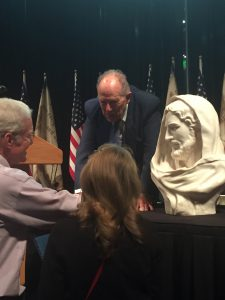
Dr. Chauncey Riddle delivers his latest paper entitled, “Human Knowing” at Firm Foundation Expo at Utah Valley University
Human Knowing
Thesis: We know little but believe much
Note: I suggest you not take notes but just concentrate on comprehension.
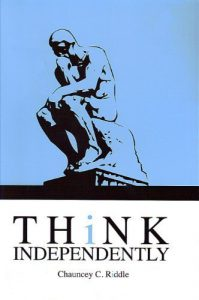
For further detail, see my book Think Independently
Think Independently, by Dr. Chauncey C. Riddle – Available in paperback or Kindle format on Amazon.com
Ways of Human Knowing: We will examine 7:
Perception: using the senses of the human body
Reason: using logic to produce conclusions
Experimentation: trial and error pragmatism
Authoritarianism: forming ideas by communicating with others
Imagination: creating ideas, hypotheses, theories
Knowledge of good and evil: The Light of Christ
Personal revelation: The Gift of the Holy Ghost
Perception: Using the senses of the human body to form ideas about the universe.
Key point: We perceive in our brain
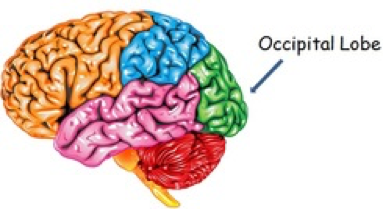
Vision: We see in the occipital lobe
Vision: We see in the occipital lobe
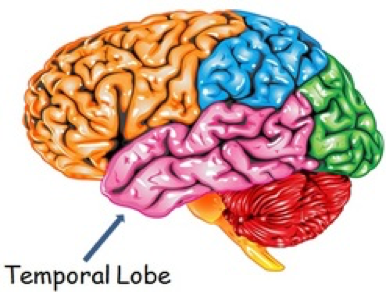
Hearing: We hear in the temporal lobe
Vision: We see in the occipital lobe
Hearing: We hear in the temporal lobe
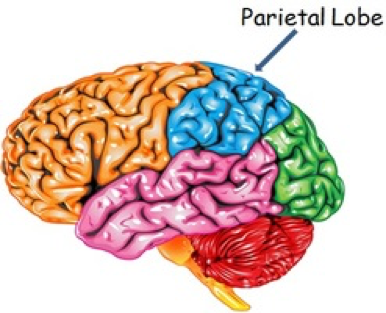
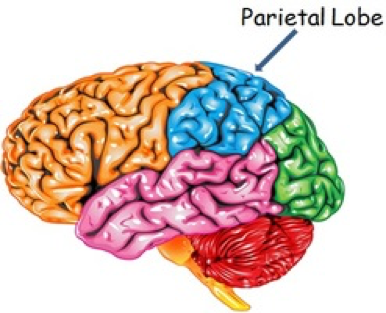
We taste, touch and smell in the parietal lobe
Hearing: We hear in the temporal lobe
We taste, touch and smell in the parietal lobe
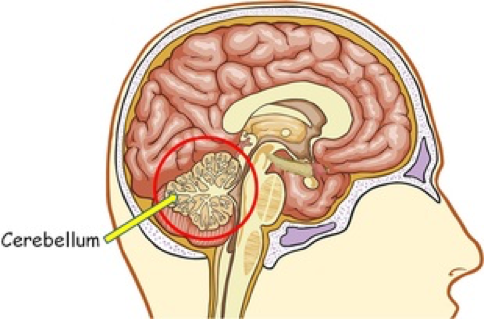
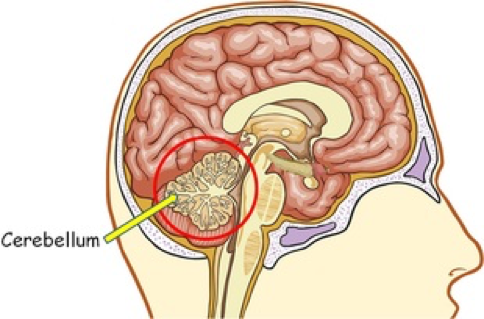
Walking, writing, balance we control in the cerebellum
We taste, touch and smell in the parietal lobe
Walking, writing, balance we control in the cerebellum
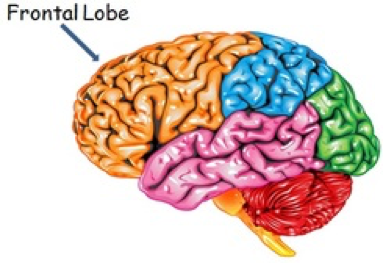
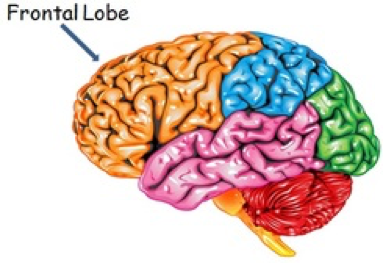
We think plan and speak from the frontal lobe
Walking, writing, balance we control in the cerebellum
We think plan and speak from the frontal lobe
We think plan and speak from the frontal lobe
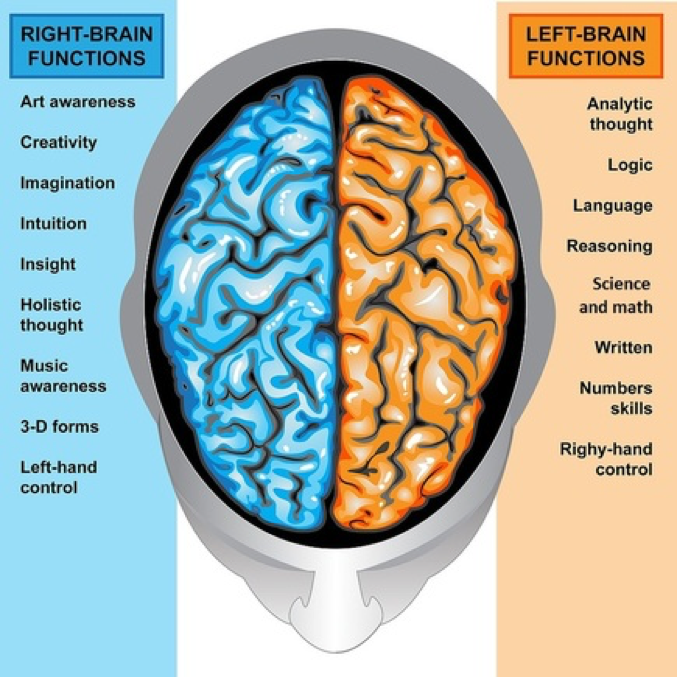
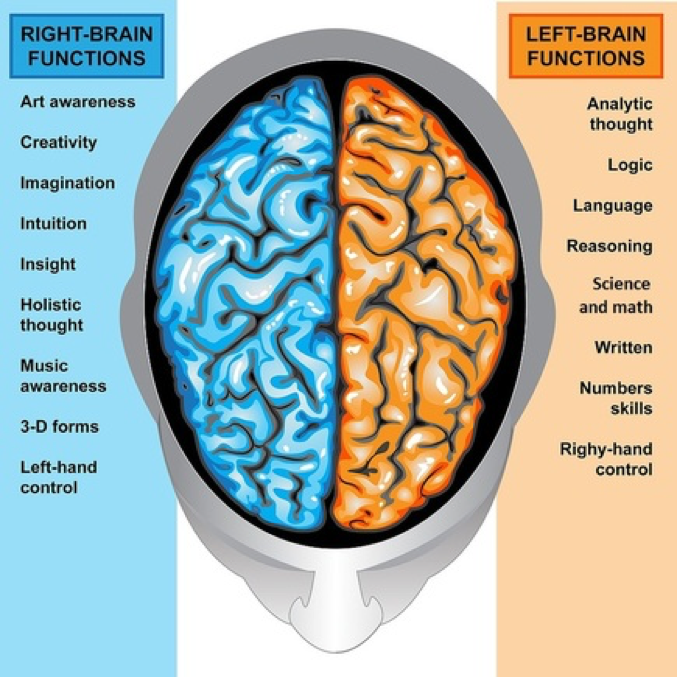
In the left brain (yellow) we think, control language, do science and math, control our right hand
In the right brain (blue) we do art, imagine, have intuition, 3-D forms, music, left-hand control
In the left brain (yellow) we think, control language, do science and math, control our right hand In the right brain (blue) we do art, imagine, have intuition, 3-D forms, music, left-hand control
In the left brain (yellow) we think, control language, do science and math, control our right hand In the right brain (blue) we do art, imagine, have intuition, 3-D forms, music, left-hand control
Sensations
Sensations are the nerve stimulation of our approximately 25 physical senses. (Yes, we have more than 5 senses.)
All sensations go from the sensing organ to specific brain locations.
All sensations traveling along the nerves from the sensing organ to the receptor part of the brain are of exactly the same type.
They are interpreted and differentiated by the location to which they travel.
The Synthesis
These we have shown are not all the parts of the human brain, but they are major components.
No one has yet satisfactorily scientifically explained how we see.
But we do see.
Somehow we put all the sensations together and form a world in
our imagination. Imaginations are most vivid when we are
actually sensing something.
We have the illusion that when we are sensing, we touch reality.
Reality
But reality is also a figment, a creature of our imagination.
To call something real is simply to say we are quite sure of it.
But we make enough mistakes that it pays to be humble.
When we are humble, we say “It seems to me that . . . “
When we are not humble we say “I am sure that . . . “
Sometimes our life depends upon being sure enough of our
sensations that we are able to avoid trouble, as when we step
out of the path of a speeding automobile.
Where we live
So we each live in the world of our imagination, inside our heads.
We form images of where we live and the surroundings of that place.
We form images of the people we know, ascribing to them various
character traits, personalities.
We form images of the rest of the world we do not now see.
We form images of the rest of the universe we do not now see.
We form images of the past, which we cannot see.
We form images of the future, which we cannot see.
And thus we live, move and have our being and doing in the world of our images.
Rebuttal
But, you say, there really is a reality out there that is not just our imagination. Let me prove it to you by punching your arm. Now, doesn’t that hurt? See, there really is a reality out there.
I must agree with you that there is a reality out there. It is just that we see that reality only through a glass, darkly. That glass we see through darkly is our flesh, our physical bodies. We thus know we are in a real world. But we are really sure about only some things, and those are not the most important things.
Example of an illusion: The Necker Cube: Which is the near corner, upper or lower?
Example of an illusion: The Necker Cube: Which is the near corner, upper or lower?
The world is full of Necker Cubes
Every person we meet is like a Necker Cube. We imagine a character for them. We tend to believe our imagination about them is the truth.
The future, the past, and everything we are not now sensing exist in our imagination, and we determine and control what we believe about them.
Most of what we think we know we only imagine. And a lot of what we perceive is like Necker Cubes where we must choose an interpretation.
Conclusions about perception:
Perception is absolutely necessary to relate to the real world around us.
Perceiving accurately and surely is done only in environments where we are very familiar with what we are sensing and doing.
If we are not familiar with what we are sensing and are unable to do anything in the situation, we need to be humble about what we believe we are sensing because we are only guessing.
Only what we can do over and over is sure to us. But we have no guarantee the future will be like the past. If we think we are sure about the future, we need to realize that that surety is only a hope.
Reason as a source of knowledge
There are three basic forms of reasoning:
Deduction: Drawing justified conclusions from given premises.
Induction: Drawing possible or probable conclusions from given arrays of data (observations, perceptions).
Adduction: Inventing premises for a conclusion we already have.
Examples of Deduction:
Given the premises:
All men are mortal.
James is a man.
We may surely conclude that:
James is mortal.
Thus deduction makes explicit the relationships of ideas we already have.
Other examples:
When you add up all your checks and deduct that amount from your bank balance, you can find out (become psychologically aware of) how much money you have in the bank.
If you know the weight of an object, you can calculate the energy required to lift it 10 feet.
Examples of Induction:
Given that your back yard has been visited by skunks the last four nights, you may reasonably conclude that skunks will visit again tonight. But you cannot be sure that they will.
You friend has lied to you several times about what he has been doing for the past month. You may reasonably conclude that he is lying to you now about something else. But you cannot be sure he is lying just because he lied before.
Your friend has remembered your birthday every year for the past ten years. You may reasonably expect him to remember again. But you cannot be sure he will.
Examples of adduction:
Given the conclusion that your friend is acting very strangely, you might think:
My friend has suffered the death of a beloved sibling.
When people suffer the death of beloved siblings they act strangely.
Therefore, my friend is acting strangely.
Or you might think:
My friend has been drinking too much.
When people are drunk they act strangely.
Therefore, my friend is acting strangely.
Conclusions about the three ways of knowing by reasoning:
Deduction is always sure but produces nothing not in the premises.
Induction is always guesswork, never sure, but can be very useful, producing ideas that often work.
Adduction: There are always an infinite number of reasons that can be invented to justify any given conclusion.
To use our power to reason is good, but it does not produce sure knowledge. It’s main help is to allow us to be consistent with ourselves.
Conclusions about reasoning:
It is usually good to be rational (consistent) in trying to know.
No one can be said to be totally rational about what he or she thinks they know. All reasoning begins with premises we cannot prove.
Anyone who claims to be totally rational about what they think shows a lack of understanding of what reason is and can do.
Since we cannot be totally rational about knowledge, we all live by faith. Faith, the things we believe but cannot prove, is where we get all of our initial premises for reasoning.
Experimentation as a way of knowing.
Doing is a form of knowing.
Doing what we can do, and doing it over and over, gives us surety that we know what we are talking about.
Experimenting is trying to do something for the first time.
When we experiment, we usually have a goal in mind, something we are trying to achieve.
If we achieve our goal, we think we have an understanding of one of the ways the universe works.
As we repeat the experience, we become settled in our confidence about what works. This is experimentation, or “pragmatism.”
A Human life is actually one big experiment:
A human baby lives by trying first one thing, then another.
First, it learns to breathe, and then to eat and sleep.
It looks around and begins to form images and expectations out of the sights and sounds and feelings and odors it experiences.
The baby learns to experiment to produce more of what it wants and less of what it doesn’t want.
The baby’s attempts to produce what it wants and avoid what it doesn’t want become habits.
Habits become a character, a personality, as the individual shapes himself or herself.
Personality (character) is the fruit of human living.
Every human life is a chain of successful and unsuccessful experiments.
The successful experiments lead us to repetition, which is the mother of learning.
As we learn to cope with the universe, we develop ideas: structures and sequences which we think are the reality of where we find ourselves.
The more successful is our coping with the universe to fulfill our desires, the more sure we become of the structures and sequences we have built as our understanding of the universe.
We turn our ideas of structure and sequence into what we call “knowledge.” This knowledge becomes part of our personality, our character.
The core of human knowledge is the result of successful experimentation.
What we really know in this world is the ideas we find help us to fulfill our desires, a core of ideas that “work” over and over.
We then add to that core of ideas, ideas formed by communicating with others. This is not knowledge, but rather belief.
If we can fit what others tell us is consistent with our core of knowledge, we tend to believe. If the things we are told don’t fit, we either accept those ideas as blind belief, reject those ideas, or experiment with them to see if we can make them fit with our core knowledge.
Until we have tried an idea for ourselves, it is not knowledge to us.
We humans are quite capable of being irrational:
When we have great respect or affection for persons who tell us things about the universe, some of us tend to believe those ideas, even when they do not fit with our core knowledge.
Some persons are “hard-headed,” “from Missouri,” and refuse to believe what does not fit with their experimentally produced core knowledge.
Gullibility, the willingness to believe others persons without experimenting on what they tell us, afflicts most human beings.
Gullibility makes propaganda a social force used to control populations.
We live in a sea of propaganda (lies and half-truths). Examples:
Much of the “news” we are given by media sources is propaganda.
A lot of what is taught in schools is propaganda.
A lot of the substance of gossip is propaganda.
A lot of what is taught in churches is propaganda.
A lot of history is propaganda.
A lot of so-called “science” is propaganda.
What politicians tell us is often propaganda.
What we tell ourselves is the real truth is often propaganda.
One cure for propaganda is personal experimentation, being “pragmatic.”
If someone tells us a certain medicine works, we can try it for ourselves to see if it works for us.
If someone tells us there is a formula for making money, we don’t have to believe them, we can just try it for ourselves.
If someone tells us a certain political expediency is what is best for our country, we can look for where the idea has been tried to see if it worked.
If someone tells us a certain religious practice is helpful, we can try it for ourselves to see if it really works that way.
Experimentation is a great help in knowing
Sooner or later, most humans learn that it pays to take what others say with a “grain of salt.” In other words, it is not usually useful to be gullible.
As we build up a store of ideas that really “work,” we begin to have confidence that we really are figuring things out.
Our store of ideas that “really work” is the basis of our life accomplishments. As we implement those ideas, what we do becomes our “works.”
Authoritarianism: Gaining ideas from other human beings.
As we watch what other humans do, we gain ideas as to what we might do ourselves. Example: We watch others ride a bicycle, then experiment ourselves until we can also ride a bicycle.
But most of our ideas from others come from verbal communication. We learn a “mother tongue,” and that becomes our major link to the world of people.
As others speak to us, we are busy in our imagination inventing meaning for the noises and gestures they display, and often find great pleasure in listening to them. Communication becomes a major part of our human living.
There are four parts to every communication:
If we really understand someone who is communicating with us, we must fix on four things:
What is the intent or purpose of the speaker.
What is the message of the speaker.
The power of this message: It’s truth or importance.
The consequences of accepting or rejecting this message.
But most humans do not carefully sort out these four things. We tend to be gullible and just accept as so what the speaker says. Because of this, most human minds contain a lot of garbage.
Conclusions about Human Communication:
We are flooded with communications from others.
That process of receiving communications often keeps us from thinking for ourselves and is always a mixture of good and bad.
It is difficult for humans accurately to sort out the good from the bad.
Any idea we accept from another person is always belief or faith. It may be their knowledge, but it is not knowledge to us, even if true.
We live in a communication jungle that helps or hurts us at every turn.
Imagination as a source of knowledge
We synthesize our sensations into a world we imagine, and fill in all the blanks with our imaginative inventiveness.
We look at the body of a person and imagine to ourselves what goes on inside them, their thinking and feeling, desires and future.
We see the present moment, and with the aid of memory and what others tell us, we invent all of the past and future in our imagination.
We hear of events in distant places, and imagine them.
We live in the world of our own imagination. And we tend to believe ourselves.
And our imagination is very useful:
We do all of our planning in our imagination.
We do all of our remembering in our imagination.
We do all of deciding in our imagination.
The universe we grasp only in our imagination.
We decide we have or do not have a Heavenly Father and a Savior in our imagination.
If we did not have an imagination, we would not be a human being.
Imagination makes Science possible
Science is man’s collective attempt to understand the universe using only perception, reason, experimentation, and imagination. Most scientists specifically try not to include any information from a spiritual source. Thus science is the delight of the natural man.
Being blind to all of spiritual existence, science does better when dealing with material things such as physics and chemistry.
But science stumbles when it ignores all spiritual existence, as in psychology, sociology, political science.
But social scientists do not think they stumble. They tend to think they are “emancipated” by pretending spiritual things do not exist.
Imagination makes History possible:
History is the imaginative invention of a story of the past. It is based in documentary evidence about the past, but its creation is always a controlled by the beliefs and imagination of the historian.
History is rewritten in every generation to satisfy the changing prejudices of historians.
In a real sense, all historical accounts are fiction. The word “fiction” comes from the Latin “faceo” which means to make or do. All historical accounts are made up by historians taking the beads of ideas gleaned from documents and stringing those beads on a narrative string of their own prejudices.
Shall we then discard Science and History?
No, we should not discard science and history. Both are interesting, often useful, often helpful, though sometimes disastrous.
Science and history should be taken with a grain of salt. That salt is the skepticism we should attach to all human endeavors.
In all human endeavors we are dealing three kinds of people: 1) the natural man who knows not God, 2) the natural man who thinks he knows God, and 3) the man who does know God. Each produces different beliefs, actions and societies.
Science and history are at their best when invented by men who know God.
Knowledge of Good and Evil:
Knowledge not only relates to what is true and false, what works and what does not work, but also to what is good and bad: values.
Some think that all values are environmentally stimulated by the persons who influence a given person.
But we see examples of people who are different from the persons of their environment.
Within each normal human being there is what is called a “conscience.”
Conscience is the Light of Christ, which lightens every person who comes into this world.
The Mission of Conscience:
Conscience gives us feelings about what is good and bad to do and say.
But the voice of Satan is always with us to give us a choice agency.
Choosing good over evil is what separates the sheep from the goats.
Conscience seems to be the key to all further spiritual knowledge.
When humans ignore their conscience often, it stops functioning. They are then “past feeling.”
Possibly those who are “past feeling” cannot escape being “the natural man.” Examples: Laman and Lemuel.
Personal Revelation as a way of knowing:
Personal revelation is communication of God to mankind through the Holy Ghost.
It comes in many forms: To heart (feelings); to mind (ideas), to strength (health), and to might (prospering). But illness and bankruptcy can also be revelations from God.
Those who really understand revelation see the hand of God in all things.
Different forms of Personal Revelation:
New understanding of a scripture.
Confirmation that what someone else is saying is true or false.
Feeling that something we plan to do needs more planning.
Understanding what unusual thing will happen next.
Confirmation that someone we are asked to sustain is the Lord’s choice.
Help with preparing a talk or a letter.
Help teaching a class.
Guidance as to what to say when speaking and praying.
Seeing a vision, having the heavens opened.
The Holy Ghost is the Pearl of Great Price
If we desire to be righteous (to bless others as God does), there is no greater aid than receiving the Gift of the Holy Ghost.
Having the Holy Spirit as our constant companion should be our Number 1 priority. We should try with all our heart, might, mind and strength to have the Holy Spirit as our constant companion.
Attaining the companionship of the Holy Spirit is what turns a Latter-day Saint (a member of the LDS Church) into a saint (a holy person, one who is forgiven of his or her sins and does only righteous acts).
”And by the power of the Holy Ghost ye may know the truth of all things.” (Moroni 10:5)
How to gain the constant companionship of the Holy Ghost: The Precious Gospel Formula
Faith in Christ: Put our whole trust in Him. This is what makes it possible to become whole, holy.
In that trust in Christ, repent of all of our sins.
Make a covenant with God to keep all of his commandments by being baptized.
Receive the right to the Gift of the Holy Ghost by the laying on of hands, then working until we actually receive the Gift of the Holy Ghost.
Why Receiving the Gift of the Holy Ghost is not the End but the Beginning of Salvation.
Receiving the Gift of the Holy Ghost is entering the gate.
We must also endure to the end.
The end we should all endure to become like Christ.
As we obey God through the Holy Spirit in all things, we become a new creature, remade in the image of Christ’s character.
But remember, there are three voices in our minds: Satan, our own ideas, and the Holy Ghost. Deciding which one to follow is our agency. Learning to follow only the Holy Ghost is the key to enduring to the end.
To become as Christ is the goal, the end to which we may all endure.
The Gospel of Christ is the Good News
The precious Gospel five-step formula is the greatest message on earth. No other compares with it in importance.
Part of that good news is that every normal human being can complete the precious five-step formula.
No one can complete the formula without help. That help is called the “grace” of God.
God is willing and able to bless us to complete the process of changing us from a natural man to the stature of Jesus Christ himself.
Summary of the ways of human knowing:
Through the ordinary human ways of knowing the truth about the universe in which we live, we see through a glass, darkly. We see enough to live our human, animal lives with some success.
This is a possible rank order of the ordinary ways of human knowing, most reliable to least reliable:
Experimentation
Perception
Reason
Authoritarianism
Imagination
But if we add ways of knowing from God
If we first pay attention to what is good and what is evil, and choose to do the good instead of the evil through the Light of Christ, then:
God will eventually, in this world or the next, make the fullness of the Gospel of Jesus Christ, the “good news” available to every human.
Then, if we so choose, we can receive the Gift of the Holy Ghost, which makes God our Senior Companion in all that we want, feel, say and do.
The Gift of the Holy Ghost then leads us to perform the best experiments, perceive truly, reason wisely, know what other persons to believe and who not to believe, and to imagine wisely and fruitfully.
Only using the Gospel of Jesus Christ can we fulfil our human potential.
When are you an expert witness, one whose testimony really counts?
Your are an expert witness when you are bearing testimony of something you can do, do do, and have done over and over.
When you are bearing testimony of something you have personally and often experienced: Seen, heard, touched, smelled or tasted.
You are not an expert witness about the things you hope for, desire, or dream about unless others want to know what you hope for, desire, or dream about.
When you bear testimony as an expert witness, you bless your hearers: They then have access to truth through you.
Conclusions about Human Knowing:
We human beings really know only two things:
That which we can do, do do, and have done many times.
The perceptions we have had about very familiar things.
Someone who has either of those two things is an expert witness.
Everything else we have in our minds is not knowledge, but rather belief.
We humans know very little, but believe a lot of things.
We would do well to treat all the statements of expert witnesses as something to be tested by our own experiments and experience.
“Prove all things; hold fast to that which is good.” 1 Thessalonians 5:21
Part Two: Applications of what we know about human knowing:
We will concentrate on four applications:
Organic Evolution as a theory of science.
Adam and Eve as the first human beings (history).
The attempt to solve human social problems.
The location of the Book of Mormon lands.
Organic Evolution
Organic Evolution is the scientific theory that life came to exist on this earth an by spontaneous generation (chance), and that all present living animals and plants are descended from that spontaneous generation as shaped by environmental forces.
Science is ideas about the universe consisting of:
Facts: Things sensed, perceived.
Laws: Generalizations of observed facts.
Theories: Ideas invented to explain laws and facts.
There are always and infinite number of theories possible to explain any given set of facts and laws.
Organic Evolution is one of many possible theories to explain the universe.
No scientific theory can be proved to be true because all theory consists of things which are purely imaginary, not perceivable.
Scientific theories can be falsified if their logical consequences are not observed.
Choosing among possible theoretical explanations of observed facts and laws is a personal choice of the persons choosing.
Every one who chooses to follow Darwin and to believe in organic evolution does so because they want to, not because any evidence makes that choice necessary.
Major problems with the Theory of Organic Evolution:
The theory depends upon the idea that life formed spontaneously. There are no examples of spontaneous generation of life known to mankind. (This is a major problem.)
The theory depends upon one species of life form changing into another species. There are no examples of one species changing to another species known to mankind. (This is a major problem.)
The theory depends upon there being an immense amount of time in the past since life on earth began to be: Millions of years. The age of the earth is a theory itself. (This is a major problem.)
The theory defies the Law of Entropy: Natural systems disintegrate (run down) as they lose heat. (This is a major problem.)
Why are some people willing to believe in the spontaneous generation of life?
Some believe that because so many other people believe it.
Some believe that because if it is true, there is no need for God and therefore no need to repent, and they don’t want to repent.
Some believe that because they think (mistakenly) that scientists are never wrong.
Some believe that because they do not think very carefully.
Why do people believe that species beget other species? (Speciation)
Some believe this because speciation is absolutely necessary to the theory of organic evolution, and they desperately want that theory to be true.
Some believe this because they are shown different animals and plants in the fossil record that resemble one another, and they want to believe that the change represents the natural emergence of a new species. But there is no way to know that one form is ancestral to another.
Some believe because so many other persons who they respect believe in this idea.
Why do people believe life has been on the earth for millions of years?
Some believe because they have been told this idea all of their lives.
Some believe in an earth millions of years old because it is necessary to the theory of organic evolution, and they desperately want the theory of organic evolution to be true.
There are many theories as to how long life has existed on earth, but there are no proofs of any of these theories.
Why do people disregard the Law of Entropy?
Some disregard it because they believe in evolution and use organic evolution as a proof that the Second Law of Thermodynamics (The Law of Entropy) is not true.
Some disregard it because they have limited experience with the natural world and suppose that order can naturally come out of disorder.
The watchmaker objection seems trite to some. To find a running watch on the beach and to suppose the winds and the waves put it together seems perfectly logical to some people.
Conclusion: The Theory of Organic Evolution is built upon other pure theories, not on facts or laws. It is wishful thinking.
Notwithstanding the theory of organic evolution is widely taught and believed, especially at universities, it remains suspect and unprovable.
There are no expert witnesses who can give evidence that the theory of organic evolution is true. (Though some would like to claim to be such expert witnesses.) No one can do evolution or has seen it.
The main present-day argument for the theory of organic evolution is that so many people believe it.
A great many people also believe in Santa Claus.
Adam and Eve as the first human beings (History)
To write history is to invent what happened in the past on the basis of evidence available in the present time.
To write prophecy is to invent what will happen in the future on the basis of evidence available in the present time.
To write history is much safer than writing prophecy, because the future will become the present and we will all know which prophecies are correct.
But history will never again become the present, so historians can say anything they want to and not be found out.
The story of Adam and Eve is automatically rejected by most historians.
To accept the story of Adam and Eve as the ancestors of the human race would be to accept the Bible a historical record, which almost no scholars are willing to do.
So historians fall in with the theory of organic evolution and postulate that human beings are one fruit of a long evolutionary process, having descended from some ape-like creature. The fact that there is less evidence for that evolutionary theory than for the Biblical account does not bother them. They of course reject the evidence for the Biblical account because the Biblical account has God and a supernatural spiritual realm as part of it, which things are anathema to the natural man.
Some people try to marry the story of Adam and Eve to the theory of Organic Evolution
Some postulate that Adam and Eve were ape-like creatures to whom God gave a conscience and superior intelligence and they then became human beings.
That postulate flies in the face of three things we are told about Adam and Eve and the Garden of Eden:
There was no death in the Garden (on earth?) until Adam and Eve fell. Adam became mortal because he transgressed. All nature became mortal with him.
Before the fall, Adam and Eve were celestial beings and had spirit matter in their veins, not blood.
Adam and Eve were literally of the race of the gods. (Otherwise, Mary could not have been the mother of Jesus.)
The Fall of Adam and Eve is central to Faith in Jesus Christ
There are three things about the story of Adam and Eve that are crucial to faith in Jesus Christ.
Adam chose to disobey God and therefore fell.
In his fallen state, Adam and all his posterity are dead to the spiritual existence around them.
Being fallen, therefore becoming carnal (trapped in a physical body), sensual (sensing only with the physical body), and devilish (subject to the temptation of Satan through the flesh), Adam and his posterity were in need of a redemption to spiritual life and the presence of God.
Redemption from the Fall of Adam comes only in and through Jesus Christ.
It takes supernatural power to restore humans to spiritual life and to be able to abide the presence of God.
It takes supernatural power to put humans beyond the power of Satan to continue to tempt them.
It takes supernatural power to rescue the physical bodies of mankind from mortal death.
These three things are principal features of what Christ does through his work of Atonement.
Conclusions about Adam and Eve:
Unless men and women have a correct idea of where they came from and what they are supposed to be doing in mortality, they will not accomplish what God sent them to do.
God tells men where they came from and why they are here in the accounts of the Fall of Adam and Salvation through Jesus Christ.
The world rejects both the correct understanding of Adam and Eve and the mission of Christ.
Part of coming out of this world and not being of it is to gain a true understanding from the Holy Ghost both of Adam and Eve and the Fall and of the Redemption made possible by Jesus Christ.
How can men create heaven on earth?
If there was no fall of Adam, there is no need for redemption.
If there is no need for redemption, there is no need for a Savior.
If there is no Savior, mankind must save itself.
The main salvation naturalistic thinkers envision is socialism.
Socialism is humans appointing themselves to be the saviors of mankind.
Socialists have only one goal: Total control of human society, using guns (force).
Socialists seek total control of human society because they theorize they can then solve all human problems:
Poverty, through government redistribution of wealth.
Ignorance, through government control of all education.
Disease, by government control of scientific endeavor.
Crime, by government control of all neighborhoods.
Opposition, by government control of all media.
Christian values (which they see as an enemy) by government control of the upbringing of all children.
Total Government Control is another name for Hell, the implementation of Satan’s plan
Satan proposed in the pre-mortal existence to save all of mankind.
Satan proposed to save all mankind by taking the power of God to force all mankind to live in a force-centered Utopia.
Satan has tried ever since Adam and Eve to set up a Utopia on earth.
Every attempt of Satan to establish Utopia has failed.
The advocates of socialism want to keep trying to establish Utopia because they see no alternative.
Present socialist half-measures are stepping stones to total control.
The proper alternative to Utopia is Zion.
Zion is a people who are pure in heart because of their own agency (choice) and the grace of Christ.
In Zion, people have one heart: They all have pure, unselfish hearts.
In Zion, people believe the same truths: they are of one mind.
In Zion, people voluntarily work righteousness: every man seeks the interest of his neighbor.
In Zion, there are no poor: those who have more voluntarily share with those who have less.
Zion has been created on earth many times, so it is a real possibility.
To make possible the establishment of Zion today is one of the main reasons the Gospel of Jesus Christ was restored in the latter days.
Why do we not have a Zion today?
We don’t have a Zion on earth today because so many Latter-day Saints are not willing to keep their covenants.
Latter-day Saints are working hard on the other reason for the restoration of the Gospel of Jesus Christ: To teach the Gospel to every nation, kindred tongue and people.
But Latter-day Saints will never fully witness the value of the Restored Gospel to the world until we establish a Zion.
We now say to the world “We have the wonderful, true Gospel of Jesus Christ to share with you. We can’t live it, but it really is true.”
When there is a true Zion on earth, the world will have its second witness of Christ.
The Restored Gospel of Jesus Christ is the one and only formula for saving mankind, both temporally and spiritually.
The Holy Ghost bears witness to everyone who will accept that witness that Jesus is the Christ, the Savior of all mankind.
Those who are saved by the Savior are different from those who are not saved. If they live the whole Gospel, they will establish a Zion. The existence of a Zion will become a witness that the Restored Gospel really does work and save people.
Until we have a Zion, we Latter-day Saints, as a people, are “Mene, mene, tekel upharsin,” weighed in the balance and found wanting.
But are there not some LDS people who live the whole Gospel of Jesus Christ?
Yes, there are some members of the LDS Church who live the whole Gospel of Jesus Christ.
If you put all of those people in one stake, they would establish Zion there.
But then the rest of the Church would fall apart.
The Authorities of the LDS Church are trying mightily to establish Zion.
When we members begin to fully implement what they ask us to do, we will have a Zion.
The engine that will finally create a Zion is the ordinances of the Temple.
There are two keys to the establishment of Zion:
Key #1: To study the Book of Mormon until we truly understand how to come to Christ and be perfected in Him. The Book of Mormon is the manual of instructions as to how to come to Christ and be perfected in Him.
Key #2: Because knowing how to come to Christ is not enough, we must also have the power to come to Christ and be perfected in Him. That power is only obtained through the ordinances of the New and Everlasting Covenant, focusing particularly in the blessings and covenants of the temple endowment and sealings.
Blessed are those who use these to keys unto perfect Faith in Christ.
What will it take to get LDS people to use those two keys?
God protects human agency above all else. Because he knows that only if his children voluntarily create Zion can they avoid creating Hell on earth and going to hell afterwards.
We will establish Zion only when enough LDS people freely choose to keep all of their covenants.
The Savior will never force anyone to create or live in Zion.
When we Latter-day Saints want Zion more than anything else, we will establish it. Right now, too many of us are overcome by worldliness. At most, only half of the LDS church members will overcome the love of the world before He comes again.
When we start loving our God and our neighbor instead of ourselves, we will have Zion.
Selfishness is the great enemy of our souls.
Selfishness is the gospel of Satan.
Jesus Christ would have us live “outside ourselves in love.” And that love must be pure, the gift of charity from Christ.
Therefore, seek after charity, for charity, the pure love from Christ, never fails.
Charity is the gift of God to all who seek to make their eye single to his glory with all of their heart, might, mind and strength.
If we gain charity, we will save our own souls and establish Zion.
The inhabitants of Zion are all expert witnesses to the truth of the Restored Gospel
Imagine if the world were flooded by expert witnesses who could say to the fallen people of this world: “Jesus Christ has come again and restored his true Gospel and Church. Look to Zion, and you can see that Gospel in action. It really does work. I know it saves mankind because I have participated in Zion and have there seen the Lord solve all human, mortal problems by helping them to have charity. You also can be part of a true heaven on earth by accepting Jesus Christ as your Savior and fully living His Restored Gospel in the Church of Jesus Christ of Latter-day Saints unto having this pure love from Christ.”
What a powerful expert witness that will be. Then the powers of hell will be shaken forever.
We turn now to the fourth application, the location of Book of Mormon lands.
This discussion has full meaning only to those who have received the witness of the Holy Ghost that the Book of Mormon is the work of God. Otherwise the discussion is purely academic.
Knowing the Book of Mormon is a true record of ancient peoples on this, the American Continent, we might then profitably wonder just where it all took place.
Joseph Smith’s statement about the Book of Mormon:
Joseph Smith said that the Book of Mormon is “the most correct of any Book on earth & the keystone of our religion & a man would get nearer to God by abiding by its precepts than by any other Book.”
(Wilford Woodruff journal, Nov. 28, 1841, Church History Library, Salt Lake City).
Notice that he did not say that the Book of Mormon is the keystone of the Church. He said it is he keystone of our religion. Our religion is our way of life, the habits of character we foster to endure to the end in our faith in Jesus Christ. That goal or end is to “come to the measure of the fullness of the stature of Christ.” Ephesians 4:13)
The first business of an LDS person is to make our calling and election sure:( See 2 Peter 1: 5-10)
Our calling is to become the children of Christ, become new crearures remade in His image, and to then inherit all he has and is.
We can receive this inheritance only as we build spiritual muscle that will enable each of us NEVER to give in to the temptations of Satan.
The commandments of God are given to us to build that spiritual muscle so that we could be trusted with godhood.
The Atonement of Christ makes forgiveness of breaking the commandments of possible, but until we stop sinning, we cannot receive full forgiveness.
Repentance is stopping sinning. Is that possible? Only in Christ.
Don’t be taken in by those who say one cannot become perfect in this life.
To become perfect means to become complete, whole, holy.
To say we cannot become perfect in this life is to say Christ cannot save us.
What he saves us from two things:
The weakness of our character that allows us to sin. He gives us the knowledge and power to learn to keep all of his commandments, thus to build the spiritual muscle necessary to be able to stand godhood.
Christ also saves us from the penalty due for having sinned.
Satan will try every way to divert us so that we will not fully repent.
Satan will fill our minds with lies (like: you can’t become perfect).
Satan will fill our hearts with lusts (like: you deserve to pleasure yourself)
Satan will try to destroy our physical tabernacle (like: you ought to try using tobacco, alcohol, or other drugs)
Satan will try to abort our mission in life (like: I’ll wait to have children until it is convenient)
The solution? To love God with all of our mind, heart, strength and might, first and foremost.
When our calling and election is sure:
When we as a people learn to live the Gospel of Jesus Christ as given in the Book of Mormon we will be able to know everything we need to know and do everything we need to do.
We will receive the sealed portion of the Book of Mormon plates. (This blessing is to the children of Lehi when they become faithful.)
We will receive the full record of the Jaredites. (This blessing is to the Gentiles when they become faithful).
Perhaps we will again have the Book of Lehi (the lost 116 pages)
And we will be able to establish Zion again on the earth.
In this setting, What about Book of Mormon Geography?
Book of Mormon geography is a fascinating subject.
I appreciate the scholarship of John Sorensen in his study of the archaeology of Meso-America and his contention that those are the Book of Mormon lands.
I also greatly appreciate the work of Rod Meldrum and others in bringing to our attention the remains of ancient civilization in North America, urging us that they are the Book of Mormon lands.
I find both of them giving interesting and compelling evidence and reasoning. But I honestly have to conclude that Book of Mormon geography is a red herring to me.
A Red Herring is a diversion. Be not diverted.
I lean towards the Heartland theory of Book of Mormon lands. Knowing where they are is important.
But there is something that is 100 times more important.
The priority of Latter-day Saints should be to:
Come unto Christ and be perfected in Him.
To establish His Zion.
When we have done those two things, we will not only know what are the true Book of Mormon lands, but a lot of other precious things also.
So let us be about doing those two things, first and foremost.
Conclusions about Human Knowing:
Humans know best what they can do. So treasure the testimony of the expert witnesses: the doers.
We humans know least about the things we cannot now experience. About those things we invent theories. Appreciate the ideas of those who talk theory. But take it all theory with grains of salt.
Remember: All human supposing of the past is theory. All human supposing of the future is theory. So learn about the past and the future only from God, for whom they are not theory.
Great doers:
The greatest doer is Jesus Christ himself: He lived a perfect life, He fulfilled his mission completely, he wrought the Atonement to reconcile every child of God who will receive it to come back to be with and live the life of God the Father, and brings about the best possible eternal happiness for each human being.
Joseph Smith was a great doer. He was able to bridge between God and man to restore the fullness of the Gospel of Jesus Christ to the earth and to establish the Kingdom of God on the earth for the last time.
Other great doers:
Brigham Young was a great doer. He was the down-to-earth doer who was able to secure the continuation of what Joseph Smith established, to help the Latter-day Saints continue the Kingdom of God in the desert, to meet with good sense the challenges of every-day life.
Thomas S. Monson is a doer who shows the way to love God by loving our fellowmen. As our leader-doer at the present day, he and the other General Authorities would have us reach out to all others in the pure love of Christ.
Recommendations for the writings of doers:
Dean Sessions is a doer who has learned to make fossils. I commend to you his Universal Model of science. His proofs of the Universal Flood are most impressive. If you want a fresh look at science and geology and to see good reasons why organic evolution is a false hypothesis, take time to investigate the Universal Model. See at https://universalmodel.com/
David Allan is a doer who has learned to measure and calibrate time. I commend to you his book It’s About Time, wherein he tells you how to measure time and to establish simultaneity. His work with time was a critical factor in establishing GPS and other navigational aids. And as a disciple of Christ, he tells you much about living the Gospel. See at http://itsabouttimebook.com
Other Doers
Stephen Covey, our deceased friend, had much good to say about doing our human life. His book The 7 Habits of Highly Effective People is a good manual for living life as an intelligent human being. It is great terrestrial wisdom.
But the greatest doer of all time is Jesus Christ. He create the heavens and this earth and all of us, and is our Savior. I commend to you all of his words about how to come to Him and to our Father in Heaven to become an eternal doer of righteousness. Please don’t accept any human being as your Savior.
My plea to you today: Come unto Christ
The best thing any of us can do for this world is to come unto Christ, all the way, until we are filled with and show His pure love.
Then we will establish Zion, get the rest of the scriptures that are promised to come forth, and each fill our missions.
Please show love and tenderness for those who do not believe in Christ, and for those who do believe in organic evolution, that Adam and Eve evolved, and that the solution to our political problems is socialism. And treat them that way even if they don’t treat you that way.
Above all, let us be humble before Christ and our Father in Heaven, that their will, not our will, be done on this wonderful earth.
Conclusion:
I bear my witness that Jesus is the Christ, that He lives and answers prayers, and that He tempers the elements for his sheep who are shorn of pride. There is no more intelligent thing to do for any human being than to search out a knowledge of this Christ. And then we can waste and wear out lives out in loving and serving Him with all of our heart, might, mind and strength by tirelessly sharing all we have with our neighbors in His pure love.
The Savior’s prayer in John 17 is a review and report of his and his apostles’ eternal covenants. All things that matter and persist in eternity are made by covenants that are validated by ordinances. The Savior was explaining that concept when he said,
21 Not every one that saith unto me, Lord, Lord, shall enter into the kingdom of heaven; but he that doeth the will of my Father who is in heaven. 22 Many will say to me in that day: Lord, Lord, have we not prophesied in thy name, and in thy name have cast out devils, and in thy name done many wonderful works? 23 And then will I profess unto them: I never knew you; depart from me, ye that work iniquity (Matthew 7:21-23, 3 Nephi 14:21-23).
The wording in Matthew’s Sermon on the Mount is the same as in 3 Nephi. However, the Prophet’s Inspired Version clarifies it. Where Matthew says “I never knew you” (Matthew 7:23), the Joseph Smith translation says, “Ye never knew me” (JST Matthew 7:33). The Book of Mormon shows that the Matthew version is correct, but the Prophet’s change shows that the Savior’s intent was to describe a relationship that never happened. Herbert B. Huffmon has shown that the Hebrew word “yada”, translated “know” in the Bible, is a technical term “to indicate mutual legal recognition” in a covenant or treaty and “is also used as a technical term for recognition of the treaty stipulations as binding.”{1} He cites “a number of texts in which “yada” would seem to be used in reference to covenant recognition of Israel by Yahweh.” One of those is Amos 3:2.
1 Hear this word that the Lord hath spoken against you, O children of Israel, against the whole family which I brought up from the land of Egypt, saying, 2 You only have I known [yada`] of all the families of the earth: therefore I will punish you for all your iniquities. 3 Can two walk together, except they be agreed? … 7 Surely the Lord God will do nothing, but he revealeth his secret [sode] unto his servants the prophets (Amos 3:1-7).
In verse 7, “secret” is sode in Hebrew and refers to the covenants made at the Council in Heaven. Jeremiah understood this, for when he was called to be a prophet the Lord said,
5 Before I formed thee in the belly I knew [yada`] thee; and before thou camest forth out of the womb I sanctified thee, and I ordained thee a prophet unto the nations (Jeremiah 1:5).
As Jeremiah struggled to teach Israel to repent he prayed, “But thou, O Lord, knowest [yada] me: thou hast seen me, and tried mine heart toward thee” (Jeremiah 12:3). Huffmon cites that verse as an example of “the frequent combination, ‘know’ and ‘see’” and Deuteronomy 34:10 is an example of one “whom Yahweh knew face to face.”
10 And there arose not a prophet since in Israel like unto Moses, whom the Lord knew [yada`] face to face. 12:3).
The beautiful 36th Psalm puts it all together in a single verse.
10 O continue thy lovingkindness [hesed] unto them that know [yada`] thee; and thy righteousness [zedek] to the upright in heart (Psalms 36:10).
So it appears that when the Savior says “I never knew you,” or “You never knew me,” that what he was saying is “I never made a covenant with you,” or “No covenant you made with me was ever sealed by the Holy Spirit of Promise.” Once again, we are back where we began: at the Council in Heaven where we made those covenants. One of those covenants is what James called the “royal law.”
8 If ye fulfil the royal law according to the scripture, Thou shalt love thy neighbour as thyself, ye do well (James 2:8)
John assures us that the royal law was taught “from the beginning.”
7 Brethren, I write no new commandment unto you, but an old commandment which ye had from the beginning. The old commandment is the word which ye have heard from the beginning. 8 Again, a new commandment I write unto you, which thing is true in him and in you: because the darkness is past, and the true light now shineth 9 He that saith he is in the light, and hateth his brother, is in darkness even until now. 10 He that loveth his brother abideth in the light, and there is none occasion of stumbling in him (1 John 2:7-10).
Nothing ever changes! That royal law which was taught “from the beginning” is still the sealing power that binds those in the celestial kingdom together in a perfect order. We are assured,
1 When the Savior shall appear we shall see him as he is. We shall see that he is a man like ourselves. 2 And that same sociality which exists among us here will exist among us there, only it will be coupled with eternal glory, which glory we do not now enjoy (D&C 130:1-2).
It is, and has always been, about relationships: with family, with friends, and with God, and those lasting relations are founded upon eternal covenants.
—————— FOOTNOTE
{1}Stephen D. Ricks, and RoseAnn Benson—“Treaties and Covenants: Ancient Near Eastern Legal Terminology in the Book of Mormon,” Journal of Book of Mormon Studies (Provo, Utah: Maxwell Institute, 2005), Volume – 14, Issue – 1, Pages: 48-61, 128-29. Herbert B. Huffmon, “The Treaty Background of Hebrew Yada’,” Bulletin of the American Schools of Oriental Research, No.1 B 1 (Feb., 1966), pp. 31-7 Published by: The American Schools of Oriental Research Stable URL: http://www.jstor.org/stable/1356118 Accessed: 09/02/2015 12:10 The Hebrew word Vada` (Strong # 3045) also can mean the very intimate relationship in marriage, which also has strong contractual overtones. Adultery violates the terms of that contract. <><><><><><><><><><><><><><><><><><><><><><>
John 17:22—“And this is Life Eternal, that They Might Know Thee the Only True God, and Jesus Christ, Whom Thou hast Sent”
1 These words spake Jesus, and lifted up his eyes to heaven, and said, Father, the hour is come; glorify thy Son, that thy Son also may glorify thee: 2 As thou hast given him power over all flesh, that he should give eternal life to as many as thou hast given him. 3 And this is life eternal, that they might know thee the only true God, and Jesus Christ, whom thou hast sent (John 17:1-3).
The Savior himself explained that verse to the Prophet Joseph:
21 Verily, verily, I say unto you, except ye abide my law ye cannot attain to this glory. 22 For strait is the gate, and narrow the way that leadeth unto the exaltation and continuation of the lives, and few there be that find it, because ye receive me not in the world neither do ye know me. 23 But if ye receive me in the world, then shall ye know me, and shall receive your exaltation; that where I am ye shall be also. 24 This is eternal lives—to know the only wise and true God, and Jesus Christ, whom he hath sent. I am he. Receive ye, therefore, my law (D&C 132: 21-24).
“To know God” does not mean the same as “to know about God.” Whether Jesus was speaking in Greek or Hebrew the word he would have used means the same: to know intimately and the intimacy has a strong covenantal connotation.{1} For example, we encountered that same word in the Sermon on the Mount where Jesus said:
21 Not every one that saith unto me, Lord, Lord, shall enter into the kingdom of heaven; but he that doeth the will of my Father which is in heaven. 22 Many will say to me in that day, Lord, Lord, have we not prophesied in thy name? and in thy name have cast out devils? and in thy name done many wonderful works? 23 And then will I profess unto them, I never knew you: depart from me, ye that work iniquity (Matthew 7:21-23).
One way to understand that is that Jesus said, “You and I have never entered into a covenant, so why are you here?” The mood and the message of the Savior’s magnificent prayer is established with some of his first words, “This is life eternal, that they might know thee the only true God, and Jesus Christ, whom thou hast sent.” This is an assertion of the perpetuation of past, present, and future relationships. This great prayer in John 17 is a study on the theme of eternal relationships. In that prayer, Jesus affirms his relationship with his Father and theirs with the apostles and with those who will believe in the apostles’ words.
The stated object of his prayer is to preserve the eternal love that created those relationships before this world and to project them into the future eternities. Jesus prayed:
19 And for their sakes I sanctify myself, that they also might be sanctified through the truth. 20 Neither pray I for these alone, but for them also which shall believe on me through their word; 21 That they all may be one; as thou, Father, art in me, and I in thee, that they also may be one in us: that the world may believe that thou hast sent me. 22 And the glory which thou gavest me I have given them; that they may be one, even as we are one: 23 I in them, and thou in me, that they may be made perfect in one; and that the world may know that thou hast sent me, and hast loved them, as thou hast loved me (John 17:19-23).
I think the best way to understand the relationship that Jesus is looking forward to is to examine the characteristics of those persons in the celestial kingdom as described in Doctrine and Covenants section 76.
The importance of that is easy to grasp when we understand the revelation on the three degrees of glory as a definition of their societal relationships. The greatest differences between the three degrees of glory as described in that revelation as the quality of their togetherness—or lack thereof.
Little is said about those in the terrestrial world except that they are “honorable men of the earth, who were blinded by the craftiness of men,” and “are not valiant in the testimony of Jesus. Their associations with each other are probably as congenial and amicable as it was in this world.
Those in the telestial kingdom are a sorry lot. Their “glory is that of the lesser, even as the glory of the stars differs from that of the glory of the moon in the firmament.” “These are they who are thrust down to hell.” “These are they who are liars, and sorcerers, and adulterers, and whoremongers, and whosoever loves and makes a lie.” They appear to be as single and separate as the stars, sharing nothing. They are resurrected, so they cannot murder each other and the property arrangements probably preclude theft and fraud.
They go through eternity filled with hate, not really able to hurt each other so they are limited to whatever satisfaction they get by telling lies that may stir even more discontent. The “glory” of the celestial kingdom is both a product of and a definition of their unity and mutual love, hesed. This is a united society where peace is the perpetual and universal state. There is no place in that part of the revelation where anyone (not even the Father or his Son) is defined as a single unit, but all are described with characteristics that are common to each of the others.
50 And again we bear record—for we saw and heard, and this is the testimony of the gospel of Christ concerning them who shall come forth in the resurrection of the just— 51 They are they who received the testimony of Jesus, and believed on his name and were baptized after the manner of his burial, being buried in the water in his name, and this according to the commandment which he has given— 52 That by keeping the commandments they might be washed and cleansed from all their sins, and receive the Holy Spirit by the laying on of the hands of him who is ordained and sealed unto this power; 53 And who overcome by faith, and are sealed by the Holy Spirit of promise, which the Father sheds forth upon all those who are just and true. 54 They are they who are the church of the Firstborn. 55 They are they into whose hands the Father has given all things— 56 They are they who are priests and kings, who have received of his fulness, and of his glory; 57 And are priests of the Most High, after the order of Melchizedek, which was after the order of Enoch, which was after the order of the Only Begotten Son. 58 Wherefore, as it is written, they are gods, even the sons of God— 59 Wherefore, all things are theirs, whether life or death, or things present, or things to come, all are theirs and they are Christ’s, and Christ is God’s. 60 And they shall overcome all things. 61 Wherefore, let no man glory in man, but rather let him glory in God, who shall subdue all enemies under his feet. 62 These shall dwell in the presence of God and his Christ forever and ever. 63 These are they whom he shall bring with him, when he shall come in the clouds of heaven to reign on the earth over his people. 64 These are they who shall have part in the first resurrection. 65 These are they who shall come forth in the resurrection of the just. 66 These are they who are come unto Mount Zion, and unto the city of the living God, the heavenly place, the holiest of all. 67 These are they who have come to an innumerable company of angels, to the general assembly and church of Enoch, and of the Firstborn. 68 These are they whose names are written in heaven, where God and Christ are the judge of all. 69 These are they who are just men made perfect through Jesus the mediator of the new covenant, who wrought out this perfect atonement through the shedding of his own blood. 70 These are they whose bodies are celestial, whose glory is that of the sun, even the glory of God, the highest of all, whose glory the sun of the firmament is written of as being typical. (D&C 76:50-70)
Jesus’s prayer was projecting into the celestial society which is not so much about separate relationships as it is about multiple friendships that are intertwined into a single, cultural whole. The Savior’s prayer continues by further clarifying their mutual love, still linking their present with their eternal past.
4 I have glorified thee on the earth: I have finished the work which thou gavest me to do. 5 And now, O Father, glorify thou me with thine own self with the glory which I had with thee before the world was. 6 I have manifested thy name unto the men which thou gavest me out of the world: thine they were, and thou gavest them me; and they have kept thy word (John 17:4-6).
The “glory which I had with thee before the world was” is also about multiple individual friendships. We have two short looks into that premortal society. One is through Nephi’s description of his father’s sode experience.
8 And being thus overcome with the Spirit, he was carried away in a vision, even that he saw the heavens open, and he thought he saw God sitting upon his throne, surrounded with numberless concourses of angels in the attitude of singing and praising their God (1 Nephi 1:8).
Lehi saw the members of the Council in Heaven who were not actually singing, but were “in the attitude of singing and praising their God.” What he recognized was their unspoken, but ever pervasive joy and love.
The other one was is Enoch’s personal description of his own sode experience.
1 On the tenth heaven, which is called Aravoth, I saw the appearance of the Lord’s face, like iron made to glow in fire, and brought out, emitting sparks, and it burns. 2 Thus in a moment of eternity I saw the Lord’s face, but the Lord’s face is ineffable, marvelous and very awful, and very, very terrible. 3 And who am I to tell of the Lord’s unspeakable being, and of his very wonderful face? And I cannot tell the quantity of his many instructions, and various voices, the Lord’s throne is very great and not made with hands, nor the quantity of those standing round him, troops of cherubim and seraphim, nor their incessant singing, nor his immutable beauty, and who shall tell of the ineffable greatness of his glory.{2}
Enoch says one cannot tell “the quantity of those standing round him, troops of cherubim and seraphim, nor their incessant singing.” Their “incessant singing” would sound like chaos unless, like Lehi, what he was describing was an attitude of shared incessant joy.
What they have described to us is the expression of a large community. It could not be summarized better than by the Savior’s words, “That they all may be one; as thou, Father, art in me, and I in thee, that they also may be one in us;” or by these concluding words of the revelation to the Prophet Joseph:
116 Neither is man capable to make them known, for they are only to be seen and understood by the power of the Holy Spirit, which God bestows on those who love him, and purify themselves before him; 117 To whom he grants this privilege of seeing and knowing for themselves; 118 That through the power and manifestation of the Spirit, while in the flesh, they may be able to bear his presence in the world of glory. 119 And to God and the Lamb be glory, and honor, and dominion forever and ever. Amen (D&C 76:116-19).
Even though the “seeing and knowing” are gifts to individuals, they are also an induction into a very privileged community.
{2} The Secrets of Enoch in Charles, R. H., ed. The Apocrypha and Pseudepigrapha of the Old Testament in English, 2 vols. (Oxford: Clarendon, 1976), Chapter 22:1-3 <><><><><><><><><><><><><><><><><><><><><><>
One of the very important commandments God gave Adam and Eve when they were placed in the Garden of Eden was to “be happy.” They were not told to do it if it were convenient, or if it pressed itself upon them. They were told to “Do it.” Since God gives no commandment unto the children of men without also giving them the opportunity and ability to keep that commandment, this is something Adam and Eve must do. And I believe they did it. How did they do it? By using the agency they did have at that point in their lives. They did not yet have the greater mortal agency which would come only after they disobeyed and fell from the grace they then enjoyed, but they had enough to be happy. I believe they obeyed and were happy in the Garden.
There are at least three lessons we can all learn from this, the commandment to “be happy.”
First lesson: It is important for Adam and all of his children to be happy. Why by happy? Because God commands it and every human being can do it and reap the rewards for such obedience. How can one be happy? By insisting on being happy as a matter of choice and will power. We humans have the ability to be happy if we want to. So we should want to and do it. A positive, cheerful attitude becomes every one of the children of men. That positive, cheerful attitude is the basis for feeling happy. It involves a gratitude for all of one’s blessings, an optimism about the prospects for the future, and an admiration for the goodness of God in providing for His children both temporally and spiritually. It is important to note that for any human being, if they were to add up their blessings on one hand, and their trials and sufferings on the other hand, every human would have more blessings than problems. So it is not only possible but reasonable for each human to be happy. Anyone who wants to keep the commandments of God can do so within the limits each is provided. In the worst of physical trials, it is possible to be happy and thank God for His goodness. Those who exercise their agency to do so are rewarded with the sweet peace of the Spirit of God, no matter what their physical problems or circumstances. We live in a time when depression is rampant. The temptation to be depressed is always with us. But the Gospel message is, we don’t have to give in just because we are tempted. We can fight that temptation and be happy.
Second lesson: We live in an age when people are taught they are victims, passive recipients in a fickle world. That is Satan’s message. The Savior’s message is that we are agents, and can do good things. The world says we “fall in love,” a passive reaction to our circumstances. The Savior says we can love anyone and everyone, and should, because it is in our power to do so. The world says someone “made us angry.” The Savior says anger is a choice, and we should not choose it. The world says we are robots controlled by our environment. Some people say they just can’t have faith in Jesus Christ. But the truth is, anyone who wants to can put their trust in Jesus Christ. The Savior tells us that we are agents because His spirit enlightens every person who comes into this world. So we get to believe Satan through our culture, or believe Christ through our conscience. To choose culture over Christ is to give in to Satan and captivity. To choose Christ over culture is to be free, and to be able to grow to become like our Master.
Third lesson: Let us draw our inspiration from the temple, from the scriptures, and from the Holy Spirit (which is the Pearl of Great Price). The world is much with us, giving us lies and half-truths which deceive and derail us if we give in to the world. Much of what we hear in the news, in schools, in textbooks, and sometimes even in church meetings is the garbage generated by Satan. Satan will let us believe anything our heart desires as long as it is not the truth from Jesus Christ. We live in a day when Satan is raging, because he knows he has but a short time. The way of Christ will prevail, but only if you and I make it prevail by force of our own will power. Every other dispensation of the Gospel has failed because eventually the covenant servants of Christ gave in to Satan.
Let us hold fast to the Iron Rod, which is the word of God, and which is vouchsafed to us only through the witness of the Holy Spirit, is my hope and prayer, in the name of Jesus Christ, Amen.
There are two worlds important to every human being: The seen world and the unseen world. The seen world is everything we sense here and now. The unseen world is the larger “box” of beliefs about the universe by which we understand and interpret the seen world. The unseen world includes all the past, the future, anything not now sensed about the present, the very large and very small aspects of the universe, plus all ideas about what causes what to happen in both the seen and unseen worlds.
Metaphysics is the study of the unseen world. Metaphysics is the most fundamental of all disciplines, because whatever conclusions one comes to about the answers to the questions of this field determine the possibilities for all work in other fields. Historically, metaphysical thinking has grappled with such questions as: Is the universe matter or ideas only, or is it both, and what are they? What are time and space, and how do they relate to existence, whatever it is? What causes things to be as they are, and to change as they do? Is there a divine realm or is all natural? What are human beings, and how did they come to be? What are the causes of change in the universe, and can they be controlled?
The most interesting thing about all of these questions is that the answers to any of these questions cannot be verified by any human objective means. (Objective here meaning that a conclusion is agreeable and acceptable to all normal human beings.) Thus human beings are divided along ideological lines, depending upon their metaphysical conclusions. Since no metaphysical conclusions can be “proved,” all metaphysical conclusions are matters of faith, an individual trusting in something he or she cannot prove or guarantee. And everyone has and uses a metaphysics. This is the main reason why there is no such thing as “objectivity.”
Thus the most fundamental thing to know about any person is their metaphysical beliefs. Those beliefs are the mental and emotional “box” in which all of our thinking, decisions and actions take place.
Because metaphysics is so fundamental and controls all a given person thinks and does, there is a struggle in society to influence metaphysical thinking. Governments, churches, schools and societies all attempt to affect the metaphysical thinking of their constituents. Affect that is not liked by someone is called by them “propaganda,” and their own ideas are called “truth.” It is interesting to note that in our modern society (2017), news has largely ceased to be the reporting of facts and is now largely propaganda. And that is why the control of propaganda machines (newspapers, magazines, television broadcasts, radio, social media, books and textbooks, schools and clubs) is so much coveted and sought after because it enables political control. And political control (which is influencing the thinking, choosing and acting of other human beings) is the dearest thing to most human hearts.
Some of the most important metaphysical questions and answers are the following:
First: Is there a God over us or not? If there is, what kind of being is it, and how does that affect us as individuals? We know that God is a perfected once-human being who loves us with a pure love and is trying to share with us all that He is and has. Knowing that is true makes a great difference to us. The world believes that all is natural, there is no god, and we exist as chance creations of a blind universe.
Second: How long has man existed, and what is the future of mankind? The world says man evolved from an ape and will probably destroy his own species eventually. We know that Adam was the first man and lived about 6,000 years ago, that all human beings are his descendants, and that the world (meaning those who deny and/or defy God) will be burned in the next few years, which will usher in a thousand year reign of peace by Jesus Christ Himself.
Third: How did man come to be? We know that Adam was created by the God Jesus Christ. I believe that Adam was born to celestial parents with no blood in his veins. One of my former bishops believes God took an ape-like creature with blood in its veins and put a conscience and consciousness into it, and that creature became Adam. This metaphysical problem is very important. Each of us needs to have a satisfying answer which is true. But you and I cannot now prove what is correct and true to anyone but ourselves.
Fourth: Does man live after death? The world discounts the many appearances of deceased and resurrected beings to living humans, believing that we cease to exist because humans are only a physical body, and that evidences of life after death are but evidences of a frenzied mind. We know that as intelligences we have always existed, were clothed with a spirit body by our Father in Heaven, were clothed with a physical tabernacle by our Savior, and are literally of the race of the gods.
Satan sows lies everywhere, but especially about metaphysical things.
We Latter-day Saints have the temple to anchor us in the truth of metaphysical matters. If only we will receive what the Lord is trying to give us. Metaphysics, that is to say, our faith, matters.
I speak to all who love truth. If you are among them, please hear me out. If you are not, this writing doesn’t matter.
Know that first and foremost I am a disciple of Jesus Christ. I count my testimony of Him to be my most prized possession.
My testimony of the truthfulness of the Restored Gospel of Jesus Christ and of the Church of Jesus Christ of Latter-day Saints has many facets, among which are:
1) the Gospel, 2) the Church and the Holy Priesthood, 3) the Book of Mormon, 4) the New and Everlasting Covenant, 5) the existence and power of Satan, 6) Joseph Smith as a prophet of God, and 7) the natural world around us.
I will here discuss each of these facets individually.
The Restored Gospel of Jesus Christ is what Jesus Christ taught in his earthly ministry and is called the Plan of Salvation, the Plan of Happiness. It was known by Adam, the first man, and will be known by all of Adam’s descendants before they are judged by God and assigned to (choose) an eternal kingdom.
The Restored Gospel is a plan that takes account of eternity. Eternity is time that goes forever back before this mortal experience and forever after this mortal experience. The existence of eternity and of the gods who control all things in eternity is an essential piece of information to understand human life and its purpose. The key idea is that every human being has been in existence from all eternity, and is a child of those gods who control the universe and that after this life we mortal human beings will live forever in whatever condition we choose in our mortal probation. The purpose of the gods in creating us (giving our eternal intelligences spiritual bodies, then physical bodies) was to give mortal men and women the opportunity to become gods themselves or to attain to any lesser degree of happiness and power to do good they desire. The great news of the Restoration is that each human being is free to become and is becoming whatever he or she chooses to be. Each human being chooses to be whatever whatever he or she chooses to do here and now in mortality.
How do I know all this is true? I have had these ideas confirmed to me time after time by the Holy Spirit. To believe the Holy Spirit is an act of faith in Jesus Christ. I cannot share that witness of the Holy Spirit with you, my reader, but you can obtain the same surety for yourself. If a person wanted physical proof of immortality of human beings it could come by seeing and conversing with a resurrected being or a spirit who has departed from this mortality. I personally know persons who have had such an experience. One such experience was the visit my dear wife, Bertha Allred Riddle, had from her grandmother, Ruth Longson Allred. Grandma Ruth brought a message about her first child, which child BAR had never heard about but who needed to be included in the genealogical record she was preparing. I consider my witness from the Holy Ghost to be as sure as the experiences of those who have seen persons from the next life. For me this same surety attaches to all of the ideas in this testimony.
The Restored Gospel of Jesus Christ is absolutely fair to every human being. Every person, born into any age, culture, epoch or condition is given by God a full opportunity (sooner or later) to know the truth about Jesus Christ and how to become like Him before he or she is judged. The great glory of the Restored Gospel is that every human can change, can become like Christ, to gain His full personal attributes of character. This means all of His power, all of His knowledge, but especially all of His righteousness, and then share with Him the blessing of others just as He did in His mortality. He lives to bless others, and did this before as Jehovah and does it now as Almighty God. The main thing He as Savior can and will save us from is from ourselves, from being the weak and flawed persons we all now are. Christ offers this salvation to every human being who is willing to trust and obey Him. And he saves everyone from physical death in the resurrection whether or not they trust and obey Him.
The Restored Gospel of Jesus Christ is self-consistent and is fully articulated. There is an answer to every seeming problem in the Gospel and everything fits with everything else. One of the great pleasures in learning and living the true Gospel of Jesus Christ is to see an apparent inconsistency, then to pursue the problem until an answer to the problem is received through the Holy Spirit. This has happened to me time and again. That is why I am willing to assert that the Gospel is self-consistent and fully articulated.
The Restored Gospel of Jesus Christ is rational. For instance, every law that God gives to man has a reason behind it. Sin is not sin just because God says it is. Sin is the transgression or breaking of any commandment God has given. Such breaking is sin because every law, every commandment, positive or negative, is designed to create a society in which every person can have all power and knowledge and yet live in perfect harmony and pure love for every other person and creature of that society. Every law God gives us is to perfect our character so that we may live peaceably in an eternal society of like persons, a celestial kingdom. That kingdom is celestial because each inhabitant constrains himself or herself not to hurt or diminish any other being there, but rather works to enlarge the blessings and happiness of each other being. This is the work of the gods, to enlarge the blessings and happiness of every other creature they affect.
My summary of the Restored Gospel of Jesus Christ:
There are gods, who are perfected former human beings, who preside over this universe with the purpose of begetting children and blessing each of them with the opportunity to become gods themselves. But no child of God is forced to become a god. Each may choose and enjoy any lesser degree of blessing.
The Gods have sent one of their own to this earth, to create, populate, and to save all this creation unto eternal blessings. The name of this God is Jesus Christ.
All human beings are offered the opportunity to gain the character and powers of this god, Jesus Christ, but no one is forced to accept or do anything. Humans are set free by Christ to become whatever they want to become for the rest of eternity.
Those human beings who actually do attain the character of Christ do so by submitting themselves to a strict discipline which is prescribed and administered by Christ. This discipline, if followed, makes a person a disciple of Christ. It consists of five basic steps:
First: Put your whole trust in Christ and his merits, learning to obey Him in all things. This is called “Faith in Jesus Christ”. Everyone lives by faith in something. The challenge is to trust nothing and no one except Jesus Christ Himself. Second: Deliberately and carefully change your every personal act and habit to conform with the pattern of life set forth by Christ. This is called “Repentance.” The challenge is to become so acutely aware of each choice, thought, feeling and action that we bring everything we are and do into the pattern established by Christ. This is difficult, but every human being is given the opportunity to do it and the ability to do it either in this life or in the spirit world that follows mortality (but not both; everyone gets one full opportunity to choose his or her course for the rest of eternity). Third: Formally commit to becoming as Christ is in character and action by making a special covenant or contract. This covenant is called “baptism,” and must be administered by one who has the legal authority from Christ Himself to represent Christ.
In this covenant the covenantor makes three promises:
First promise: To be willing to take upon themselves the name of Jesus Christ. To take his name begins by being identified to the world (all other people) as a disciple of of Christ, and concludes by receiving the name of Christ in His Holy Temple. Second promise: To remember Him always, which is to make one’s life a continual mental conversation with Christ, seeking to understand all things by His light and striving to do in every situation what He would have us do. Third promise: To obey every instruction or commandment He gives, so that one’s life comes into total conformance with the will of Christ.
Fourth: Have the laying on of hands by authorized servants of Christ and be given the Gift of the Holy Ghost, then actually accept and receive the Holy Ghost as one’s constant companion. Only by fulfilling this fourth step can one actually complete the first, second and third steps of becoming a disciple of Christ. Fifth: Through humility and obedience, maintain the constant presence of the Holy Ghost in one’s life unto attaining the stature of Christ, His character becoming our character, then enduring in that pattern until one is taken into the next world by physical death.
This five step process is more demanding than becoming a great musician or a great mathematician. No one can do it by simply taking thought or simply wanting to do it. In other words, it cannot be done by human means. It can be done by any and every human being by accepting the gifts of God and continuing in that receptive, humble mode unto the end of mortal life. Each human has an individual path to this salvation through accepting and living by the gifts of God, which are His graces. We are saved from our weakness and sinning only by the grace of God. But we receive this grace only by doing all we can do to accept and live by that grace.
The Church of Jesus Christ of Latter-day Saints is the only true and living church upon the earth today. It is true because it is the only church that has the true priesthood authority from God. It is presided over and governed by that priesthood authority. I know this priesthood authority is true and real because I hold that priesthood and have seen its power to perform miracles and to bless the lives of God’s children. I know that it is operative only under the guidance of the Holy Spirit, which is the guidance and power from God. I know personally many of those who preside over me in this priesthood: my bishop, my stake president, and many of the General Authorities. Some of the General Authorities have been students in my classes at Brigham Young University. I know these men to be called of God as their words and acts are attested to me as good and appropriate by the Holy Spirit, which happens constantly. I see the works of the Church and they fit exactly what I would expect if Jesus Christ is the head of this Church, which He is. The Church reaches out to every human being on earth to share with them the wonderful news of the Restored Gospel of Jesus Christ. It reaches out to allay suffering among the poor and the needy. It encourages everyone to be honest, true, chaste, benevolent, and to do good to all men. It promotes the learning of every good and useful thing. It promotes the sharing of all good things. It will eventually produce a Zion society where every person will be a true disciple of Christ (fully righteous, but not self-righteous) and no person will be poor. (I hope that Zion will come very soon.)
This Church of Jesus Christ of Latter-day Saints was established in these latter days to prepare the human inhabitants of this earth for the Second Coming of Jesus Christ. There are two main parts of that preparatory work:
The first great task of Christ’s church is the preaching of the Restored Gospel of Jesus Christ to every human being on earth who is accountable. This is done so that every accountable human being can make an informed choice as to whether to be burned (killed) at the Second Coming or to become righteous enough to be saved alive. The threshold of righteousness necessary to be saved alive at the Second Coming is to accept Jesus Christ as the God of this earth and to at least live by the Ten Commandments which he has given mankind. Every person who breaks any one or more of the Ten Commandments and will not repent will be burned as unfit to live in the new world that will be presided over by the personal presence of Jesus Christ in the Millennium. Thus will there come peace on earth for a thousand years.
The second great task of Christ’s church is to establish a Zion. A Zion is a people who not only live the Ten Commandments but who also abide the Law of the Celestial Kingdom, which is Faith in the Lord Jesus Christ. This is a people who have learned to love God with all of their heart, might, mind and strength, and who love their neighbor instead of themselves. They have done these two things by accepting and living the whole Restored Gospel of Jesus Christ. They are the ones who have to see to it that the Restored Gospel is offered to every accountable human being. They have wards and stakes that fully implement the work of the Church of Jesus Christ of Latter-day Saints. They man the Holy Temples of Christ in patience and love for all. The do their genealogical research because they love their ancestors, and do the ordinance work for them in the Holy Temples. They do not need police or prisons because they are all law abiding. They do not need armies or navies or an air force, because they have power in their priesthood to protect themselves from evil doers, and which they will need both before the Millenium and again at the end of the Millenium when evil again comes to power. They spend the Millenium teaching those newly born to be disciples of Christ and doing the work for all of their kindred dead, all the while enjoying the paradisiacal glory of a redeemed earth and people. Then after the final great battle in which evil is overcome for the final time, the earth will die and be resurrected as a celestial kingdom, the eternal abode of all who have learned to love Christ with all of their heart, might, mind and strength.
The Book of Mormon is truly what it purports to be: a record of the ancient inhabitants of the American continents written by prophets of God to teach Israel and the world about Jesus Christ and how to be saved through Him. I know the book is true because the Holy Ghost testifies to me of its truthfulness and importance every time I read it (the promise of Moroni 10:4-6 really does work!). I see that the book is marvelously internally consistent. There is only one explanation of the origin of the book which fits the known historical facts: It was translated from ancient plates by the power of God by a man (Joseph Smith, Jr.) who had almost no schooling but was called and empowered by God to bring the work forth. The Book of Mormon is a great complement to and support of the Holy Bible which the world knows so well. The Bible witnesses the coming forth of the Book of Mormon, even as the Book of Mormon testifies of the truth and importance of the Bible. The Book of Mormon has many earmarks of having been translated from records written by Hebrew speaking people, such as the phrasing and word order, the frequent use of “and it came to pass,” chiasmus, etc.
My belief is that there is abundant physical evidence which proves the historical authenticity of the Book of Mormon. One day that evidence will be brought forth so that everyone could prove the Book of Mormon to be a true record without revelation. My guess is that the physical evidence is being suppressed by the authorities of the Church and by the Savior so that the Book of Mormon can do its true work: To be a spiritual sifting mechanism, to make an entire separation between the righteous and the wicked in preparation for the Second Coming of Christ.
The Book of Mormon truly is the keystone of the religion of the Latter-day Saints. Because it is true, Joseph Smith, Jr., was and is a prophet of the true and living God, Jesus Christ. And therefore the Church Joseph Smith restored is the true Church of Jesus Christ of Latter-day Saints. As the prophet Joseph said, you and I can become closer to Christ and better be His disciple by abiding the teachings of this book than by abiding the teachings of any other book. The Book of Mormon truly is the most important book in this world.
The New and Everlasting Covenant is the crown jewel of the Restoration of the Gospel and the Church of Jesus Christ. This covenant clearly marks out the strait and narrow path which leads to exaltation in the celestial kingdom by helping each person become remade as a person, a new creature in the image of Jesus Christ. This new creature can inherit all that Christ is and has, even as Christ has inherited all that the Father is and has. This remaking is delivered by the total earnest efforts of the individual (all we can do) supported and enabled by the saving power of Jesus Christ (grace). That saving power came to Christ by his living a perfect life in mortality in this earthlife, fulfilling the New and Everlasting Covenant himself and then performing his Atonement for the sins and weaknesses of all mankind (making possible the grace of God). The New and Everlasting Covenant consists of the following parts:
Baptism: The individual agent person promises to be willing to take upon himself or herself the name of Christ, to always remember Him, and to keep the commandments He has given them. This is done by accepting immersion in water (baptism) by one having true authority.
Confirmation: After baptism, the Savior has his authorized servants bestow upon the baptized person the Gift of the Holy Ghost by the laying on of hands. This gift is the right to the constant companionship of the Holy Spirit, which is the pearl of great price spoken of in the Bible. That pearl is so important that a person who understands its importance would give all he or she possesses to obtain it. It is so valuable because only under the tutelage of the Holy Ghost can one continue to the end of the strait and narrow path, which end is the stature or character of Christ and the eternal life that character makes it possible to receive and tolerate.
Ordination to the priesthood of Melchizedek: As those who have authority to bestow this priesthood do so, the worthy recipient shares the power to preach the Gospel of Jesus Christ, to bind a witness upon his hearers, to administer the ordinances of the Gospel, and to bless others in the capacity of a called administrator in the Church of Jesus Christ of Latter-day Saints.
Temple endowment: Every person receiving the endowment (the word means “gift”) receives the promise of blessings which lead to exaltation in eternity, accompanied by instruction, obligations and precautions which the person must carefully observe to claim those blessings. Those who carefully fulfill those obligations are fulfilling the measure of Christ (see Ephesians 4:11-13). Only as they attain the measure of Christ himself, His character, can they stand to receive the blessings which God the Father and Christ are attempting to share with them.
Temple sealing: A man and a woman who mutually agree to be complete servants of Christ and do His works are married and sealed by the authority of the Holy Priesthood to form an eternal family. This family is instructed to bring posterity into this mortal world with the promise that that posterity will be an eternal family to them if they are faithful. This family institution by those partaking of the measure of the stature of Christ is the essence of exaltation and godhood. That is why the family unit is so sacred. And that is why the adversary of Christ, who is Satan, tries in every way he can to destroy the family as an institution, to destroy the chastity and righteousness which make an eternal family possible, and to get LDS families to have as few children as possible.
This series of ordinances: Baptism, Confirmation, Ordination, Endowment and Temple sealing constitute the fulness of the New and Everlasting Covenant which true disciples of Christ enjoy. And let us not forget the precious ordinance of the Holy Sacrament which members of the Church of Jesus Christ of Latter-day Saints can use each week to renew each part of their New and Everlasting Covenant with the Father, the Son and the Holy Ghost.
The existence and power of Satan: I believe that no person can fully appreciate the power and greatness of Jesus Christ and his Father unless they also have a testimony of the existence and power of Satan on this earth. Satan has the following principal ploys to keep human beings from inheriting their potential as children of God. He assures mortals that:
There is no God, no spiritual existence, no Satan, no afterlife.
No such thing as right and wrong.
No difference between good and evil.
It is all right to go against one’s conscience.
That they should fully indulge their physical appetites and do “all that comes naturally.”
For those who believe in God, that a little sinning won’t really hurt anything.
For those who are covenant servants of God, that they should relax, not be valiant.
For faithful members of the Church of Jesus Christ that they should find fault with their leaders.
This is by no means an exhaustive list.
Joseph Smith, Jr. is God’s prophet of this dispensation: I marvel at what Joseph Smith had to endure while he brought forth the last dispensation of the fulness of times. The scriptures he gave us, the understanding he gave us, the keys he shared with us are all most precious. I have some unanswered questions about him, but the greatness of the revelations he brought forth, attested and interpreted by the Holy Spirit, convince me that he was and is a prophet of God. I am content to wait upon the Lord for further revelations to answer my questions about him.
The order and beauty of the natural world: The earth upon which we live is a marvel of order, complexity and beneficence as the habitation of mankind, and a perfect environment for the probation of each person. I believe this is the best of all possible worlds. Father gives us this earthly experience so that we can prove to Him that we can be good stewards and use the potential of this earth to provide the necessities of a good mortal life for every human being. One of the great false theories of uninspired men is to pretend that the natural world is the result of blind chance operating in a strictly physical universe. That hypothesis is insanity to my way of thinking. That false hypothesis is dear to many hearts because if there is no God, then there is no judgment and we humans can do as we please in mortality and then cease to exist.
Please remember two things as a framework in which to view my testimony. First, everyone on earth is a blood descendant of righteous persons who knew and accepted the fulness of the Gospel of Jesus Christ I have tried here to portray. Why do now so many persons on earth not know the Gospel of Jesus Christ? Because they are also descended from persons who knew and rejected the Gospel of Jesus Christ, preferring to be social, worldly, carnal, sensual and devilish. But this was part of God’s design to give each of his children a real choice. That choice is not dictated by their genes and thus not by their ancestors. It is a matter of freeing the intelligence/spirit within each human physical tabernacle to choose for itself, regardless of ancestry. The second point is like unto the first. Every human being who lives on this earth will eventually hear and have the opportunity to accept and live by the Gospel of Jesus Christ and become an heir of all that God is and has. The fact that the world is filled with lies and half-truths is no different today than it was in the time of Adam. The smoke screen of mis-information is physical and affects everyone. This is by design, so that no one will accept the Gospel of Jesus Christ by reason of their physical environment. Each must rely solely on his or her spiritual instincts. This is designed to set the intelligence/spirit free to be itself. Thus no human being is compelled to accept Jesus Christ either by heredity or environment. Each truly is free to be and become what the intelligence/spirit within wants to be and become.
I rejoice in being free. I glory in this freedom and hope to make the most of it. I know there is a God because I have had many revelations from Him as to specific answers to my questions and needs. I believe that if I were to deny what I know, I would be a son of perdition. I will not fight against Christ. I love Him and support His cause on earth. I am willing to do whatever it takes to learn to bless others as Christ does, to join him in this blessing of others to all eternity.
Definition of the word “agent”: Webster: 1. A power that acts; a moving force; as by some other than human agent. 2. One who acts or performs an act or who has power to act; as, a free moral agent.
To be an agent, one needs to have three things:
Be intelligent, having the power to believe and to choose.
Have a knowledge of alternatives among which one may choose in a given situation.
Have the power to carry out what one has chosen to do among the available alternatives.
We humans are agents in degree, and our agency is always situational. The degree depends upon how much knowledge we have of our alternatives and how much power we have to implement those alternatives. Our knowledge and power vary with each situation. Only God is fully free.
When Adam was placed in the Garden of Eden, he was given agency by God. But he had very little agency. His agency was limited to partaking of the fruit of the tree of knowledge of good and evil, or not. Adam used his agency to partake of the forbidden fruit, and by so doing greatly increased his knowledge of alternatives. This increase came because of his having followed Satan in partaking of the forbidden fruit, which gave Satan full access to tempt Adam in every choice, not just to partake of the forbidden fruit. Thus after the Fall, Adam had the opportunity to choose and follow either God or Satan in every matter in which he knew what God wanted him to do.
What kind of being is a human? We are given to understand that a human being is three in one:
Each human is an intelligence which has always existed.
Each human intelligence was clothed in a spirit body by our Heavenly Parents.
Each human spirit body was then clothed in a physical body by Jesus Christ.
What is the real person in each human? It seems to be the intelligence clothed in a spirit body. The physical body is but a temporary housing and facilitator. All humans will be resurrected, but only some are promised to have the same body in the resurrection.
How do human beings increase in knowledge and power, to gain more agency? Christ is the source and giver of all truth and power. Persons who are faithful to Christ gain more knowledge and power until they have a fulness of both. Satan’s role is to tempt humans to believe in falsehoods instead of truth, and to use the power each has from Christ to hurt others (to sin). Christ increases agency. Satan tempts people to misuse their agency, which misuse eventuates in the loss of agency. But the temptations of Satan supply the full value of faith in Christ, for without Satan’s opposition, faith in Christ would not be nearly as note-worthy or rewarding.
How do human beings gain knowledge? Most of what humans think they “know” is actually only belief. What one knows is limited to things one senses with the physical body and understands correctly. One can sense something and not understand it, so in that there is no knowledge. One can sense something and think they understand it, but can be wrong; so in that there is no knowledge. To sense something and understand it by the light of Christ is to have true knowledge.
How do human beings gain the power to act? All power to act comes from Christ. In Him we live and move and have our being. When any person sins, they do so by using the power Christ has given them to obey the prompting from Satan. That is one reason each must stand before Christ as judge and account for each sin. Having used God’s gift for evil, each must satisfy God’s demand for justice in accounting for each sin. Justice demands that the sinner suffer an amount of suffering equal to the amount caused by each instance of sinning.
So how do human beings use their agency? Every agent person has two choices in every act. A person may obey Christ or obey Satan. What makes each an agent is having these two choices. If a person does not have both choices available at a given moment, at that moment they are not an agent.
Do human beings affect each other’s agency? Yes. No human being of normal intelligence over eight years of age lacks the influence of Satan, so that is always in place. Humans can reinforce the temptations of Satan under the influence of Satan, which is a use of the reinforcer’s own agency. But what the person being tempted is responsible for is how he or she reacts to the direct temptation of Satan, not for what some other human entices them to do. Everyone is free to reject the evil influence of other persons if they have the influence of Christ within them. And if they do not have the influence of Christ, they are not agents.
But the most important influence one human can have on another is to help or hurt their opportunity to have the light of Christ within them. Parents who know of Christ and do not teach their children to have the influence of Christ are denying agency to those children. This is a sin for which the parents will have to answer. But if parents truly teach their children of Christ, so that those children actually come to enjoy the influence of Christ in their lives, those parents will have contributed greatly to the agency of those children. In Christ, and in Him only are we made free. Parents who teach their children about Christ and help them to gain His influence greatly affect their children’s agency by enlarging it.
Because God loves each of His children, each human being will eventually be taught the fullness of the Gospel of Jesus Christ and thus will have the full opportunity to gain full agency, whether or not their parents teach them so or not.
Thus it is that no person can control the eternal salvation of any other person. One human can help or hinder another person’s timing of coming to know of Christ, either hastening or slowing the time when the person is set free in attaining their own personal witness of the life and mission of Christ. But no person has the power, in the long run, to give or deny agency to any other person.
Thus every human is or will be an agent, and will choose his or her own eternal destiny, regardless of any environmental influence other than the influence of Christ and Satan.
Pertinent scriptures:
Wherefore, because that Satan rebelled against me, and sought to destroy the agency of man, which I, the Lord God, had given him, and also, that I should give unto him mine own power; by the power of mine Only Begotten, I caused that he should be cast down; And he became Satan, yea, even the devil, the father of all lies, to deceive and to blind men, and to lead them captive at his will, even as many as would not hearken unto my voice. (Pearl of Great Price 4:3–4)
And now, my sons, I would that ye should look to the great Mediator, and hearken unto his great commandments; and be faithful unto his words, and choose eternal life, according to the will of his Holy Spirit; And not choose eternal death, according to the will of the flesh and the evil which is therein, which giveth the spirit of the devil power to captivate, to bring you down to hell, that he may reign over you in his own kingdom. (2 Nephi 2:28–29)
I have just completed reading the first two of the three systems of the new Universal Model (UM) project of Dean Sessions. I am greatly impressed and delighted by what I found. It was like seeing an exciting, powerful new movie that deals with some of my favorite topics and concerns. To specifics:
Sessions is right on in pointing out that much of present-day science is theory-oriented rather than being fact-oriented as it should be. For many scientists, theory is more important than law. Scientific laws are demonstrated by facts, but theories cannot be demonstrated by facts. There are always an infinite number of possible theoretical explanations for any finite set of facts. Theories can be eliminated by facts, but only if the persons involved in evaluating them will make the correct application: face the facts. When a theory is an article of faith, many people refuse to apply the pertinent facts which should cause them to abandon a particular theory. Sessions has called attention to specific facts and laws which should cause any honest person to reject the theories of organic evolution, the great age of fossils, the magma theory of the history of the earth, etc. How refreshing to see such candor in scientific thinking!
Sessions is also correct in showing that technology is as important as scientific theorizing. Technology enabled the work of Galileo to establish the heliocentric theory of the solar system, much to the consternation of the self-appointed scientists of his day. Sessions has shown by technology how granite rock is actually formed, as well as other minerals. He has shown how fossils are formed, such as petrified wood. Diamonds are now produced by technology. All of these technical achievements create facts and laws which every honest scientist must recognize and apply to theories affected by them. Technology trumps scientific theory because technology demonstrates what is (facts), whereas scientific theory only muses on what might be. Theory in science is actually metaphysics, not physics. Only when substantiated by facts and laws do theories become acceptable, and are always subject to elimination if new facts and laws come forth to negate them. Sessions has done an admirable job of showing how some present theoretical darlings of some scientists must be rejected.
Session’s discussions of hydrofountains, hypretherms, the Universal Flood, organic evolution, fossils, climate, history, anthropology, etc., are all refreshing and challenging. Reading this book is having one’s imagination stretched at every turn. Every serious reader who has an interest in knowing the truth will be delighted with the challenging ideas found here.
Will there be criticisms of this work? Most certainly. What form will they take?
One will be ignoring this work and discouraging others from reading it. Just as the politicians in charge try to marginalize everyone who is not “politically correct,” so will influential members of the science community try to ignore and belittle this work. But every honest seeker after truth will relish the opportunity to think freshly about important scientific matters, in a refined paradigm of science, and with new facts and laws to ponder.
Some critics will say that this work should be ignored or discounted because the author, Dean Sessions, is not a professional scientist and does not have the “necessary” academic background to propound such a work. This attitude is rubbish, of course. That is like saying someone cannot run fast because they are not part of an official Olympic Team. The proof of science is not in who says it but in the physical evidence brought to bear in evaluating our ideas about this physical world we live in. Sessions is right in pointing out that theory (which cannot be proved, but can be falsified) has become more important to many current scientists than are facts. The great example of this is the theory of organic evolution which is the darling of much of academia right now and which is completely unsupported by the facts, specifically the fact that there is no observable speciation in nature. That plus the inability to prove the immense time frame necessary for the theory spell the death-knell for the theory of organic evolution for every honest person. But evolution is a religion, a matter of faith for many persons, and they would rather give up their honesty than give up their favorite irrational article of faith.
Some will say that Sessions has picked and chosen very carefully the quotations of other writers which he cites to support his case. But that is not a fault. Every person picks and chooses among potential citations, a necessity in the flood of writings about every topic. What is most remarkable and commendable is the breadth and depth of the scholarship which Sessions exhibits in his writing. He has searched the literature of many fields of endeavor with exciting and telling results. Most people know the literature only in their own field. Sessions has no primary field and delves into what others have said from all the fields he deals with to help his readers realize what is being said and not said in the areas of his interest. Be grateful he has been selective and brings to you a summary of what others are saying.
Sessions will possibly be proved wrong about some assertions he has made in his work. This is almost inevitable for anyone doing serious thinking and writing. But the finding of such errors will not be an embarrassment for Sessions. He will laud such a finding, because that will mean that the cause of truth will be advanced. His purpose is to bring truth and light to important matters, and if his work stimulates others to produce more truth and light, even unto showing his work needs to be amended, he will be grateful. He will be grateful because he writes not to give the final word but to further the ongoing human inquiry into the powerful ideas about the true nature of the universe that gives us all more understanding and power.